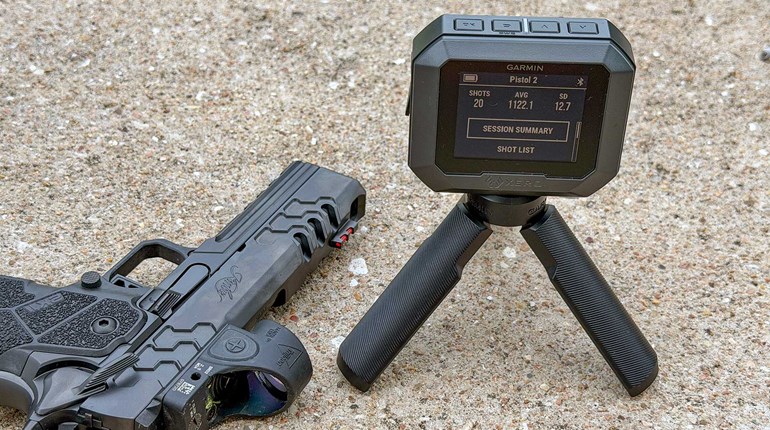

There have been several articles published in different publications about the excellent Garmin Xero C1 Pro chronograph. This small, radar-based chronograph was released in October 2023 and is popular, but will it work well on the chronograph stage at a major USPSA match? The short answer is yes.
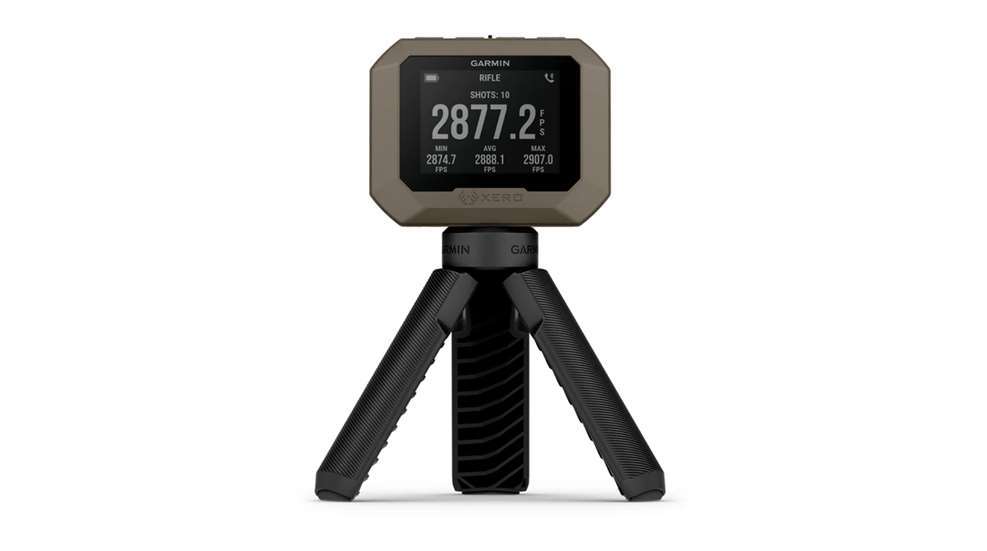
The 2024 USPSA Area 1 match was held in Winnemucca, Nevada, in May and I convinced the match staff to switch from their original plan of using LabRadar chronographs and to give the Garmin units a try, because I really wanted to see how they worked at a major USPSA match. I have served as Range Master at several matches that have used the LabRadar; at some matches there are no issues, but at other matches there are major issues.
It seems to be related to bay size and operators; folks need be experienced with the LabRadars to make sure all the settings are correct to have them work well. I am not saying the LabRadars are horrible, but the Garmin units seem to be way less finicky in regard to bay size, and are much more user-friendly to set up and use compared to LabRadar.
For the match, the two Garmin units were set side by side on a table, using the tripods that came with them. The chronograph staff shot over the units at a target downrange. (A target is not needed, but does provide a consistent aiming point.) The units were set on the pistol setting using the 600 to 1,700 f.p.s. range. Garmin chronographs will auto-sense nearby units and adjust the radar frequencies so as to not interfere with each other, unlike the LabRadar which requires the user to change that setting. The Garmins started fully charged in the morning and usually had around 50 percent battery remaining at lunch. They were charged during lunch with a battery pack, ran for the rest of the day, and were then charged overnight. You can save battery life by pausing the session between squads. When a session is active, the Garmin unit is constantly looking for shots. You can also run the units while plugged into an external battery pack.
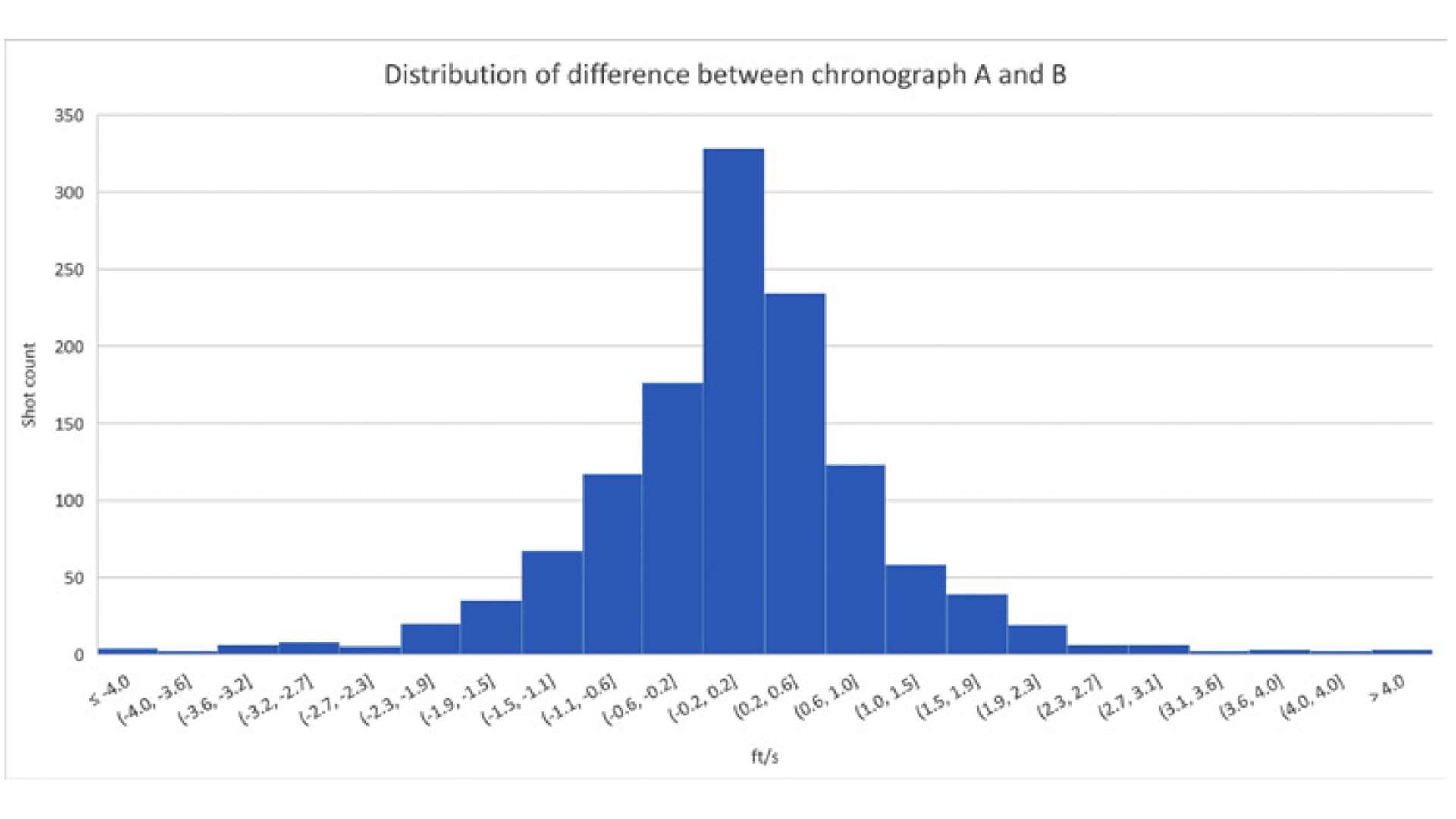
Dual chronographs are run in USPSA matches to ensure that each shot gets measured and to make sure the chronograph equipment is functioning normally. Sometimes one chronograph will read the shot and not the other. For competitor measurements, one unit missed a single shot the entire match, and the difference between the units was usually less than one foot per second. I pulled the data from the two Garmin units and got some stats; the missed shot was removed, leaving 1,263 paired data points from both units. The difference between unit A and unit B was calculated, and the standard deviation of those numbers was 1.294 f.p.s. From the chart (see above), you can see that for the most part, the difference between the readings was around one f.p.s., but there were some outliers and a normal distribution of the data.
Overall, the chronograph staff at the match was happy with the Garmin units because of the easy setup and use. Many competitors were curious about the Garmins and remarked on how close the readings were between the units. If you have the room for a radar-based chronograph stage at your major match and want units that virtually anyone can use, I highly recommend the Garmin Xero C1 Pro chronograph.
Article from the July/August 2024 issue of USPSA’s magazine.
Most Popular