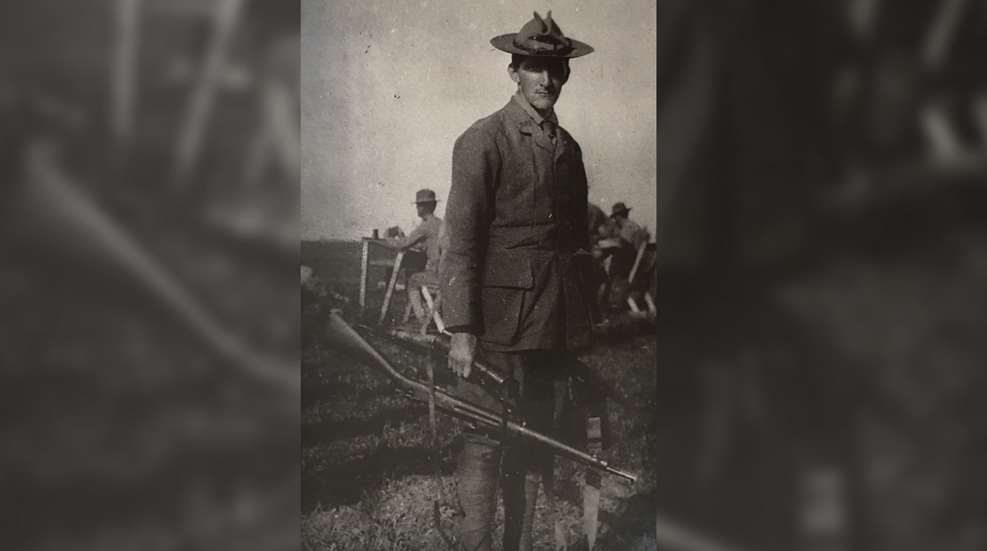
Kellogg Kennon Venable Casey was, arguably, the finest long-range marksman in the history of the sport. His achievements in the long-range shooting game in the first two decades of the 20th century guarantee him a place among the all-time greats.
K.K.V. Casey, as he was invariably and understandably known, became interested in marksmanship following his Spanish-American War service with the 71st Regiment, New York National Guard. The 71st was one of two Volunteer Infantry regiments—the 2nd Massachusetts was the other—directly involved in the fighting at El Caney and San Juan Hill on July 1, 1898. The 71st saw action at San Juan Hill. The 2nd fought in the concurrent battle for El Caney.
Casey rapidly mastered the Krag-Jorgensen service rifle and rose to prominence in military marksmanship circles, making the United States Palma Team in 1902 and again in 1903, 1907, 1912 and 1913. In 1903 he won the President's Match for the Individual Military Championship of the United States—the first to do so in the modern (post-1902) era of high power rifle competition. He won the Wimbledon Cup three times (1902, 1907 and 1908). In 1908, Casey won both the Wimbledon and Leech Cup matches—one of only a handful of competitors to do so over the course of one National Match program.
With a track record such as this, it is not surprising that Casey was a skillful and much-sought-after long-range coach. He was captain of the 1923 Palma Team.
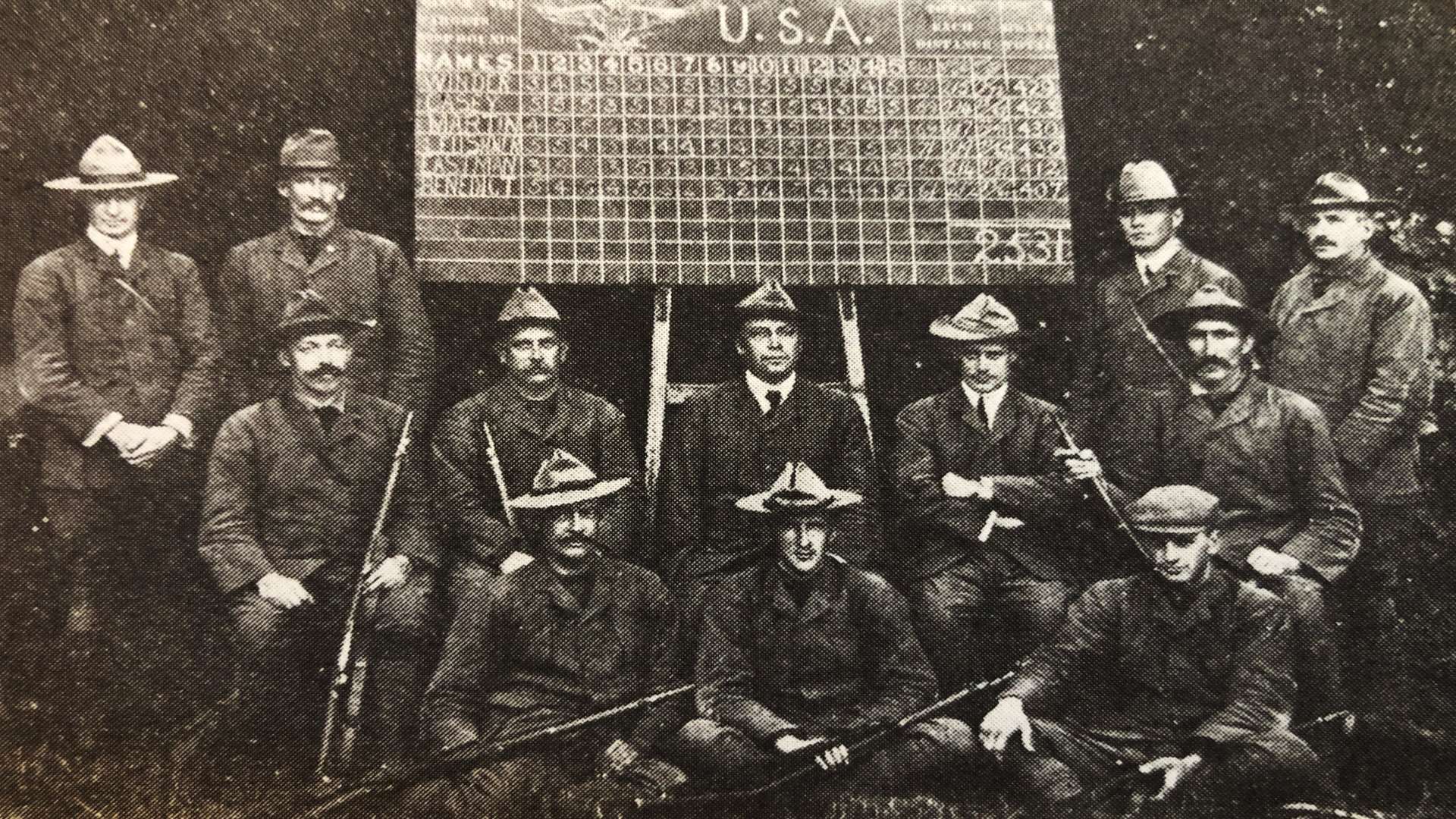
Casey also made his mark in Olympic competition. At the 1908 London Olympics he won a silver medal in the 1,000-yard individual rifle match, shooting an "as-issued" Model 1903 Springfield (albeit with a selected—i.e. "star-gauged" barrel) against a field that included match rifles with telescopic sights. In the team match, fired prone at distances from 200 to 1,000 yards, he collected a gold medal as the United States team handily won the event.
Somewhat unusual for the time, Casey was an enthusiastic handloader and routinely shot handloaded ammunition in matches where it was permitted. Casey also devised the Casey Firing Problem, an exercise that combined field techniques with range procedures and which can be regarded as an early precursor of today's National Trophy Infantry Team Rifle Match (the "Rattle Battle").
In 1905, Casey went to work for the Du Pont Company, first in the Smokeless Powder Department and later in the Military Sales Department. In 1921 he became Director of Military Sales and was usually involved in the annual trials to select ammunition for the National Matches. During this period he became a familiar face at major shooting competitions nationwide. Additionally, he served as a longtime director of the National Rifle Association and as a member of the National Board for the Promotion of Rifle Practice.
In these various capacities—as a competitor, as coach and executive, and finally as industry representative—Casey often seemed to be everywhere. Seemingly, no assemblage of the movers and shakers of the shooting world was complete without him. His long, narrow and distinctive face appears in virtually all the photographs of those gatherings. He was truly a man deeply involved in all aspects of the shooting sports.
Casey was also a talented musician who played the flute and bassoon as a member of the Wilmington (Delaware) Symphony Orchestra.
Casey's death was ironic and premature. Despite the considerable pain of an infected ingrown toenail, Casey attended the 1938 National Matches and the meeting of the National Board at Camp Perry. By the time he returned home, the infection had developed into septicemia—blood poisoning. Medical treatment, including amputation of the affected leg, failed in those days before antibiotics and Casey died on October 18. He was 61 years old. Casey is buried with his comrades of the 71st New York, in the regiment's San Juan Burial Plot in Mount Hope Cemetery, Hastings-on-Hudson, N.Y.
K.K.V. Casey
b. Sept. 17, 1877 - d. Oct. 18, 1938
Read more: Open To Civilians: The 1904 National Championships