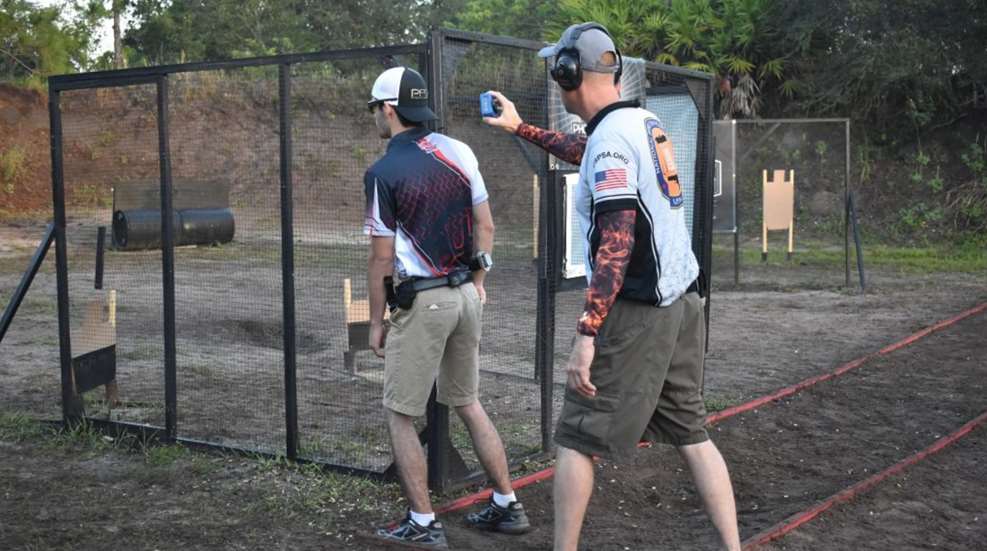
Learning can be hard. Acquiring new skills can be challenging. Repetition is needed when working to apply those skills.
In our volunteer sport, many of us did not initially acquire rules knowledge and officiating skills from any organized training. It came from observation as we attended local matches.
Unfortunately, what we observed was not always correct. Rules application was often spotty, and the techniques displayed by the Range Officer (whether certified or not) may have been lacking. But we “sponged” all that information and made it our own, thinking “This is the way!”
Examples: bad range commands, poor Range Officer positioning, no Range Officer teamwork, no one focusing on the gun, not seeing or ignoring obvious earned penalties, lazy target scoring, no WSB—add your own experiences.
At some point, in some fashion, reality struck—perhaps at a major match where it was painfully discovered that what was allowed or ignored at the local club was actually a disqualification, or watching a good stage crew really impressed us. For many of us, attendance at a USPSA/NROI Range Officer seminar offered an opportunity to realize what we once thought of as gospel was actually incorrect.
As an instructor, I can present the course material and demonstrate the correct techniques that have evolved over time. The seminar provides an opportunity to learn and practice basic skills—but now the real challenge begins. Once a habit is ingrained, it is difficult to change it. Just like in shooting, learning a new skill requires “unlearning” the original technique. That takes effort, concentration and, most importantly, repetition. With good effort, progress is inevitable. We don’t receive financial compensation for what we do on the range, but we should treat it as if we do. This is called pride of workmanship.
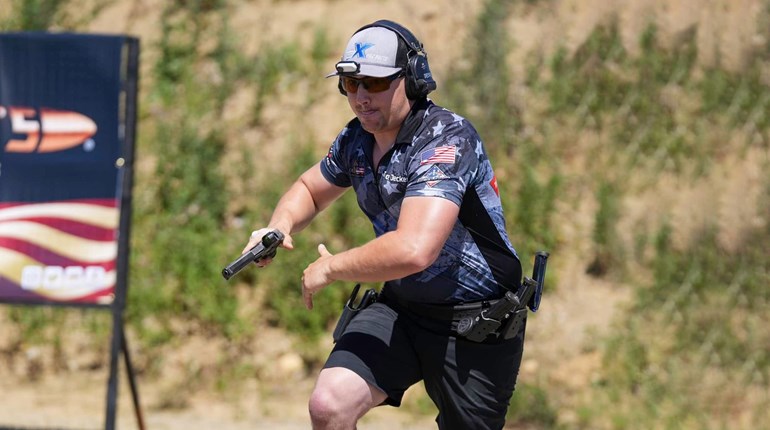
The first evidence a shooter has of your proficiency as a Range Officer is in your range commands.
So many things to fix—where do we start? I suggest that the best first place is your range commands. It should not take long to do some “dry-fire” range command practice prior to the match if you make the time. Self-critique is important—once your commands become automatic, you can dedicate your mental concentration to more important things, such as looking at the gun or being prepared to deal with an unexpected event, or rule on potential shooting/scoring penalties. Consider this: the first evidence a shooter has of your proficiency as a Range Officer is in your range commands. I know that when I’m shooting, hearing bad commands has me thinking about the Range Officer behind me instead of the stage in front of me, messing with my Zen—a form of Range Officer interference, if you will.
In the Range Officer seminar, we talk about the leadership responsibility which comes with the certification. Although the USPSA/NROI Range Officer certificate is somewhat a “learner’s permit,” we expect the newly minted Range Officer to return to his or her local club to display and share what has been learned. That can be a challenge, especially if the new Range Officer falls back into the old habits formed prior to the class. It can be tough to overcome those old habits and even tougher to act counter to the ingrained culture at a local club. A leader sets the example—that example will display the qualities we expect of our officials and, most importantly, be noticed by others. New shooters will benefit from the chance to absorb the correct commands and techniques from the start. From my perspective, I believe that doing it the right way is more efficient and less stressful, avoiding the delays caused by the mistakes, challenges or arguments that ultimately follow.
Over the long term, an effort to enhance your USPSA rules knowledge and stay current with rules changes is expected and should be part of your continuing education. USPSA offers several helpful pathways, including the NROI podcast, the Question of the Month, the NROI blog, the Downrange newsletter and USPSA magazine all provide insight into subjects that deserve more attention from shooters and officials.
It takes as much planning, focus and attention to detail to correctly RO a stage as it does to successfully shoot a stage.
Author George Jones is a USPSA/NROI Range Master Instructor.
Article from the March/April 2025 issue of USPSA’s magazine.
Most Popular