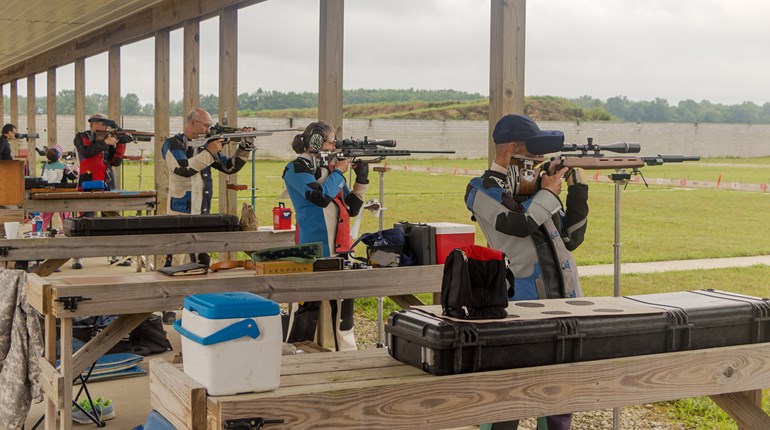

“Once through the gate, though, you begin to feel the pulse of the National Matches—the quick-moving, well-ordered beat which somehow gets into a man’s arteries and becomes such a part of him that once he has felt it, he comes back year after year.”
—The American Rifleman, October 1929
This year marked the most successful National Matches to date in terms of attendance as entries soared to more than 17,500—an increase of almost 4,000 from the year before. Without question, the surge occurred because shooters knew well in advance of the program’s funding due to the National Match legislation passed in 1928.
The dominating success enjoyed by the Marines in 1928, however, did not carry over to the 1929 competition, which was held August 15 to September 15 that year. The Corps did tally wins in the Herrick and National Team Pistol Matches, but the rivalry-ridden National Team Rifle Match, with its record field of 108 entries, went to the Infantry. The National Individual Rifle contest also featured a record field as 1,638 shooters took part and the title went to Cavalry Sgt. J.B. Jensen, while in the President’s Match, which marked the end of the NRA portion of the program, Navy Ensign C.B. Coffin topped 1,512 other shooters.
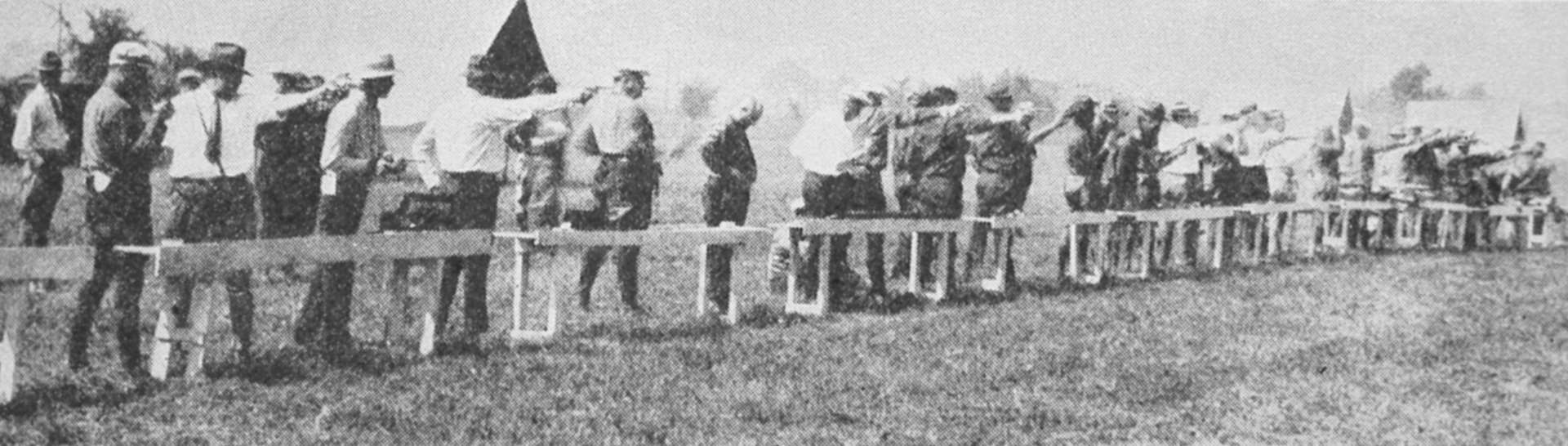
Throughout it all, some of the more notable performances this year came at the hands of civilian and police competitors. For the first time since 1913, the Marine Corps Cup Match was won by a non-military shooter, as R.W. Ballard of Colorado earned the distinction among 1,385 competitors while the National Individual Pistol Match was won by L.E. Wilson of Washington state and the Infantry Match went to the Massachusetts civilian squad. Even the top honor in the Chemical Warfare Match in 1929 went to a civilian after R.G. Hansen of Utah donned the required gas mask for the win.
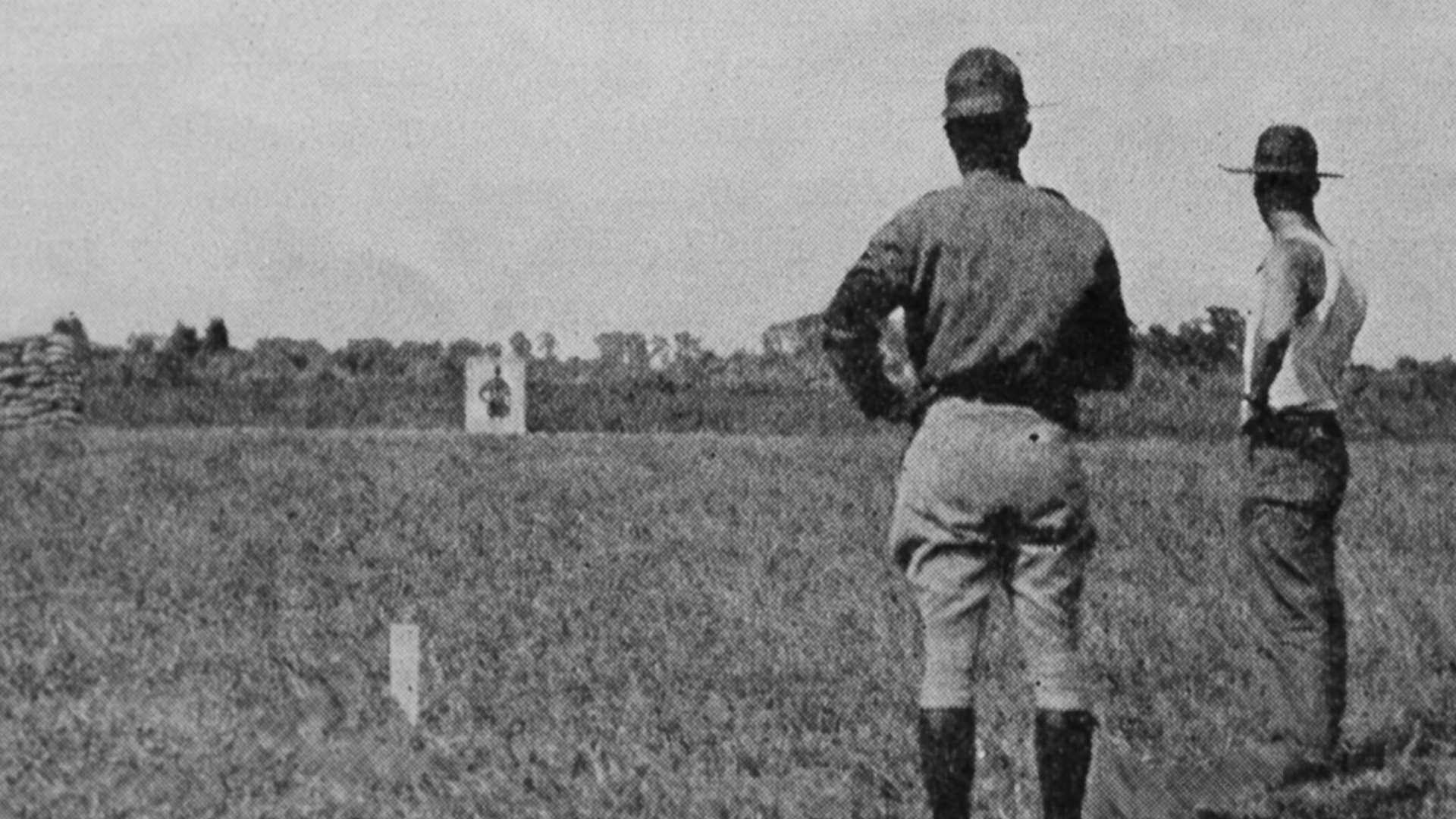
A record 18 police teams competed this year and the improvement displayed since their sparse, initial involvement in the National Match program a decade earlier came in the form of a second consecutive NRA individual pistol championship victory and a one-two finish in the NRA’s team pistol match.
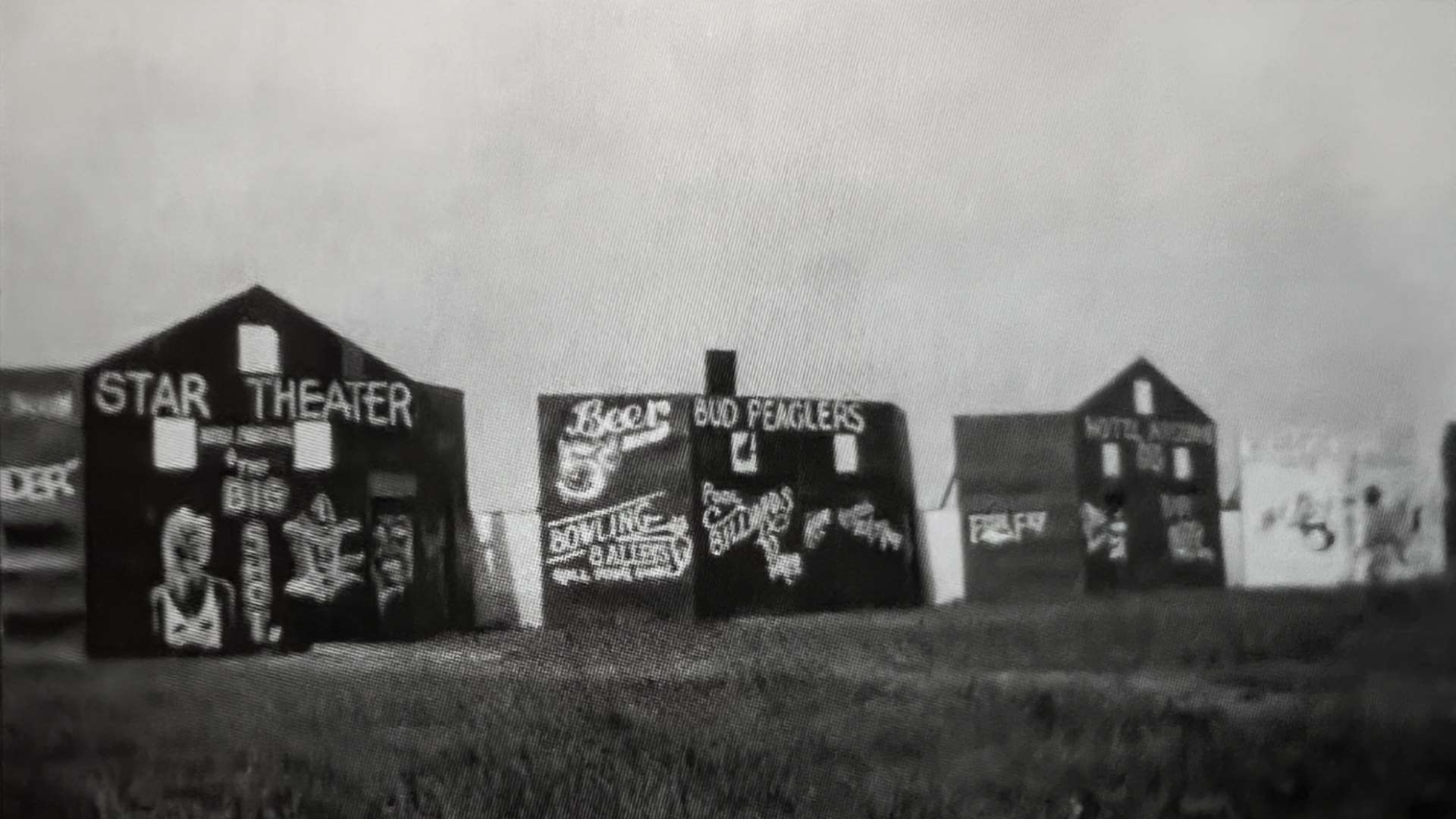
The police in 1929 dubbed their special range “Hogan’s Alley,” site of such matches as the Thompson Sub-Machine Gun Course, where shots were fired from a moving vehicle; and the Myers Match, which featured shots at disappearing targets in buildings. And a highlight of this year’s police program was the attendance of the uniformed Royal Canadian Mounted Police, who finished behind the U.S. representative team from Portland, Oregon, in the first International Police Team Match.
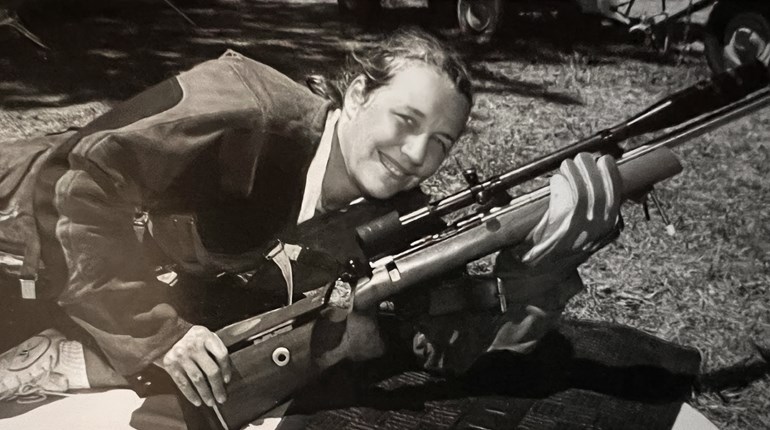
Col. Hu B. Myers was again the Executive Officer of the National Match program, which included U.S. international smallbore victories in the Dewar and Railwaymen’s Matches. In the Dewar, Mary Ward, age 19, became the second woman in history to qualify as a firing member of an international rifle team (Mrs. E.C. Crossman was first in 1919) and was the only shooter to fire a possible score at 50 yards, while famed barrel maker Eric Johnson of Connecticut won the national smallbore crown by virtue of a tie break over 17-year-old Larry Wilkens.
1929 National Matches Fact
Marine Lt. R.T. Presnell asked for a re-mark on his last shot in the Rapid-Fire Pistol Match with a record score at stake. He claimed a nine instead of the 10 he was given. The re-mark still gave him a 10, but he put up a $1 challenge fee for pit officers to examine and he was given the nine.