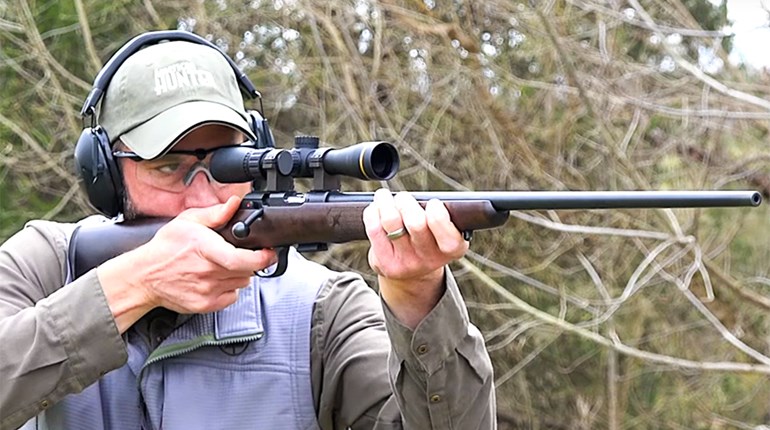
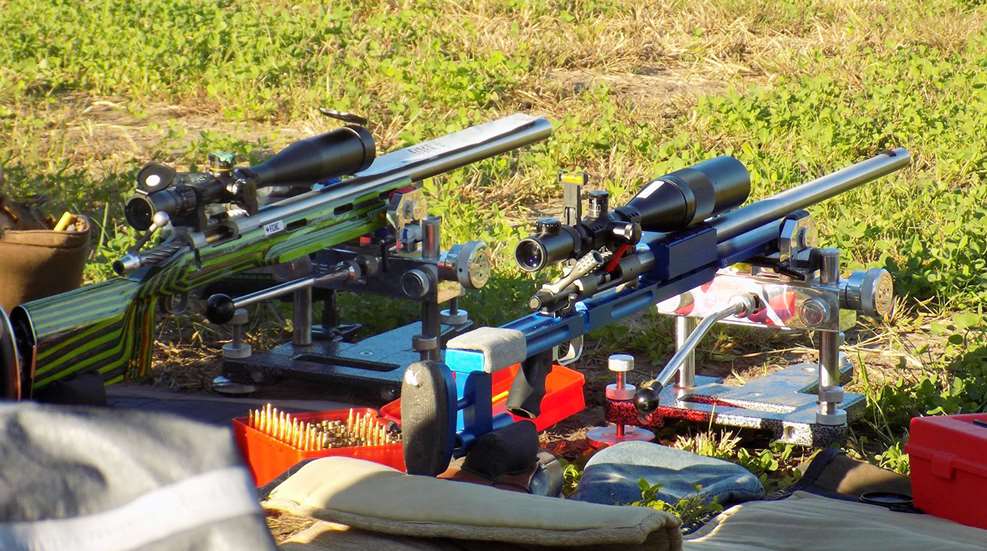
If you’re an experienced shooter, particularly in high power, there’s not a lot I can tell you about F-Class shooting you probably don’t already know. As with any precision shooting discipline, it’s all about the fundamentals: proper body alignment; a stable, natural, relaxed and consistent shooting position; and proper breath and trigger control.
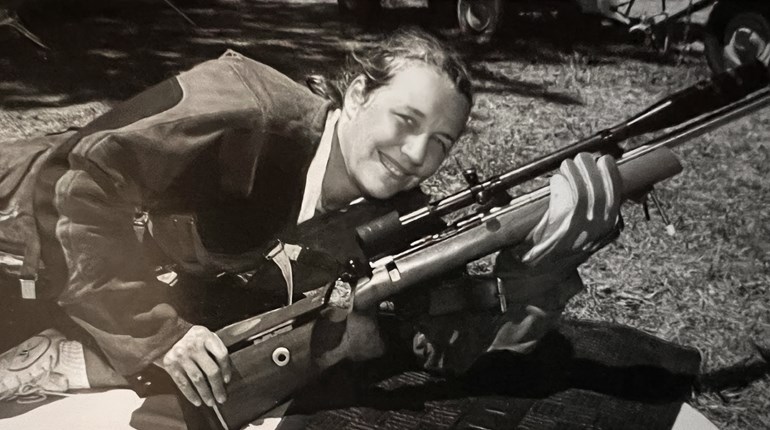
Don’t think that shooting from the prone position off sandbags, a bipod or a tripod is easier than shooting off a bench. It’s harder to get comfortable on a mat laid on ground that may be uneven or sloping. Your position is also less natural, in that your weight has to be distributed properly, with a lot of pressure on the elbows, and your neck must hold your head at an upward angle to look through the scope.
I’ve tried both flat prone and rollover prone positions. I like the latter, as it takes weight off the chest, which allows easier breathing and reduces the movement caused by breathing, which can disturb the crosshair. Rollover prone also tends to put the head higher, so that less neck tension is needed to keep the eye centered on the crosshair.
All proper positions share the same rudiments. First, everything about the position―the angle of your body to the target; the position of your legs, knees and feet on the mat; the position of your elbows; the distance of your upper body from the rest; and the placement of the rear bag―should be as comfortable and natural as possible.
Your position should also be consistent. Consistency is produced through repetition, including dry-fire practice, to develop an unconscious muscle memory of each aspect of the position.
Finally, the position should be relaxed. Relaxation is achieved when the position is natural and the stock dimensions, scope height, and bag/rest height are all optimized for you. I heartily recommend a stock with an adjustable cheekpiece that will facilitate such optimization.
Proper cheekpiece or comb height depends upon the structure of the face, whether stock weld is firm or light, and the height of the scope. Scope height, in turn, is related to the diameter of the objective lens and the height of the base and rings. I generally prefer to set the scope low in relation to the bore, with as small a gap as is reasonable between the objective and barrel. This reduces the effects of canting the gun and allows a lower, more relaxed head position. A scope can be too low, however, if it forces me to aim through the top of my eye socket―not an optimal situation, especially when my prescription glasses slip down. To rectify this, I simply increase the height of the bipod or front rest.
The scope’s eye relief should be set from the prone position, not at the bench. To do this, I first get in the prone position with an unloaded gun on the bags. Then I shoulder the gun with my eyes closed, and get into a comfortable, natural-feeling position. When I open my eyes, the position of my dominant eye in relation to eye relief and scope height tells me how much to adjust the scope and cheekpiece position to give me the proper view through the ocular lens.
Having an accurate gun, an accurate load, and a consistent and stable position, is only half the equation, however. What separates the top shooter from the dilettantes is the ability to read the wind and compensate appropriately for the load. There are two distinct skills involved in this. One is simply the capability to judge the prevailing wind at any given time, using all the information at your disposal―wind flags, mirage, ripples in the grass, the feel of the breeze on your face and so on. The second skill involves translating this general information about the wind into a specific point-of-aim adjustment for your particular gun and load.
Both skills require diligent and extensive practice. Initially, you’ll do a process of conscious guess-timation in your mind, such as: “OK, I can barely feel the wind on my face, and the wind flags aren’t stirring much, so I think there’s a wind of maybe five miles per hour from left to right. Since a 10-mph wind will deflect my bullet about 80 inches at 1000 yards, my five-mile-per-hour deflection will be about half that, about 40 inches. Since the target paper is 72 inches wide―36 inches on each side from the center of the bull―I’ve got to hold about four inches off the left edge of the paper.”
Those kind of mental gymnastics will become even more involved when the wind flags tell conflicting tales, or when the winds are quartering. Given enough practice, reading the wind and adjusting for it will become second nature.
Use a logbook during practice to record each shot’s estimated wind value, the hold-off you allowed and the result on the target. Also, make a point of practicing in the wind. If you can keep your shots in the black when the wind is gusting 20 miles per hour or more, you’ll do great in a match with breezes of only a few miles per hour.
Read more about F-Class rifle competition: