Loading double-action and single-action revolvers involves two separate and very different procedures. Here are specific techniques for performing this function with both types.
Loading Double-Action Revolvers
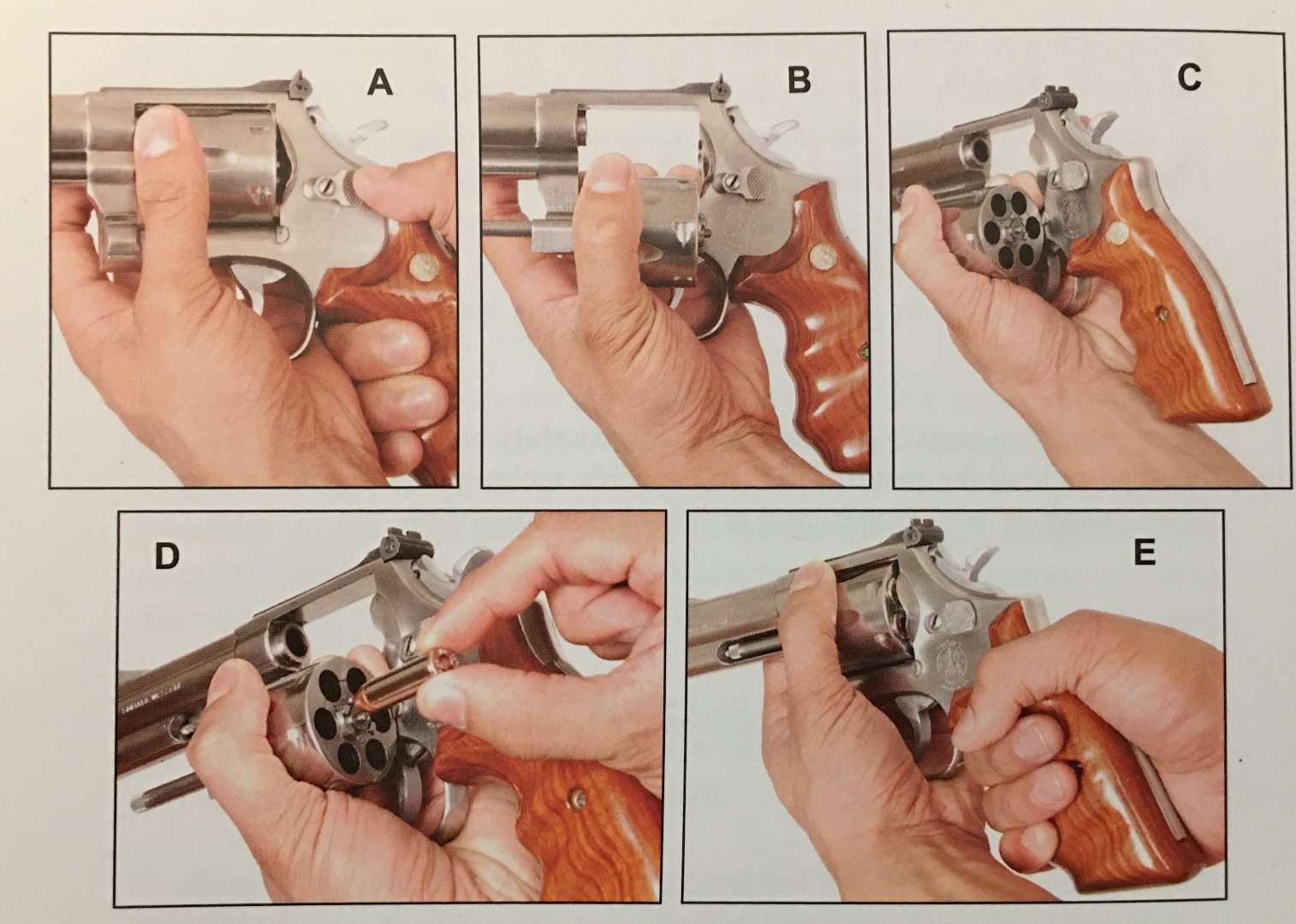
Almost all double-action revolvers feature a swing-out cylinder operated by a latch that, in most models, is located on the left side of the frame. With the revolver held in the right hand (for both right- and left-handed shooters), pointed in a safe direction with the trigger finger outside the trigger guard and alongside the frame, the cylinder latch is engaged with the right-hand thumb. Note that a few revolver models locate the cylinder latch on the crane, engaging the latch must be done with the left hand.
With the cylinder latch disengaged, the left hand is placed around the frame and the left-hand fingertips push the cylinder out of the frame, to the left. The cylinder should never be swung out violently, as is sometimes seen in feature films, this causes damage to the revolver.
Once the cylinder is fully open, the revolver's muzzle is pointed slightly downward. With the revolver held in the left hand, live cartridges are inserted, one by one, into the chambers of the cylinder with the right hand. When the cylinder is full, the left-hand thumb pushes it fully back into the frame. A click will be heard when the cylinder is locked in place by the cylinder latch.
At this point, the revolver is ready to fire. A firing grip may be obtained with the right hand (for right-handed shooters) or the left hand (for left-handed shooters).
Loading Single-Action Revolvers
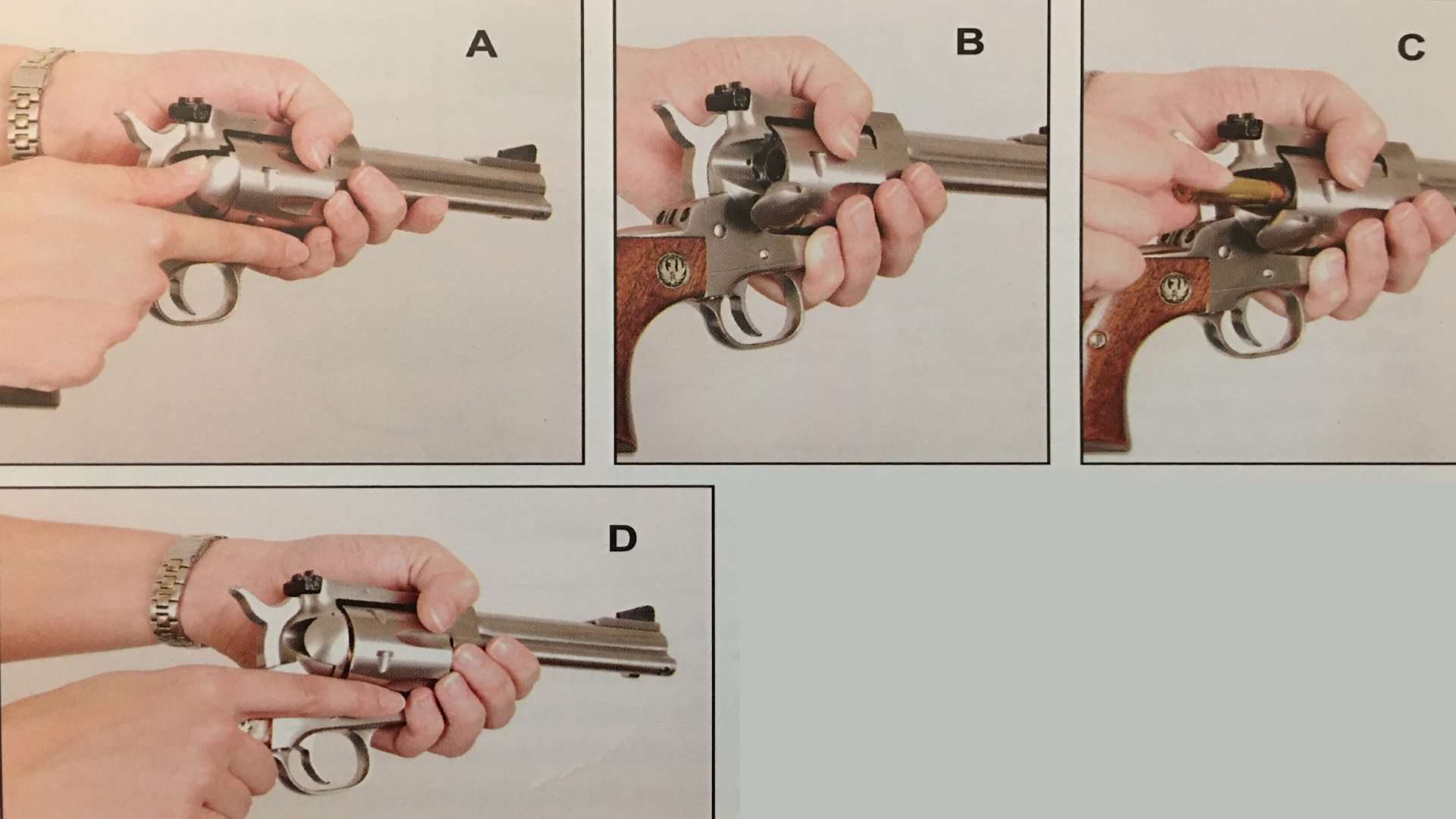
Instead of a cylinder that swings out, single-action revolvers usually have a right-side loading gate that is swung open to allow access to one chamber at a time.
For a right-handed shooter, the revolver is initially held in the right hand, the hammer put in the half-cock position (on some models), and the loading gate opened with the right-hand thumb. The gun is then transferred to the left hand and is turned slightly counterclockwise, with the muzzle pointed downward (but still in a safe direction). Next, the cylinder is rotated to expose an empty chamber. A fresh cartridge is inserted into the chamber with the right hand, and then the chamber is rotated to expose the next empty chamber. This process is repeated until all the chambers are full, at which point the loading gate is closed.
For left-handed shooters, the revolver is held in the left hand, the hammer is placed in the half-cock position if necessary, and the loading gate opened with the right-hand thumb. With the gun rotated slightly counterclockwise and held with the muzzle down (but still pointed in a safe direction), the cylinder is rotated with the right hand until an empty chamber is fully exposed, and a fresh cartridge inserted into it. The cylinder is rotated to expose the next empty chamber, and the loading process is repeated until all the chambers are full, at which point the loading gate is closed.
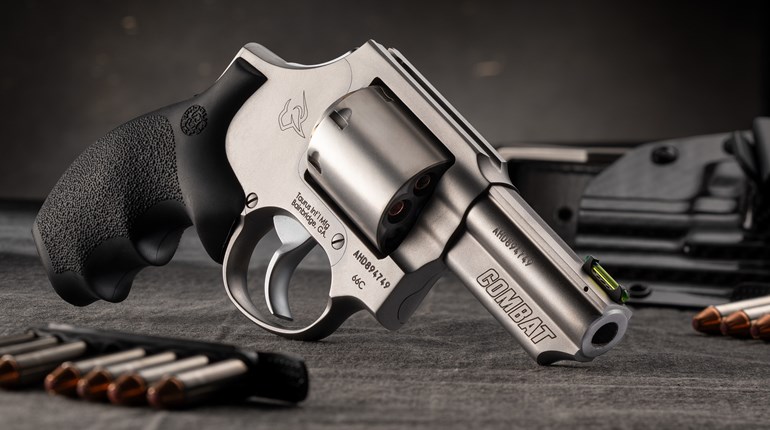
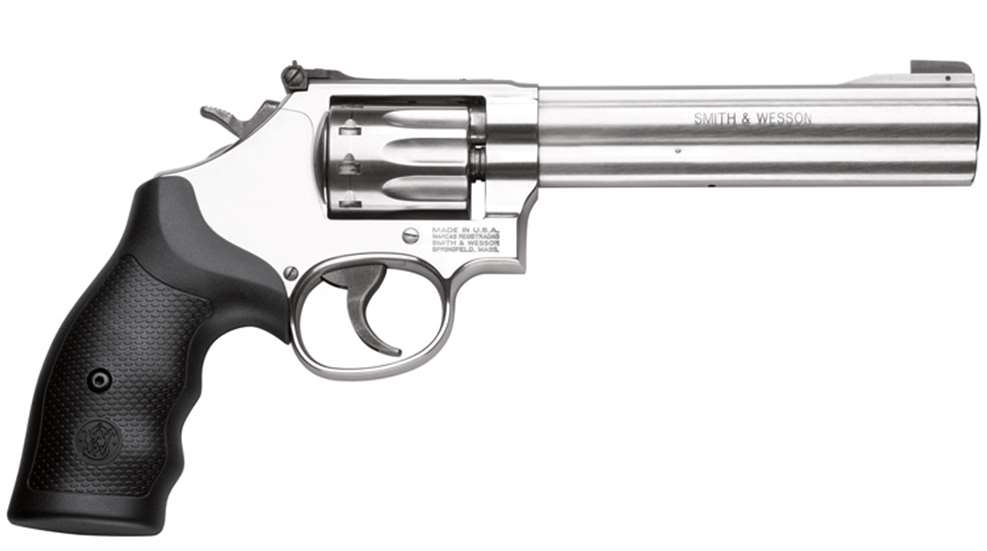
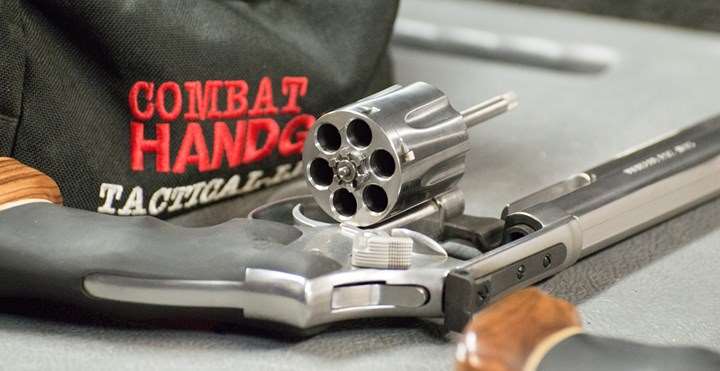
Lead photo: Smith & Wesson Model 617 Rimfire.
Read more: Handgun Operation: Semi-Automatic Safety Mechanisms