
The below is an excerpt from the 1978 book, Olympic Shooting, written by Col. Jim Crossman and published by the NRA.
1968—Mexico City
By Colonel Jim Crossman
When the 1968 Olympic Shooting Team arrived in Mexico, things were not yet finished. Everything was in perfect shape, but the venues were continually improving the shrubbery and planting for more beauty. Throughout the Games, workmen were busy putting in a new shrub here, taking out an old plant there, and replacing patches of grass that had been trampled to bare dirt by the crowds.
Everything else seemed to be completed right on time—and beautifully done. It was not possible to find fault with the planning, construction, organization and operation. The Mexicans did a magnificent job.
The great new Olympic range—the Poligono 68—was specially built for the Games. Situated on a slight slope, the range was on several levels. The lowest level, on the east, was a spacious 50-meter range with a covered firing point at 25 meters specially designed for the modern pentathlon's turning target course. On a slightly higher level was the rapid-fire pistol range, with eight sets of targets and room for additional sets.
The next level was occupied by the handsome administration building, with its beautiful patio, restaurant and lounge, as well as offices.
The first range on the west was the 50-point, 50-meter layout, while the last range was set up for 50 targets at either 50 or 300 meters.
Concrete tunnels gave protection so that people could move in and out of the pits while shooting was going on. Even the 25-meter pistol range had protected passages and waiting rooms at the butts for the markers. The area between the firing line and the backstop was nicely sodded.
All the ranges were of the safety type, with high sod or concrete sides and end walls with a series of vertical baffles downrange so that a stray bullet could not get out. The trap and skeet fields, as a matter of fact, were built behind the 50- and 25-meter ranges. The shotgun ranges consisted of a skeet field, trap layout and a combination field.
In addition, there were buildings with private rooms for each team. Other buildings provided space for the press room, target preparation, and the important target control, or scoring, while there was ample room for parking, except on the biggest days. The range was provided with attractive signs, so people could find their way around easily.
And the whole thing was brightened with grass and colorful flowers and shrubs. The buildings, the signs and decorations, the plantings and the patio where the flags of all the nations flew—a most colorful sight.
The matches went off on time and with a minimum of confusion, fuss and disturbance to the shooters. The range operation was a tribute to the organizers and operators of the match.
The 1968 Games were the scene of a new Olympic shooting event—skeet. Skeet has become very popular in this country in the half-century since it was developed as an off-season field shooting sport. For some years it had been shot as part of the Pan American Games, and as part of the UIT World Championships, but skeet had never been part of the Olympic Games.
International skeet differs from skeet in the U.S. in a few important points, although the field layout and general scheme are the same. The bird is thrown farther in the international game than in the United States, about 71 yards versus 55 to never more than 65 yards. In international skeet, the gun must be touching the shooter's hip at the time the bird appears, rather than on the shoulder as in the U.S. skeet. The bird may be thrown any time within three seconds after the shooter calls, rather than coming instantly as in the United States. These are the three major factors that combine to make the international skeet much more difficult than the U.S. variety, though there are other minor differences.
In addition to the 200-bird skeet event, the Olympic shooting matches in Mexico City included the old standby events:
- Smallbore rifle, 50 meters, 60 shots prone ("English Match")
- Smallbore rifle, 50 meters, 120 shots, 40 in each position—prone, kneeling and standing
- Free rifle, 300 meters, 120 shots, 40 in each position—prone, kneeling and standing
- Free pistol, 50 meters, 60 shots
- Rapid-fire pistol, 25 meters, 60 shots
- Clay pigeon, 200 birds
Mexico City posed the problem of altitude for Olympic athletes. At 7,800 feet elevation, the city is far higher than any good-sized U.S. town. The high altitude does have an effect on athletes, as was concluded by an international symposium on the subject held in preparation for the 1968 Olympics.
If one has ever had the experience of moving up to high altitude, say over 7,000 feet, and staying there for a while, there is trouble in catching the breath on the first few days. Any physical exercise leaves the individual panting like a hound-dog and other typical altitude symptoms—headache, fatigue, sleeplessness and so on. A symposium is not needed to tell the individual that they are uncomfortable.
The group concluded that altitude brings these troubles and more, and that generally performance times are longer than at lower altitudes. Related is the fact that recovery times are longer. Acclimatization at altitude helps helps to overcome some of these disadvantages, but some athletes adjust to altitude better and more quickly than others.
How does this affect the shooter?
While he does not have the same problem as the long-distance runner, for example, the shooter is bothered by the altitude. It affects his breathing and, since he does considerable physical labor in shooting, this affects his results. He is subject to the same problems of initial altitude sickness—headaches, sleeplessness and so on.
How all these things might affect eyesight and coordination or endurance for the long matches was not clear. But there seemed to be no doubt in the minds of the shooters who had encountered altitude that the physiological effects do constitute a problem of some degree.
Read Part 2 of our look back at the Mexico City 1968 Olympic Games. Subscribe to the free Insider newsletter for the latest updates.
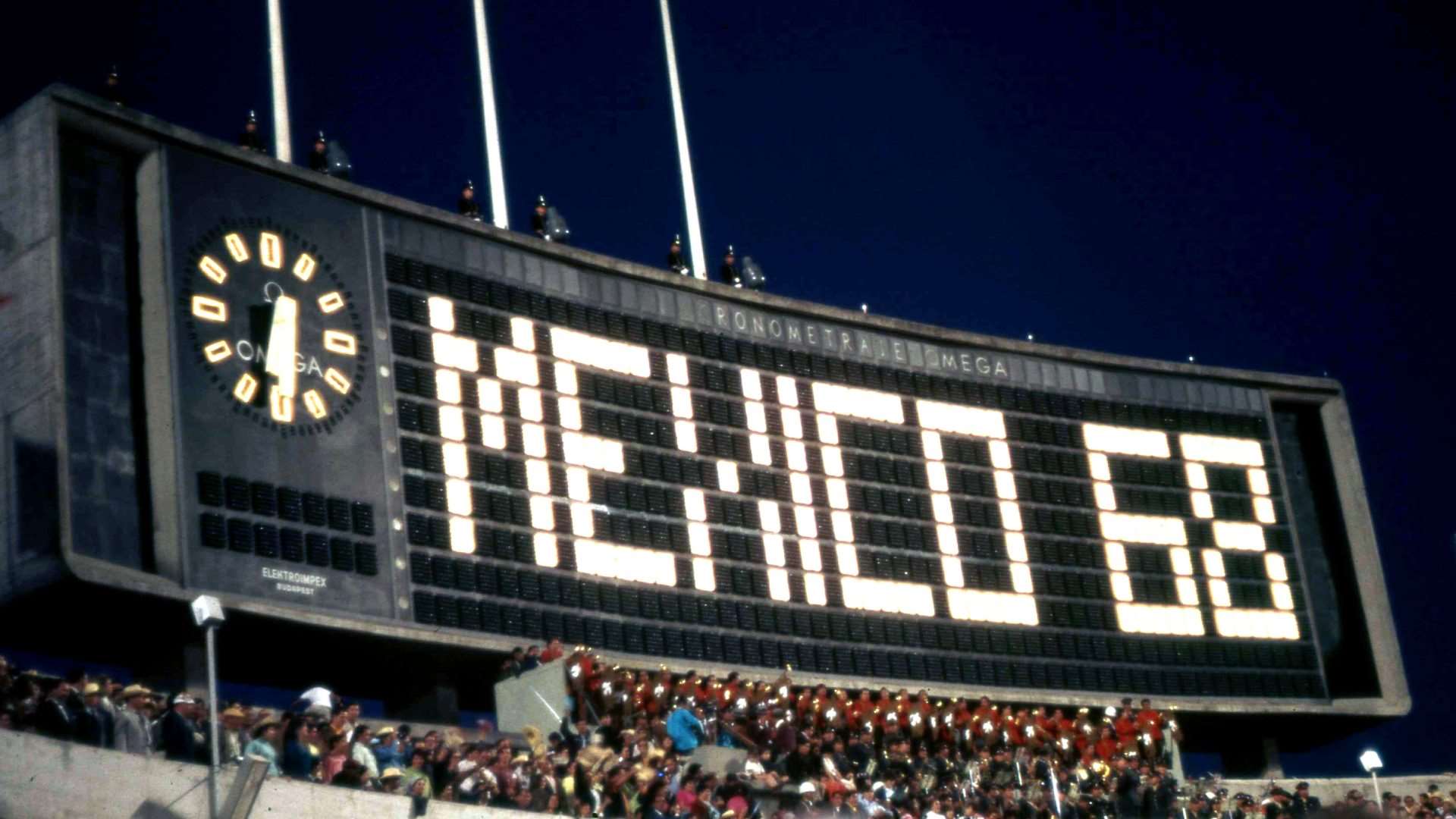
Photo: The opening ceremony for the Mexico City 1968 Olympic Games at the Estadio Olímpico Universitario. Photo by Sergio Rodriguez/Wikimedia Commons.
Read more: Tokyo 1964 Olympics: Training Does Pay Off
Most Popular