
With the exception of the unfailing, classic performances by Harry Reeves and Huelet “Joe” Benner, two legendary handgunners who won six (three apiece) of the seven NRA national pistol titles fired between 1942 and 1953, this segment of National Match history stands out as the most erratic for a number of reasons—the most obvious being the war-induced match suspensions from 1942 through 1945 (World War II) and again in 1950 (Korean War)—and that eight venues hosted national championships under varying circumstances and conditions during the other seven years. Hands down, competitors from this era experienced the most disjointed National Match schedules ever, as programs comprising both National Rifle Association of America and National Board for the Promotion of Rifle Practice events were conducted just six times over the 12-year span.
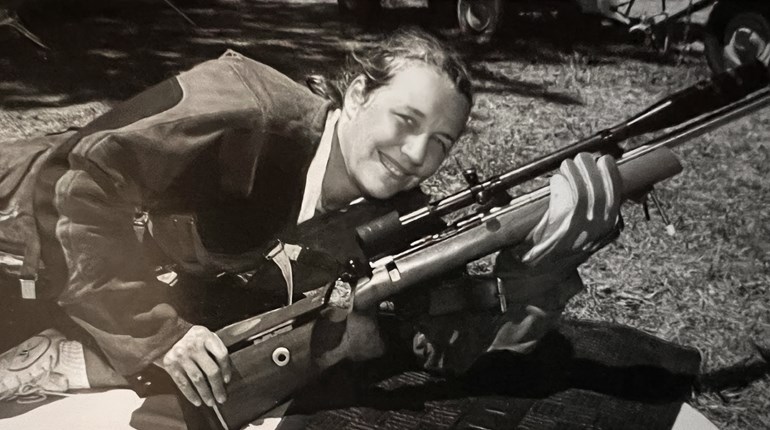
National high power competition took the brunt of the volatility in the form of an 11-year drought that lasted from 1940 until 1951, brought or in part by such war effects as the temporary suspension of Division of Civilian Marksmanship services and the general reduction overall in ranges, sporting arms and ammunition production. The shadow cast on big bore shooters, however, meant that the spotlight shone more brightly on smallbore and pistol competitors during the post-war years when the NRA proved indispensable in providing a national forum to display their talents.
In essence, the National Match program from 1942 to 1953 was a microcosm of a revamped American way of life that was laced with uncertainty. But fortunately for American shooters, reservation and reluctance were overridden by resolve. Never was this resolve more apparent than in the NRA’s tireless efforts to implore Congress to fulfill the mandate that led to the creation of the National Board four decades earlier, a mandate that was fortified by the National Defense Act of 1916 and subsequent federal acts that called for annual funding of the National Matches.
The National Rifle Association was the force behind national shooting competitions in any and all of its forms during this time for concurrent with the pattern of inconstant National Match appropriations was the unsettled state of a National Board that was in the midst of an identity crisis due in no small part to the formation of the Department of Defense in 1949—an extension of the National Security Act of 1947 that abolished the War Department. In a resultant role reversal, NRA officers kept the issue of National Match funding alive in the halls of Congress when federal appropriations foundered, and these same officials conducted modified National Match programs while the National Board functioned in more of a cooperative capacity.
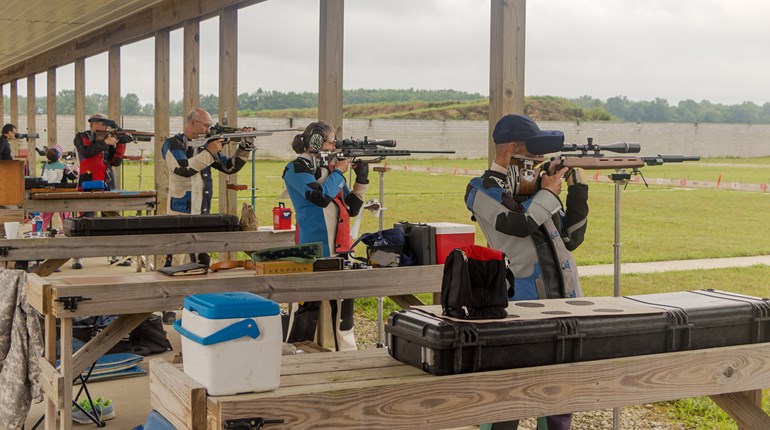
NRA’s diligence and unified relationship with the National Board paid off when in 1953, the National Matches returned to Camp Perry with all four National Trophy contests intact, ending the nomadic and divided existence that officials and competitors had endured for 13 years. And as fate would have it, this much heralded achievement at Camp Perry occurred nearly 50 years to the day after the National Matches were first conducted.
Most Popular