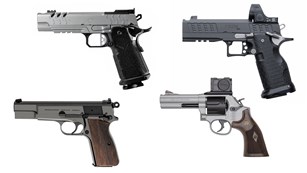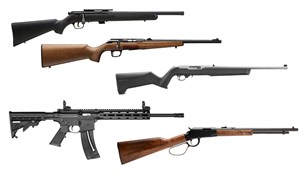

In 2025, Ruger introduced two innovative versions of its venerable 10/22 rifle with lightweight, hammer-forged stainless steel tensioned barrels in a carbon-fiber wrap. One is the 10/22 Carbon Fiber with Grey Birch Chassis, featuring a 30-MOA Picatinny rail and designed for the long-range PRS22 event. I tested that model and was impressed with its accuracy. It was virtually MOA out to 200 yards, which is as far as my range facilities extend.
The other is the more conventional 10/22 Carbon Fiber. With an advertised weight of 3½ pounds and a trim Magpul MOE X-22 stock, it looked like a natural for fast-paced games like Steel Challenge and Metal Madness. Since I’m a fan of those games, I decided to test that one as well.
10/22 CARBON FIBER
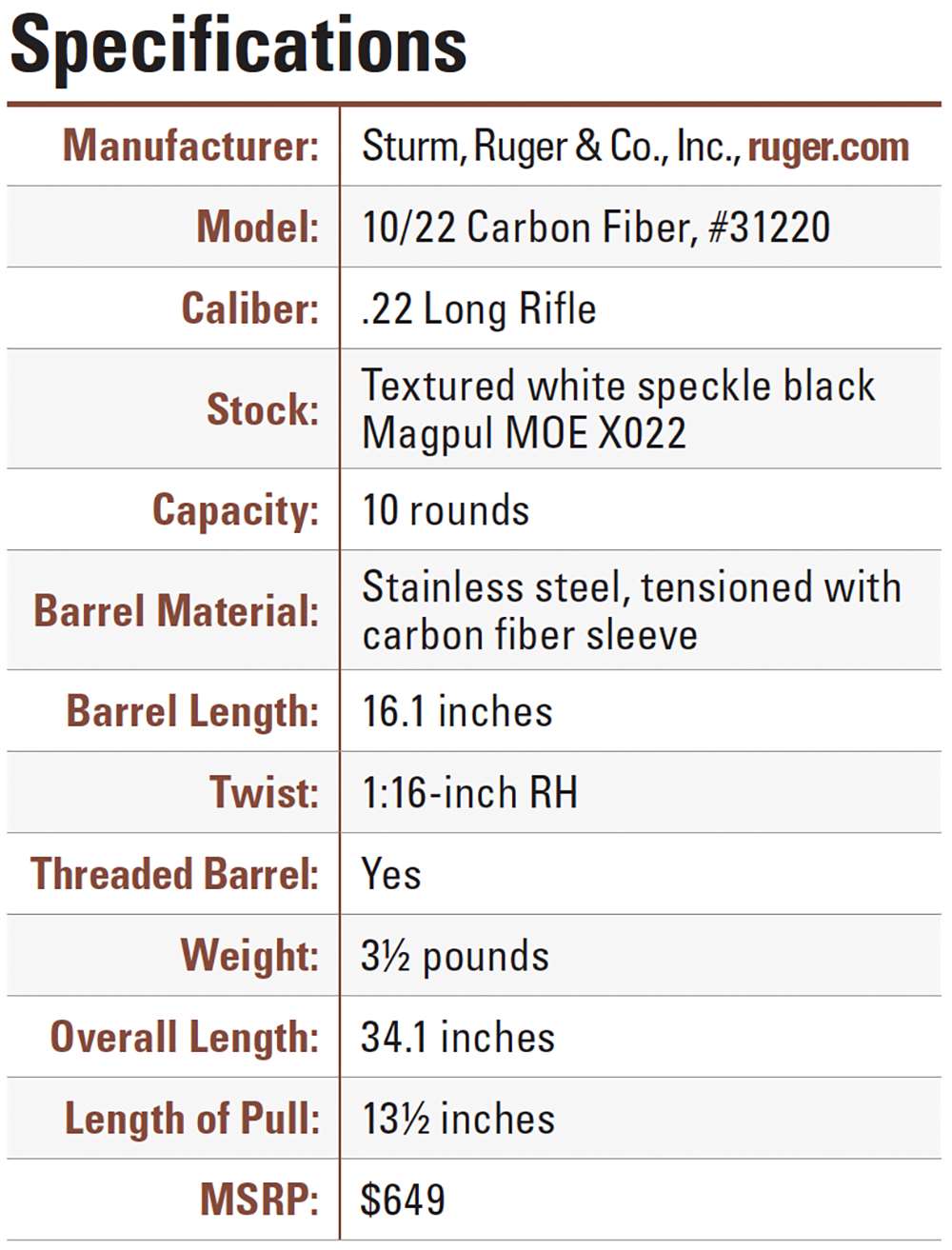
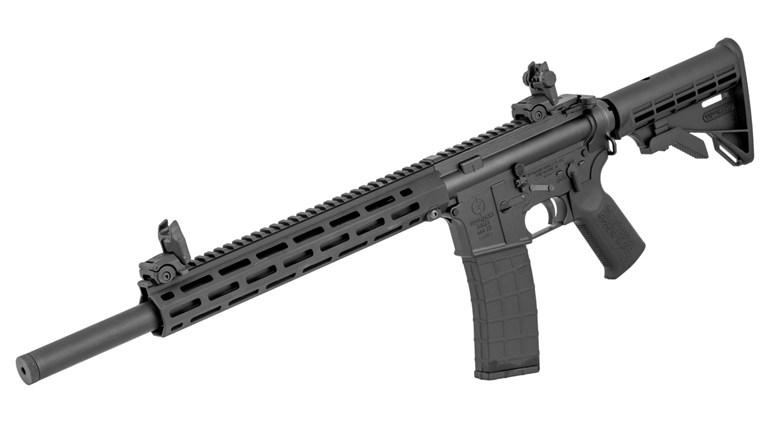
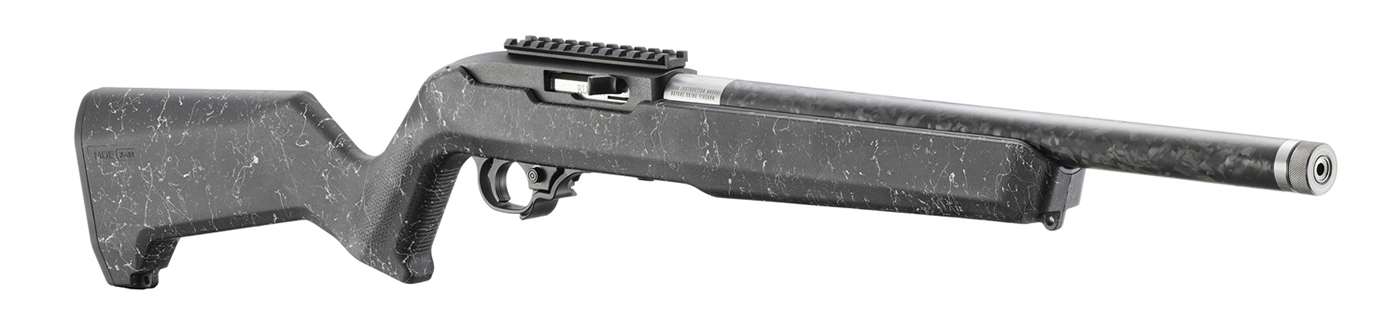
The featherweight Ruger 10/22 Carbon Fiber (#31220, MSRP $649) features a 16.1-inch barrel in the conventional 1:16-inch right-hand twist. It is threaded to allow the use of muzzle accessories and an end cap is included. Ruger’s BX trigger (2½ to 3 pounds) is standard.
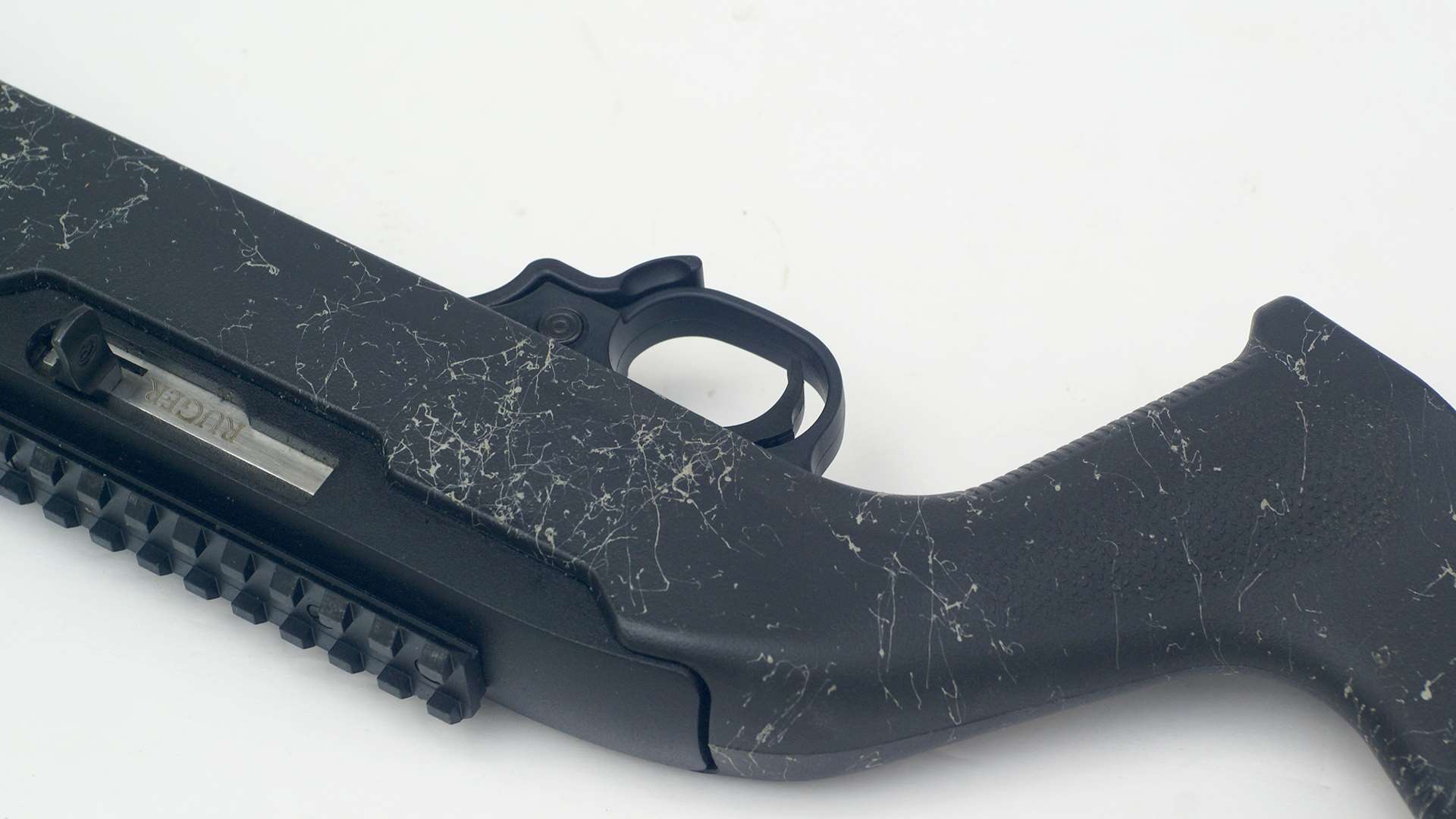
The trigger group, like the other Carbon Fiber model, differs slightly from the standard 10/22 in that the magazine release features a slight outward extension that makes it easy to drop the magazine with the trigger finger.
A Picatinny rail is installed and there are no provisions for iron sights. The Magpul stock sports front and rear sling mounting eyelets, with M-LOK slots on the underside. Overall length is 34.1 inches with a 13½-inch length of pull.
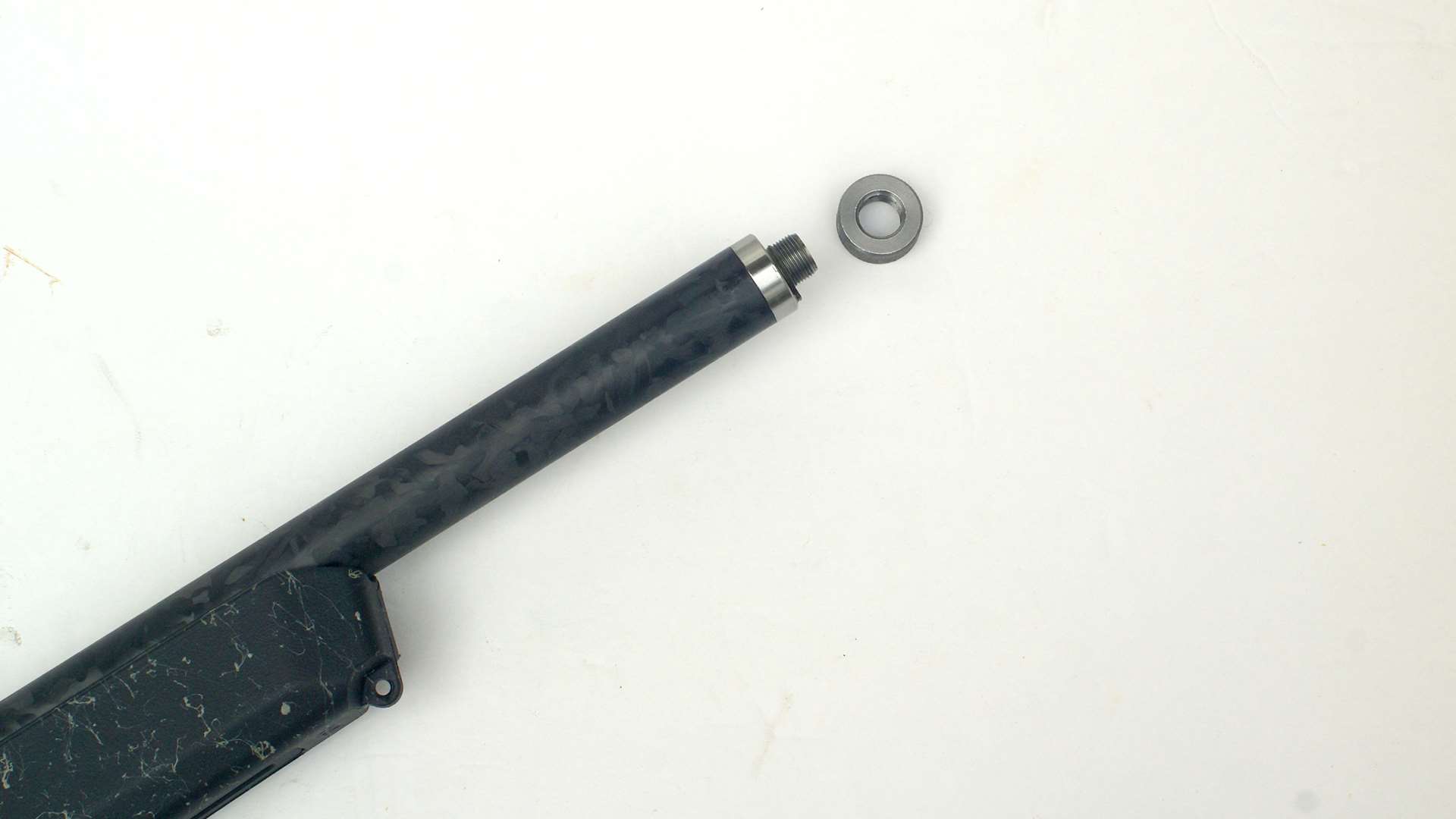
ON THE RANGE
As per my normal routine, I locked the slide back and ran a patch through the barrel and then applied some lube. The previous carbon-fiber Ruger I tested had a handy feature. With the bolt locked back, you didn’t have to diddle with the little slide release lever. You just pulled the bolt handle back and it released. Unfortunately, even though the control group looks identical, that feature isn’t present on this gun, so it was back to diddling with the little lever.
With the basics done, it was time for the range.
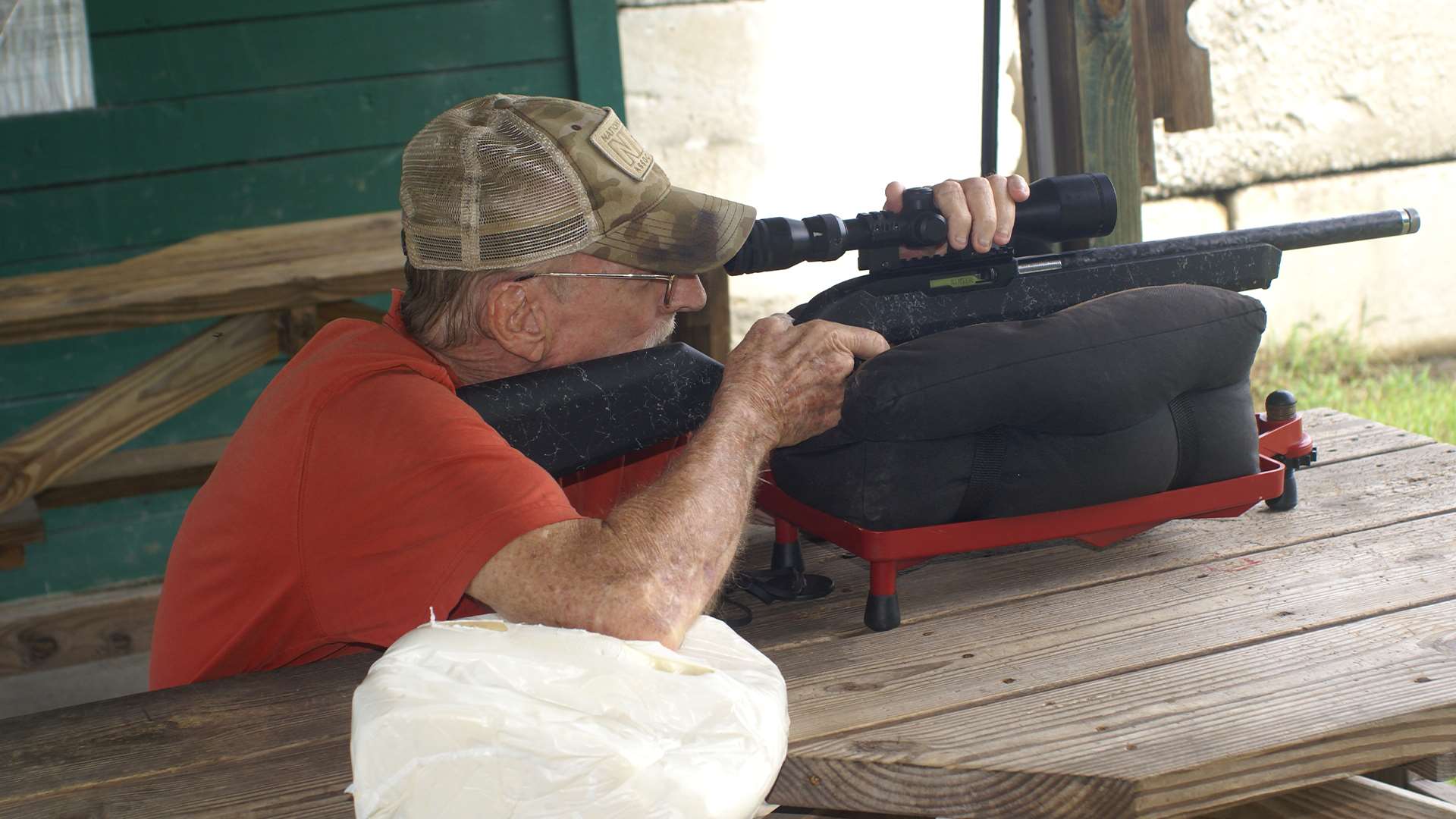
Given this featherweight’s obvious affinity for Steel Challenge and Metal Madness matches, I removed the C-More RTS3 from my regular Steel Challenge rifle, a Ruger 10/22 Takedown Lite and installed it on the Carbon Fiber. I had a Steel Challenge match available in about a week, so I headed to my backyard range. My ammo for the match would be CCI Green Tag, so I zeroed with that.
My zero target was a Birchwood Casey three-inch burst circle on a plain white background. I fired two rounds into the berm to the side of the target to avoid a cold bore shot, and then centered up and fired a pair. A quick look through 8x binoculars showed a hole just outside the burst target and low right. But I couldn’t see a second hole.
Walking down to the target I found the second round. It was almost perfectly centered in the first, but I could see two grease rings. It took less than a half-dozen rounds to walk that group into target center, where once again I was looking at what amounted to one large hole. I was surprised. Lightweight sporters aren’t supposed to do that.
At the Steel Challenge match, the lightweight gun was a joy to handle. On a couple of occasions, a bit too joyful. It’s a pound lighter than the 10/22 Takedown Lite I normally shoot and on a couple of strings I pushed a bit too hard and got ahead of myself. But that’s just a matter of a bit more familiarity to get the body into the featherweight rhythm.
With the Steel Challenge match done, I got to thinking about my experience while zeroing the RTS3. The groups were noticeably tighter than I would have expected from a featherweight gun, but it did use the same tensioned barrel as the PRS22 model I had tested some months ago. Was there something about that barrel system that contributed to accuracy? I decided to find out.
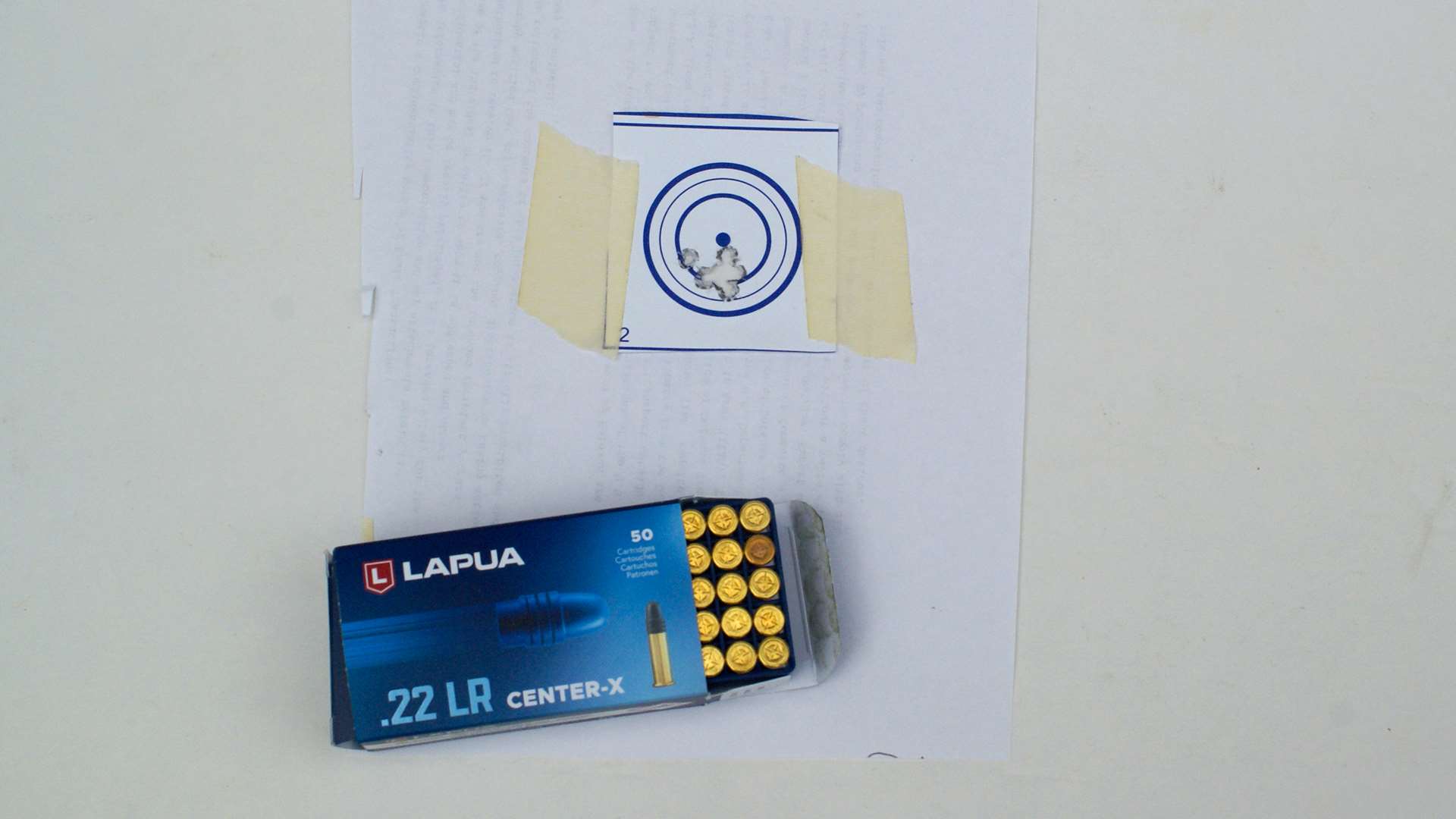
The 6-24x Baush & Lomb scope I used on the PRS gun had since died on me. The windage and elevation adjustments went wacky and would not zero. The best option I had was the 3.8-12x Simmons that had previously ridden on my deer rifle, so I put that on and got a 25-yard zero on my backyard range. I was still getting pairs that either touched, or were one hole, so I headed for my club’s 50-yard range.
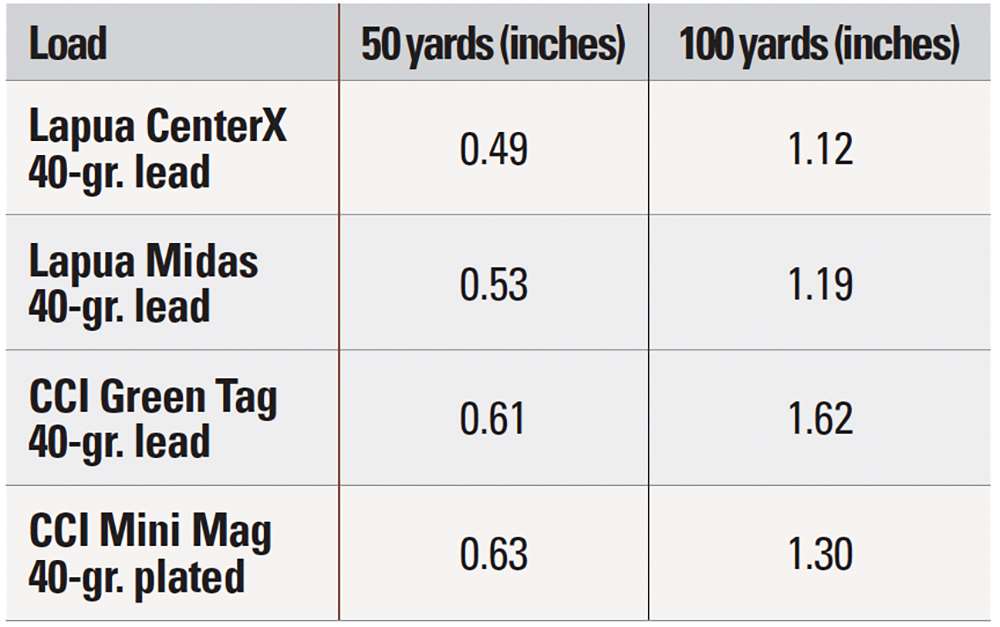
For loads I selected the two best performers from my tests on the PRS22 gun (Lapua CenterX and Lapua Midas), along with two CCI loads that had previously performed well in heavier barreled .22 rifles (Green Tag and Mini Mag 40-grain plated Target). I was impressed with the groups so I set in a 50-yard zero with the Center X.
I then moved to the 100-yard range. I hadn’t planned on that and didn’t bring a suitable target, but the 50-yard groups were intriguing. The drop from a 50-yard zero to 100 yards is about 10 inches, and I wasn’t going to change the 50-yard zero. Instead, I bought some target backings and sight-in squares at the range and set the squares at the top of the target with room below to catch the groups. The accuracy was surprisingly good for a lightweight rifle as the accompanying table shows.
ACCURACY TABLE
I was about ready to head home, but at the other end of the 50-yard range some shooters were setting up a couple of Know Your Limits targets for a practice session. I moved on over and got in line.
The eight little hanging steel targets at 50 yards measure (left to right) 2, 1¾, 1½, 1¼, 1, 3/4, 1/2 and 1/4 inch in diameter, and when hit they spin. I knew a 12x scope wasn’t enough to deal with the last two tiny plates. You really need 18x or more, but I was there, so why not.
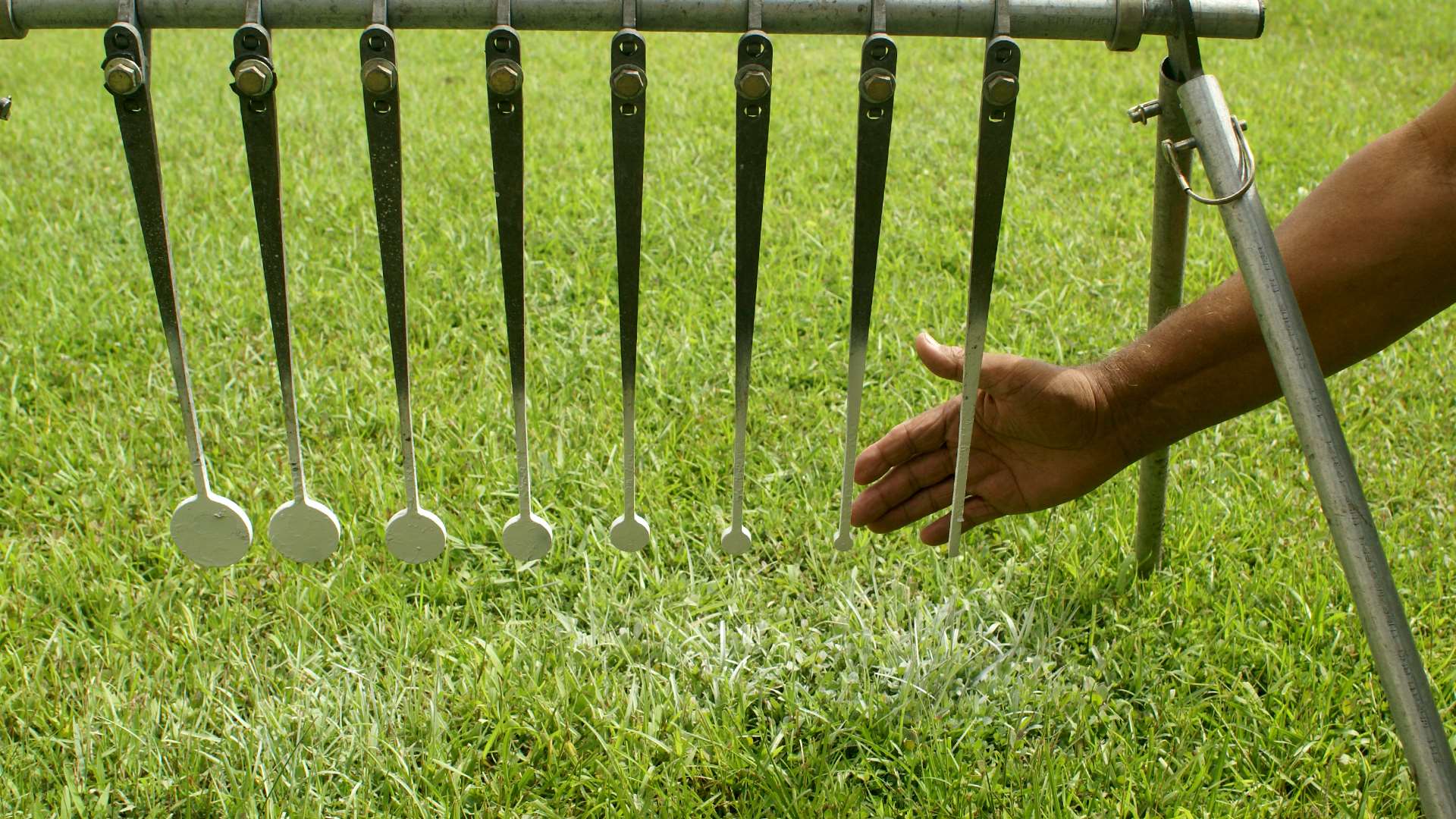
When my turn arrived, I loaded up some CenterX, set up my rest and sighted on the targets. From left to right it was eight rounds bang-spin: not a miss. The 1/4-inch plate was really an eye strain at 12x, but that was bang-spin as well. With two rounds left in the magazine, I engaged the 1/4-inch plate twice and hit it once. My eyes were swimming by then, but the little Ruger was doing as well as some of the high-dollar custom guns I had watched.
By this time there were almost 350 rounds through the gun without cleaning, but there had not been a single malfunction of any type with any of the four loads. I didn’t have a 50-yard sporter rifle match within a reasonable period of time. But I imagine this little featherweight would have no trouble with the 1¾-inch-diameter 10-ring.
While Steel Challenge is an obvious place for this gun, stopping there is a mistake. This new Ruger 10/22 Carbon Fiber may be a lightweight, but when it comes to accuracy it packs a heavyweight punch.