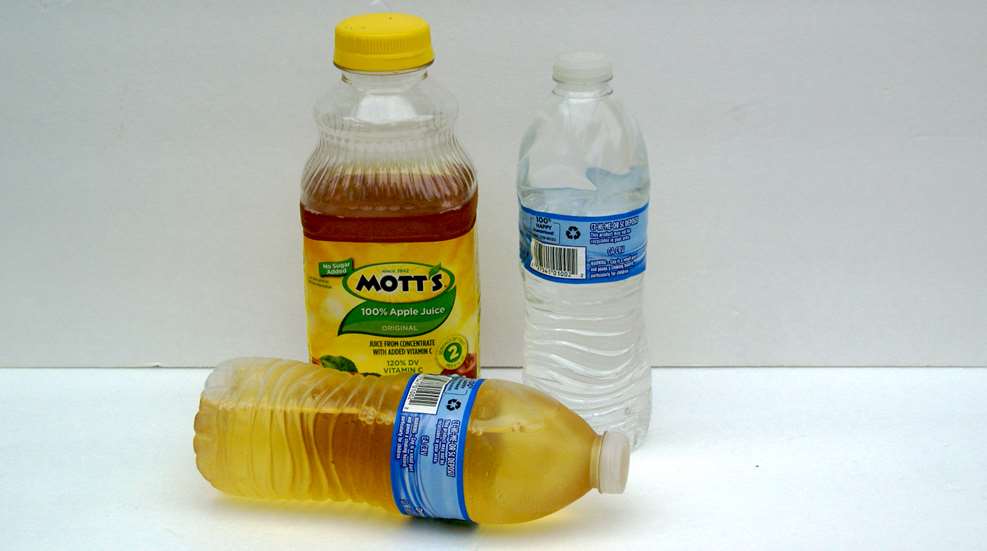
Above: A mixture of fruit juice and water is an effective way to stay hydrated, and take in some energy producing glucose at the same time.
No matter how well a shooter prepares their body before a match, if they don't take care of it during the match their performance will suffer. An important factor is maintaining the right internal body water volume. Dehydration occurs when the body loses more fluid than it takes in. And it doesn't have to be a scorching summer day for that to happen. One can become dehydrated on a skiing trip, or shooting a match in 40 degree weather.
“Every time you breathe, sweat, urinate or defecate you are losing body fluids, and also salts,” says Dr. Miguel Tepedino, who in addition to serving as the Chief of Staff at Florida's Lake City Medical Center is also a former triathlete who now spends his recreational time as a competitive shooter in IDPA and USPSA. “If you lose too much the body will go out of balance. The body becomes fatigued and sluggish, with a general feeling of weakness, a lack of concentration, and even confusion. With any degree of dehydration, even a minor level, the individual will experience a functional decrease in their mental performance and reaction time; which certainly doesn't help a shooter during a match.”
It's not difficult to recognize when dehydration is occurring. If you feel thirsty you're already in the beginning stages. Savvy athletes will drink before they become thirsty. Trips to the Porta Potty are another indication.
“Your urine color is a very important indicator,” says Dr. Tepedino. “If you're peeing orange colored urine you are already in big trouble and need to take immediate action. This is a serious sign of dehydration, and in the advanced stages it can result in fainting spells, heart palpitations, and even acute renal failure. Dark yellow urine means you are definitely dehydrated and need to get fluids in right now.”
“To maintain proper hydration,” he continues, “you want your urine to be, at worst, a pale yellow color. The best is relatively clear urine, and if that changes to a darker color you have waited too long to maintain hydration and need to increase your fluid intake.”
Properly hydrating can begin the night before the match. Increasing the normal amount of water you drink before bed can help saturate the body with fluids. And there are some fluids that should be avoided. Alcohol is a diuretic and can promote a loss of body fluids. Moderation is recommended.
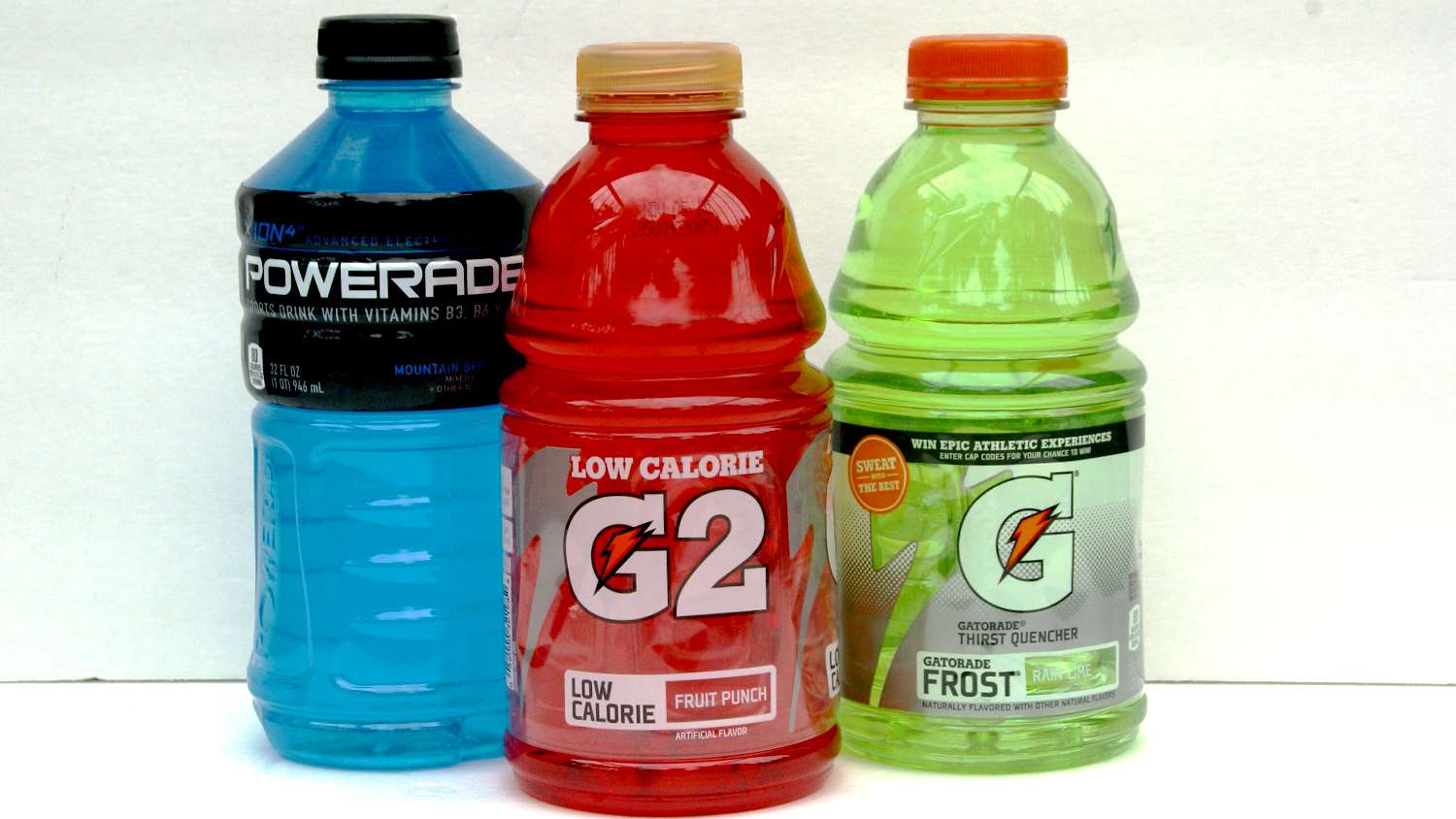
Maintaining proper hydration does involve replacing the salts (electrolytes) that are lost. Those electrolytes are needed, but only if they have been expended. Sports drinks, like Gatorade and Power Aide, deliver those electrolytes, but sometimes in volumes that are not needed and an excess can cause performance problems. Gatorade was developed at the University of Florida, by putting athletes on a treadmill for a vigorous workout and then collecting their sweat. That was analyzed and found to contain potassium, sodium, and other electrolytes, in addition to water. Gatorade was created to replace those and sugar was added to improve the flavor. Power Aide came along later, with similar ingredients.
“Some sports drinks contain a lot of processed sugar,” Dr. Tepedino notes, “which can create an imbalance within the body unless it is properly utilized and absorbed. There is a big difference between someone who is involved in strenuous activities that burn over 5000 calories a day, and someone in a less strenuous activity like a shooting match. Their intake needs are not the same. Some people load up on these sports drinks that they don't normally drink, with all the extra processed sugar that they don't normally take in, and are not even burning. That can throw their system out of whack, hurt their performance, and may send them running to a bathroom.”
“If I was going hard core in a marathon, pushing my body to the limit, and burning 5000-plus calories a day I would use Gatorade or Power Aide,” he adds. “But for a less strenuous event, like a shooting competition, I would favor Gatorade G2. This is, basically, a 50/50 mix of Gatorade and water; kind of a 'Gatorade Light', with much less processed sugar. It would fit those intake needs.”
Shooters can make this up themselves by mixing Gatorade with water at a 30 to 50 percent ratio. Another excellent option for the moderate exertion levels of a shooting competition—and one recommended by many sports dieticians, as well as Dr. Tepedino—is a mixture of fruit juice and water in a 30 to 50 percent ratio.
Popular juices include apple, cranberry, or orange juice. This not only provides the internal fluid volume the body requires, but the fruit juices add natural sugars (glucose) which are quickly absorbed as energy in a similar manner to snacking on fruit. Or, one can rely on plain water. During a fall Florida match I shot with Dr. Tepedino I watched him drink a 16-ounce bottle of water between each stage.
“Your urine color is key to your level of hydration,” he notes, “and for most normally healthy individuals that can be maintained by nothing more than water intake. If you start experiencing muscle cramps you do need some electrolytes, but water volume within the body is still the key to proper hydration.”
There are a number of options to maintaining hydration. And they should be treated in the same manner as your gun and ammunition. Find out how they work for you before the match. Don't wait for match day to slug down a lot of sports drinks if you don't normally drink them and don't know what affect they will have on your body.
It makes little difference whether you're trying to squeeze X’s out of the 50-yard Conventional Pistol target, in a tight prone position on the 600-yard line at Camp Perry, or running and gunning through a USPSA stage—proper hydration is a key to match performance.
You need to stay wet to win.
Readers may also want to check out author Chris Christian’s previous article in conjunction with Dr. Miguel Tepedino on beating the mid-match crash.