** When you buy products through the links on our site, we may earn a commission that supports NRA's mission to protect, preserve and defend the Second Amendment. **
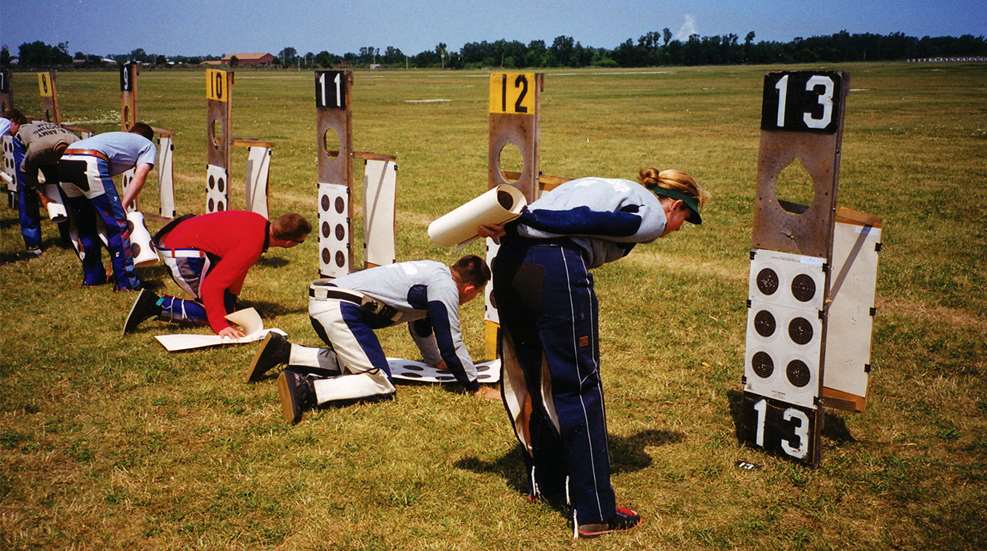
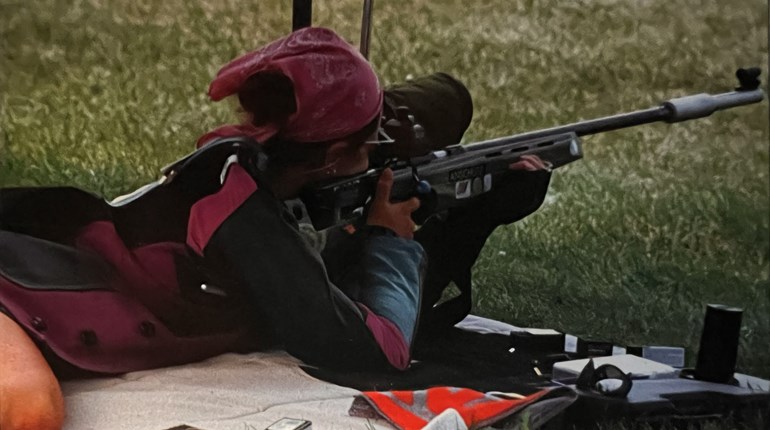
In smallbore rifle shooting, targets are placed at distances of 50 yards, 50 meters (54.7 yards) and 100 yards. The scoring rings of the 50- and 100-yard targets are proportional; at 100 yards the 10-ring is two inches in diameter. The scoring rings at 50 meters are somewhat smaller than those at 50 yards. When firing of a 20-shot stage is complete, and line safety is secured, a sort of mass migration occurs as shooters go forward to change the target of the competitor on their right—after careful inspection of their own targets (target inspection at Camp Perry is pictured above).
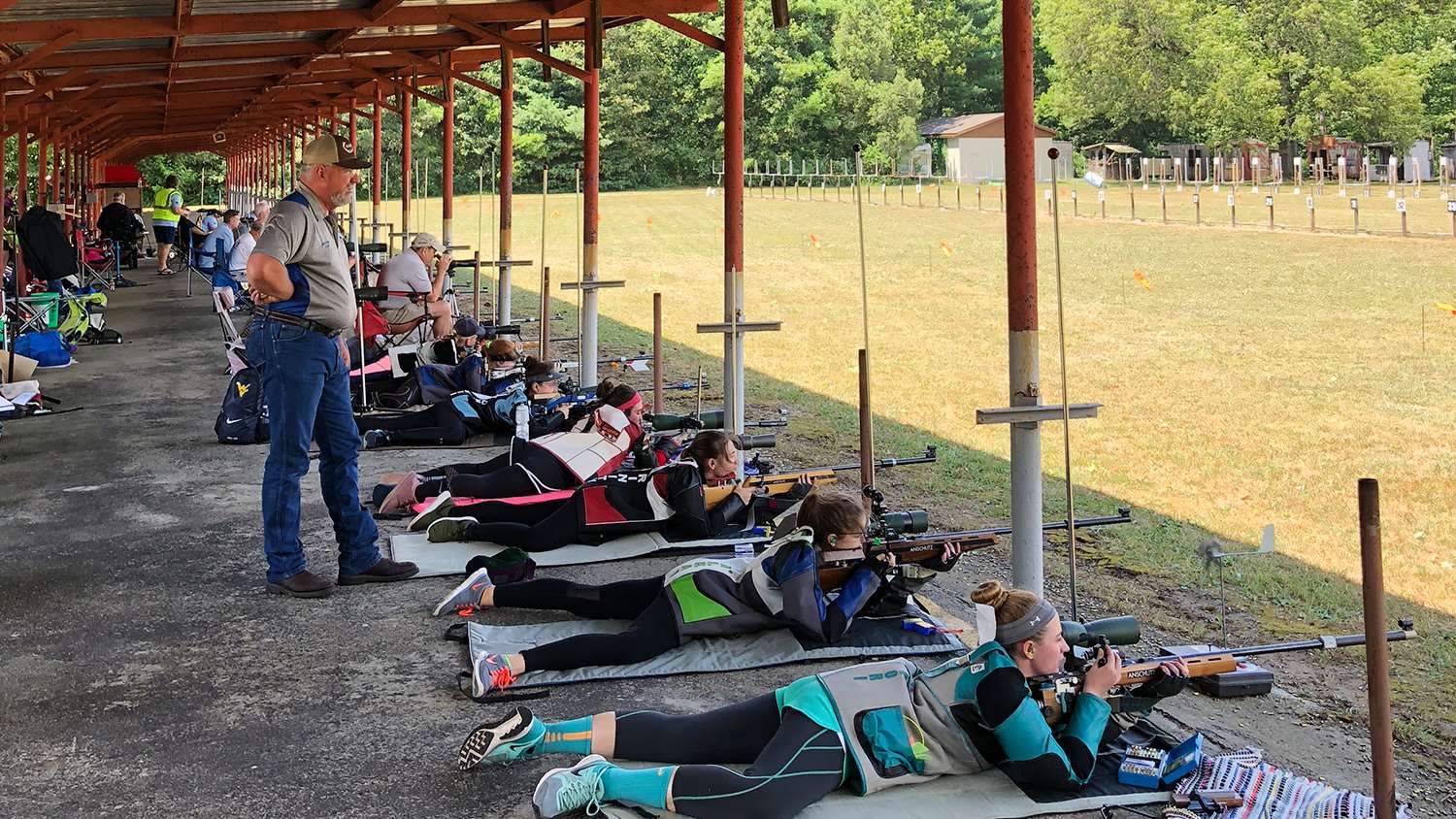
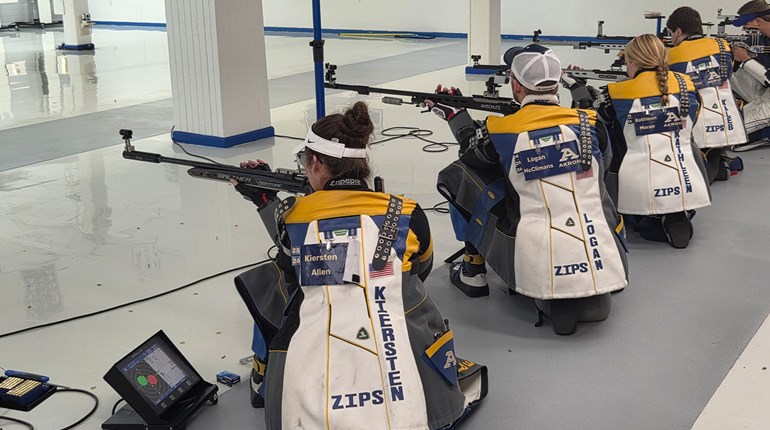
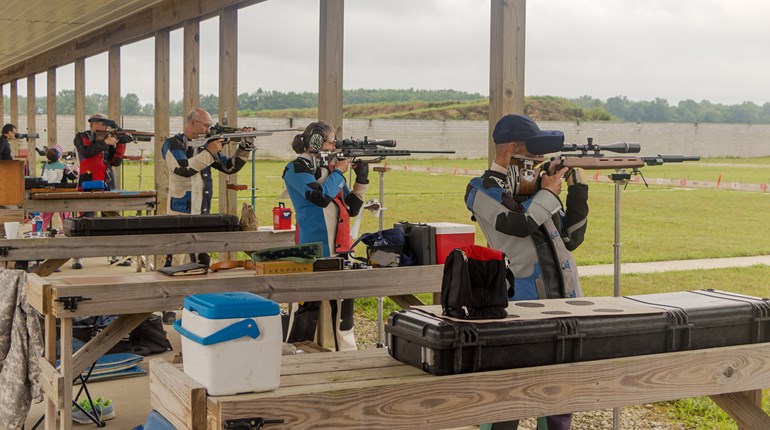
Because of all the shooting, whether prone or position, is fired from one fixed firing line in smallbore competition, it is possible to provide a cover for that line. Beginning in 1987, a removable tarp cover was a welcome addition to smallbore shooting at Camp Perry. The smallbore line at Camp Perry stretched from Rodriguez range to Young range (and occasionally onto Viale range). A few years back, when the NRA National Smallbore Rifle Championships moved to Bristol, IN, the new facility Chief Wa-Ke'De Range already had a permanently cover already in place over all firing points along the line.
Target collection is in numerical order by range personnel who take the targets away to be scored by the statistical office. Competitors then hang fresh record and backing targets (useful for assigning crossfires but also occasionally handy for detecting "doubles") and return to the line and prepare to do it all over again in the firing of the next stage or match. After scores are posted competitors have a challenge time in which they may challenge their scores. At the expiration of the challenge period the scores become final. Since smallbore shooting began at the National Matches in 1919 there have been a variety of target managing used, with the present system in place since the 1930s.
Covered smallbore firing points at the Wa-Ke'De Rifle Range during the 2018 NRA Smallbore Nationals
Because of all the shooting, whether prone or position, is fired from one fixed firing line in smallbore competition, it is possible to provide a cover for that line. Beginning in 1987, a removable tarp cover was a welcome addition to smallbore shooting at Camp Perry. The smallbore line at Camp Perry stretched from Rodriguez range to Young range (and occasionally onto Viale range). A few years back, when the NRA National Smallbore Rifle Championships moved to Bristol, IN, the new facility Chief Wa-Ke'De Range already had a permanently cover already in place over all firing points along the line.
Target collection is in numerical order by range personnel who take the targets away to be scored by the statistical office. Competitors then hang fresh record and backing targets (useful for assigning crossfires but also occasionally handy for detecting "doubles") and return to the line and prepare to do it all over again in the firing of the next stage or match. After scores are posted competitors have a challenge time in which they may challenge their scores. At the expiration of the challenge period the scores become final. Since smallbore shooting began at the National Matches in 1919 there have been a variety of target managing used, with the present system in place since the 1930s.
Most Popular