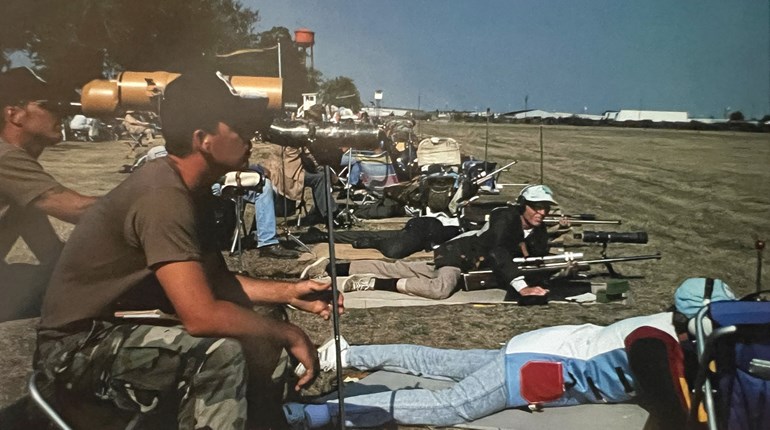
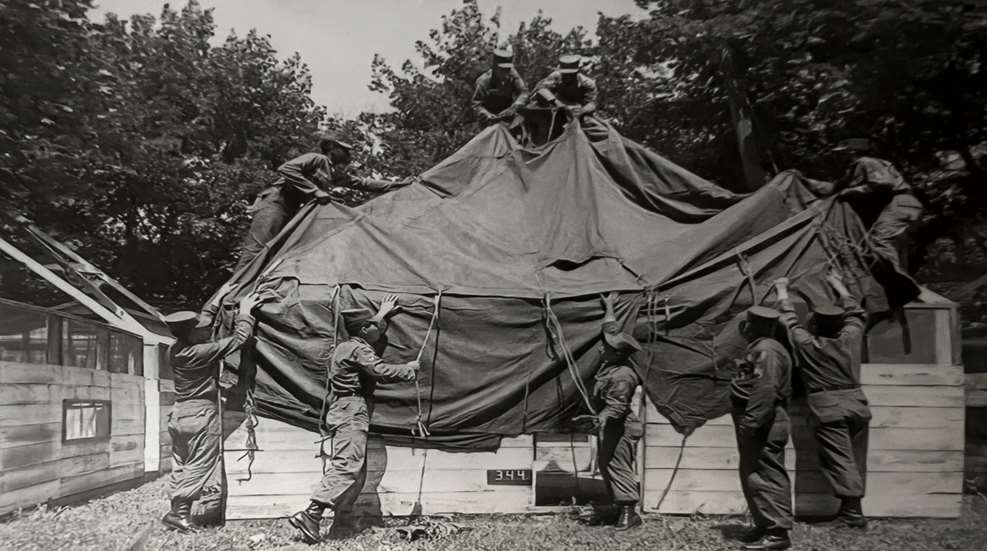
The 1962 National Matches marked the 10th consecutive held at Camp Perry since World War II and the most significant in terms of participation. At no other time had Camp Perry been the site of a complete National Match schedule for more than six straight years and it is hard not to think that the total firing attendance figure of 7,726 in 1962—an all-time high—was due to the consequent combination of program stability and momentum. Competitor entries during the 10 National Matches conducted from 1953 to 1962 rose steadily with a culminating attendance this year that practically quadrupled, making this the most considerable growth period in event history.
Col. Edward Crossman oversaw the schedule of events in the capacity of Match Director, and the change in title from Executive Officer served as a prelude to a number of other changes throughout the program. A renovated mess hall complete with acoustical ceiling tile featured taped music during meals and more awards in the form of trophy guns awaited competitors who pushed both housing and range capacities to the brink.
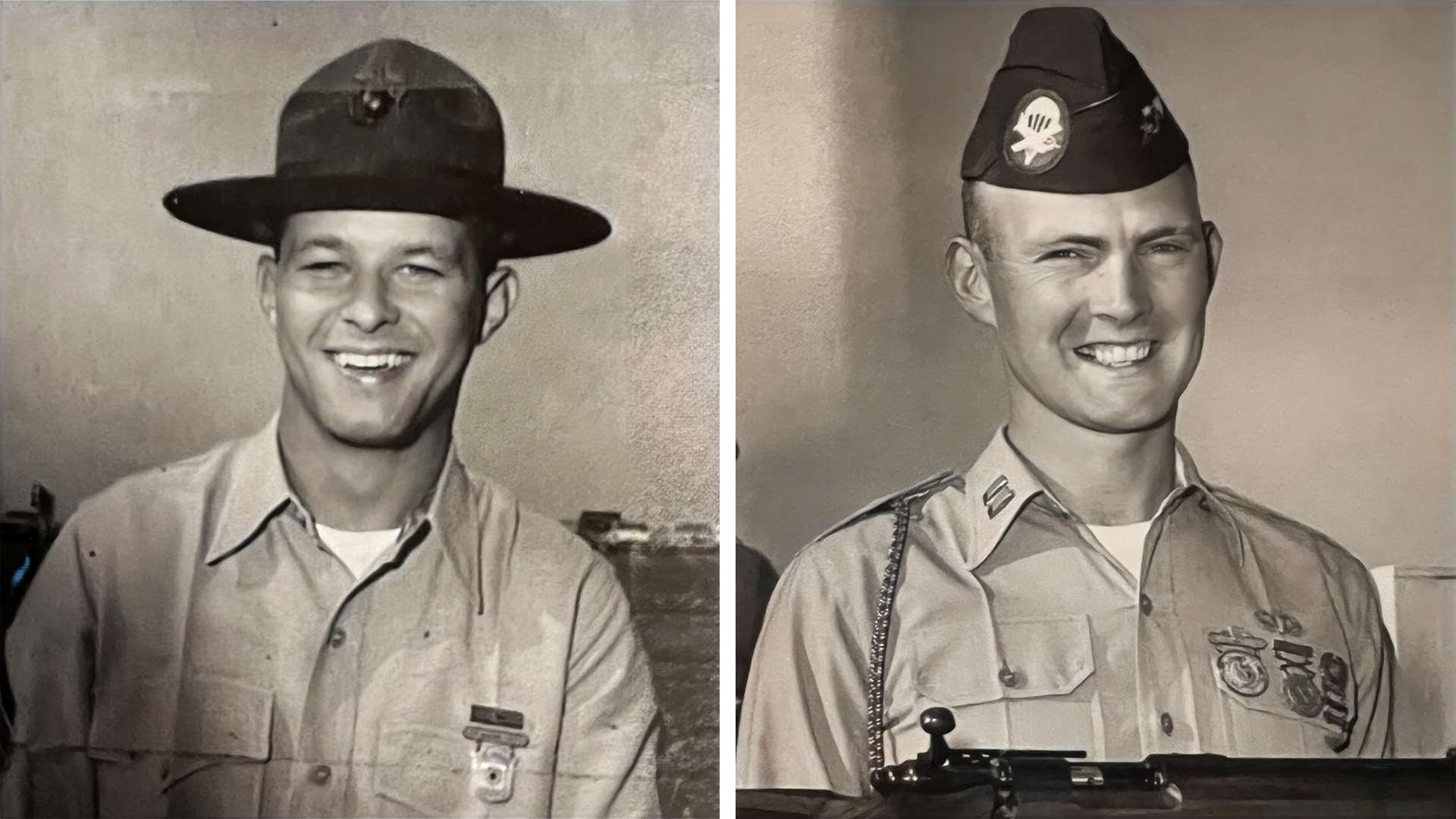
One aspect of the matches that remained constant, however, was the overall dominance of Army shooters and Sgt. 1st Class William Blankenship, Jr., got things started when he logged his third straight pistol title, thus becoming the second competitor (Harry Reeves was the first) to be named national pistol champion three consecutive times. Blankenship’s victory came after a .45 sub-aggregate win and a final score of 2633-128X, 12 more Xs than Navy Petty Officer Donald Hamilton in one of the closest championships ever. The other two sub-aggregates were also claimed by Army shooters (Sgt. 1st Class R.L. Cochran in .22; SP4 Robert Stocker in center fire), as were all three NRA team championships, two of which established National Match records.
The Army carried its commanding effort into the National Trophy matches as Staff Sgt. James McNally won the individual event, an honor he also earned in 1959. Team match laurels went to the Army Western Region squad, which succeeded in sustaining the momentum from its NRA team aggregate win the day prior. Notable in women’s pistol competition was the fact that Air Force Lt. Gail Liberty became the first service shooter to win the national title.
In smallbore, a trio of 1600-point aggregates again comprised the prone championship and it proved to be a close match that featured the likes of Army Lt. Presley Kendall, who first broke into the champion ranks as a junior in 1954, and Lawrence Wilkens, a wily Camp Perry veteran who first earned a spot on the Dewar Team in 1928. Kendall made his move for the title late in the metallic sight aggregate, which was won by William Summers of Akron, Ohio, and proceeded to win a couple of contests in the any-sight aggregate that eventually went to Wilkens. Kendall then went dry in the final 1600-point Prone Team Fund Aggregate and did not win a single match, but he still placed high enough to win, and with it the national championship, complete with the Critchfield Trophy, was his by a single point over Summers.
The contest to win the Frank Parson’s Trophy for the four-position championship got off to a quick start as Army Capt. Dan Puckel swept the metallic-sight matches. The any-sight matches were split between Puckel’s teammate Barry Trew and eventual junior champion Philip Bahrman of Arlington, Virginia, but it was the slow and steady performance of Army Capt. Tommy Pool that put him atop the field for the second straight time. Pool’s title defense marked the second time in the brief six-year history of the position championship that back-to-back wins were achieved. (Art Cook won in 1957 and 1958.)
For the fourth time in the last six National Matches, a service rifle score topped the entire field in the NRA high power championship. Marine Cpl. David Luke fired a 790-69V in an aggregate that was increased by a match this year for an 800-point possible. The additional contest was the Nevada Trophy Match, which was revamped from a team competition to a 30-shot event fired from 200, 300 and 600 yards.
Luke’s score was 10 points higher than bolt winner Earl Burton’s and both men captured one of the sub-aggregate titles, as Luke topped the President’s Match field and Burton won the Coast Artillery Trophy Match. Army Spc. Barbara Hile defended her women’s service rifle crown while Pauline Tubb of Canadian, Texas, garnered honors with the bolt rifle. Notable on the junior awards bulletin this year was young Lanny Bassham of Fort Niagara, New York, who took high honors in the category for service rifle and went on to capture his first Olympic medal—a silver in smallbore—10 years later. (In 1976, Bassham won gold in the same event.)
Army shooters continued the trend of frequent award podium appearances as Staff Sgt. Henry Edwards won the Leech, Sgt. 1st Class Chester Hamilton won the Wimbledon and team honors were captured in the Enlisted Men’s and Rumbold Trophy Matches. The Marines managed a victory in the Herrick but a National Trophy sweep was the Army’s yet again as wins in both rifle team events and in the individual contest (by Sgt. 1st Class Vernon Read) followed those posted earlier in the program by their pistol counterparts.
“Camp Perry, Ohio, a piece of real estate consisting of rifle ranges and military camp ground on the shore of Lake Erie, is an integral part of Americana.”
—The American Rifleman, October 1962
“DAMP PERRY”
Camp Perry is on the shore of Lake Erie and its flat, poorly drained land is just slightly above the lake level. Protracted rains can leave the ranges seriously flooded.
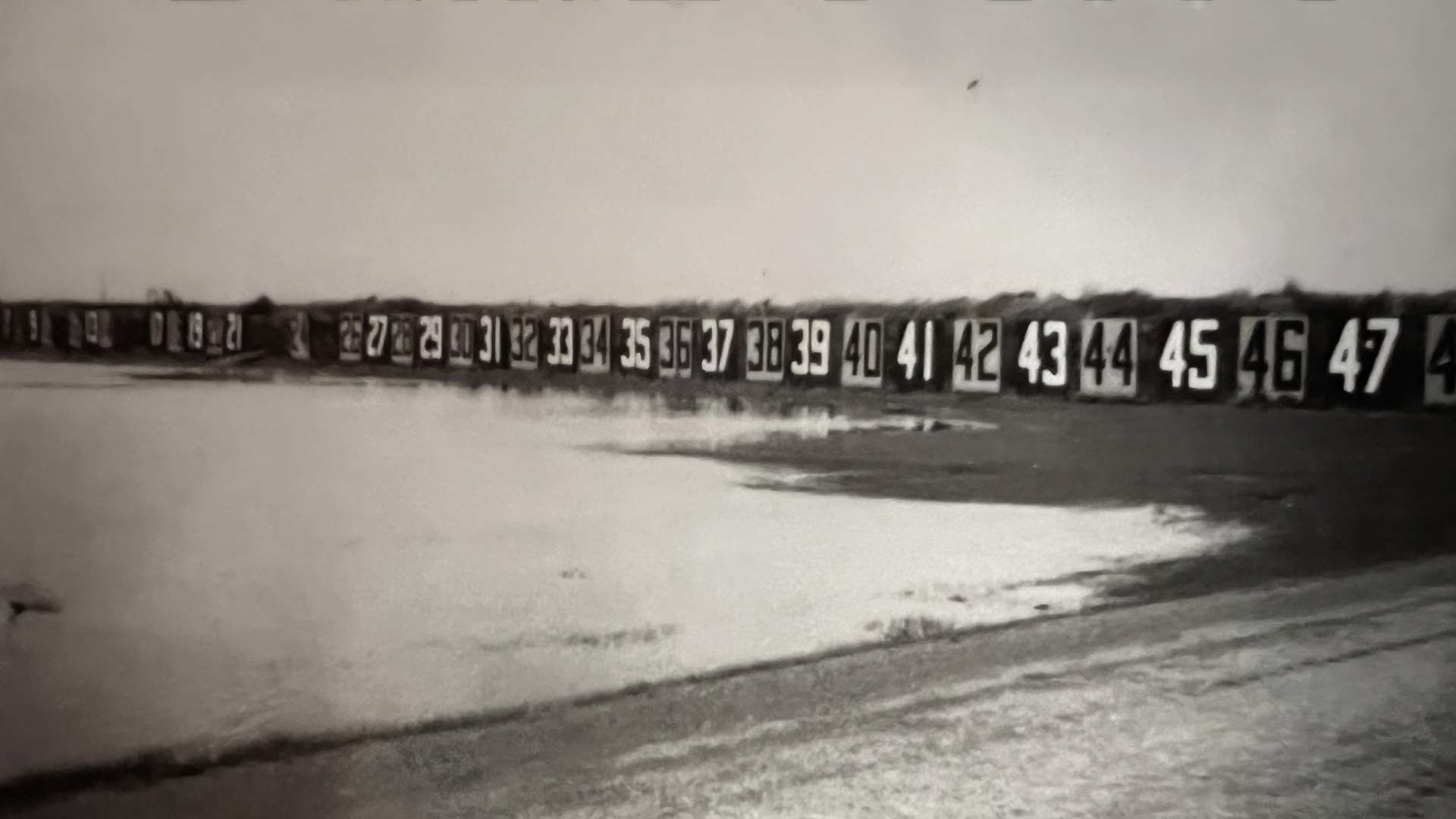
Many years ago, the NRA ordered certificate award holders for use at Camp Perry, they were to be imprinted “Camp Perry” to allow multiple year use. Owing to a misprint they came with the imprint “Damp Perry.” They were useless for their intended purpose.
The arrival of the misprinted folders coincided with one of the floods and photographs of the high water were collected in the folders and sold for several years in the NRA store.
“Damp Perry” may have been a misprint but nonetheless there are times when it is an appropriate description.
Most Popular