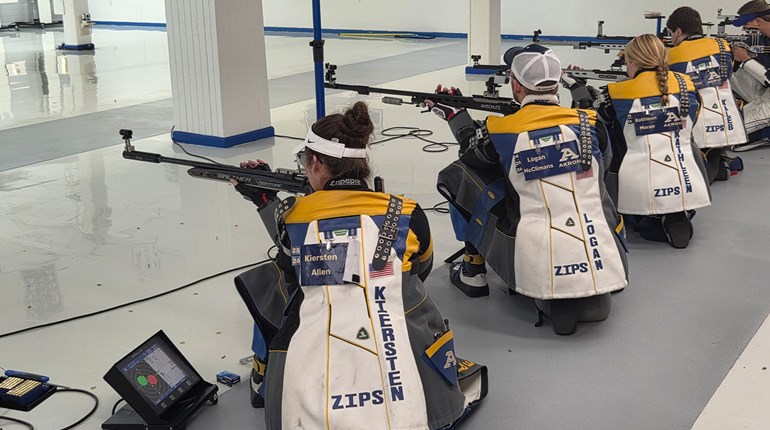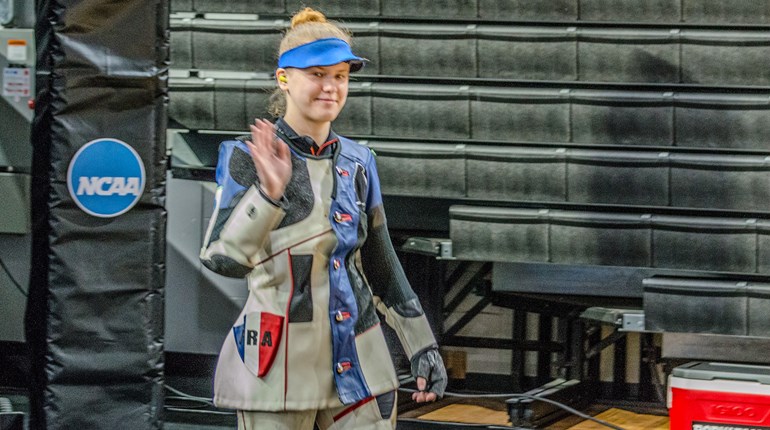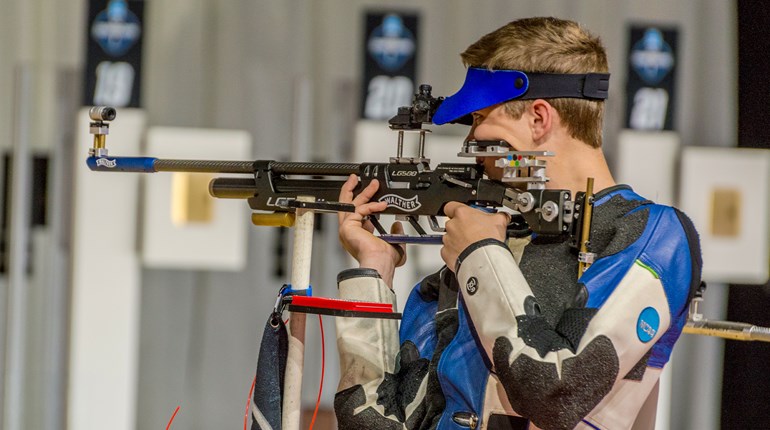

The Rogers Convention Center gives up nothing to weather, wind or light. What it offers instead is a hall in northwest Arkansas, four firing positions and a scoring ring roughly the width of the BB sent to find it—conditions that strip away every excuse and leave only patience. Over three days in July, junior competition shooters aged 8 to 15 tested theirs at the 59th Daisy National BB Gun Championship, and none held steadier than Violet Combs.
Combs, shooting for Walton County, put up 390 of a possible 400 across the four positions—98 prone, 95 standing, 99 sitting and 98 kneeling—then answered all 100 points of the written safety and rules examination correctly. Her 490-23X aggregate led a field that ran 251 deep.
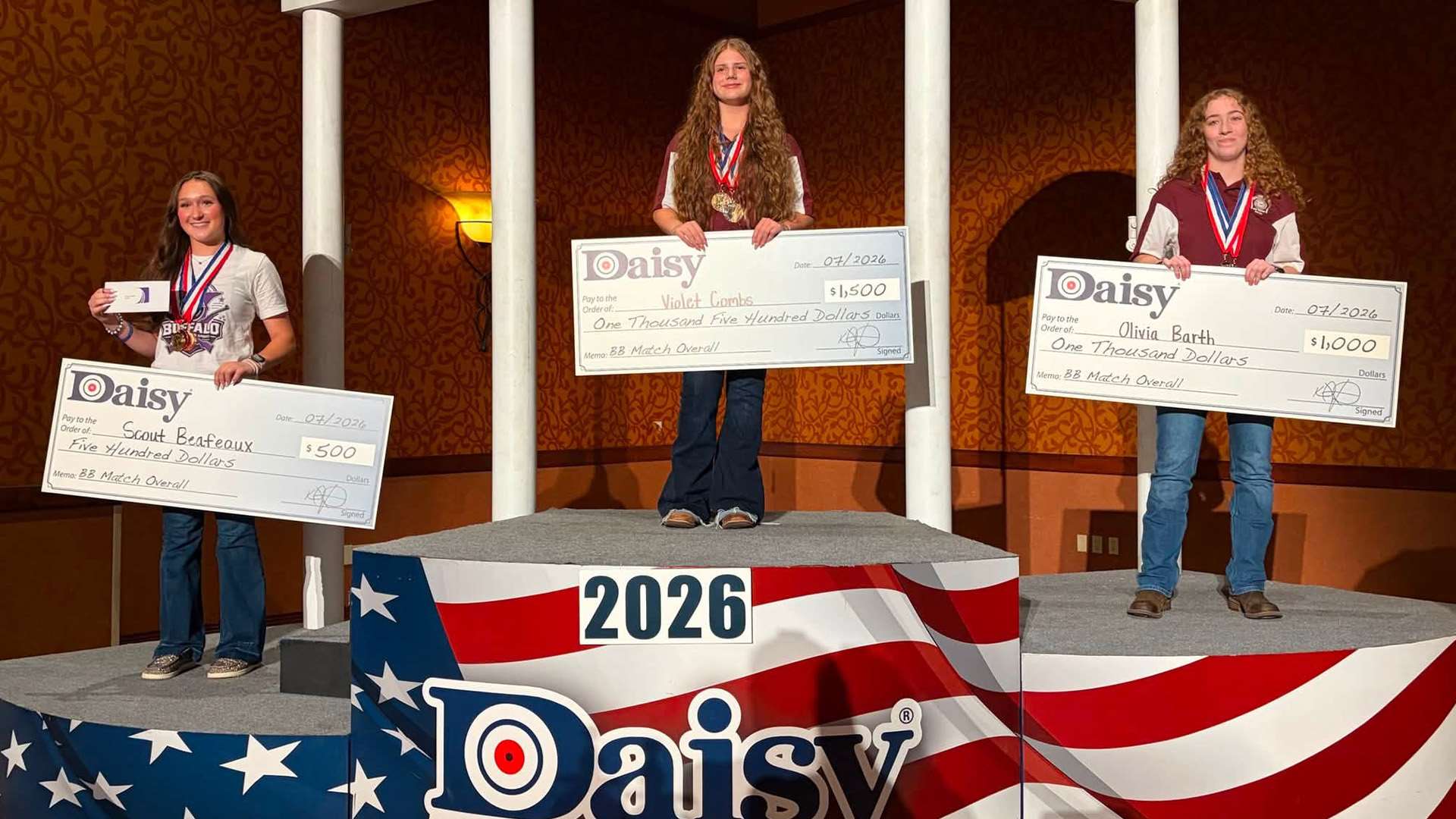
Behind Combs, the margins turned microscopic. Olivia Barth took second at 487-19X, also on a perfect test, with a clean 100-5X sitting. Scout Beaufeaux and Aubrey Fendley then tied at 485 apiece and had to be separated by X-count, Beaufeaux taking third on 25 Xs to Fendley’s 19. All three shooters on the podium were girls, and all three came off it holding scholarship checks—$1,500 for Combs, $1,000 for Barth and $500 for Beaufeaux.
Beaufeaux’s card is worth a longer look, because it explains what this championship actually measures. On the firing line she was very nearly the best shooter in Rogers, posting 389-25X across the four positions—a single point off Combs and with two more Xs than the champion managed. Then came the written test, where she scored 96. Four points on paper, and a national title changed hands.
That relationship between marksmanship and the classroom runs through every result in the bulletin. Competitors qualify through their state championships, complete a 10-hour curriculum before they ever load a BB, and sit for a written examination drawn from the NRA rulebook that carries a full quarter of the available score.
Nine of the 251 shooters answered it perfectly. Five of them wore the same team shirt.
Walton County team members each posted a 100, giving the team a flawless 500 out of 500 on the written portion—the only such score in the match. Add 1928 of a possible 2000 from the line and Walton County finished at 2428-93X against a maximum of 2500. All five of its shooters placed inside the individual top eight.
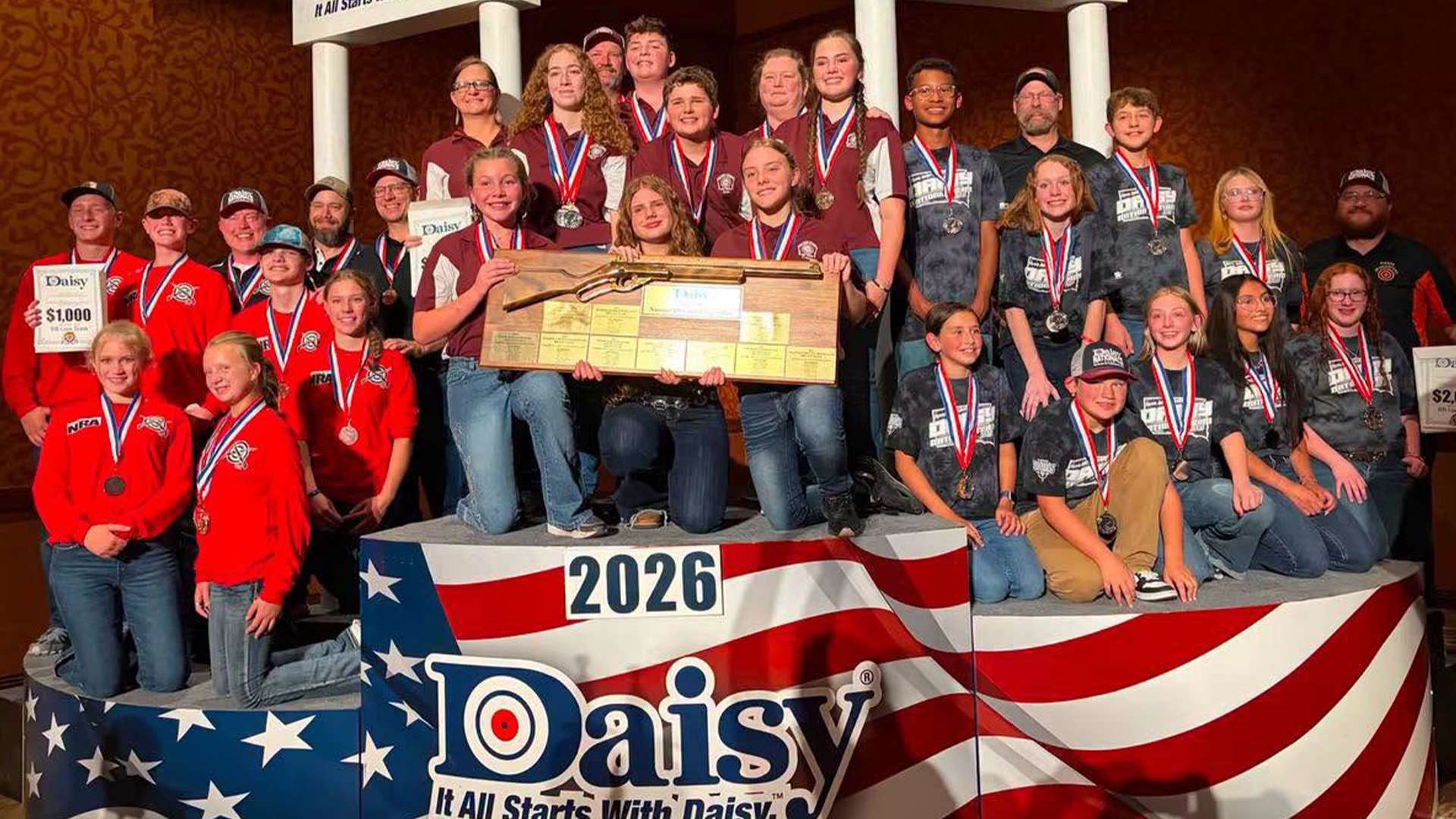
No one got close. Pierre Junior Shooters took second at 2371-78X, 57 points back, anchored by Gordon Zilverberg’s seventh-place 482-18X. Gallatin Valley Sharp Shooters claimed third at 2357-74X behind Brock Foth, whose 483-23X was good for sixth individually.
One Point, Two Ways
Roberts County will spend a while with the third-place math. Its shooters actually outfired Gallatin Valley on the line, 1872-80X to 1871-74X—a one-point edge earned across 200 shots. On the written test, Gallatin Valley answered back 486 to 484. Final margin: Gallatin Valley by one, 2357 to 2356.
Two points on paper, reversed by one on the range, decided a national podium.
Ties shaped the middle of the standings, too. Gillespie Co 4-H Shooting Sports and RL/PT 4-H Straight Shooters both finished 2329, split by X-count for seventh and eighth. Humboldt Sharpshooters and Middletown Marksmen both landed on 2313. Deeper still, Norton County, Central Kansas District and Union County 4-H Club all posted 2305, a three-way knot resolved on Xs and position totals.
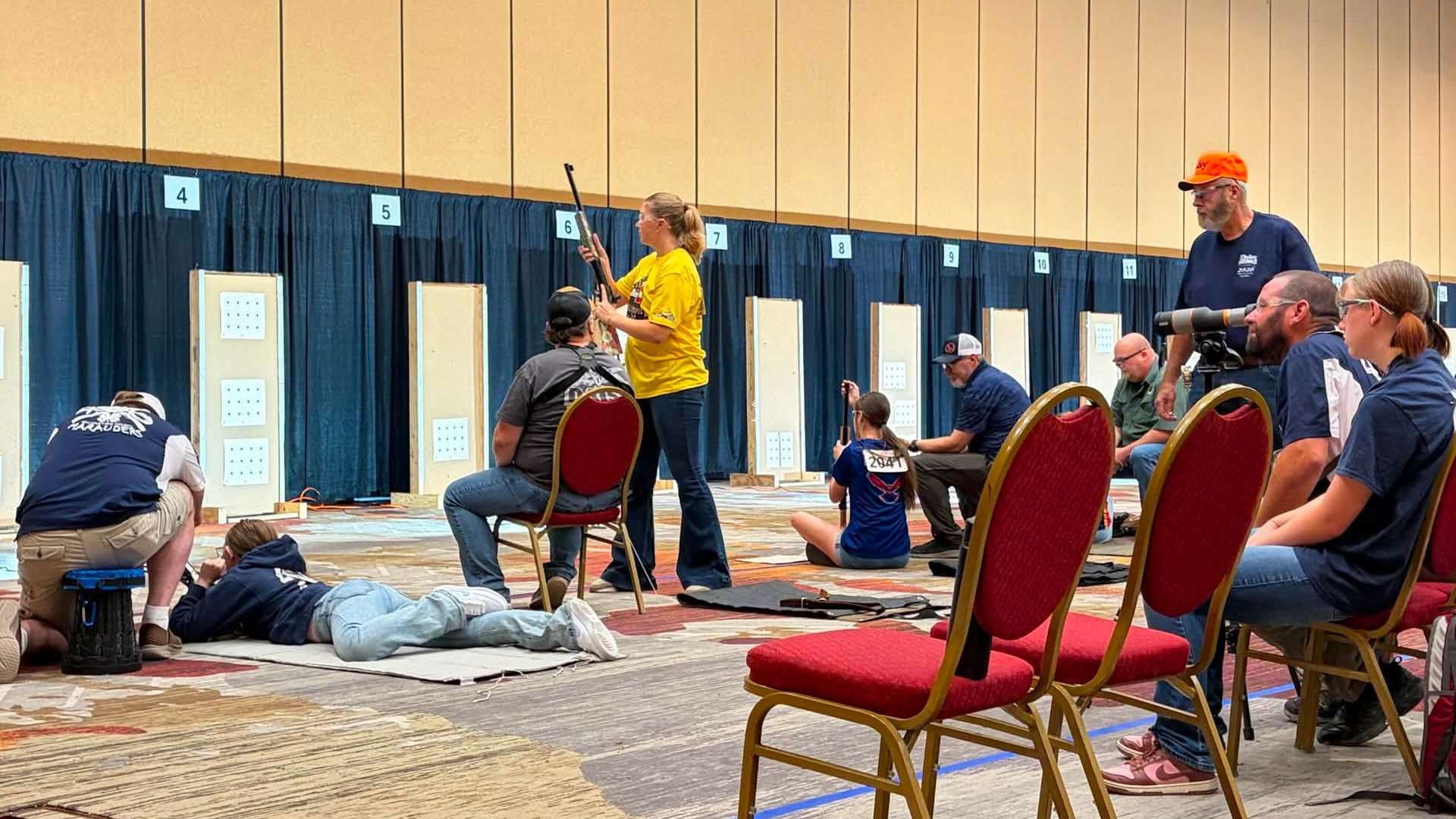
Across 251 competitors firing four positions apiece, exactly six position targets came back perfect. Four were prone: Aubrey Fendley (100-5X), Vera Bahadori (100-6X), Harlee Sellens (100-4X) and Garrett Border, whose 100-9X was the tightest single card of the championship. Sitting produced the other two, from Olivia Barth (100-5X) and Scout Beaufeaux (100-9X).
Standing yielded nothing at all. Nobody cleaned it, and the high score for the discipline belonged to Jenna Oman of Buffalo County 4-H at 97-5X—a number that looks modest next to the prone column and represents, in context, one of the better pieces of shooting anyone did all week.
Kneeling topped out at 98, reached by Violet Combs, Maggie Bryant and Ruger Pelster.
Behind the Firing Line
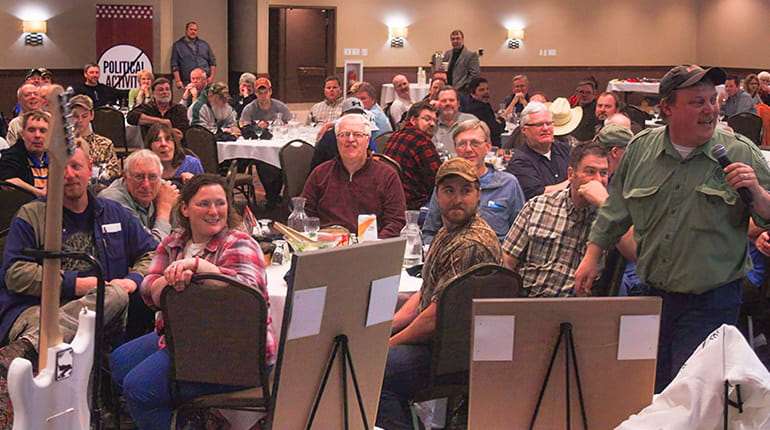
NRA First Vice President Mark Vaughan addressed the Opening Ceremony and drew a warm reception from a hall full of competitors, coaches and parents. Statistical operations ran on laptops, scanners and printers upgraded through NRA support over the past two seasons, a quiet investment that shows up in the speed with which 251 individual cards and 51 team aggregates reached the bulletin board.
Two of the people reading those cards were honored during the week. Mary Furr, the championship’s chief statistical officer, and Clyde Furr, match referee, were inducted into the Daisy Hall of Fame in their 21st year volunteering at the match. Both are in Ohio this week for the NRA National Smallbore Rifle Championship, where Mary again serves as chief statistical officer and Clyde as chief range officer.
Full individual and team results are posted through the Daisy Nationals website.
Most Popular