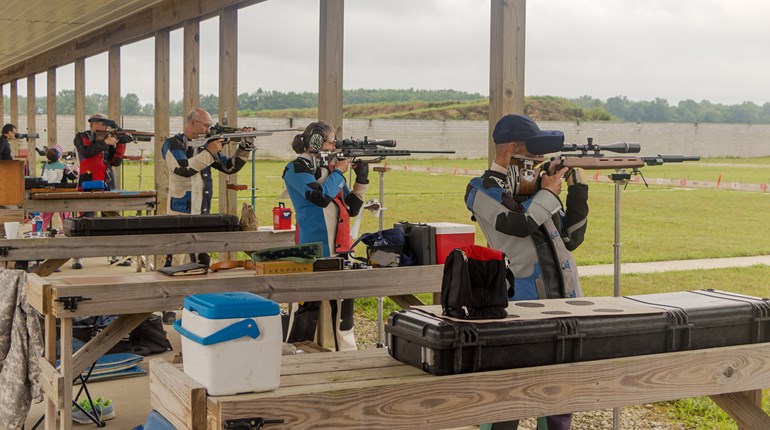
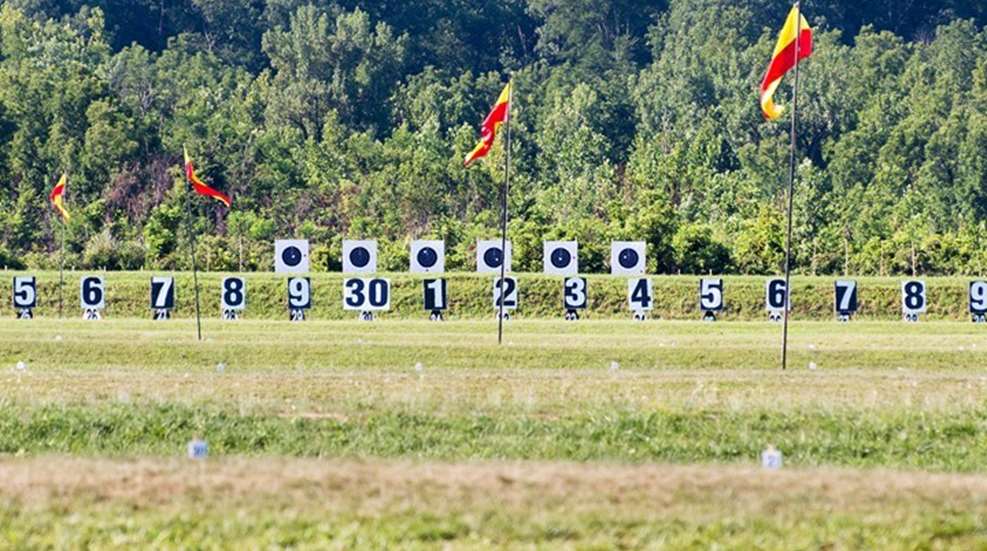
Wind is an ever-present challenge in outdoor shooting and if you compete in the National Matches at Camp Atterbury or Camp Perry, sooner or later (probably very soon) you will have to deal with it. Wind does two things to the aspiring marksman: it blows the shooter around and it moves the bullet on its way to the target. Here, we are going to address the second effect, the one on the bullet.
There are several ways to "read" the wind; watching the wind flags is one; most ranges have them. Watching the mirage is another—the sun heats the ground causing the warm air closest to the ground to rise and create a swimming effect that flows, quickly or slowly, depending on the wind speed and direction, giving a handle on the wind which can be correlated with the location of the shot on the target. Other ways have a measure of desperation e.g., chasing the last shot. And these are the least dependable methods.
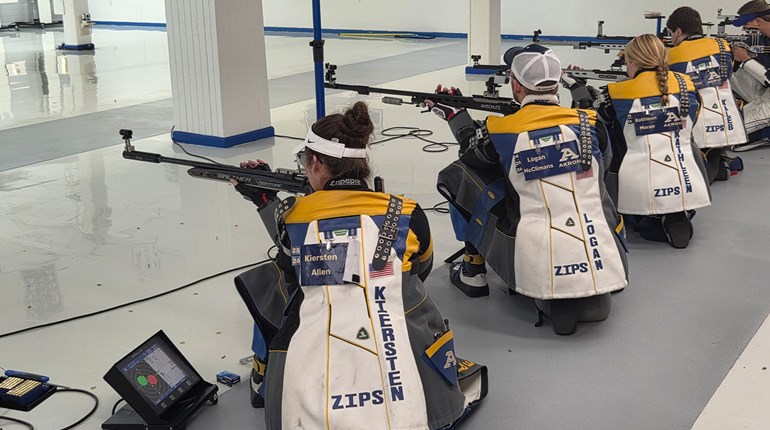
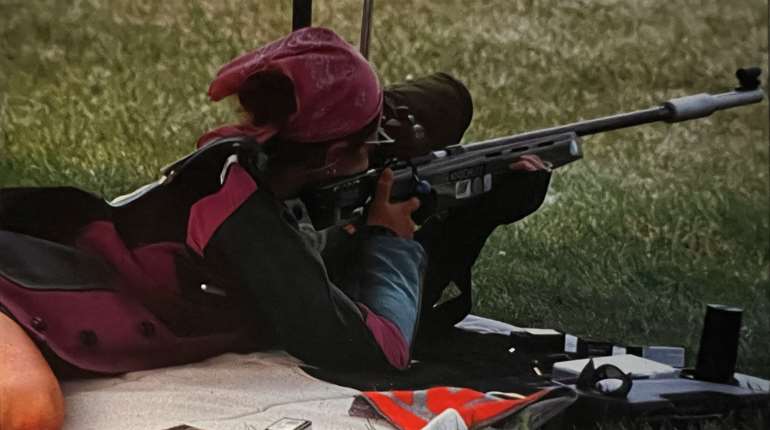
Smallbore shooters have it relatively easy because, with unlimited sighting shots, the shooter can test his or her guess on the wind's effect with a sighter. The innate perversity of the universe often makes it true that the sighter will be a 10 and the following record shot will be a nine.
High power shooters have it harder; not only are they limited to two sighting shots but those two must be taken (and scored) at the beginning of the match so the wind's effect must be evaluated (or "doped") for each record shot. When conditions are changing rapidly it is quite a challenge, so high power shooters must know their rifle's "zero" (the no-wind sight setting that puts shots in the X-ring) and must apply the appropriate sight correction for the wind for each shot. Most high power shooters keep a score (or data) book in which these sight settings are recorded, shot by shot. Otherwise, you can become hopelessly befuddled by the end of a difficult string as you move the sight to and fro.
Sometimes, though, the simplest way is best.
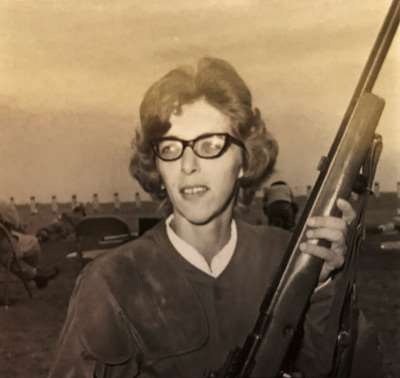
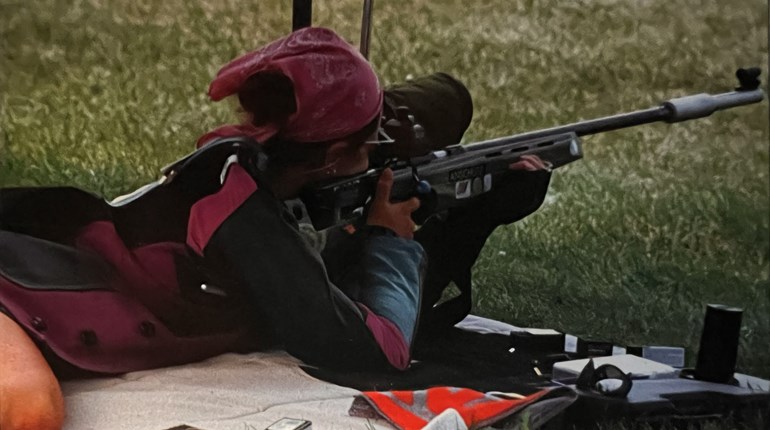
In 1963, Elizabeth Espointour shot an M1 in the Leech Cup match (20 shots at 1,000 yards with metallic sights). Conditions were tricky and experienced shooters were regularly adjusting sights for the conditions. Liz qualified for the shoot-off. (Although she was an outstanding position and prone smallbore marksman, she was then new to high power.) The shoot-off for the Leech (and the Wimbledon) takes the high scorer from each relay in each category with both service and match rifles and they start over from scratch, all on the line at the same time, with the high shoot-off score winning the match.
Knowing Liz's relative inexperience at high power, a couple of the military shooters took her aside before the shoot-off to give her presumably much-needed advice.
"May we see your score book?" they asked.
"Sure, here," Liz replied.
Inspecting her entries in the book they said, "You didn't record your sight changes; you should always enter your sight changes."
"Sure I did," she replied. "There, see," pointing to the single, lonesome sight change she had made.
"You made only one sight change in the whole match?" was the incredulous response. "What did you do about the wind?"
"Well, I just waited until I felt the wind blowing the same way on my face and then I'd shoot," was her quick reply.
Her coaches were astonished and dumbfounded but finally concluded that she'd probably do okay in the shoot-off.
Unfortunately Liz didn't win the Leech that year but her real achievement was in making the shoot-off—a major accomplishment then as now, and she did it the simplest way possible.
Sometimes simple is best.
See more: Excellence in Competition Rifle: Then and Now