
“1992 has been among the finest years in recent memory … with a great cross-section of the population … the military, civilians and reserves all united and showing pride and patriotism.”
—DCM Director Col. Paul Cullinane, Jr., in Shooting Sports USA, November 1992
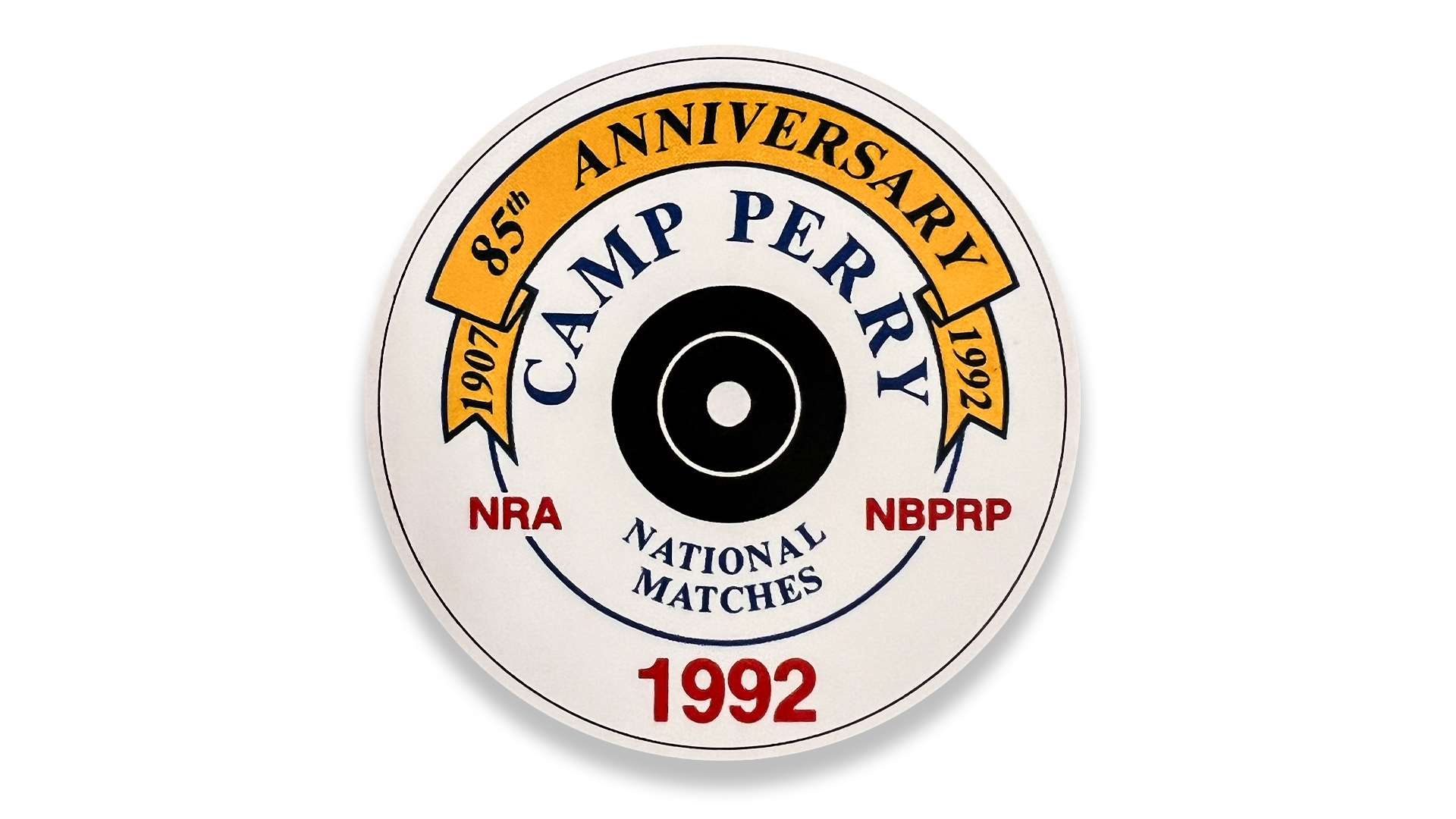
The anniversary that marked 85 years since Camp Perry first hosted the National Matches was not one the weather gods wanted to miss. After all, the event’s history is riddled with episodes of less than ideal climatic conditions and 1992 was no different as rain appeared throughout the program. But the environmental deities went a step further this time around, dispatching a tornado that forced the temporary evacuation of pistol competitors and match personnel from their rooms the evening before the Board matches were fired.
The unsettled weather did not disrupt the pistol schedule, nor did it sidetrack the commanding Marine presence during this year’s opening phase. After being blanked in the four .22 matches, Marines came to the forefront in six of the remaining eight contests that determine the NRA National Pistol Championship.
When it was over, Sgt. Mario Lozoya, who won the service title in 1991, and Cpl. Brian Zins stood side by side on the podium, having finished first and second, respectively. Lozoya fired a 2657-147X, which included a National Match record score of 891-57X in the .45 Championship, to become just the third Marine in National Match history and the first in more than two decades to be named national champion. (Bill McMillan won in 1957 and Frank Higginson won in 1970).
Zins topped the centerfire field and earned the Clarke Trophy on his way to a 2655-142X. And perhaps on a mission to prove that Marines were indeed adept with .22s, Zins provided the high score on the winning 1992 Mayleigh Cup effort. Additionally, Ruby Fox earned her 10th women’s title while John Bickar dominated the junior set and Don Hamilton, possessor of the highest score ever fired at the NRA National Pistol Championships (2668 in 1969), topped the senior class.
The USMC charge continued through the Board matches when Lozoya won the President’s Match and Gunnery Sgt. Mitchell Reed took National Trophy Individual honors, with both contributing to the win in the National Trophy Team Match.
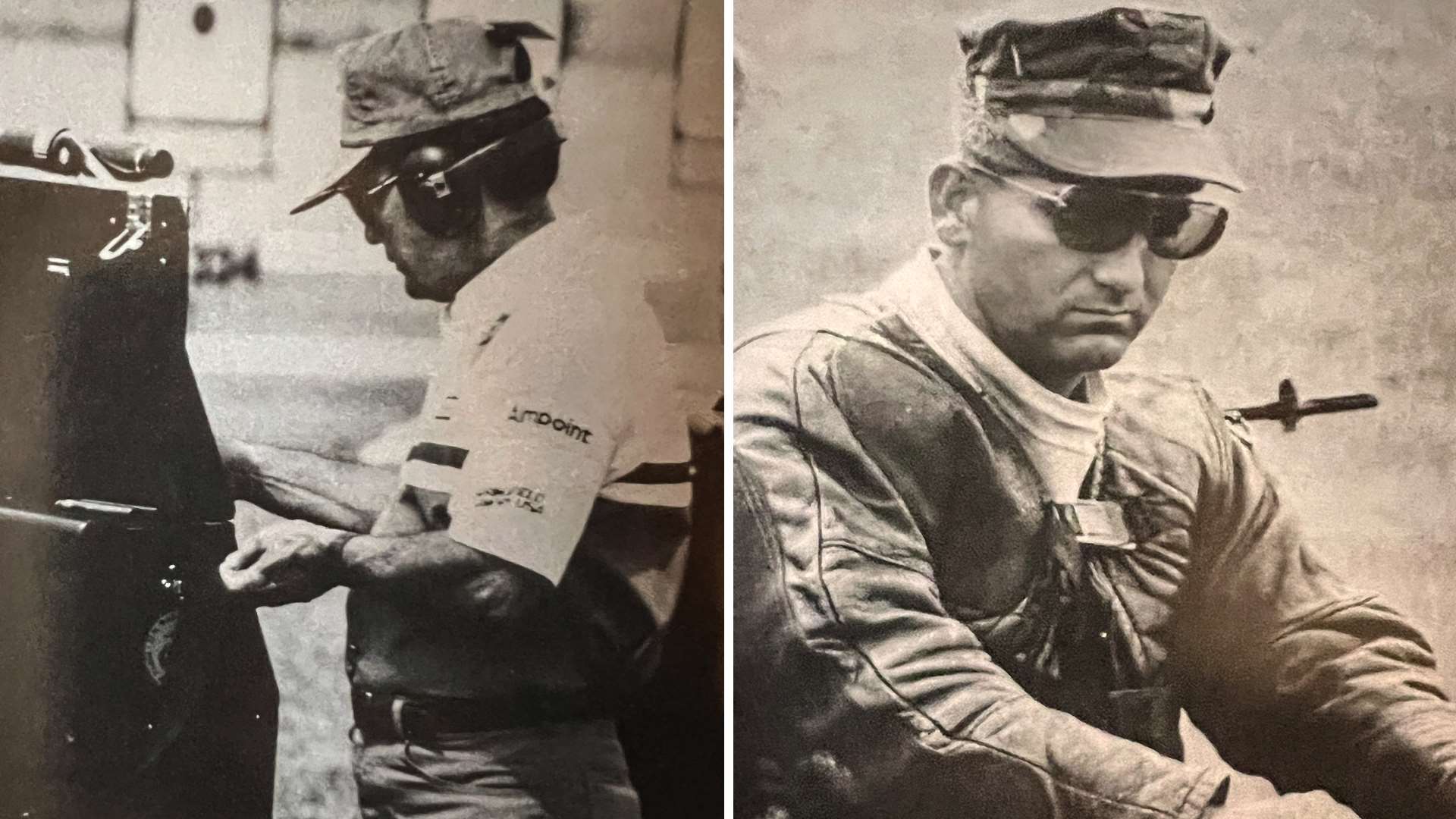
That the 1992 summer matches coincided with the Olympic Games did not keep Darius Young from competing at the National Matches, where he finished third overall, before departing to join the U.S. Pistol Team in Barcelona, Spain. By the time the national smallbore championships got underway, however, U.S. Shooting Team Executive Director Lones Wigger, Jr., was still stateside —at Perry—to defend his position title. Having done all that was possible to prepare his Olympic shooters, Wigger the international veteran said adios, communicated long distance and busied himself in competitive surroundings that had been part of his life for more than 35 years.
The metallic sight portion of the championship proved to be a parade of record scores. Cory Brunetti, Matt Suggs and Ken Benyo posted new highs in the prone, standing and kneeling matches, respectively. When the final bulletin went up for Match 31, the Metallic Sight Championship, four competitors had broken the record of 1131 set by Wigger the year before. Bill Dodd’s 1132 was good for first master civilian, while Suggs came in third overall with a score of 1133. In second place was Michelle Scarborough of the Olympic Training Center in Colorado Springs, whose 1135 fell short on Xs to none other than Wigger.
“I know they claim I shoot better in the wind, but I don’t. The wind affects me too, but most people beat themselves when the wind blows. It’s a matter of attitude.”
—Lones W. Wigger, Jr., 1992 Smallbore Position National Champion
Two more records were posted in the any sight championship, courtesy of Army Reserve Sgt. Karen Monez (standing) and All Guard Staff Sgt. Lance Peters (kneeling), who was named any sight champion. And Wigger? Four hundred and thirty seven shooters stood below him in order of merit as he took home his 21st national position championship. He had quietly amassed a score of 2281-83X, upping the previous high by 10 points, thus setting the final record of this year’s position competition. Monez was named women’s champion, Fred Cole nabbed another senior crown and Brunetti snagged both collegiate and junior honors.
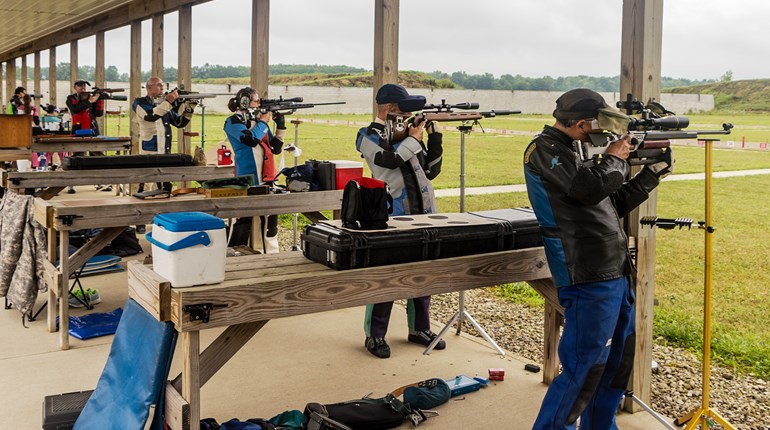
Of the 431 prone shooters in attendance, the one positioned atop the 50-Meter match bulletin was in fact lying on the National Matches’ firing line for the first time in a decade. Three-time national champion Mary Stidworthy-Sparling picked up like she had never left, and her 400-37X—three Xs off the perfect record score she fired in 1981—gave her an obvious lift as she pursued a fourth crown. Iron sight competition concluded with Suggs the Hoppe Trophy winner at 3198, two points ahead of Army Capt. David Chesser. Sparling won the Peters Trophy as women’s champion and stood seven points down heading into the any sight matches.
The third day and any sight aggregate began under lowering skies, yet with a host of 400s in the 50 yard match, it seemed as if the dark gray and light drizzle kept the glare down and acted as a fine wind indicator. But as the relays swapped a deluge kicked in and made it impossible to continue—the match was scrubbed. Weather gods had stirred things up again, this time setting the stage for one of the great competitive disasters in National Match history. In haste and confusion, the firing line was cleared and shooters madly scrambled to keep equipment and selves, in that order, dry.
When the final decision was made to cancel the yard match the line was called for Match 54—the 50-Meter match. Targets were hung and range commands given to begin the preparation period. But as some shooters peered downrange through their scopes, eyes widened when it was realized they had hung the second stage yard targets that had been in their kits prior to the match being called. The targets have the same bullseye arrangement and by the time the error was discovered it was too late—those with the wrong targets took a 200-point penalty. Wigger was among those who dropped out of competition in this spectacular fashion and the ill-fated match went to Owen Blakemore, whose 400-37X bested a large field of 400s.
Wigger, showing the stern stuff of which he was made, came back to win the last match of the day and he also duked it out the next day to win a tie breaker in the meter match. But Chesser, who shot perfectly over the last two days along with Army Capt. Steve Goff and Carl Jooss, managed eight more Xs to win the U.S. Cartridge Company Trophy. Sparling won the Western Cartridge Company Trophy to nail down the women’s national title and her record seventh Remington Trophy.
Chesser mounted the podium as both the national and service champion with a 5996-474X score while Dodd finished five back, topping Web Wright, III, by 13 in the X-count to take the silver and the Schweitzer Medallion as civilian champion. Larry Moore enjoyed his second trip to the stage in as many years for the senior award, while Brunetti doubled up as collegiate and junior champion, making him the first shooter to win both titles in the same year in both position and prone. Above all, the sodden and shortened smallbore matches will most certainly be remembered for the lore of Match 54.
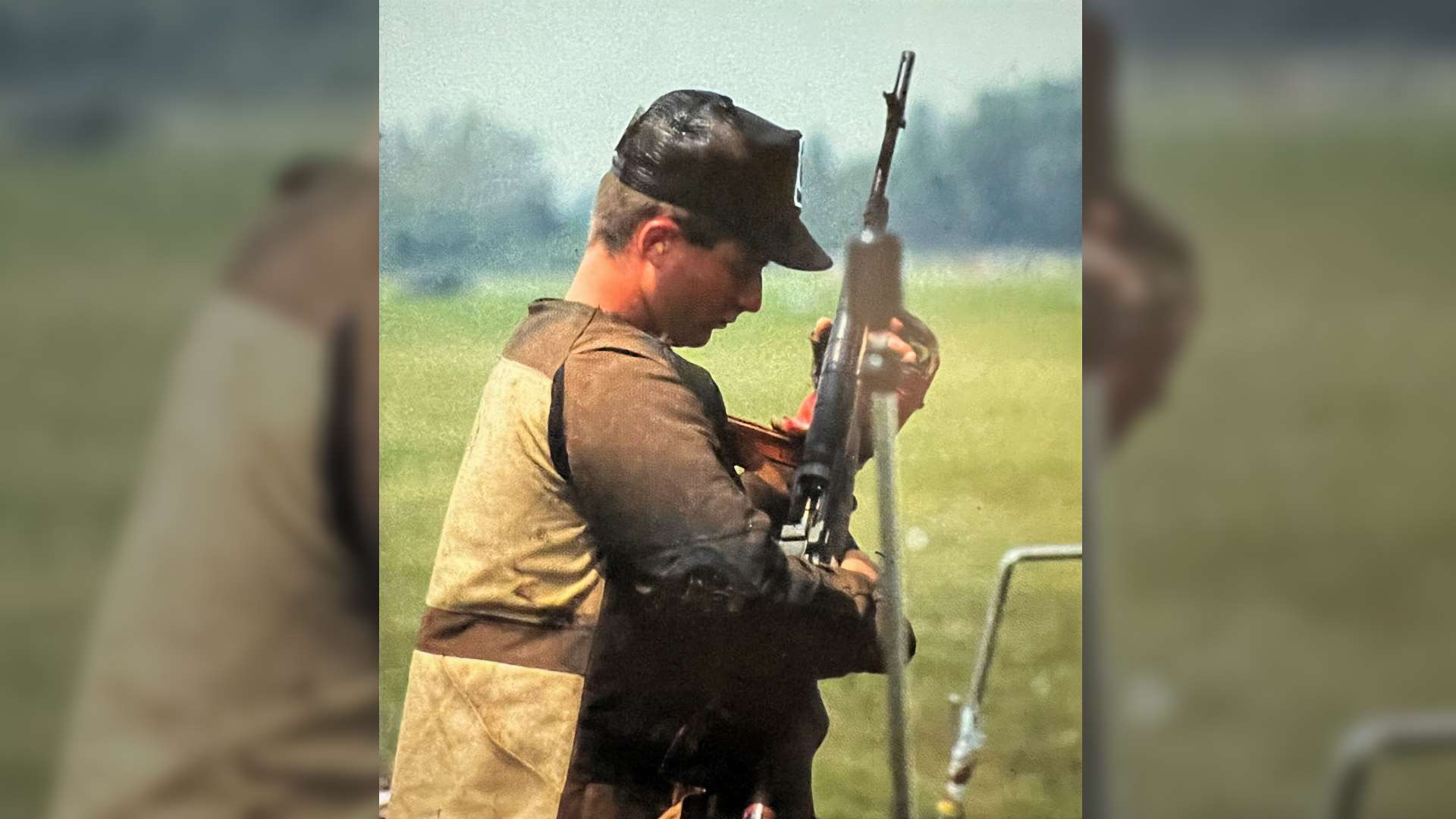
Like Mary Sparling’s return in smallbore, Carl Bernosky’s return to high power competition at the National Matches in 1992 was a success, to say the least. Bernosky is one of just a handful of competitors to win national titles in more than one shooting discipline and his last trip to the awards stage at Perry was in 1985 when he topped the smallbore position field in the midst of dedicating himself to the .22 rifle and competition with it at the international level. His first NRA National High Power title came in 1977, followed by three more in succession. In 1992, 15 years later, he claimed his fifth with a record score that remained the benchmark for just more than a decade.
Bernosky accumulated his 2385 total in momentous fashion. First, he fired a 792 in the Vandenberg Cup Match aggregate (won by Nancy Tompkins-Gallagher with a 795), then shot his own winning 795 in the Nevada Trophy Match aggregate before closing the door on his opponents with a record 798 in the Clarke Trophy Match aggregate. Thomas Whitaker, who won his own national smallbore title (prone) in 1969, finished eight points behind Bernosky to take second place. In addition, the 1992 national service champion was Marine Sgt. Billy Williamson, whose 2369 edged 1984 service champ Dave Erickson by two for the DuPont Trophy.
Tompkins-Gallagher fired a winning 200-16X in the final match of the championship to finish with a 2372 for her fourth straight women’s crown. Bob Jensen earned his third senior title and James Kallenbach topped the juniors.
In the National Board events that preceded the NRA Championship, Army Specialist Grant Singley emerged victorious from a record President’s Match field that exceeded 1,600 shooters, while National Guard Lt. Michael Johnson was awarded the Daniel Boone Trophy for his National Trophy Individual victory. In team competition, U.S. Army Reserve units earned honors in both the National Trophy and Infantry Team Matches.
As is customary, the National Match program concluded with long-range firing and the NRA’s historic Leech and Wimbledon Cups were presented to Randall Gregory and Frank Van Cleave, who finished third overall in the NRA High Power Championship. Gregory, who defeated Mitchell Maxberry in the Leech Cup shoot-off, fired a record aggregate score (842) from the Leech, Wimbledon and Palma Individual events to claim the Canadian Cup. That total, combined with his 600-yard scores from the NRA High Power Championship, also gave him a record (1437) in the NRA Long-Range Championship for the Tompkins Trophy.
“The National Rifle matches had finished for the day when the tornado warning sirens went off at Camp Perry Sunday evening. As soon as they did, Camp Perry military police evacuated the trailers and cottages at the camp where matchgoers were staying.”
—Port Clinton (Ohio) News Herald, July 13, 1992
Most Popular