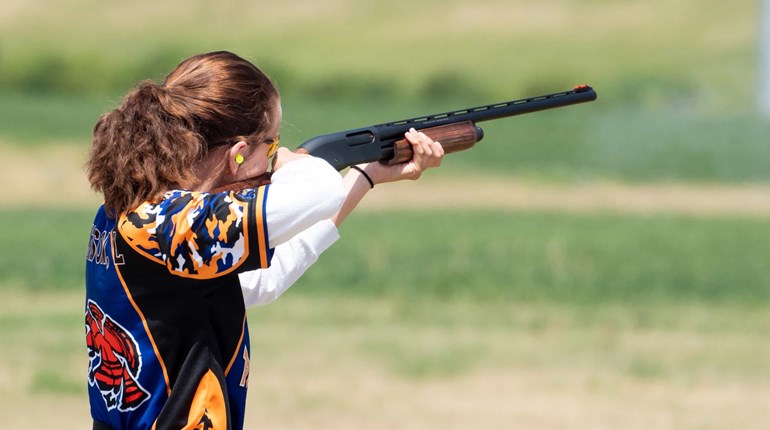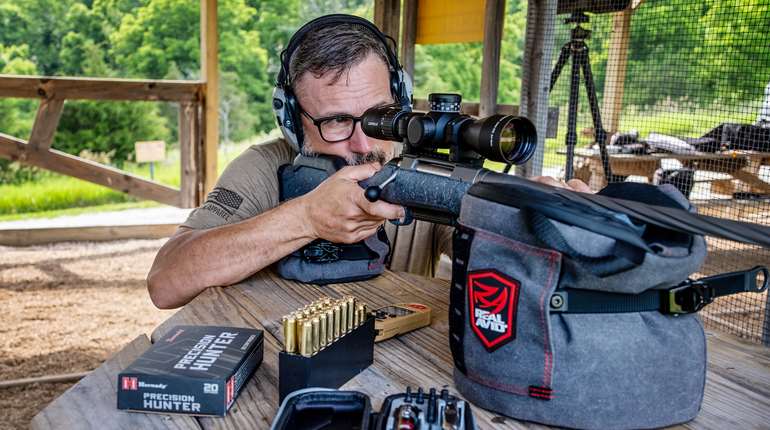
Campus shooting programs generally fall into three categories: education, intramural (recreation) and competition. Some categories combine aspects of each. All shooting programs include classes or seminars on gun safety. An education course offered for academic credit may prompt students to form a competitive team or to add shooting as an intramural sport.
To select the best program for a particular school, first consider the interests and the needs of the students. The most obvious consideration, and perhaps the most important, is whether the desired activity can capture the imagination and interest of enough students and faculty who are willing to put in the time and effort needed to make the program a reality. To put it another way, does the proposed shooting program meet the needs of the students, and will they participate?
Shooting, like tennis or skiing, provides recreation, relaxation and is a serious sport that students may enjoy long after college graduation. The sport travels with individuals throughout their lives.
Discussions with students and faculty may determine if this sport is an attractive prospect for intramural or recreational activities. Suppose that a rival school has a shooting club or team—perhaps a friendly competition would add to a campus spirit. Perhaps the the physically disabled students on campus would be interested in a sport that affords them a competitive outlet. Perhaps the physical education department needs a course for credit that every student may take. Collegiate shooting programs can meet all of these needs. Remember these positive thoughts when surveying students and faculty regarding a shooting program on campus.
Types of Shooting Activities
Educational courses on shooting include lectures on safety, marksmanship skills, firearm development and a practical application of shooting on the range. These courses may be offered for credit and can be part of the college's or university's formal curriculum. The educational aspects of collegiate shooting programs satisfy the traditional quest for knowledge and carry over into life after the college years. The essential lessons of all shooting programs—to be safe and responsible when handling and using guns—applies on campus, on the range, in the field, at home, in the community and in many professions, such as the military and law enforcement.
Shooting does not demand exceptional speed, strength or other physical traits traditionally associated with athletic endeavors.Intramural shooting activities are developed for recreational enjoyment and are open to all students, faculty, clubs and organizations. An intramural shooting activity is a great opportunity to experiment with different types of shooting disciplines to find out what events are best enjoyed by the students. Shooting, by its nature, builds self-confidence and offers a sportsmanship experience. Shooting does not demand exceptional speed, strength or other physical traits traditionally associated with athletic endeavors. The addition of shooting to the school's intramural sports program may provide a recreational outlet for students who are excluded, for any reason, from a school's usual athletic fare. Surveys of physical education-related activities prove that students favor shooting sports over other sports offerings. Classes fill up fast, and students often find themselves on a waiting list.
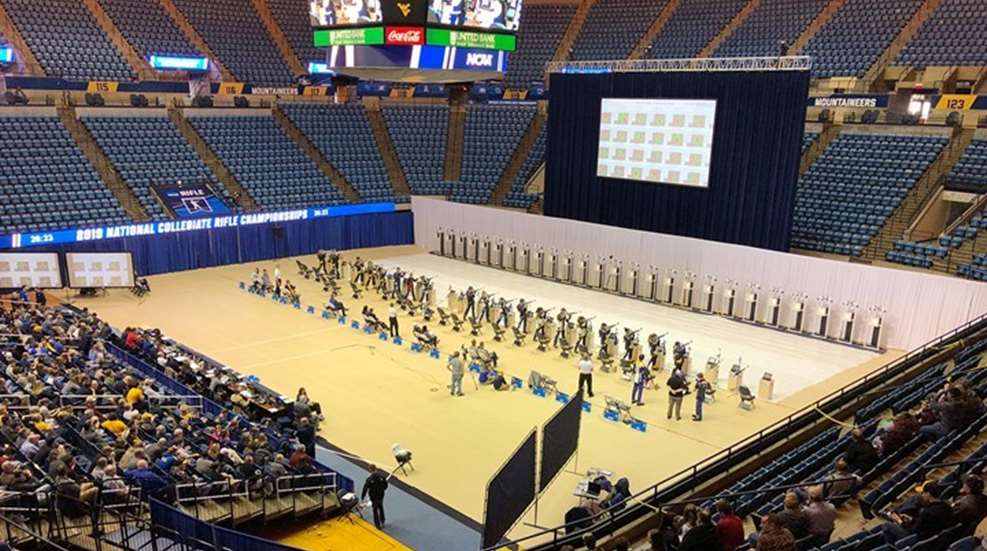
Intercollegiate shooting competition is nationwide and may be enjoyed by the best college teams in the country, as well as by newly-formed college clubs. At any shoulder-to-shoulder competition, all levels of competitive excellence can be found.
Defining a Program's Goals
The first step in building the case for a campus shooting sports program is to define the program's goals. Goals can be simple or complex, and can be limited to a single course or aimed at starting a shooting club or team. Goals can also be focused initially on a specific activity with an eye toward eventual expansion into other shooting activities. For example, a course on gun safety and coaching the shooting sports offered by the physical education department could spur interest in an intercollegiate shooting club or team. A shooting club could eventually be elevated to the varsity sport level. An intramural program can promote student interest in forming a club sport for recreation and in honing marksmanship skills.
The immediate and most attainable goals are short-term; while those that may follow later are long-term. To keep your program in focus, write down both short-term and long-term goals and review them regularly. Short-term planning for the upcoming college year deserves immediate attention, but long-term goals keep the program in perspective and allow planners to review its overall purpose. Exposure to shooting sports brings with it a host of side benefits, mainly respect for firearms and a high regard for safety. Under the guidance of a patient and supportive instructor, a student's apprehensions disappear. Almost inevitably, the understanding of guns leads to fascination and interest in the recreational and sporting aspects of shooting. This spark of interest ignites in the classroom and often leads to an intramural, club or varsity activity. Finding a pool of motivated potential team members is a chief concern of any athletic endeavor. A credit course in rifle, pistol or shotgun can be the first step in bringing varsity shooting to a school.
More to the point of any educational course, however, is the primary goal of any shooting program—preparing the student to handle firearms safely, correctly and confidently. Knowledge of correct and safe behavior around firearms is the best means of preventing accidents. Safety seminars open to the entire student body may increase student interest in the shooting sports. Exposing as many students as possible to safety instruction is a worthy goal.
Other direct benefits are the developmental characteristics imparted through a shooting course. The absolute adherence to safety rules and range etiquette in a shooting course fosters responsibility. Self-discipline and total concentration are absolute musts if shooting is to be mastered.
See more: The Origin Of The Olympic Games