With an iron-sighted handgun, the precise alignment of the front and rear sights is mandatory for an accurate hit. At least it is for most targets. But not for all.
Whether you’re shooting USPSA, IDPA or ICORE, you will routinely encounter targets inside 6 or 7 yards—sometimes as close as 3 yards. And, the “perfect score” zone on those targets is rather generous. The A Zone on a USPSA standard target is a vertical rectangle measuring 6 inches wide by 11 inches tall. The Down 0 Zone on an IDPA target and the A Zone on an ICORE target are 8-inch circles.
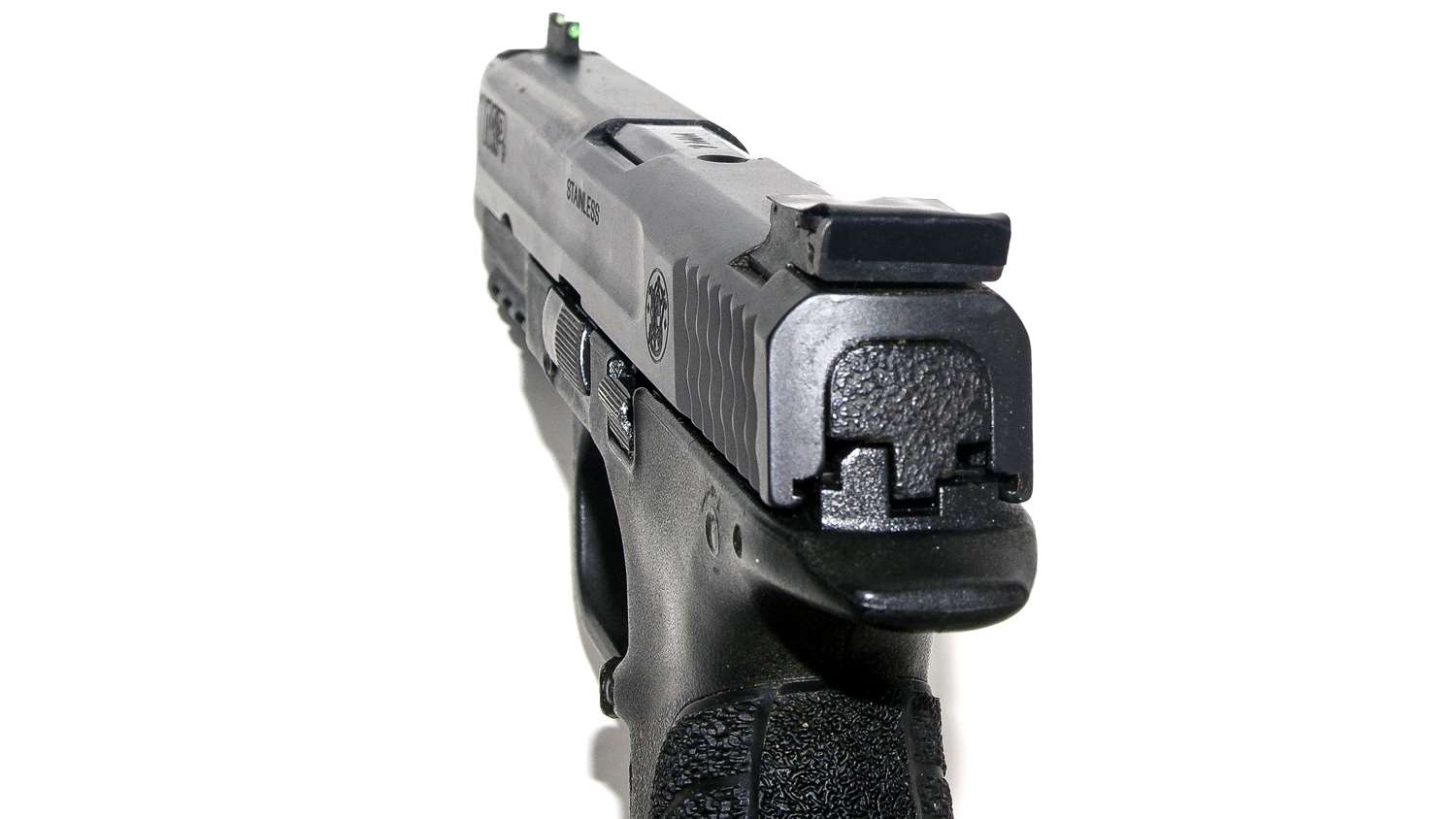
Upper-level shooters have learned that the time spent achieving a “textbook” sight alignment on close targets is wasted time that adversely impacts their time/score. For them, making an accurate hit involves nothing more than “seeing what they need to see” to make perfect hits.
They are “point shooting.” But unlike in the movies—where the hero casually points their handgun in the general direction of the villain, pulls the trigger and wins the fight—the technique used by experienced shooters is more refined, disciplined and focused. They’re using a solid stance, a firm grip, with the gun brought to eye level, and focused on the target. The only difference between that and precisely-aimed fire is what degree of sight alignment—if any—they see.
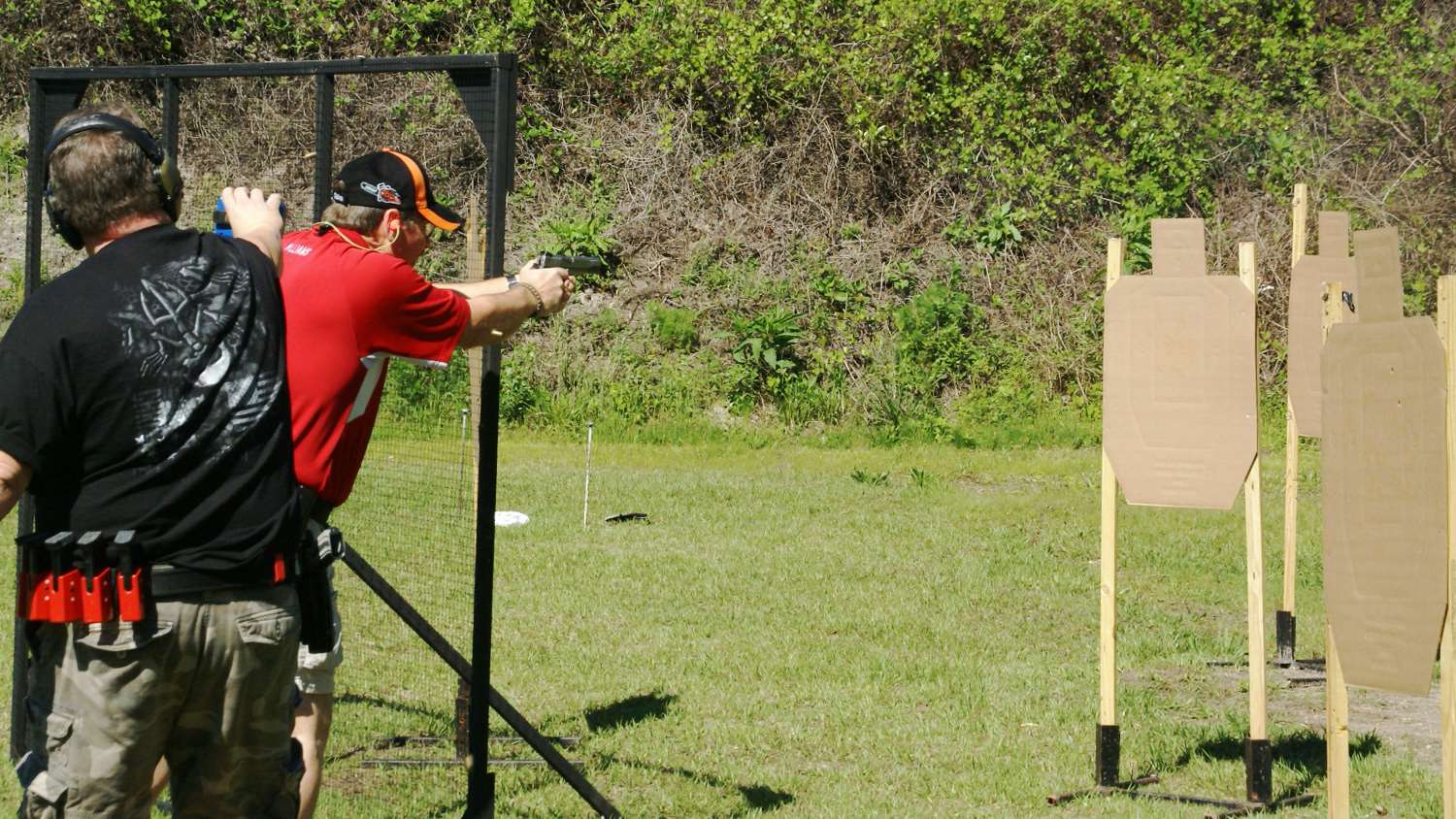
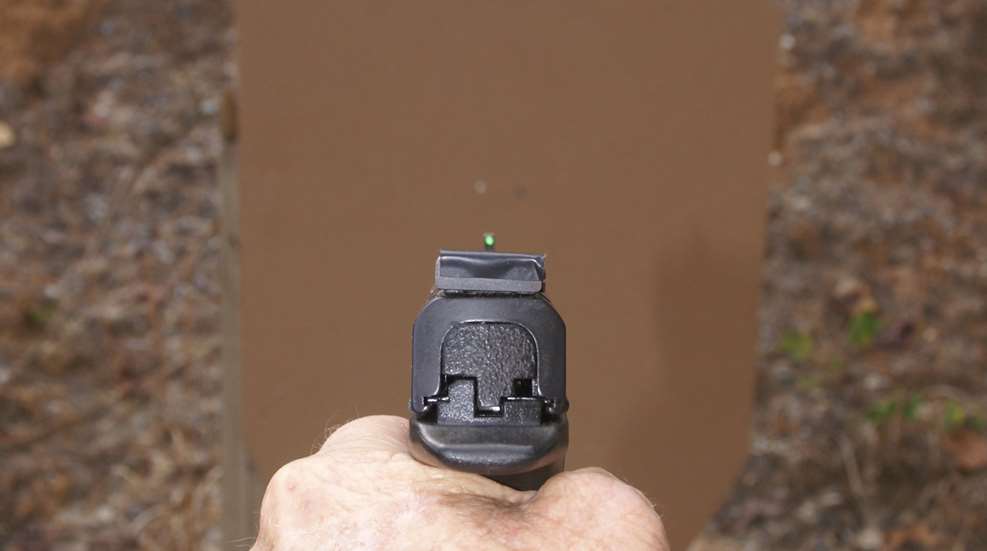
One technique that works for some is to ignore the sights entirely and shoot the “back of the gun.” With the rear profile (back of slide and rear sight on a semi-automatic, and the rear sight and hammer on a revolver) centered on the target close-range hits can be achieved. The drawback, however, is that with the front sight out of visual reference it is far too easy for the muzzle to wander right/left or down. As targets get into the range of 4 yards and beyond, this can miss the A or O Zones.
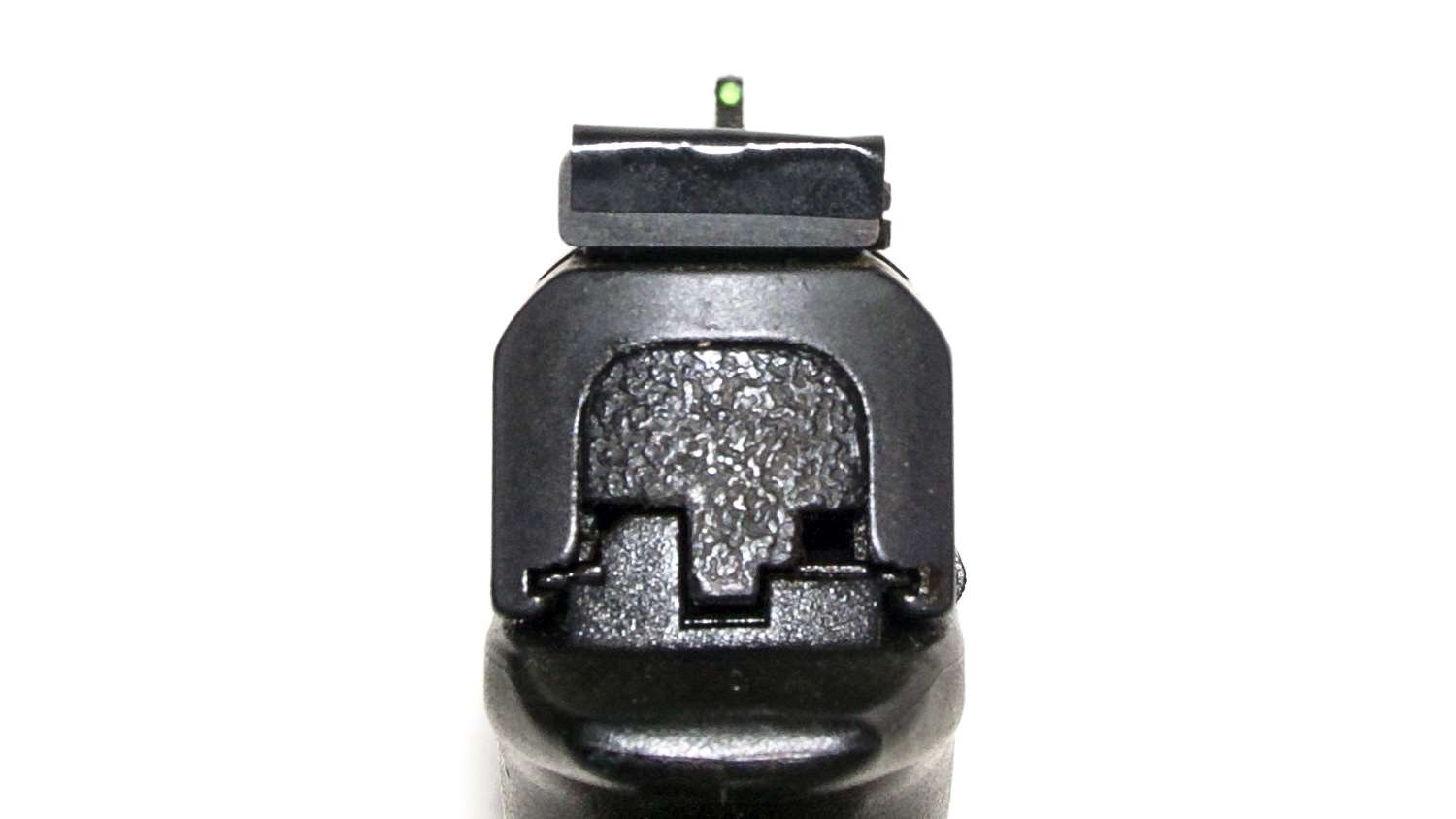
A commonly-used (and more effective) technique is to ignore the rear sight and focus solely on the front sight. In effect, they’re doing what clay target shooters do with their shotgun—put the front bead on the target, shoot and hit. Many upper-level shooters do this as a matter of course, whether they consciously-realize it or not. It is especially effective if a bright (fiber optic or painted) front sight is used. All that is required is ignoring the rear sight in favor of a total front-sight/target focus.
As with any shooting technique there are drawbacks. One is that many newer shooters, who are learning to instinctively achieve proper sight alignment, find ignoring the rear sight difficult. It’s still there and becomes a distraction. The other is that front-sight focus, without a corresponding mating with the rear-sight notch, will elevate the front sight and raise the bullet impact point—albeit only slightly at close range.
Both are easily overcome with a simple training drill. And, while it sounds a bit bizarre, it has been taught at a number of law enforcement academies (and by some personal-defense instructors) as a way to teach shooters to hit quickly and accurately at close range—precisely what is required here.
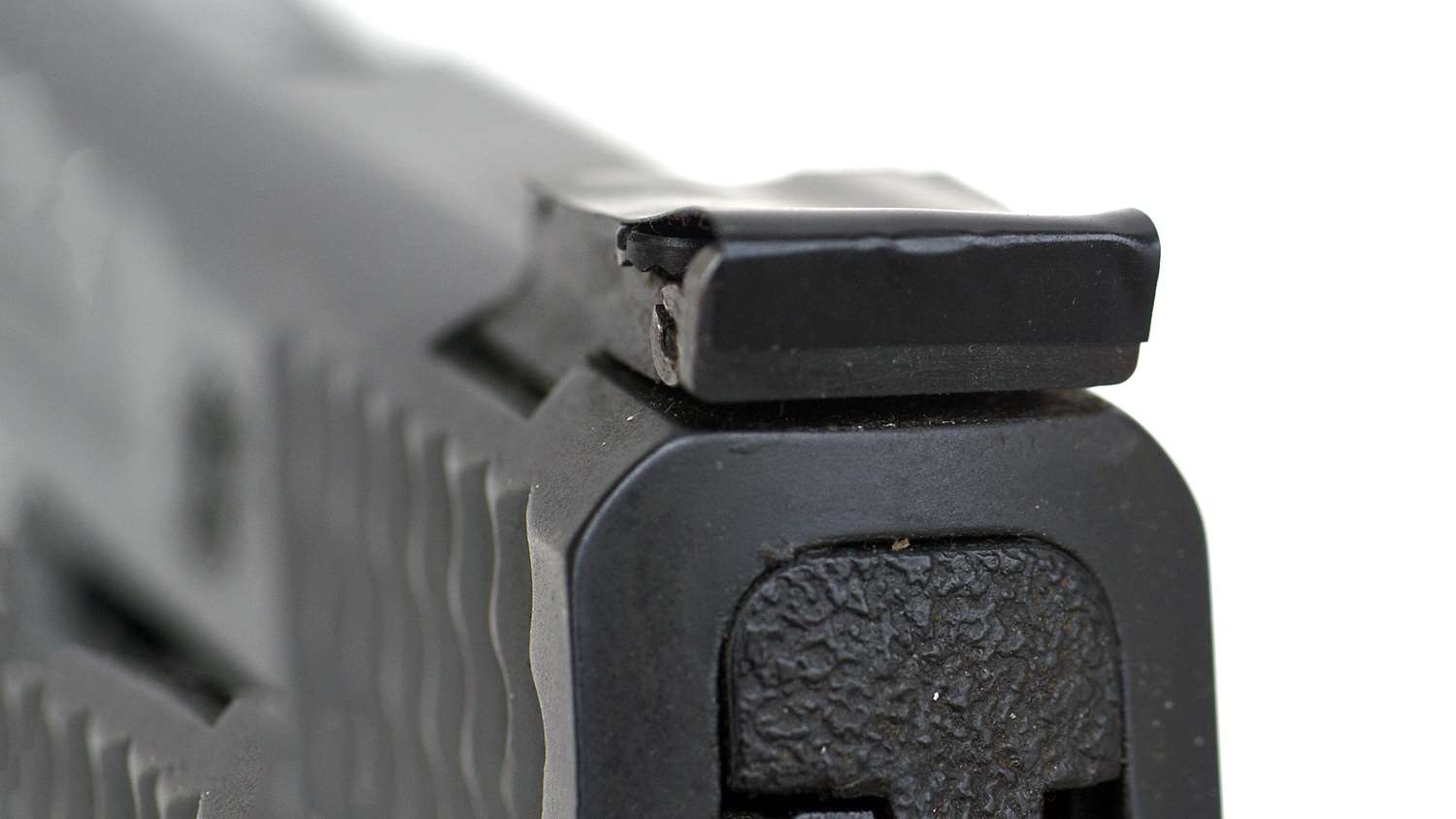
The first step is to place a piece of black PVC tape over the rear sight to completely cover the rear notch. That creates a “black blob” for the rear sight and leaves only the front sight in visual focus. This is actually what most will see when using this point- shooting technique and provides sub-conscious input that will play back “for real” when the tape is removed.
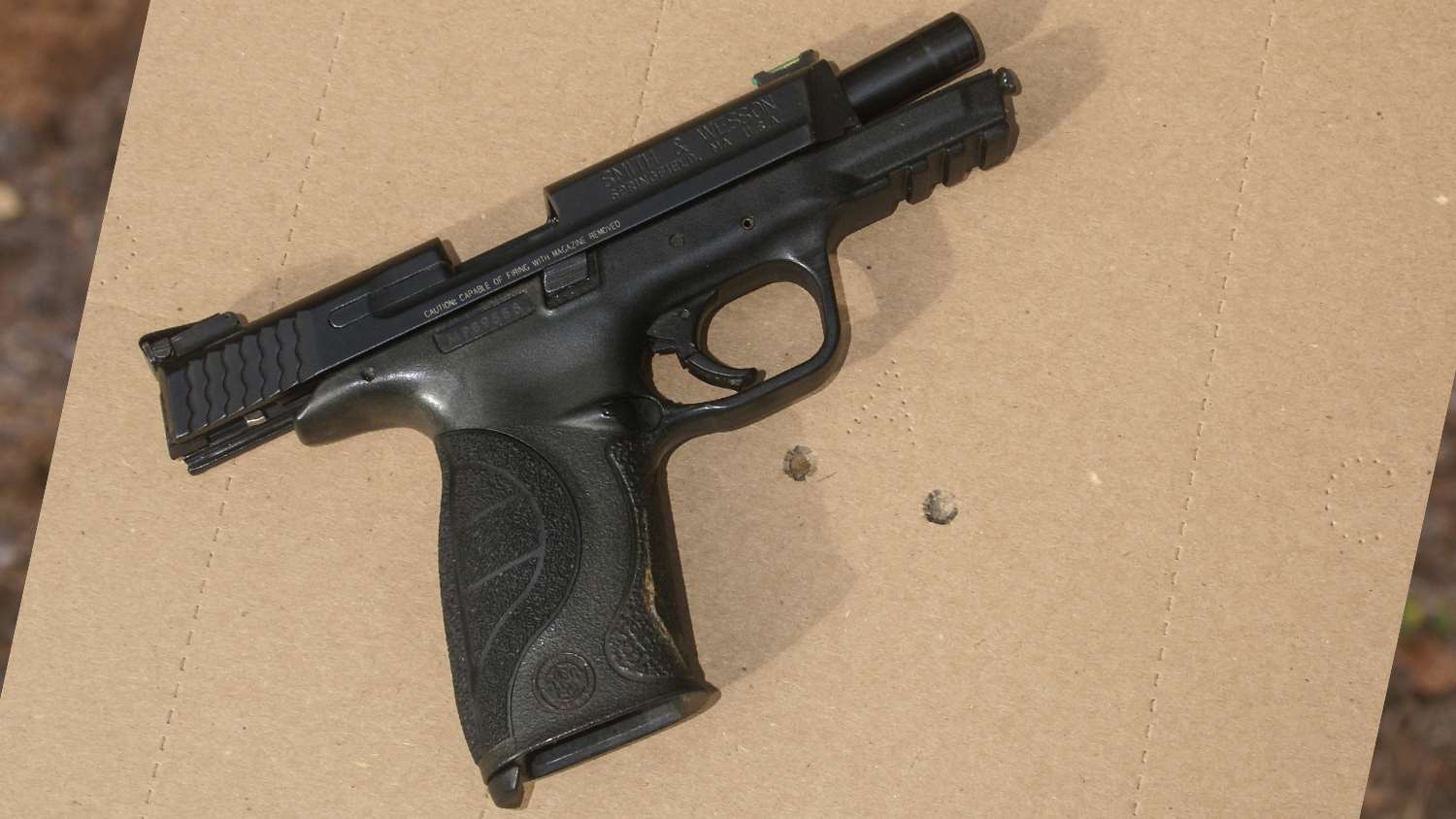
Step two is to set up a target appropriate for the game being shot and engage it from a holstered draw. Be sure to work for both speed and front-sight focus. Quickly find that front “shotgun bead” sight. Start at 3 yards, and then gradually increase the target distance. This will tell you just how far you can make point shooting work for you. It will also tell you what aiming adjustments might be needed. With the front sight elevated, most shooters find that a hold in the lower third of the perfect scoring zone will put their hits in the center.
Speed is a major factor in action-pistol scores, and the time shooters waste seeing what they don’t need to see will work against them. This important drill will show shooters all they need to see for fast, close-range hits that will improve their scores.
More action shooting articles by Shooting Sports USA Field Editor Chris Christian:
Most Popular