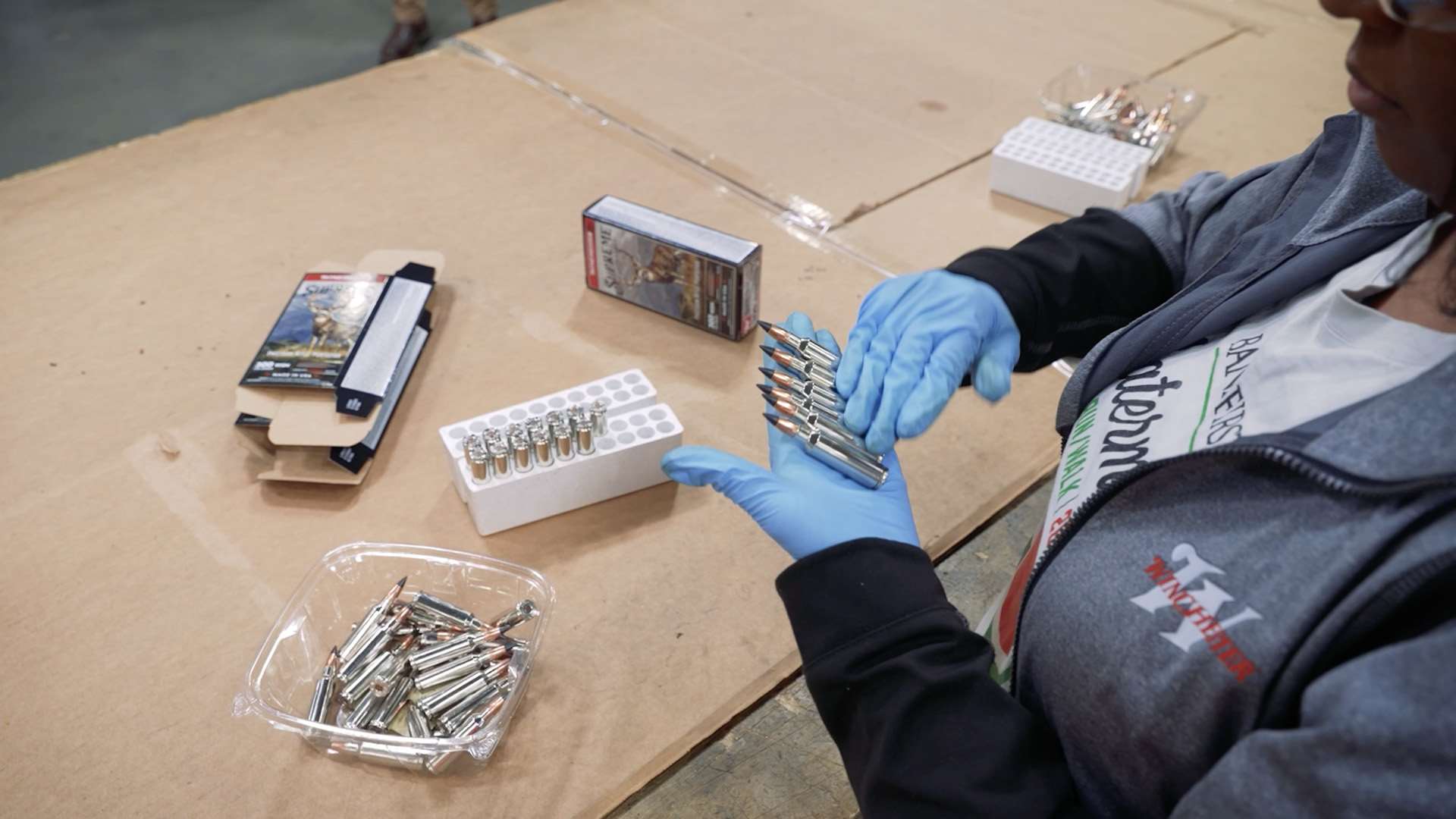
OXFORD, Miss. — Winchester Ammunition’s newest rifle line began with a question its engineers hadn’t asked before: what would it take to build a bullet accurate enough for extreme-distance hunting entirely in-house? The answer, several years in the making, is Supreme Long Range, the subject of a recent “American Rifleman Television” segment filmed at the company’s Oxford, Miss., facility. (Watch the full segment above or at YouTube.)
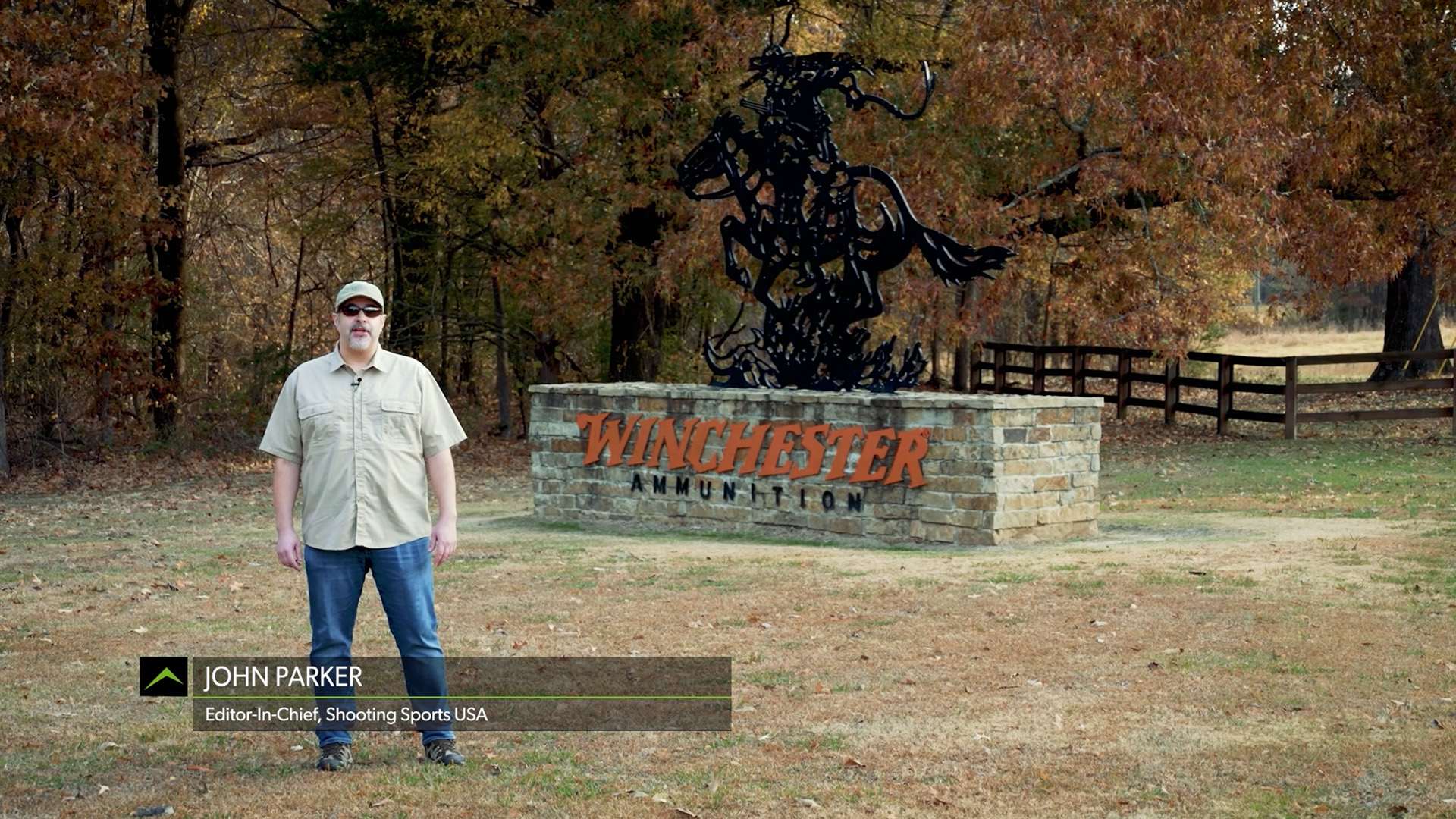
“We wanted to develop the most accurate, factory loaded precision rifle hunting cartridge, period,” said Kyle Masinelli, operations divisional director at Winchester Ammunition. “Supreme Long Range was engineered for the long-range hunter that may only get one chance to make a shot. If that hunter has the skill to make the shot, Winchester Supreme Long Range will take care of the rest.”
At the center of the line is the BC Max, the first projectile Winchester has designed and manufactured from scratch specifically for long-range work. The team set out for groups measuring 0.8, 0.7 or even 0.6 MOA, a standard that forced new thinking on jacket construction, lead core production and final assembly.
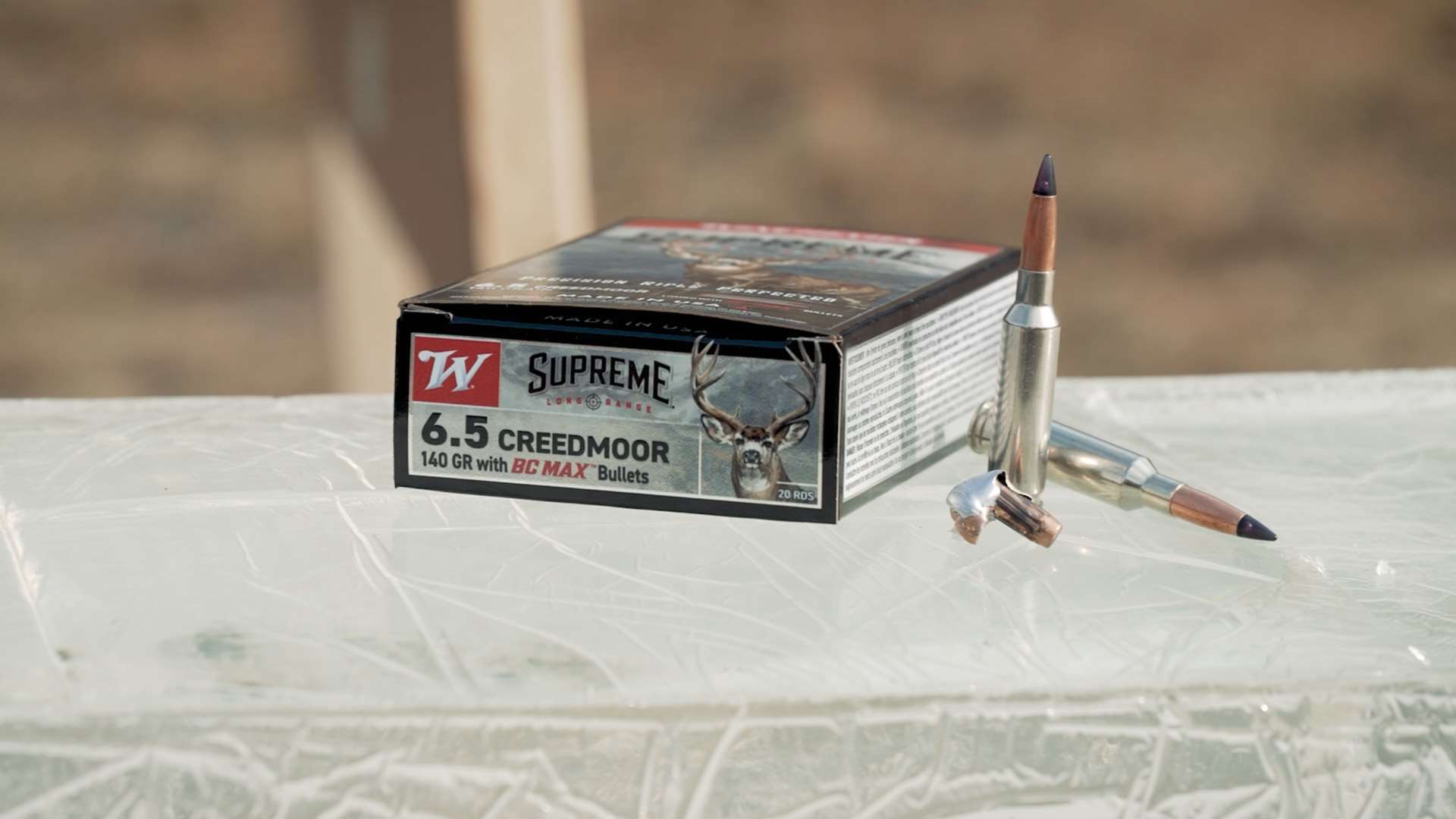
“The largest challenge in producing the Supreme Long Range projectile is controlling every dimension of that bullet in its final assembly point,” Masinelli said. “Holding 10 thousandths of an inch tolerancing is pretty common in all forms of bullet assembly, but it's not just 10 thousandths of an inch in terms of diameter or overall length. It even includes the concentricity of the boattail to the body of the projectile, or the body of the projectile to the tip of the projectile.”
That concentricity requirement drove Winchester to purchase new equipment and develop production methods unlike anything used in the company’s 160-year history. Jackets are drawn to minimize wall thickness variation, then mated with a low-variation lead core of a specific alloy and a heat-resistant polymer tip. Final assembly happens in a press held to one-thousandth of an inch tolerance while applying as much as 50 tons of forming pressure.
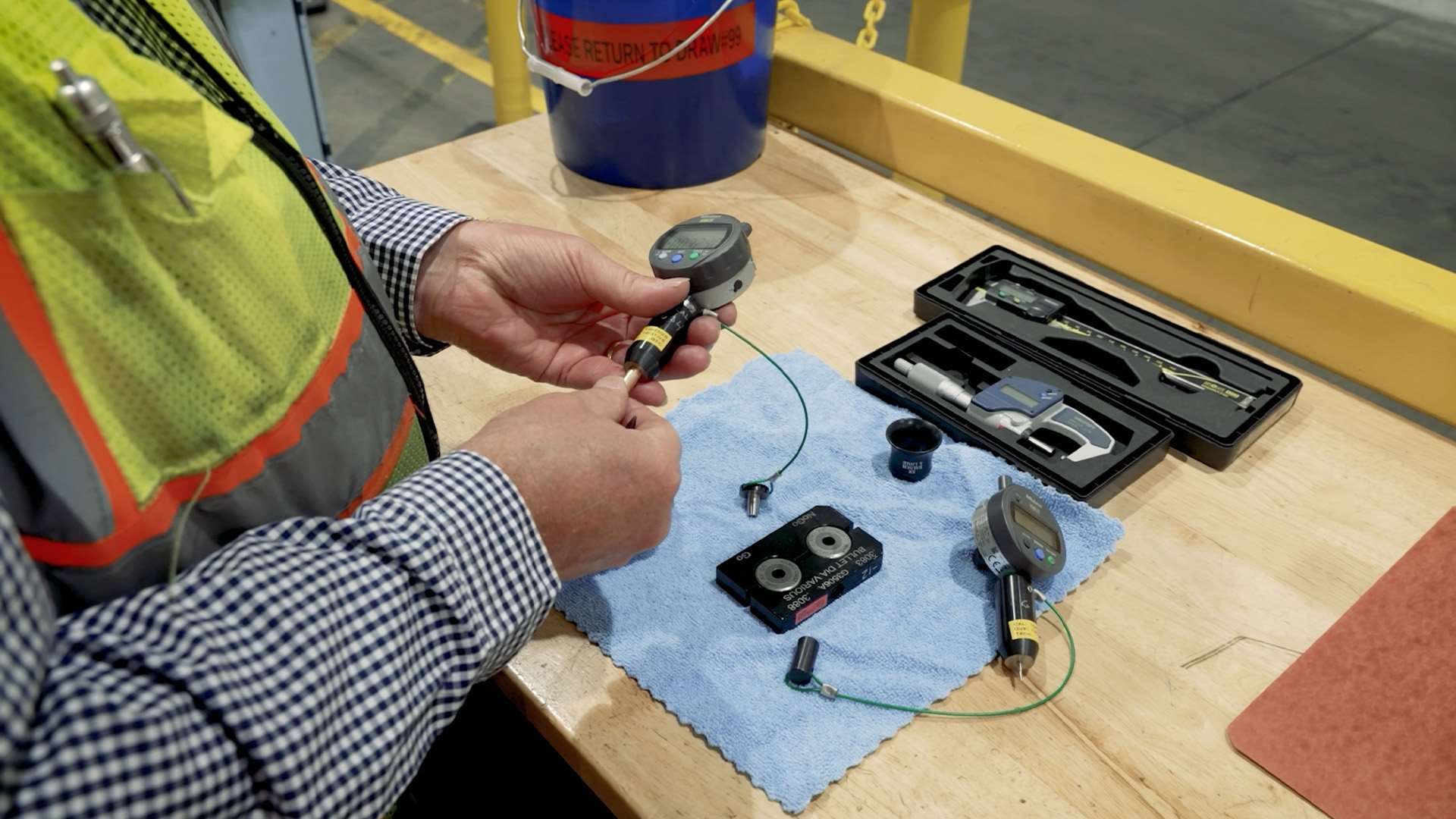
Consistency inside the bullet matters as much as its exterior dimensions. “One of the things that we focus on is our lead core retention inside the jacket, particularly when it comes to making sure that we don't have a core jacket separation at the upset,” said John Mark Huff, new product engineer. “We have an attribute called a staking attribute at the heel of the jacket, and that locks that lead in.” Tight weight control on the core delivers shot-to-shot consistency, Huff said, while an exceedingly concentric boattail contributes to both accuracy and a high ballistic coefficient.
Why so much fuss over minutiae? Nathan Robinson, Winchester marketing manager, explained that small flaws compound quickly at distance. “When you get past that 300, 400 yards, all of a sudden, little imperfections in the bullet jacket, in the thickness of the lead core, in the material that you use for the tip, those start to get exaggerated at those extended distances, and you’re not a quarter-inch off. You start to be 3, 4, 6 inches off as that distance extends.”
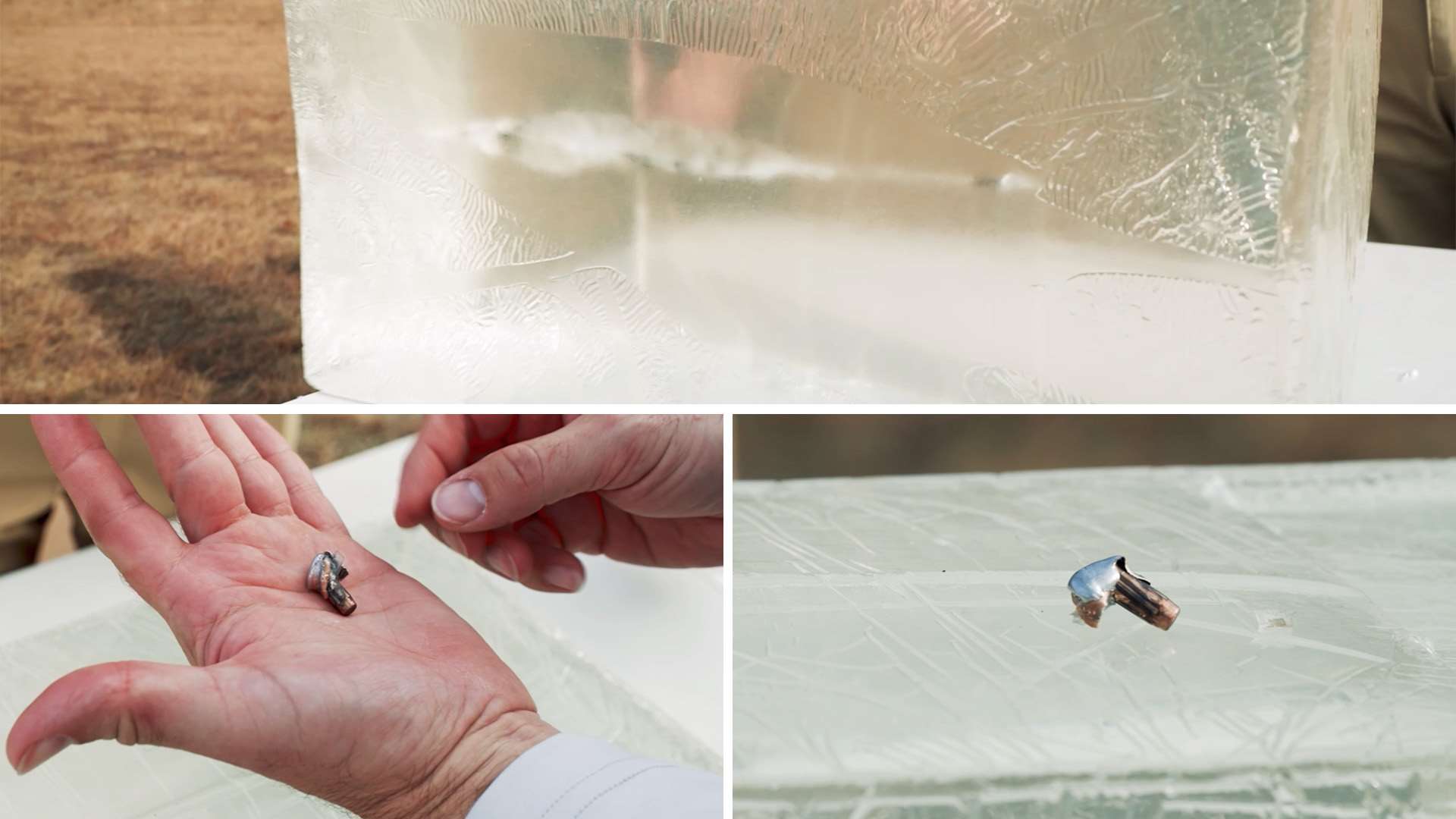
Accuracy alone wasn’t the finish line, either. During the ARTV shoot, the team fired a 6.5 mm Creedmoor Supreme Long Range load into a dense 20% ballistic gel block at 550 yards. “We’ve got good entry, we’re approximately 16 inches here,” said Micah Grubbs, new product development specialist, examining the block. “You’ve got a nice upset, how it’s opened up even at extreme ranges where we’re at. That’s what we were looking for with this product. We wanted to have good terminal performance at extreme ranges.”
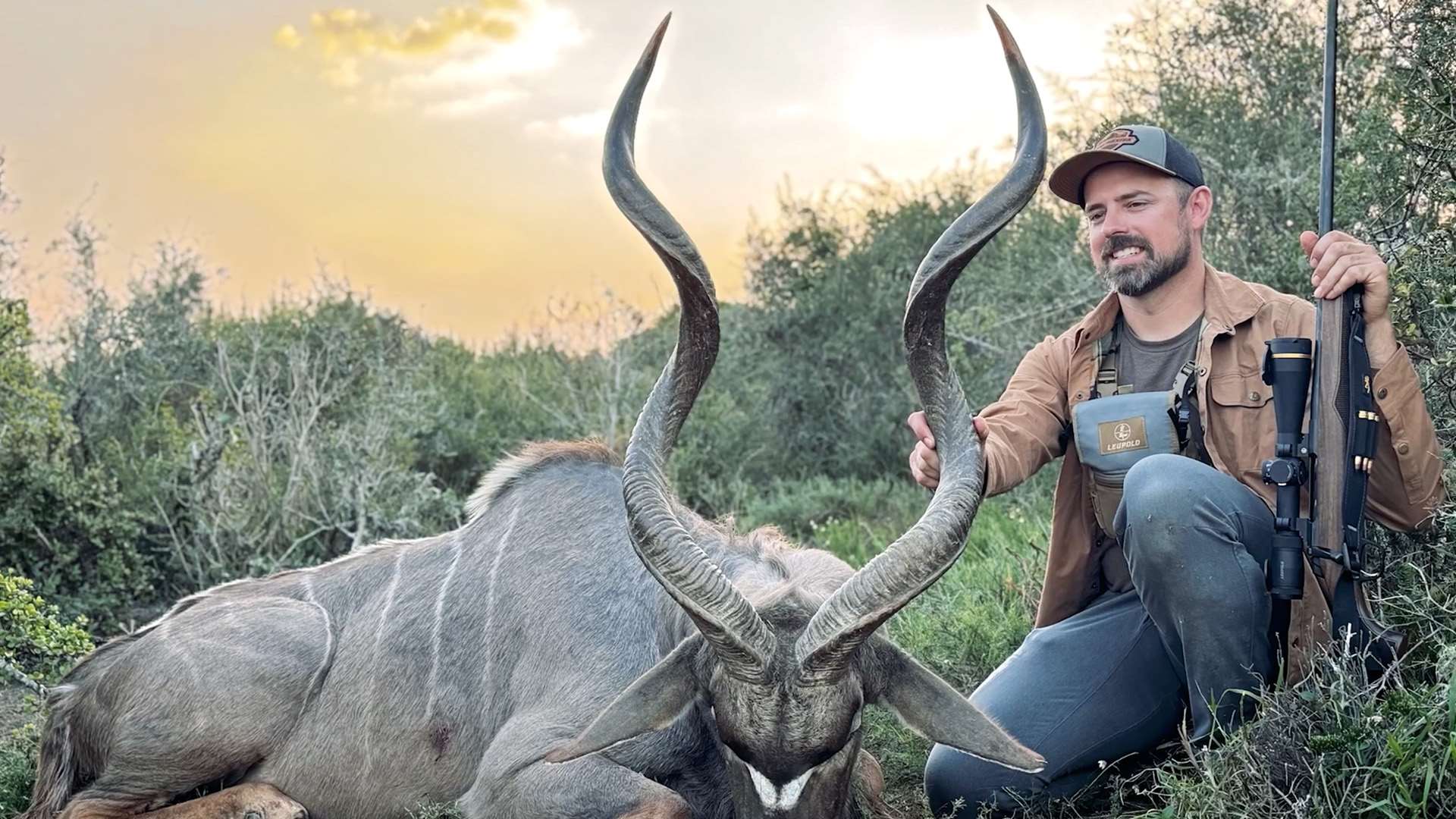
Masinelli pointed to the same block as evidence the BC Max design balances expansion against penetration. “You can see how fast the energy transfer happened, but still got to 16 inches penetration in this nice, dense 20% gel block. That’s 550 yards. That level of penetration would have gotten the job done on any game animal.” During product development, Winchester validated the bullet on game ranging from duiker and pronghorn to elk, kudu and nilgai.
Five loads are available now. The 6.5 mm Creedmoor carries a 140-grain BC Max at 2,725 fps (MSRP: $45.99 per 20-round box), while the 6.5 PRC pushes the same bullet to 2,900 fps ($66.99). On the .30-caliber side, a 195-grain BC Max anchors the .30-06 Springfield at 2,720 fps ($52.99), the .300 WSM at 2,900 fps ($64.99) and the .300 Win. Mag. at 2,900 fps ($67.99). Coming soon are a 175-grain .308 Win. load at 2,675 fps ($52.99), a 175-grain 6.8 Western at 2,825 fps ($69.99), plus 195-grain .300 PRC and 180-grain 7 mm PRC offerings.
For Masinelli, the line answers a decade-long shift in the market, as affordable sub-MOA rifles have put long-range shooting within reach of more consumers than ever. “Supreme Long Range addresses that shift,” he said, “and ultimately provides a long range, capable product from the American legend Winchester.”
For all-new episodes of ARTV, tune in Wednesday nights to Outdoor Channel 8:30 p.m. and 11:30 p.m. EST. Learn more about Winchester Supreme Long Range at winchester.com.