
As I was writing the article on stage management, I realized that stage management and running a squad are not the same thing. They are strongly interrelated, but each has its own little quirks. This article will cover how to run a squad of competitors. The following is truly my opinion. I have taught Range Officer and Chief Range Officer classes for many years, but I had rarely put down in writing the methods I have taught to newer ROs and CROs.
If there is a set of rules to follow when running a squad, the Boy Scout law is a good basis. The good Range Officer will have the following attributes. They will be honest, fair, courteous, helpful and knowledgeable. Please remember it is never RO versus the competitors. It is usually competitor verses competitor and often, a competitor against himself. I heard a great joke that stated, the person who gives you the most problems is the person who stares back at you while you are brushing your teeth or shaving.
The only difference between a Range Officer and a competitor are the duties they are currently performing. Some of the best Range Officers I have ever worked with are also skilled competitors. To give you a good example of this; at a USPSA Limited Nationals in the distant past, one of the ROs would have scored in the top 16 overall—if his scores shot in the RO match would have been entered into the match. Yet he feels he is serving the competitors better as a Range Officer. That way he can assist the vast array of competitors from a National Champion to the newest competitor.
Once the stage is set up and you have it debugged; it is time for the squad to put it to the test. I will assume you have followed all the little hints we have given you over the last couple of articles.
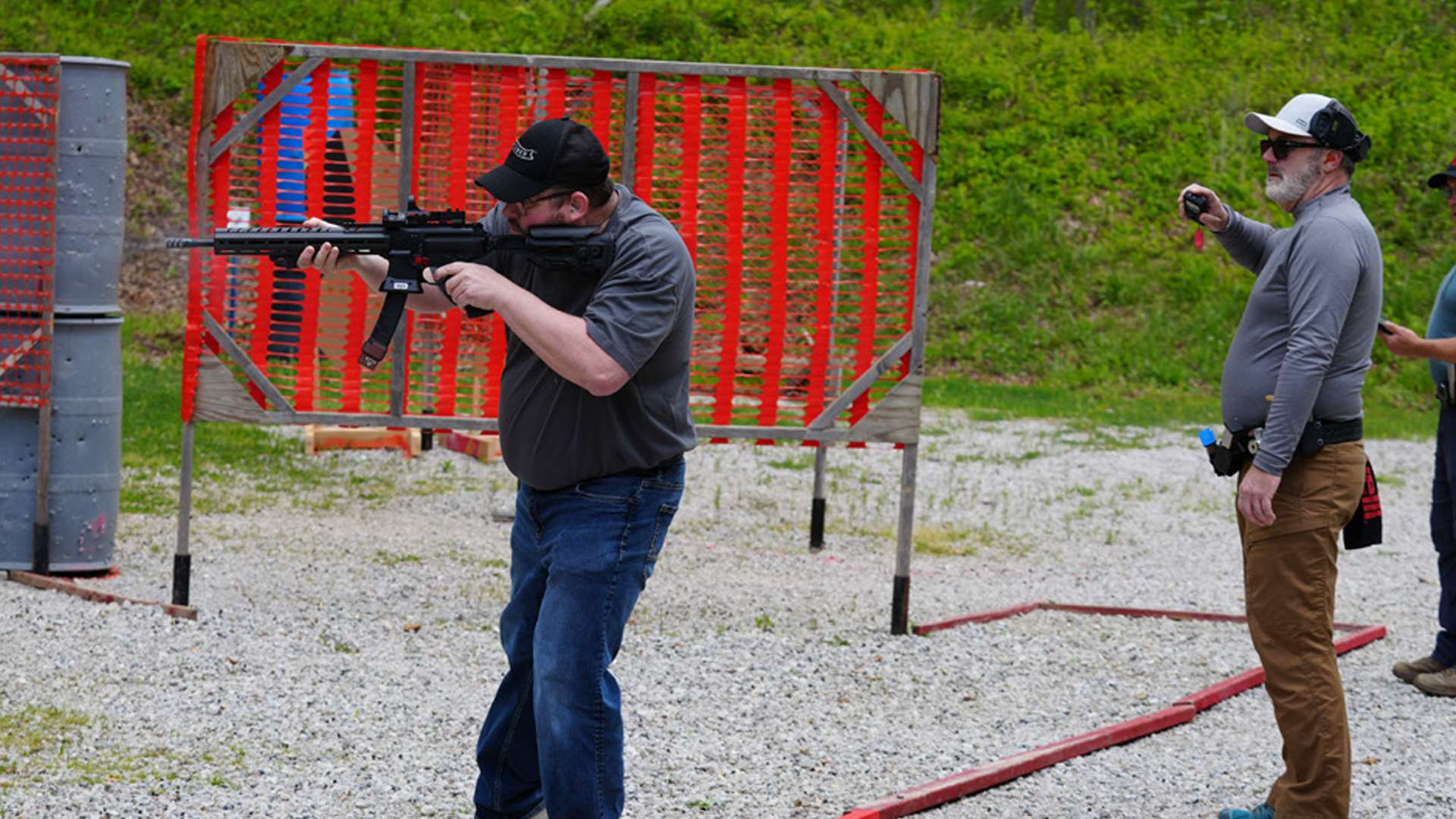
In a perfect world, there should be at least three ROs on a crew. One works directly with the competitor, he is normally called the Timer RO. The second is the scorer/pad person, sometimes called the offside RO. The third RO runs the clipboard if we are doing paper back-ups and/or keeps track of the rest of the stage and will call the range set after the targets are taped, steel is reset and any special targets are set. The crew normally rotates positions after each squad.
It is a truism that the first squad in the morning is usually running late. It seems when we get ready to go on time there are two or three competitors still not there yet. It is simple to take care of that. Take a quick roll call using the pad. If they are not there at the scheduled start time, I put them at the end when they arrive. We can then give them their own walkthrough after the rest of the squad is completed. You might also want to contact stats to see if there had been any late squad changes.
At many major matches, the first squad of the day or flight if we are doing multi-day squadding, we will need to collect chronograph rounds. This requires the competitor to surrender eight rounds and fill out a card or sheet with their name, squad and division and place into an individual bag. It is easy to use the pad, if you have it by then to make sure everyone has completed this task. If the pad is not there yet, which can sometimes happen at matches where registration is either behind or walk-ons are allowed, you may have to confirm you have all the competitor as soon as possible after getting the pad. If there are any competitors who are using the certified ammo program, they still must submit eight rounds on the stage.
In rare cases, someone might want to use the certified ammo program and failed to surrender a delivery sample at registration. In those cases, call the Range Master if the competitor does not have the forms and a spare bag. In the case where they are doing on the stage, that means they must surrender 16 rounds, eight in each of two bags, with the form in one of the bags. If they fire a shot without surrendering a delivery sample, they are prohibited from using the program.
At most matches it is strongly suggested before you start your first squad of the day or flight, each day you do a quick equipment check, i.e., the “fashion show” to ensure everybody is in division compliance. It should not take very long and can be done at the same time you are collecting ammo if the competitor has their firearm on their belt.
Once everything above is done or once all the members of the squad are on the stage, the next thing we do is read the written stage briefing. This WSB needs to be written down and be read directly off the sheet. You should always read the WSB the same way for every squad. If you have additional remarks outside of the WSB, write them down also. These are such things as scoring order, who is going to reset the activators, etc. Anything that is rules based must be approved by the Range Master, such as split or early scoring. That way everybody gets the same story. I strongly suggest you treat every squad the same. If you allow one squad to open a door, then you need to let all the squads do the same.
If this door activates a target, then it is my strong suggestion you limit every squad to a single live demonstration. You can then let the rest of the squad open the door but not reset the activator target until you are ready for the first competitor to run the stage for score. It is common practice to let the first competitor on the squad open the door or say bang when you are demonstrating a popper or other mechanically activated target. The problem is if you do not, then the squad is going to want you to reset the target for every competitor, so they all get the same look and feel. If you are limited to a 4-5-minute walkthrough time, you will never get the squad started anywhere near on time.
Once the squad has had their play around time, it is time to run the squad. Call out the first competitor, the on-deck competitor and the in-the-hole competitor. That way the competitors can start to get themselves ready. Allow the first competitor to take their time getting ready, they will not have the advantage of a clear stage since the rest of the squad was also going through the stage. A couple of minutes of extra time are a simple courtesy for that first competitor.
After the first competitor, only the on-deck competitor should be allowed to play on the props. I consider this smart in two ways. The most important is a safety issue. You only must keep track of one competitor playing on the props. The second is common courtesy. That way the next competitor can get a good look at the stage with minimal interference. If you run into a competitor who will not cooperate with their squad on this issue, I tend to suggest they move to the bottom of the squad, so they have more time to get their head on straight. This tends to be most effective with large squads. Who wants to wait around for 15 competitors to shoot the stage before they get to?
With the advent of PractiScore, all the pads at most larger matches are set up to use the same sorting order. Random is rarely used at larger matches. In my experience, the stats crew prefer this is not changed for any reason. Some squads may have modified their set shooting order. In many cases this is because of things like families/informal teams wanting to record each other, sharing equipment such as magazines, after gun changes where two people maybe sharing a firearm and a family with multiple members wanting to spread out over the whole squad. We try to honor these requests, but you must make sure the RO running the pad is aware. In many cases it is common practice to confirm the person on the line is the person you have on the pad. It can be fixed if you make a mistake easily, but it is better to not make that mistake. Also, I have learned not to totally trust names on shirts because sometimes they are incorrect or nicknames.
Once you make sure the stage is clear, have the next competitor come to the line and start through the proper range commands. I normally allow the competitors prepare at their own pace if they do not take much more than 30-45 seconds to get ready. If the competitor is having problems getting ready, I will ask the competitor if they wish to be put down a competitor or two to get better prepared. Some competitors will not load directly behind a wall, so allow them to load in the designated Make Ready location. Do not allow them to wander around the stage once you give the “Make Ready” command. Remember that until the timer goes, you are there to assist the competitor’s safety. If you see something that appears not right, i.e., hearing or eye protection, in the wrong start position, etc., let the competitor know. It their responsibility to take the appropriate actions to correct the problem. Remember, starting a competitor in the wrong start position is a mandatory reshoot and not a procedural.
Once the competitor has completed their run and the range is called clear, then the Timer RO needs to call the time off and score the targets in the order you have decided. This needs to be done the same every time. Normally we will start to score the targets as soon as the scorer is ready. If you see a target the competitor may want to look at, you should call out to the competitor to let them know. The key is to keep moving and to make your calls as you seen them. If the competitor is concerned with a scoring call, they will let you know. Be decisive, make the calls as you see them and move on. If there is a question in your mind, use your overlays.
Also, if a competitor requests you to overlay a hit go ahead and do so even if you think it is not needed. It is their right to ensure the calls are correct. Once you are done scoring targets, take it uprange. Once the competitor has completed the stage and all targets are scored and time is recorded, the scorer will press Review and call out the time, column totals, any penalties recorded and the hit factor. The competitor will then approve the score by pressing the “Approved” button. If the competitor disappears without approving the pad, we will not run them down. A loud verbal request if you see the competitor will show an honest attempt. By rule, if the competitor either refuses to approve the score or walks away before approving the Range Master must be called to resolve the issue. The RM may approve the pad and note the person refused to approve the pad. Their failure to approve the score may be due to an oversight on their part or they may be preparing to protest some aspect of the stage. Since the pad always notes the time of day, the one-hour protest period starts from the time the scorepad is approved.
The score keeper should always take the competitors uprange to finish the paperwork. That allows us to get the stage cleared and prepared for the next competitor. Keep going this way until the squad is completed. The crew should look and act like a well-oiled machine while there are competitors competing on the stage. The social time is before the WSB is read and after the squad is done shooting. During the business time of the stage, the critical issue is to make and keep the stage a safe and fair test of competitor skill. The last thing most competitors want is a lot of distractions from the RO crew.
I have several little habits that I have developed over the years. The first is I carry a strip of white pasters with me along with a box of pasters or paster gun. That way if I see an untaped target or no-shoot, I can take care of it without any undue fuss. The other thing you can do is to leave a strip of special pasters on the target stick or wall near no-shoots or hard cover targets. The second is if I am the RO running the competitors, I will take the time to make a quick look around the stage before I call the next competitor. If I am the scorer, I will call the next three names on the pad off in order. This usually prevents the wrong score sheet from being used and confirms who the next competitor should be.
I feel that a good way for competitors to get involved in a stage is to have them paste targets and set steel. Most competitors have no problems doing this as it almost the standard at most matches. Since most large matches are lost brass matches, they do not have to shag brass. I do allow the competitors to pick up their live rounds if they want. However, I have found most competitors will not pick up live rounds from the ground. I tend to look for them and remove them as I consider them a risk, especially on rocky ground.
Part of the problem with having competitors tape targets is that rare time you get to a taped target before you can score it. You can solve that problem by letting the squad know ahead of time the scoring order. There are couple of tricks to help you. If you have close targets that will be the last scored following your normal pattern, have your third RO look at them and note what is on them. If they get taped ahead, you will still have a valid score witnessed by the RO. The second method is to use either early or split scoring on those targets, remembering that if you do so you must add that to the WSB with RM approval.
If it happens then, it may or may not have been a mistake and you may need to investigate it. If you got hung up due to a prolonged scoring issue, it is easy for a competitor to “think” the targets were scored because the last 10 competitors were done scoring by then. This is one of those times where your judgement may be tested. On the other hand, if the competitor just trashed the stage, it looks a little strange if one of their buddies tapes a target out of order. There is a solution for such reprehensible conduct, Rule 10.6.1 DQ for Unsportsmanlike Conduct. In any case where this is a possibility, the RM must be called under 8.7.5. It is up to the RM to investigate further and make a judgement. Your job is to get the stage ready for the next competitor.
Once the squad is done shooting your stage, take time to let the squad know you have enjoyed running them and wish them good luck for the rest of the match. I tend to find this is the best time to talk to friends and others. The pressure on the competitor is off, and they are not as keyed up. Unfortunately, if there are additional stages for them to shoot, they tend to wander off with the rest of their squad and it starts all over with the next squad.
The next section is the potentially unpleasant part of the job. On occasion you will be in the situation where you have to enforce the safety rules. My view on the safety rules is that we must be tough but fair. If you know the competitor has violated the rules, you must enforce the rule. Never forget what puts those nice round holes down range. This is a sport that has the potential for bad outcomes if the competitors do unsafe things. The reason we do not have such things is that our rules are so tough. It is important we do not get lax in our enforcement of the safety rules. This does not mean we go overboard in the enforcement or set up the competitors to fail. I would rather give a competitor a reshoot by stopping a potentially unsafe behavior rather than DQ them once they have become unsafe.
However, if it gets to the point where the competitor has placed himself in the situation of getting a DQ, document, document. Assume the competitor will protest any DQ. Most do not, but occasionally it happens. If you have done your job right, the DQ should stand on its own merits. In any case, the RM must be called.
Remember, if the competitor is planning on using video to appeal any scoring issue this is allowed. You should be happy to review anything that might be useful. If it is going to however, be used to attempt to overturn a DQ, the recording must be in a state where the RM can document it before the evidence leaves the stage or can be altered.
I know that these articles give you a lot to think about and remember. The best way to get better at this is by doing. I learn something new every time I work another match. I have learned that if we try to do the best every time, the competitors will be served well. I have made mistakes over the years. Like most adults, mistakes are how we learn to get better. If I were to presume to give any advice it would be to leave your ego at home. The other thing is to learn how to say no. About 90% of the time, if a stage gets into trouble it is because the CRO failed to add that word to their vocabulary.
My saying is very simple, “You shoot the stage the way you feel is correct, I will award any penalties I feel are appropriate.” Between these two extremes is where the real world exists. The other thing is to have fun while working, but never at anyone else’s expense. Most of the time, working a stage can be a lot of fun. You will meet some great people and be able to share a great experience with them. At the end of a match, you should be able to say to yourself, I did the best I could for the competitors and the match. If you can do that, then you should be happy for a job well done.
Article from the May/June 2026 issue of USPSA’s magazine.
Most Popular