
So it finally happened. After several years working at your local club and helping at the State Level II USPSA match, you have been asked to run a stage at the Area match. You will be running a stage you did not design or build. What are you going to do?
This article will give you an idea of how to go about this seemingly difficult task. In the end, how you do will depend on a number of factors. What we will discuss is how to avoid the most common pitfalls and prepare you to be able to make it look easy. It really is!
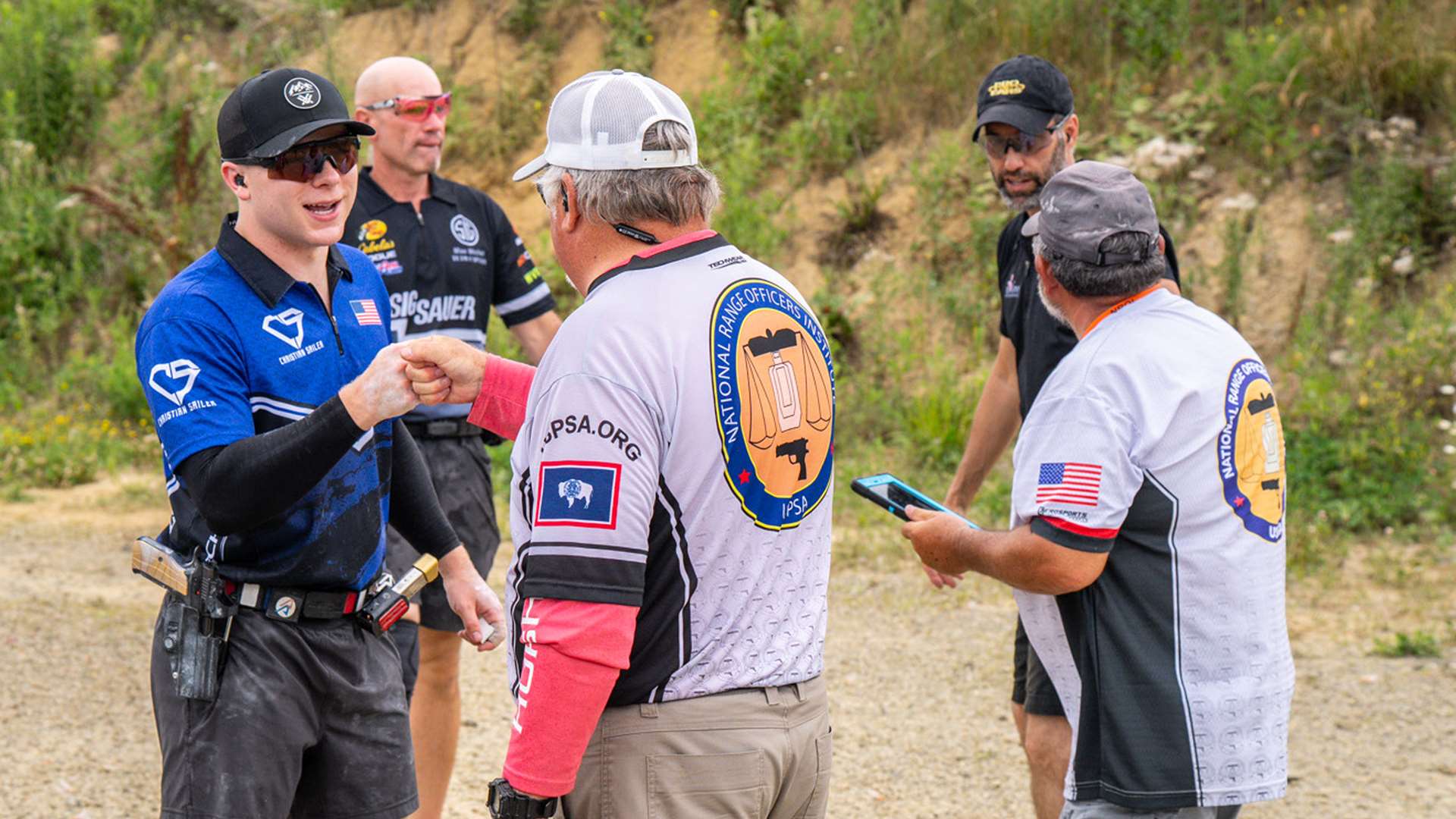
The most important factor is attitude. If you go about running the stage with the right attitude, you will find you will be able to run a stage that does the three most important things it needs to:
- Be a fair challenge for the competitor’s skills.
- Be safe for both the competitor and the Range Officer (RO).
- Be able to be run on time and with a minimum of effort for both the staff and the competitors.
It is my opinion that the ideal stage is one where, if asked about it later, the competitor will be able to comment on the design of the stage, the layout, the challenge and how they did. What they should not have to comment about is the officials and how they influenced what went on at the stage. The ROs and their duties should be transparent to the competitors. Remember, the ROs are there to safely assist the competitors through the course of fire.
Over the past 30-plus years, I have worked many major matches. I have worked numerous National events as either an RO or as the Chief Range Officer (CRO) on the stage. In that period of time, I have developed a point of view that allows me to run interesting yet efficient stages. My feeling is that the reason the competitor comes to a stage is to shoot. Any distraction from that reason is not a service to the competitor. Most competitors have enough problems controlling their match nerves, and the RO staff needs to ensure they get a safe and fair stage to shoot.
Let me get off my soapbox. How are you going to set up and run that stage efficiently?
The first thing is to be prepared—proper planning prevents poor performance.
Most experienced ROs have a basic group of tools they bring to any match. Now this is a toolbox in the back of my vehicle. In many cases, it is small enough that you can add it to your normal shooting supplies. The basic toolbox consists of the following suggested equipment:
1. A stapler or two. I like the PowerShots, but any that take T-50 staples work fine. A T-50 staple is the most common type at matches. Many have gone to the carbon-fiber ones for weight. I suggest you buy only 9/16 or 17/32 ceiltile staples. The reason is that you can put up to three layers of targets on a target stand with them. Since you will be using at least two layers most times, that allows you some flexibility. If you can afford one, a P22 plier stapler is a good addition to your kit.
2. A good staple puller. It makes changing out targets much faster and more effective.
3. Measuring tapes. You can get by with a 12- to 16-footer and a 50-footer. A 100-footer is better. This is especially important if you are setting up classifiers.
4. Wrenches. Most poppers need a 3/4" combination wrench. If you need to go with just one wrench, go with a good crescent-type wrench; 10" or 12" is nice. If you can afford to go with more than one, get a set with a smaller one for those smaller nuts you might run into.
5. A set of screwdrivers. Both flathead and Phillips work well.
6. Pliers. I feel a large pair of Channellock pliers along with a set of lineman's pliers is enough. I also carry a pair of Vise-Grip pliers, but I use them for other things.
7. A utility knife with blades.
8. A toolbox saw and a small hacksaw are nice but not required.
9. A cordless 3/8" drill/driver is important. If you are not able to put together the whole kit when you start, this should be one of the first things you add later.
10. Duct tape. I like black Gorilla tape, but if you are wrapping activator sticks, go with the gray, cheaper stuff.
11. Magic markers, both large and small. I use Sharpies for witness marks and to note no-shoot targets. They are waterproof and pretty inexpensive.
12. A decent hammer for driving stakes. A framing hammer is fine in a pinch, but a 3- or 4-pound hand sledge works better. I also have a 10-pound sledge, but that is more a setup crew tool.
13. A basic first-aid kit with the addition of a tourniquet, Israeli bandage/ trauma dressing and packing gauze or QuikClot gauze, just in case.
14. A couple of long wire ties to check for squibs. A squib rod is nice but optional.
With this basic toolset, you will be able to make any quick repairs, drive stakes, put up targets and do all those other chores that are required to set up and run a stage. Most ROs also carry two other tools. One is a good sharp pocketknife. The second is a belt tool of some sort. I have a super Leatherman tool that works great for pulling staples and tightening a loose nut in a pinch, and it is always with me out on the stage.
All of these are tools you can use around the house on those rare days you are not out on the range, reloading or working. Tools are like guns; you can never have too many. Also like guns, you get what you pay for. Either buy good tools and mark them or buy cheap tools and keep breaking or losing them.
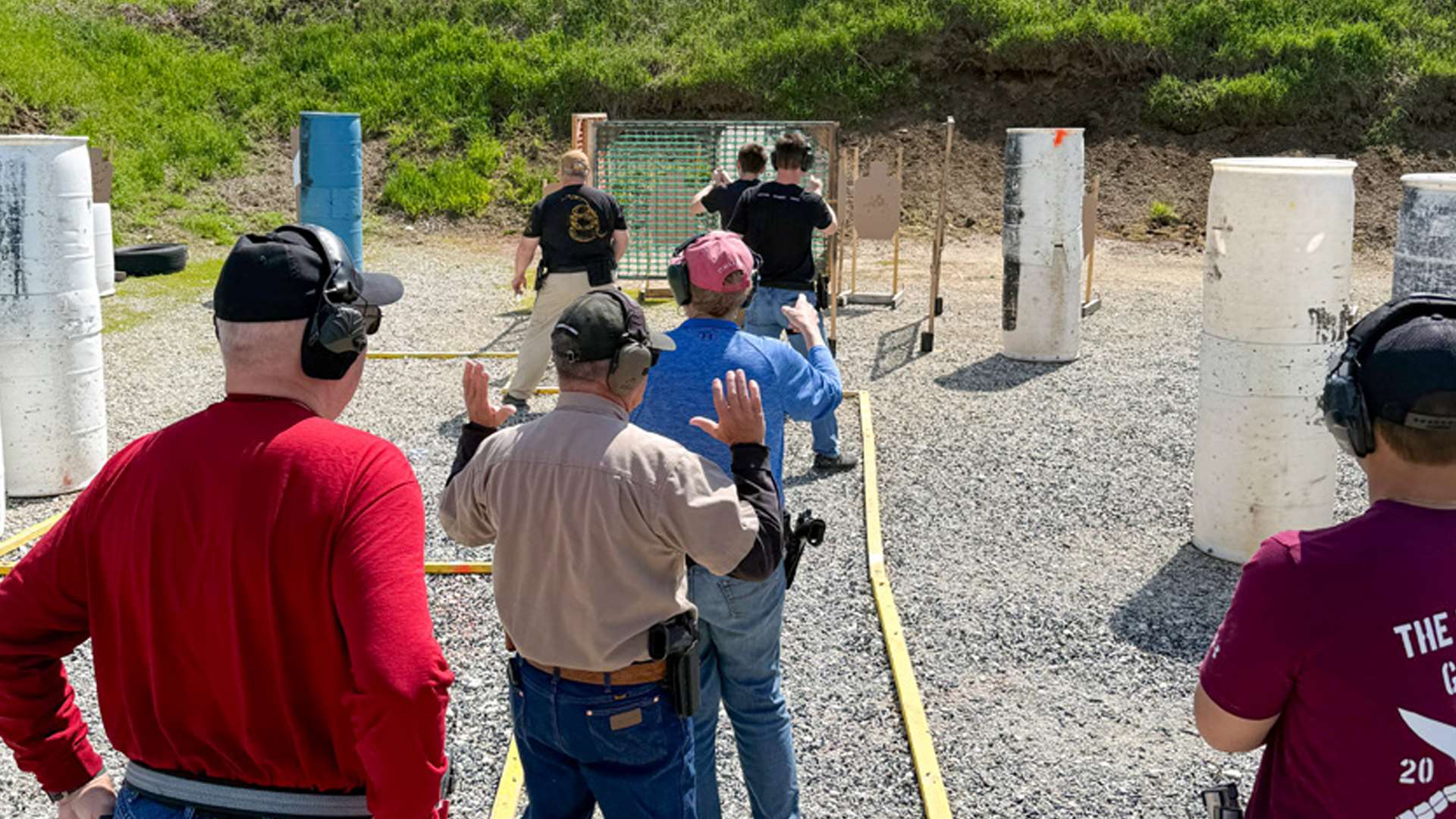
Now that you have tools to help you get set up, look over your stage. Often, the target locations are already set either by the setup crew or by the stage design. However, once the targets are laid out, you need to look to see if they are going to work. Many times, I have seen stages that look good on paper but are impossible to run without some modifications.
Look for shoot-throughs, especially no-shoots. Look for bullet impacts. Can the targets be engaged from more than one place safely? If so, will the rounds stay in the range from all the positions they may be shot? Are there any sweet spots for the high-capacity guys? If so, what can you do to even up the stage for the rest of the competitors? Good stage design should not allow such things, but sometimes the best-laid plans fail.
If the stage is still in the setup phase, you can discuss making changes with the Range Master (RM) to make the stage fairer to all. Are the ports low enough for all competitors? If not, can they be lowered safely? Does that change the impacts on the berms for taller or shorter competitors? Remember, on close targets a significant distance from a backstop or side berm, the angle might look fine at the target, but bullets could either impact the floor of the range or go over the backstop.
Another issue I have run into is ports that are not high or low enough. I prefer slots over ports since both taller and shorter competitors have the same view. With the advent of more optical sights and issues with sightline parallax, just because a competitor can see the targets does not ensure the rounds are passing through the port or around a wall instead of going directly into it. Open guns and pistol-caliber carbines can have significant issues with clearance in many cases.
Get down and look at all the possible ways to shoot the stage. Image yourself to be tall, short, left-handed, and normal—oops, I guess I meant to say a right-handed B-class competitor.
The next thing to do is to look at the stage from the competitor’s point of view as to target engagement. Remember, once the buzzer goes off, the competitor's plan will either go very well or to hell. If the plan goes away, will the competitor start shooting things that will cause problems for both the stage and for others? Anything that is downrange of the competitor is at risk. My philosophy is: Do not put things downrange you do not want shot. I used to leave paint downrange. Not anymore! I have lost paint and other equipment from splatter and stray shots.
Now look at the stage as an RO. Where will the competitor end up? Is it a safe place to unload and show clear? If the competitor ends up prone, I always ask them to get up to at least their knees before I have them clear the gun. This prevents the competitor from disqualifying (DQing) by trying to reholster while prone. I have seen it more than once—it is ugly.
Are there any obvious competitor or RO traps? A competitor trap is a place where we put the competitor in either an unsafe place or in a position to DQ even if they take usual care in gun handling. The best example of this is a flat parallel wall to the backstop where the competitor must run and reload. While this can be hard to avoid, try to either prevent it or warn the squad during the walkthrough about what you are watching for.
An RO trap is a place where you could be put in an unsafe position or lose control of the competitor. I have seen far too many muzzles in my career as an RO, and I do not want to see any more! I worked a stage at the 1992 USPSA Nationals called Shack Attack. We followed 500 competitors into a dark building where they could have done anything and we would not have seen it, because we could not see clearly coming into the semi-darkness from bright sunlight.
How are you going to score the stage? Most ROs will score the stage from where they end up. The most important thing is to score it the same for everybody. If you have special situations, such as a target where there are no-penalty misses, you need to set up that target with stats before the stage starts. In many cases, Practiscore will require you to score that target on a specific line. I was taught that an extra step at the USPSA Nationals worked out to a mile of extra steps over the period of a week. I do know that extra steps cost time and slow down the stage.
The next thing to do is to talk with your RO crew. The ideal situation is to have the same RO crew for the whole match. This is the goal we have at the USPSA Nationals. For some other matches, the standard is to have a CRO for each stage and have different ROs each day or half-day. Both systems work if the CRO takes the time to talk with the crew each time they change. Now you are going to ask: What do they talk about?
The main subject is how they are going to run the stage. If there are special situations, point them out. Who is going to reset activators, if any? I always have the RO crew reset, or at least check, the activators, so they are done the same way every time. A good tip is to have the person assigned to checking the activators also call the range set. One of the ROs needs to make sure all is ready to go and the range is clear. I try to talk to the crew and point out places they need to be careful about and where to watch for problems. If you have a place on the stage that has the potential to be a problem for the competitors, let the crew know so they are aware. Many times, if you look over a stage, you can pretty much tell where a competitor may be tempted to do something that could be borderline unsafe or dangerous. I will try to warn the competitors ahead of time in the walkthrough to let them know what to watch out for.
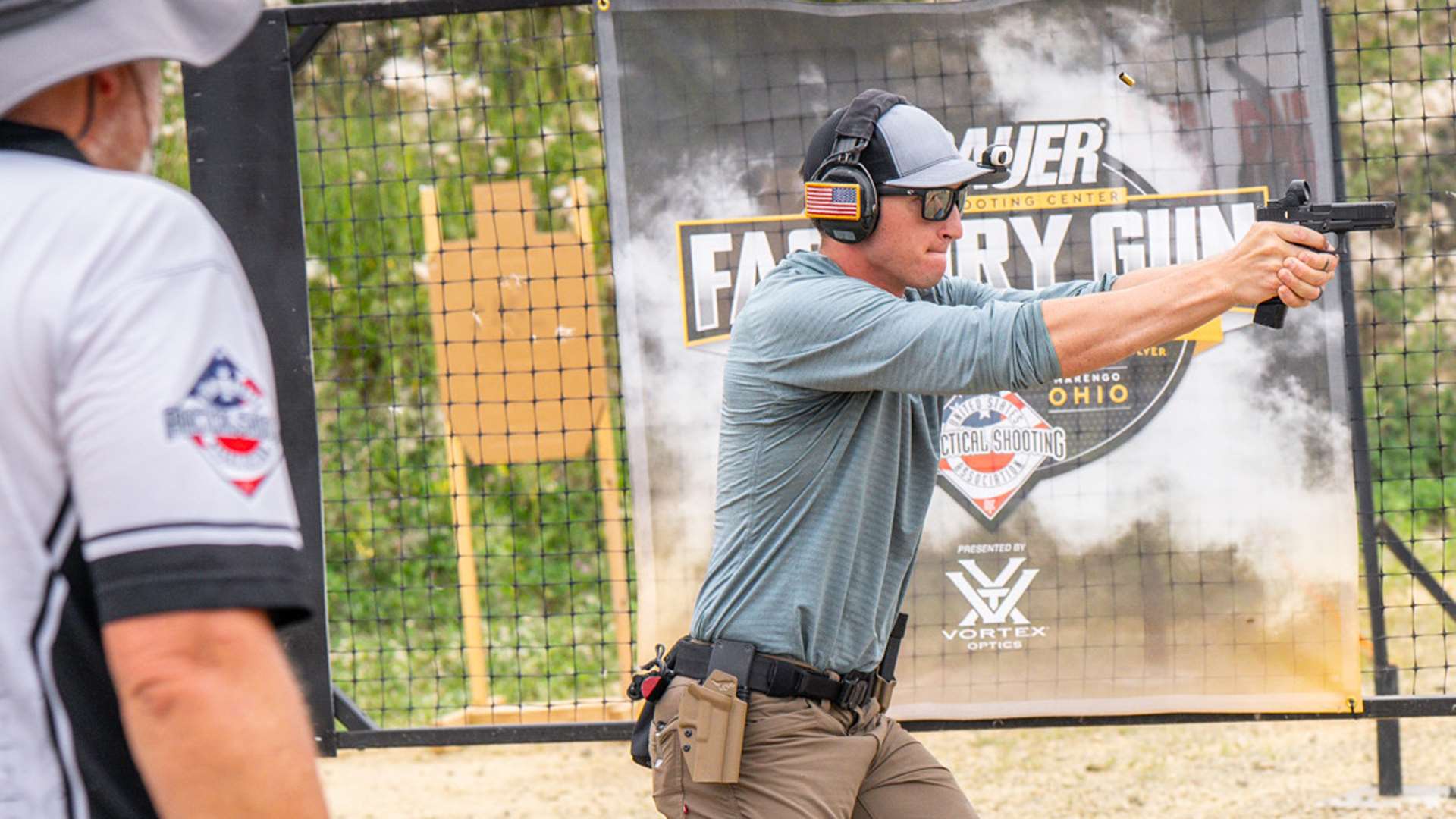
I also discuss how we are going to score the stage. The most important thing is to make sure all rounds are accounted for. This is critical since a screwed-up score is almost always an automatic reshoot. The ROs on a stage need to enter the scores correctly to help stats and prevent unnecessary reshoots. If paper backup sheets are being used, who is going to do them and how are they going to be handled?
Now let us talk about the mechanics of the stage itself. Where are the targets? Do you have to paint hard cover? How many of what type? Do you have a range bucket? What is in it? These are important questions.
At most matches, the purchase of targets is the responsibility of the match organizers. You will need to find where they are located. Look over your stage description. Does it show any hard cover targets for you to paint? Sometimes the painting of targets is the responsibility of the crew on that stage. Occasionally, you may find the setup crew has painted targets ahead of time or the match organizers have ordered pre-printed hard cover for you, but that is not typically the case. You may need to paint enough targets to make sure you have enough for the whole match. If using pre-printed hard cover, make sure they are consistent. Sometimes there are minor variations, especially from lot to lot. If you run into an issue, talk to the Quartermaster or RM to resolve it.
Count the total number of regular targets on the stage. Remember to count the no-shoots also. Normally, the Match Director or RM will tell you the target change interval for the match. This is usually based on the number of competitors per squad and the number of squads per day. You should have enough available targets to change all of them on the stage every day based on that interval. You may not need to change certain targets, but you should have enough targets available just in case. Having spare targets and rain bags (if they are being used) ensures that if you get rain, you are ready.
Normally, you will secure one complete set of hard cover targets for every third squad or specified change interval. Now you may not change targets every third squad, but you need to have extras for rain and to allow you to pull a target if you have a scoring problem. I tend to grab or prepare extra targets if the target has only a small impact area, such as an upper A/C Zone target, as the scoring lines tend to disappear under the pasters. A fast way to do this is to salvage shotup targets from earlier squads and use the upper A/C Zones as spares. That is where having a paper stapler comes in handy.
When you get ready to set targets, put the targets up first. Then take the time to do a final check for shoot-throughs, impact areas and other problems. Once you are sure the targets are exactly where you want them, secure the target stands down. Depending on the style of stand, use either landscaping spikes, rocks, sandbags or whatever method you choose to make sure the stands will not move. The next thing to do is to witness the target positions on the stakes. I tend to use a magic marker to mark the position on the sticks. This is the second level of protection. If you have no-shoot targets, note that on the target stick. The first level is to never remove the base target unless absolutely required. This works great on static targets.
Once you have a base target on the stands, you can remove the second layer of targets, place the new targets and be assured the targets will be exactly where they are supposed to be. Now this method may not work on activator targets, as you need to have the same weight every time. In that case, you need to make sure the target stakes are well marked.
Once all targets are up and in the correct place, use your phone to photograph all the arrays so, if something happens, you have a record of what was there. If you have very tight shots from a specific position around walls or barrels, a photograph from the competitor’s perspective will allow you to make sure they remain the same after target changes or repairs.
At the end of the day, strip the targets down to the base, cut off the upper A/C Zone and cover them to protect against rain or overnight dew. The next morning, you can get ready very quickly and be assured the targets will be exactly like they were the previous day.
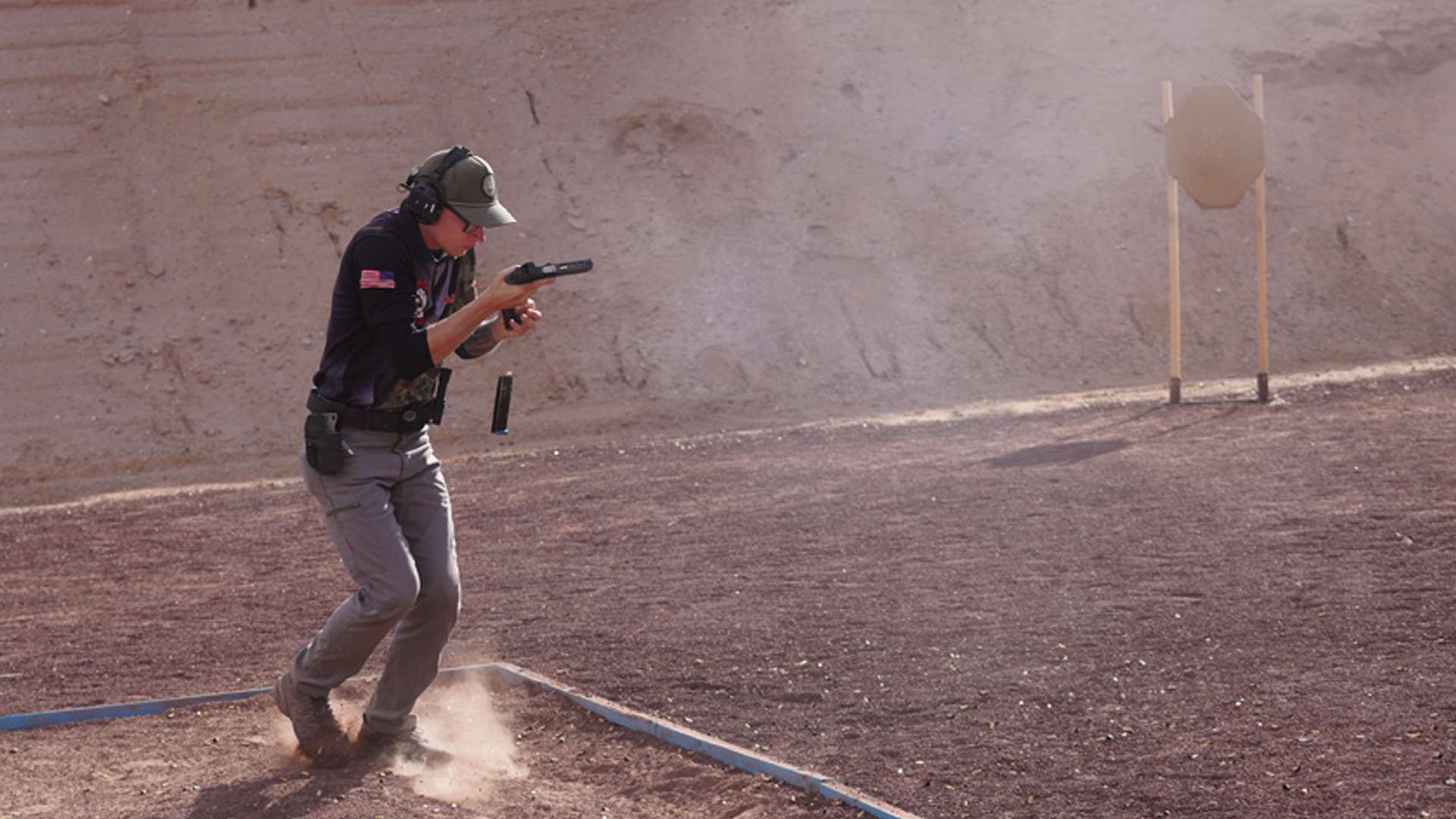
The final thing is to make sure you have your extras: extra target sticks, extra pasters, extra staples, extra batteries for the timer, a spare cable if you have activators, etc. The idea is to make sure you are 100% ready to go when that first squad gets there.
A couple of simple tips before I go:
1. The last thing you should do before leaving is paint your steel. Most times, the steel will be cold in the morning and covered with dew. While you are out painting, look to see if the steel needs to be turned. If the plate is starting to deform, it may be time to reverse the plate if possible.
2. Look over your target sticks after every squad. If the sticks are getting shot up, it is better to take a couple of minutes to change them out between squads or at lunch than to have them fail during a squad.
3. A quick trick for target sticks on activators is to wrap them with duct tape before the match starts. This allows them to hold up better to bullet hits, and the sticks are less likely to shatter or fail during a competitor's run.
4. Check all bolts, nuts and cables for looseness and damage. Make sure the popper nuts are tight and have not loosened up due to impact. I like to take a quick stroll around the stage during the squad play-around time to look for minor problems.
Now it is time to get ready for your first squad. The next article will concern squad management. In it, we will discuss such things as walkthroughs, how to run a squad effectively and how to ensure all competitors at your stage have the best chance to do well.
Article from the May/June 2026 issue of USPSA’s magazine.