
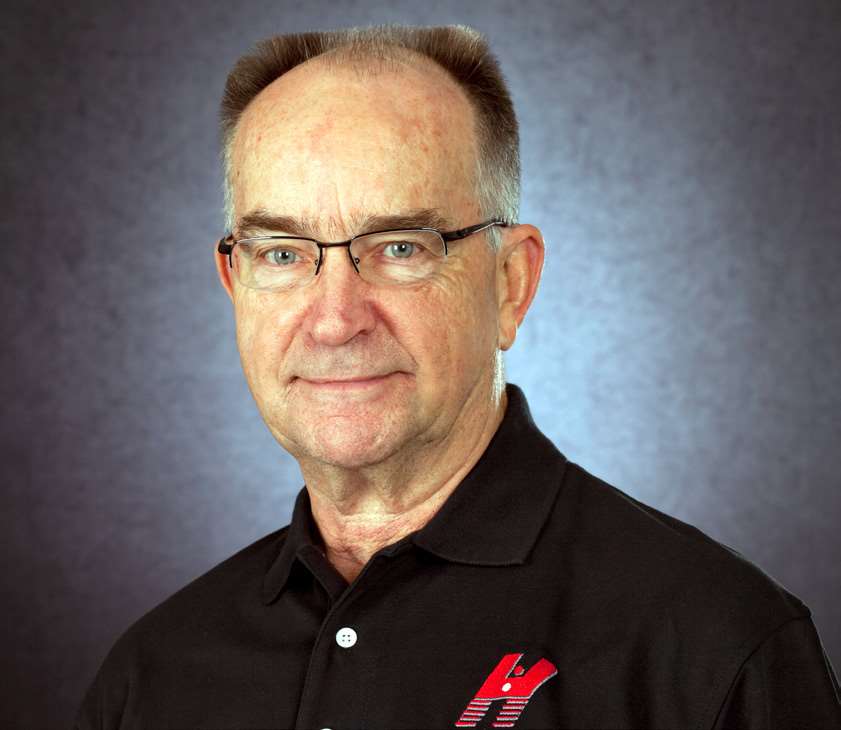
Recently, a friend and shooting buddy sent me an email saying that Richard Heinie had sold his business and was retiring. That was a bit of a surprise because I was not aware he was still in business. It turned out he had sold his sight and parts business but was still working on completing custom guns as one of the premier gunsmiths in the country.
I met Richard almost 35 years ago and have worked closely with him putting on the Single Stack Classic for more than 20 years at Pike Adams Sportsmen’s Alliance (PASA) in Barry, Illinois.
I decided to give him a call and discuss his past with our organization. As you can see by his USPSA number, he was one of the original USPSA members when we became the U.S. region of the International Practical Shooters Confederation. He was involved in one of the first USPSA Nationals held at Milan, Illinois, working with such pioneers as Dave Arnold, Dave Stanford, Jake Jatris and Steve Herbeth in the late 1970s.
Richard was from Havana, Illinois, and originally started a USPSA club in Canton in 1979. In 1981, the club moved to Havana to an old racetrack and eventually to the “Devils Hole” Range. He is still president of the Central Illinois Practical Shooters Club. It has recently been holding the Illinois Sectional. He still shoots some USPSA and other matches when he has time.
When I first met him, he was running for USPSA Area 5 Director in the early 1990s. I think he was concerned with the advent of high-capacity .38 Super Comp guns with optics, which were just beginning to become more common. Unfortunately, he was fighting against the concept of “who had the better mousetrap,” which did not limit what could be used if it met Power Factor and was safe. Of course, that led later to the development of the various divisions—Open and Limited to start.
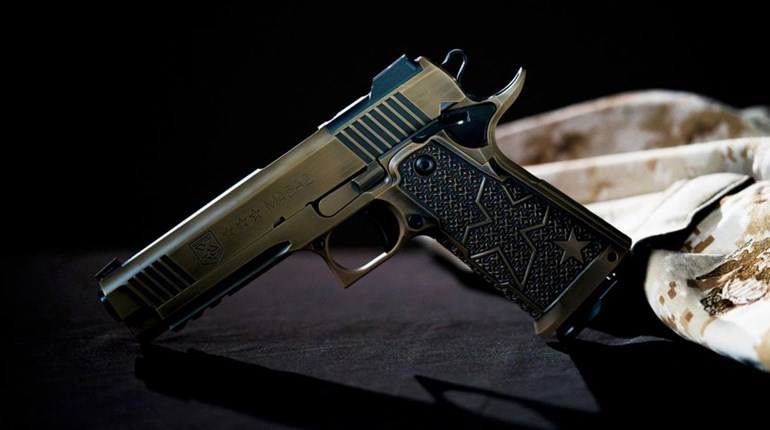
Richard was always a hardcore 1911 Single Stack shooter and builder. When the first high-cap optical guns started to appear in the late 1980s and early 1990s, he felt that we were losing part of our roots and history.
In the mid-1990s, he started working with Russell Cluver to develop a match designed around the 1911 platform. They based the match on a concept similar to the International Race of Champions: everyone competing using the same basic firearm platform on stages that emphasized accuracy, power and speed equally. They then worked with Walt Rauch, Kirby Smith, Steve Kalamen and Robert Houzinga to set up and help run the first match in Milan. This became the 1911 Single Stack Classic.
It was initially held in Milan for the first couple of years and then moved to PASA. As time went on, it attracted a larger group of competitors due to its basic concepts. It was a popular match with competitors from all over the U.S. and several foreign countries.
One of the perks of winning the match was a custom 1911, built by various gunsmiths. The winner got first choice, and since Richard built a custom gun for each match, it was one of the few ways to get a Heinie custom without waiting for years. Rob Leatham has a pretty good collection of Richard’s guns since he dominated the match for many years.
Gary Stevens was on the USPSA Board of Directors and used the 1911 Single Stack Society rules to propose the Single Stack Division to the Board. The match eventually became the USPSA Single Stack Nationals/1911 Single Stack Classic. This remained until the nine days of Nationals in 2018. The match then went back to being the 1911 Single Stack Classic.
Richard worked with the PASA leadership to put on one of the better matches held each year. He worked with a dedicated group, including Russell Cluver until his untimely passing, Ray Hirst, the PASA Competition group with Dick Metcalf as the range host and a dedicated group of volunteer range staff—many of whom worked over 20 years as Range Masters, Chief Range Officers and Range Officers. In an era where it was unusual to be able to work and shoot a USPSA Nationals match for score, every member of the staff was encouraged to take part.
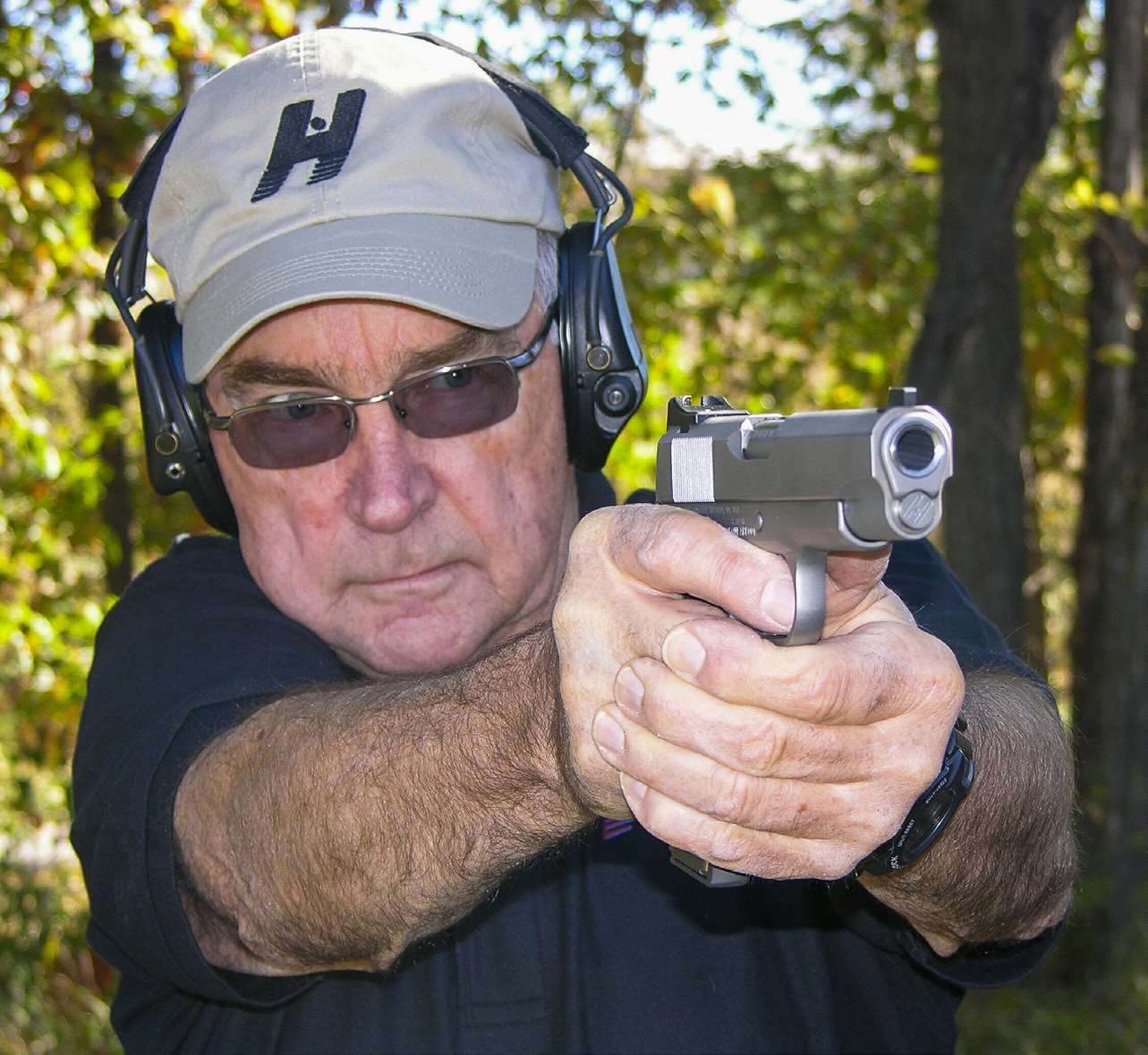
I spent many hours talking about various things with Richard. The thing that impressed me most was his deep knowledge of firearms and other mechanical things. He once told me he would wake up in the middle of the night with an idea and would write it down so he could build upon it. He had a thriving side business designing and mounting his various sights and parts. He was also a dedicated Corvette owner and made many trips with them.
Unfortunately, he suffered a stroke in the mid-2010s, which took a while to recover from. This did not really stop him, however, and he branched out and worked with other firearm builders, including Springfield Armory and Nighthawk Custom.
One of my memories is a supper meeting I attended where Richard was present and the beginning divergence between Open and Limited was discussed. There was a comment made at the dinner table that in five years, there would not be a difference between a full-house Open gun and a full-house Limited gun except for the cost of the optic. Several of the people at that meal ended up splintering off to the International Defensive Pistol Association because it was felt USPSA was losing its tactical/real-world roots.
Having been involved in this sport for more than 40 years, I have witnessed the changes. The weird thing is Richard is a 1911 expert, but we also discussed the Browning Hi-Power. For years, I used a Hi-Power with Heinie sights as my calibration gun at Single Stack.
Richard Heinie has seen USPSA go from a small group of competitors who believed in the viability of a scenario/real-world-based sport to the run-and-gun sport that now dominates USPSA.
Even at age 83, Richard is still working on custom guns. I have said to friends and students that I consider him a maestro with steel. I know many competitors who have shot guns built by him, and he has always stood by his work. May he continue to contribute to our body of knowledge and history.
Article from the May/June 2026 issue of USPSA’s magazine.