
In the aftermath of the September 11 terrorist attacks, security and operating procedures were revamped and tightened at the National Matches, yet it was with a heightened patriotic awareness that more competitors traveled to Camp Perry in 2002 than during any of the preceding 11 championship programs.
With three national pistol titles to his credit, Marine Gunnery Sgt. Brian Zins was on hand for his first title defense and he was successful despite firing the lowest winning score in 46 years. Formidable winds wreaked havoc across the board and Zins’ 2611 topped the field of 700 shooters while the only other shooter to break 2600, Larry Carter, finished second by nine Xs. (Carter’s championship bid suffered a blow on center fire day when a scoring error during a refire was not caught during the challenge period.) The last year a winning score was lower, with the exception of 1990 when Jim Lenardson won with a 1764 after the .45 matches were canceled, was in 1956 when Joe Benner won the national title with a 2610.
Indicative of the trying winds that challenged the field, Carter and Zins fired winning scores of 870 and 881 in the .22 and center-fire championships, respectively, while Army Reserve Sgt. James Henderson’s 882 in .45 competition represented the highest aggregate score of the program. Carter’s 870 in .22 fell 27 points short of the record score set in 1997 by Jason Meidinger. This year’s winning center fire and .45 scores were each 10 points off the record marks, established in 1980 and 1993 by Joe Pascarella and Darius Young, respectively.
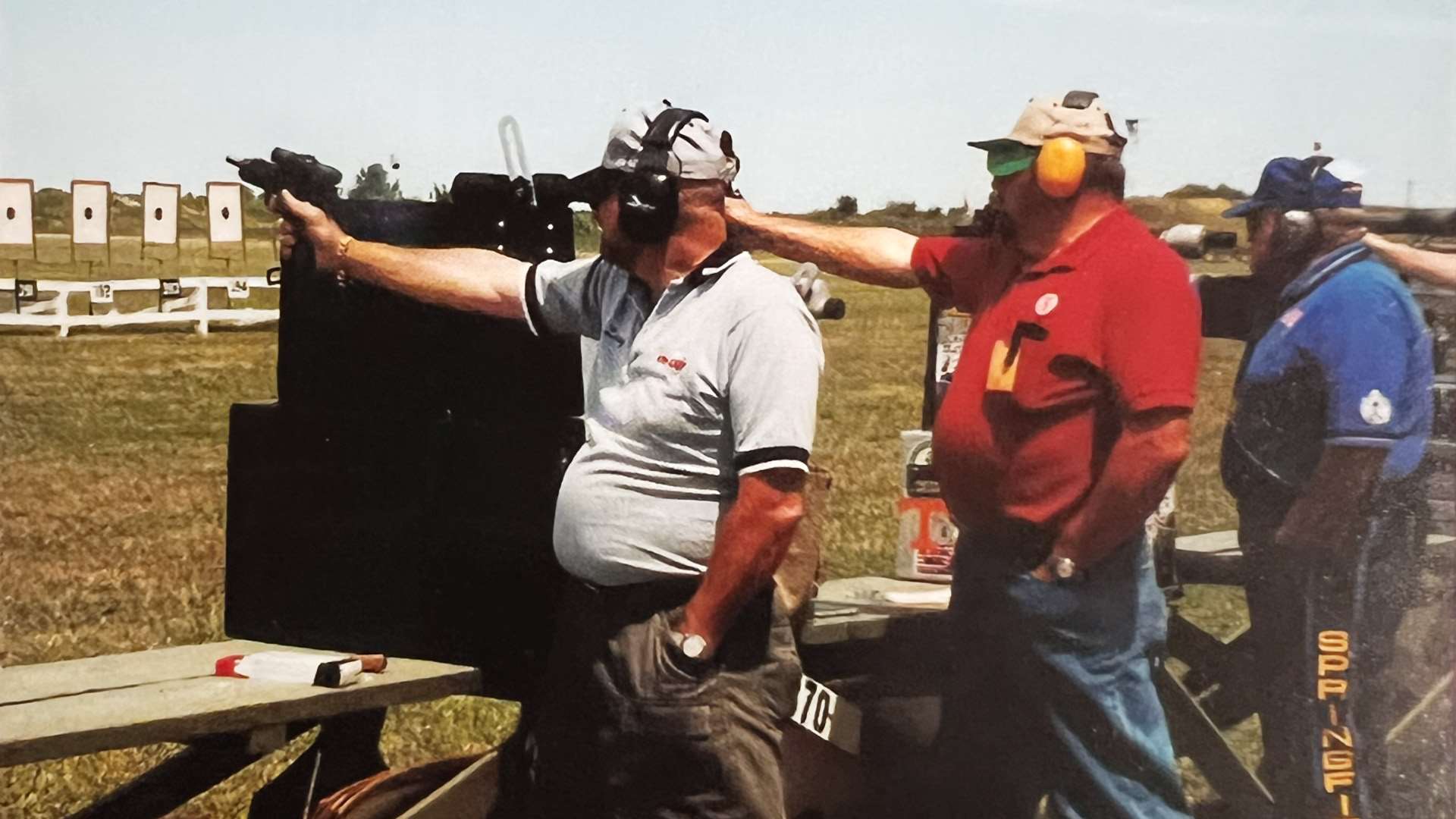
Zins was not the only repeat winner called to the pistol awards stage in 2002 as Darius Young and Theresa Meyer successfully defended their civilian and junior titles. In the women’s category, Kimberly Hobart joined an impressive list of female handgunners who have won at least three consecutive national titles, joining the likes of Gertrude Backstrom, Sallie Carroll, Ruby Fox, Barbara Hile and Gertrude Schlernitzauer.
The day after winning the 2002 .45 Championship and accompanying Orton Trophy, Henderson accomplished an impressive—and unprecedented—National Match first. He captured all three National Trophy individual awards. On July 14, Henderson, who won the President’s Match in 1997, won his second President’s Pistol Trophy, the General Custer Trophy as winner of the National Trophy Individual Match and the Military Police Trophy as high overall scorer in the National Trophy Team Match, which his team won. He also earned the General Mellon Trophy for high Army honors in the National Trophy Team Match. Prior to this year, no pistol shooter had won both President’s and NTI events in the same year, apart from Marine Staff Sgt. Mitchell Reed in 1990, who was awarded both titles by virtue of one fired score during a shortened program.
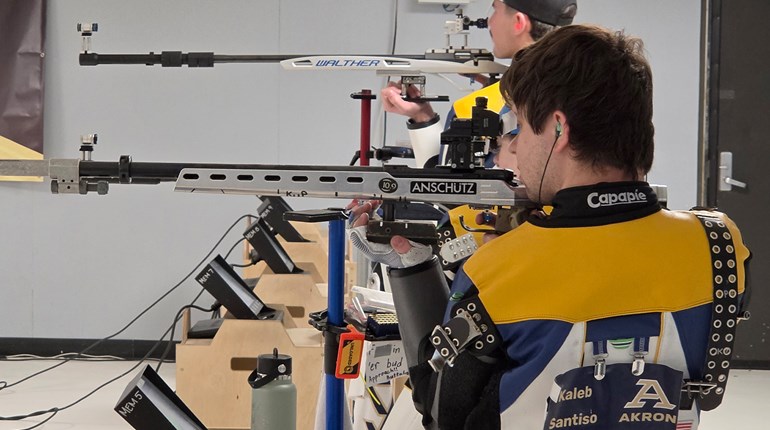
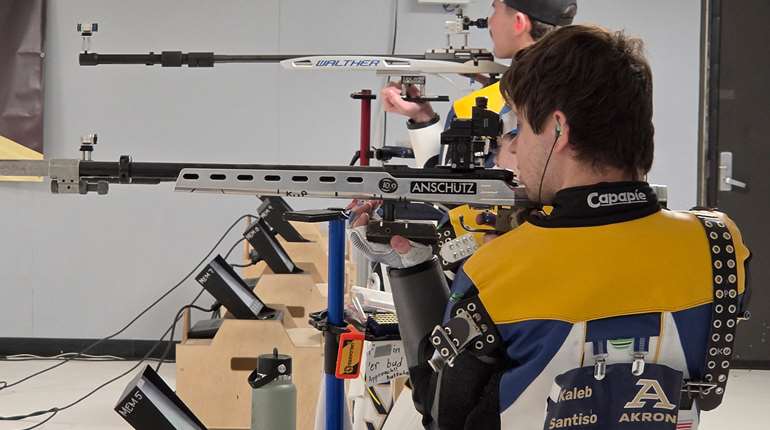
The first day of smallbore position competition began overcast, hot and humid. The winds that played havoc with the handgunners vanished and there was hardly a hint of breeze as junior Jamie Beyerle finished atop the iron sight field to earn the Bill Krilling Trophy for her high aggregate score of 1144-41X. Individually, Army Specialist Trevor Gathman opened with a winning iron prone score of 397-27X, standing honors went to Billy Grant with a 375-10X and Jeff Doerschler’s kneeling win marked the beginning of an impressive run for the Connecticut PhD.
On any-sight day, Doerschler accomplished a virtually unheard of aggregate sweep, marking his fourth consecutive match win when added to his iron sight victory from the day before. He took any-sight prone with a 398-25X, standing with a 377-10X and kneeling with a 386-19X for a record 1161-54X, surpassing by four points the previous high score set by Ken Johnson in 1995. The feat was one that even Wigger rarely accomplished.
Doerschler’s virtuoso performance of 2285-95X vaulted him into second place in the grand aggregate and possession of the Winchester Trophy as high civilian. Army Specialist Shane Barnhart, who finished third on day one and second on day two for a 2290-83X aggregate, earned his first Frank Parsons Trophy as national champion in addition to the D.I. Boyd Trophy for high service honors. His victory was even more impressive given that he shot the entire championship with iron sights.
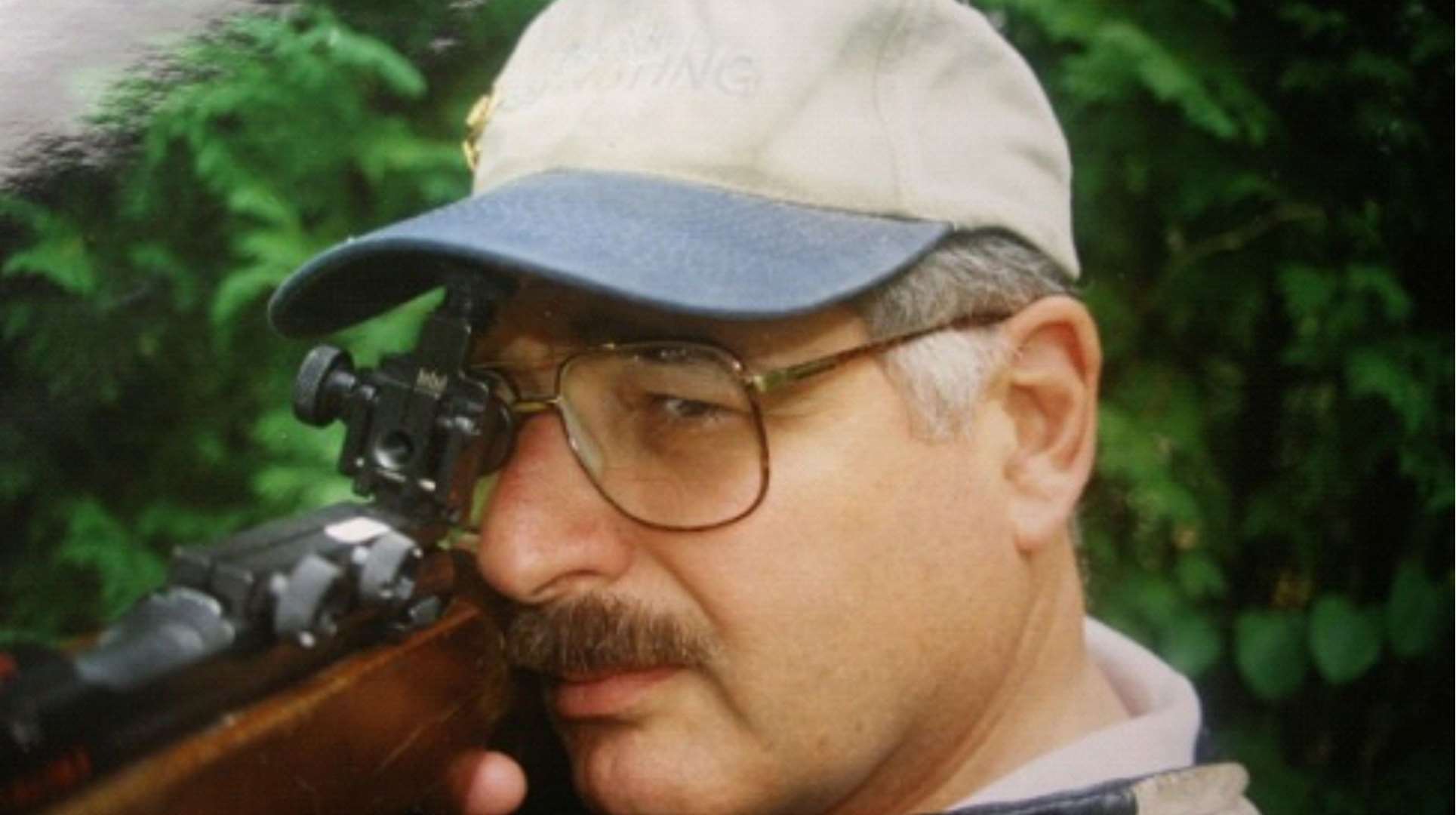
Beyerle earned both women’s and junior honors and her third place overall finish was the first top three performance in position by a woman since Kirsten Pasch placed third in 1989. For Fred Cole, this year capped a lifetime of accomplishments in the intermediate senior and senior categories that rivals Lones Wigger, Jr.’s open class tally. Cole, 80, took home the Meister Trophy as high senior—his 18th national outdoor title since 1977—while this year’s intermediate senior crown went to Hap Rocketto.
It was one decade ago that Wigger recorded his last three-position championship—his 21st overall. In the 10 years since his retirement from three-position competition he acquired three national prone championships, and his 2002 title brought his total count to eight.
The prone championship was marked by a significant wind event that forced a range evacuation during practice and damaged enough of the firing line cover that the entire awning was removed, marking the first time in 18 years that prone shooters competed out in the open. Bright sun, high heat and stiff winds awaited competitors for the first match, the Dewar, which 1998 national champion Cory Brunetti won with a perfect 400-28X. The perfect score was one of only three fired, an indicator of the testy conditions. The next two matches produced just one perfect score before 400s finally appeared in abundance at the shortest range, 50 yards. Overall, just six scores exceeded 1590 on the first day, with the high of 1594-94X fired by expert junior shooter Joshua Albright, who went on to claim the metallic-sight championship with a 3183-191X.
Day two proved no easier than the first as 400s were hard to come by and the daily aggregate went to Jim Miller with a 1595-114X. As the second stage of the second relay’s Meter match got underway a lightning storm forced a range evacuation. Before the line was called back, targets had been blown from their frames and Match Director George Harris called a rare smallbore range alibi—new targets were hung and the match was completed. Coincidentally, it was 10 years prior that a similar incident took place. Back then, post-storm confusion resulted in the now-infamous Match 54, where shooters who hung wrong targets after the delay, Wigger among them, lost 200 points. A decade later, T-shirts proclaiming “I Beat Wig in Match 54” help perpetuate the memory of the 100-yard any sight match now known as Match 340.
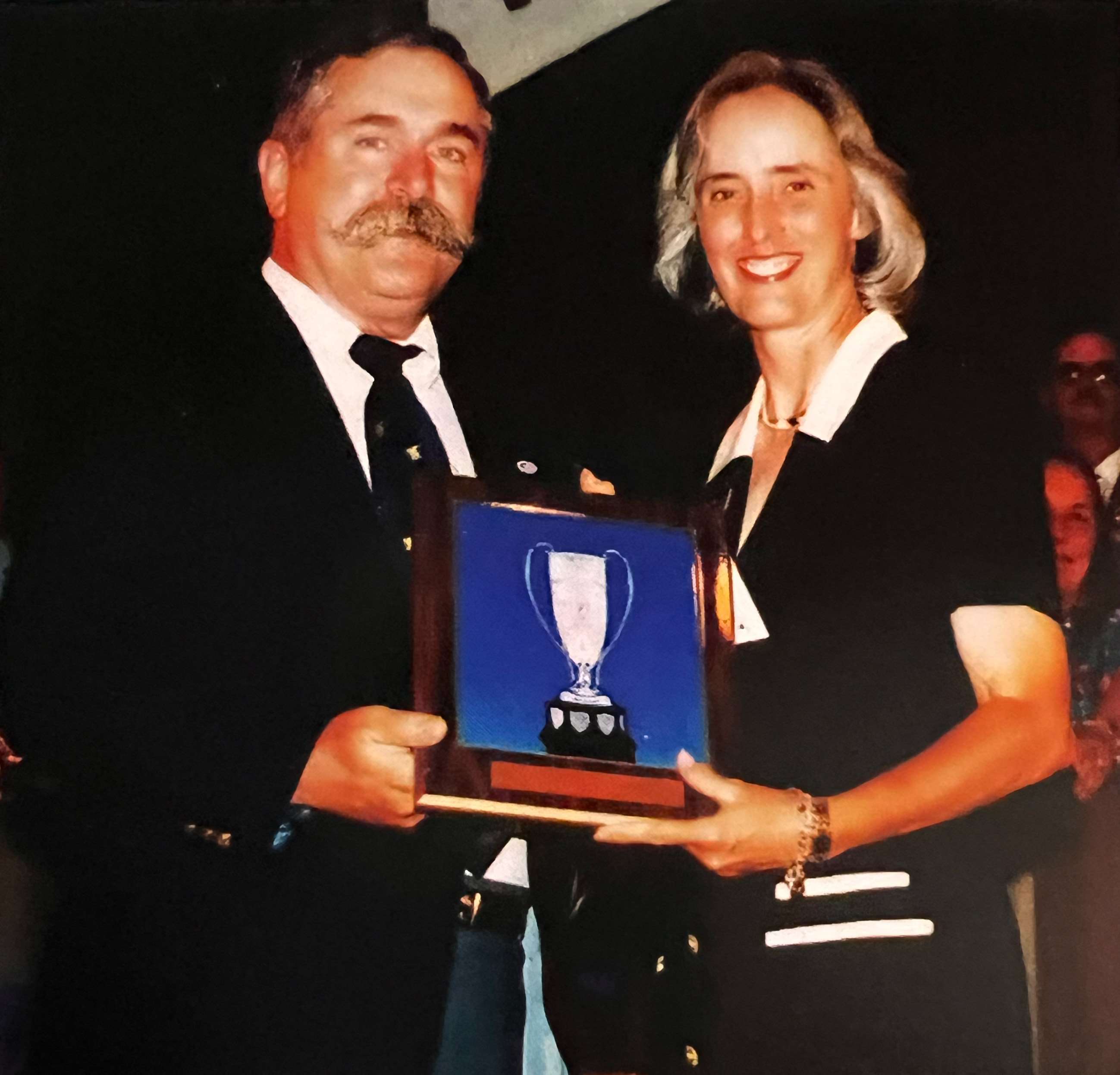
With a three-point lead going into the second half, Albright stayed with his iron sights while the rest at the top switched to scopes. Conditions were still rough as Wigger emerged victorious after day three with a 1599-128X, although the day ended in a more traditional Perry style when more than 70 perfect 400 scores were posted in the 50-yard match.
After a week of wild winds, the last day of prone began as a scope shooter’s delight—no wind to speak of and comfortable temperatures. Shooters quickly took advantage and many 400s were fired. Just as quickly however, threatening conditions returned and for the fifth time in six days, shooters were called from the line in anticipation of a severe storm. After a 90-minute delay in anticipation of a storm that never transpired, competition resumed and the first 1600s of the week appeared, led by Steve Kern’s 137 Xs.
When the awards podium was brought out and the top three places awarded, junior Daniel Ault was called to the third step. Service champion Barnhart took the silver medal and had he but a single point more he would have won and doubled up as champion in both disciplines in one year. In first place was the only person to have ever accomplished what Barnhart came so close to achieving. Wigger, who edged Barnhart 6377-468X to 6376-480X, not only earned his eighth national prone title, but claimed high senior and civilian honors as well. Wigger won national open position and prone titles in the same year twice over his illustrious career—in 1963 and 1973.
The ascending pattern of impressive title counts that began this summer with a fourth pistol title for Brian Zins and an eighth smallbore prone title for Lones Wigger continued when G. David Tubb successfully defended his high power crown for a remarkable 10th national title.
Tubb began the championship in trademark fashion—behind but in striking distance of the leader, which after day one was Marine CWO Dennis DeMille with a near-perfect 599 after three matches. DeMille followed through to collect the first of three aggregates that comprise the NRA Championship. His Vandenberg Cup score of 798 upped by one point Tubb’s previous high set the year before and was five better than Tubb’s second-place finish this year.
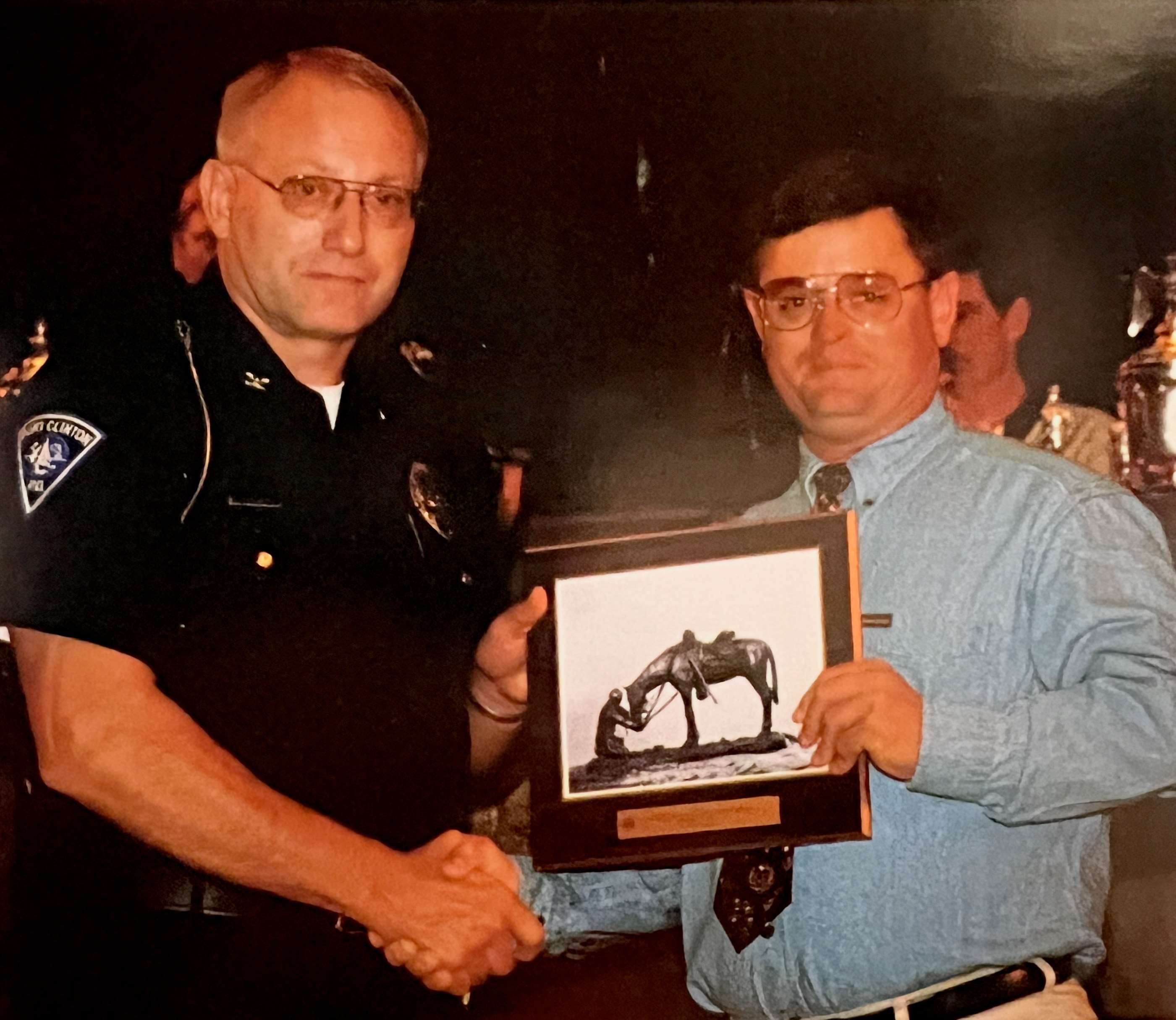
It wouldn’t be Camp Perry if wind didn’t play a role and fortunately for the shooters, a firing delay was called to clear the offshore safety zone when the wind was at its worst. When firing finally got started on the second day, competitors lined up for the Navy Cup Match, a 200-yard standing event. The 2002 winning score of 183 by former national champion Mitchell Maxberry is a testament to the challenging conditions faced by the world’s best high power marksmen. The record score for the match, a perfect 200-15X set in 1971, remains one of the most memorable performances for record holder Gary Anderson.
In addition to his Navy Cup win, Maxberry claimed the 600-yard Air Force Cup Match. But despite winning two of the four events that comprise the second championship aggregate, the Nevada Trophy Match, his 774 total placed him third overall. Tubb took the Nevada Trophy with a 778 that, while 21 points off the record score fired 18 years earlier, put him in perfect position for yet another championship run.
Entering the last day Tubb was 11 points up on Maxberry and proceeded to fire winning scores in the Appreciation and Calvary Cup Matches, the former in record-tying fashion, to close the door on all challengers with his field-topping 794 in the Clarke Trophy Aggregate. His 2365-121X total bettered by 13 points Maxberry’s second-place effort, while DeMille finished third at 2345.
Service Rifle honors went to Sgt. 1st Class Kevin McMahon of the U.S. Army Marksmanship Unit, a two-time National Trophy Individual (NTI) Match winner (1997, 1999) who had a successful week leading up to this year’s NRA Championship with a President’s Match win and membership on both winning National Trophy Teams. (McMahon’s success carried over into long-range competition as well, where he earned the Billy C. Atkins Trophy for high service rifle score in the long-range championship.) The Daniel Boone Trophy for the NTI win went to Marine Staff Sgt. David Karcher.
Junior national high power champion Robin Maly also fired the high score among the women competitors while former junior champion Adam Bester and Bert Medina defended their respective titles in the collegiate and police categories and Mid Tompkins won the Townsend Whelen Trophy as high senior for the fourth time in five years. Maly’s earning of both junior and women’s national high power titles in the same year was the first time for the occurrence in National Match history.
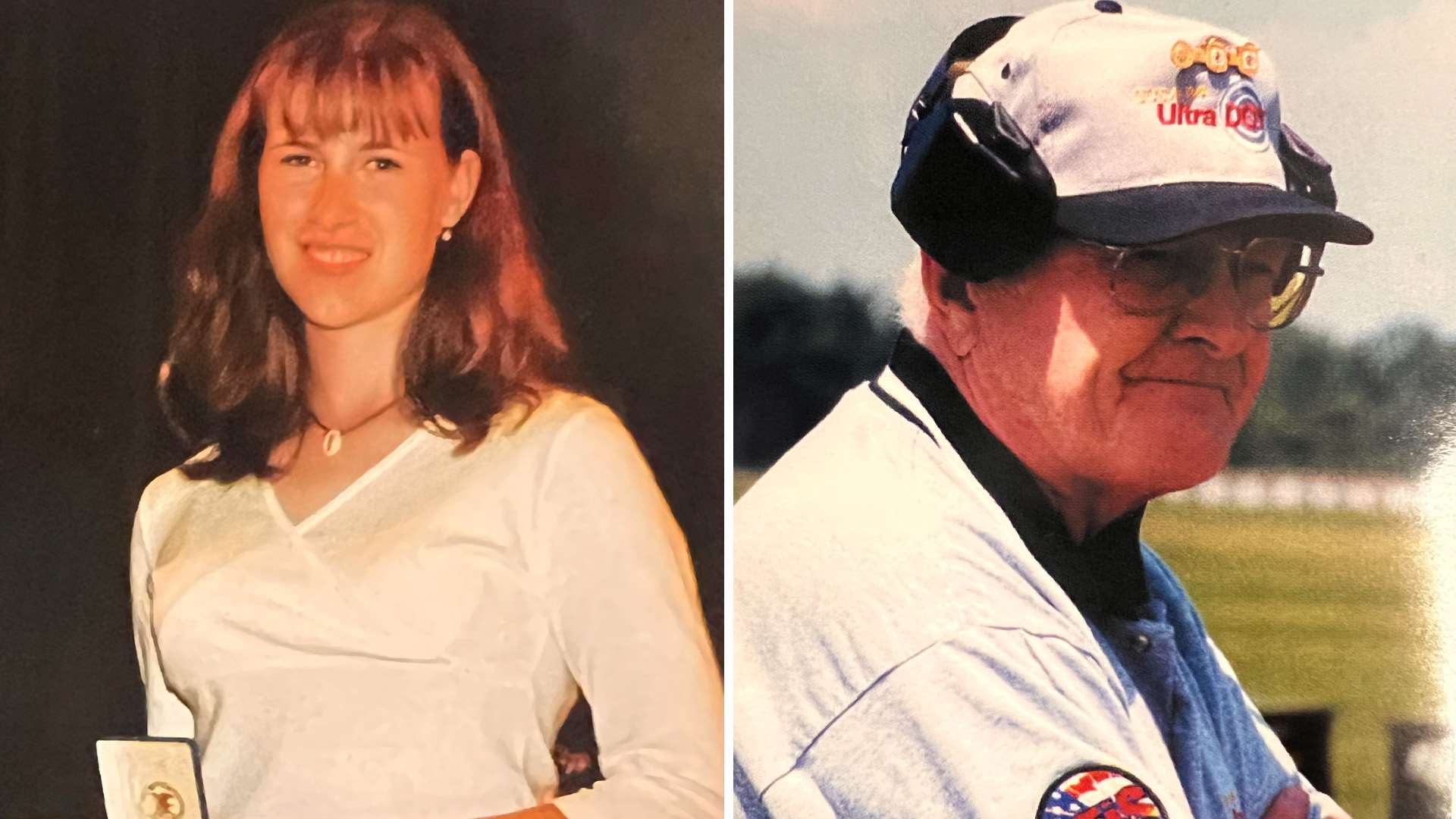
Not to be left out of the wind-doping game, more than 500 long-range competitors were tested by challenging gusts and squalls—not to mention bouts of target-blurring haze—before the 2002 Tompkins Trophy winner emerged victorious by an X. Josh Harless, 19, kept the recent youth movement alive in long-range competition, following a two-year reign by young phenom Michelle Gallagher, whose younger sister Sherri finished third overall this year by a 16-X margin. Harless, Sherri Gallagher, and runner up Bob Gustin all shot 1438s over the course of the four-day, six-match championship comprising a 1450-point possible. High power champ Tubb and three-time long-range champ and former national high power champion Nancy Tompkins-Gallagher completed the talented class of top five finishers.
Gustin, whose number of years competing at Camp Perry (38) exactly doubled the age of Harless, earned the Canadian Cup for high aggregate score from the Leech, Wimbledon and Palma Individual Matches. Individually, Norman Houle topped the Leech Cup field, Lee Land won the Wimbledon Cup, and Bert Rollins, who was named national senior long-range champion, won the Palma contest. Additionally, Gustin won the Sierra Trophy for posting the high 1,000-yard Palma aggregate score from the Andrus and “Doc” Aiken Trophy Matches, which included a win in the former.
National Matches Facts
In 2002, three new 600-yard matches were added to the long-range championship, replacing the three high power across-the-course events (Army Cup, Air Force Cup, Crowell Trophy) that previously factored into the Tompkins Trophy Match aggregate score. As a result, the long-range championship was extended by a day.
The Harry Reeves Match, begun in 2001, memorializes the life and accomplishments of the six-time National Pistol Champion. In Reeves’ day, centerfire pistol competition was almost invariably fired with a .38 Special revolver and the Reeves Match re-creates those conditions: a National Match course fired with a center-fire revolver of .32 caliber or larger. The competition also encourages nostalgia as the fine old classic revolvers of yesteryear like the Smith & Wesson K-38 and the Colt Officer’s Model join a few other “old timers” (such as the Colt New Service), as well as modern revolvers on the firing line.