The below is an excerpt from the 1978 book, Olympic Shooting, written by Col. Jim Crossman and published by the NRA.
1948—London: The Cookie Does Not Crumble
By Colonel Jim Crossman
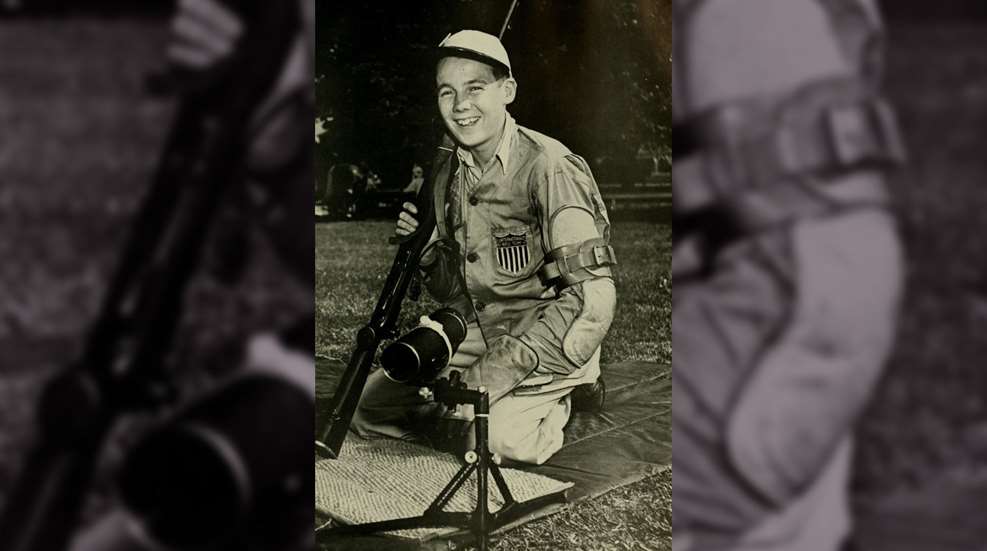
He was not the sort of person that you would expect to be carrying the chances of your country and trying to break the losing tradition of a quarter century. Less than 5½ feet tall, and having to step on the scales a couple of times to get them up to 120 pounds, he looked considerably younger than his 20 years. The tradition he was trying to break was that of the U.S. shooters getting skinned at the Olympic Games. The U.S. had done well in the old Games, ending with several medals in 1924, but there was no shooting in 1928, and the United States did not scare anybody in 1936. So here it was 1948 and almost a quarter century since the U.S. had won a medal.
Forgetting that Dinwiddie had won a medal for the United States when he was only 17 and that Lane had won three gold medals at about 20, the foreigners were not inclined to take the youngest member of our 1948 team seriously. But they didn't realize that this was Arthur Cook, the "Cookie" that does not crumble.
The 1948 Olympic Games in London were markedly different from the games of 40 years before in London, which had been marked by bickering and bitterness—although not in the shooting sports. Unfortunately, neither Baron de Coubertin nor his successor Count Baillet-Latour were alive to see the spirit of friendship and cooperation that prevailed in these games—the effect they had always hoped the Games would produce. To avoid any possibility of trouble so soon after World War II, Germany and Japan were not invited to the Games, although all other nations were. The Russians sent only observers.
The British had not fully recovered from World War II and were not able to build an elaborate Olympic village, as had been done at Los Angeles in 1932 and Berlin in 1936. Instead the competitors were housed in army barracks at Uxbridge, 15 miles from London and 10 miles from the stadium.
The U.S. shooting team spent their first week there and then moved down to Bisley Camp. Over the years, various British shooting clubs had built fine pavilions at Bisley, where their shooters stayed during matches. The American team was housed in the handsome old clubhouse of the London and Middlesex Rifle Association. Since the ranges at Bisley were available for practice only for the week before the matches, the team had to practice where they could, including the military range near Uxbridge, the range of the Ham and Petersham Club, and the range of the Twickenham Club.
Even with the difficulty in practicing, the shooters were glad to be there, especially the free rifle shooters. Six months before, when the program had been announced, the chairman of the Olympic Rifle Committee, Gen. Milton A. Reckord, had publicly questioned whether the United States should send a team. He cited the objections which American shooters had always raised about many of the Olympic events—they called for a form of shooting which was popular in Europe but unpopular in the United States, and the course of fire permitted specialized guns which were not made in the U.S. and which were possessed by only a few U.S. shooters. The same arguments could be made, to a large extent, about the slow-fire free pistol and the rapid-fire pistol events. But these arguments did not hold for the smallbore rifle event—60 shots prone at 50 meters. The American outdoor smallbore rifle shooter generally did not shoot anything but prone, and while the tough international metric course was relatively new, having been adopted by the NRA that year, it did not seem to be that much different from the U.S. 50- and 100-yard course and the U.S. shooters should have been good at it.
Read Part 2 of our retrospective on shooting events at the London 1948 Olympic Games.
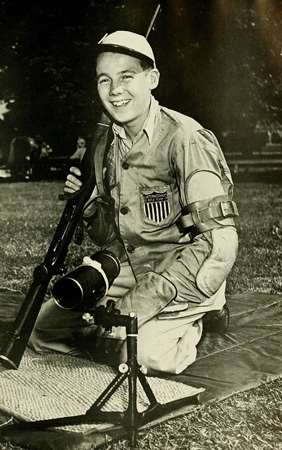
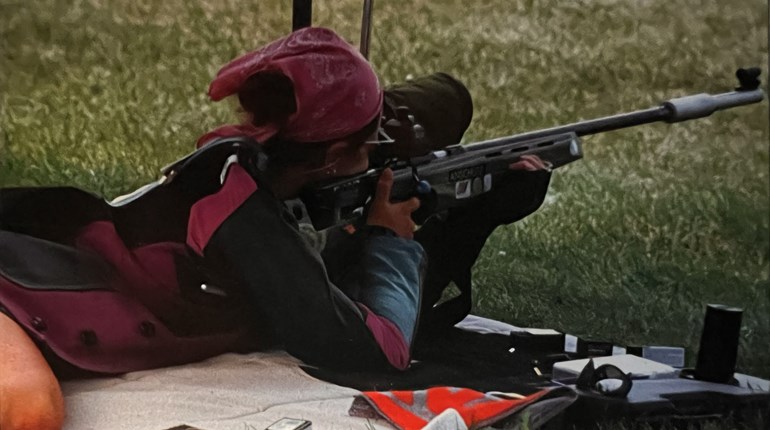
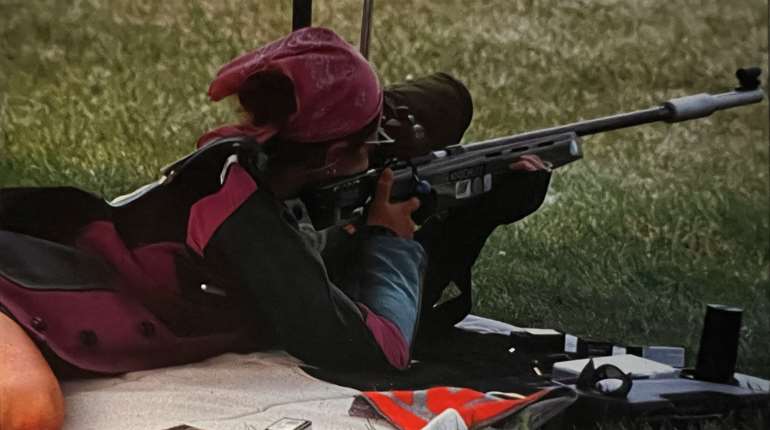
Photo: Arthur Edwin “Art” Cook, “the Cookie that would not crumble,” is pictured here at the 1948 Olympic Games in London, England. Sadly, Cook passed away on Feb. 21, 2021.
Read more: Berlin 1936 Olympics: Amateurs Once Again
Most Popular