The below is an excerpt from the 1978 book, Olympic Shooting, written by Col. Jim Crossman and published by the NRA.
1964—Tokyo: Training Does Pay Off
By Colonel Jim Crossman
All that promotion effort and hard work to improve American shooting in the international events paid off in the 1964 Olympics—that is, if you think winning medals is a payoff. Look at how the United States had been doing in recent years: Three gold medals in competition since 1928 across six Games and 29 shooting events.
This was not an impressive record compared to anybody, let alone compared to the fine showing made by the Soviets in the more recent Games. Since it entered competition in 1952, the USSR had garnered 19 total awards, compared to the U.S. with 12 going back to 1928.
The problem was the same as it had always been. The events shot in the Olympics were generally not those widely shot in the United States. The Olympic events required different equipment and different techniques than were common in the United States. The obvious answer was to get more shooting of this type in the U.S., and a concerted effort was made in this direction by a number of organizations.
Some of the efforts have already been mentioned. One was the encouragement by the National Rifle Association for affiliated organizations to hold events over international courses. Another was the establishment of the International Shooting Fund on a continuing basis, rather than on the one-shot basis of past appeals for team support. The establishment of the NRA's International Championships helped, but this championship had to wait until adequate ranges were available. The NRA moved into the competitive shotgun field, not to conflict with the Amateur Trapshooting Association and the National Skeet Shooting Association in domestic shotgun shooting, but to promote the international style of shooting which was not being actively promoted by either shotgun group.
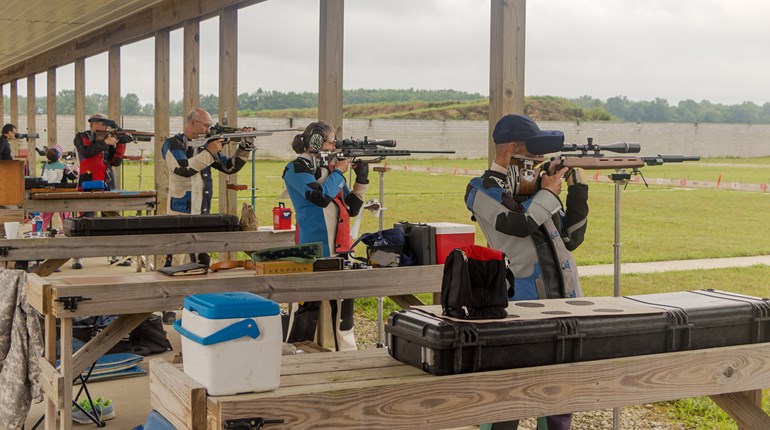
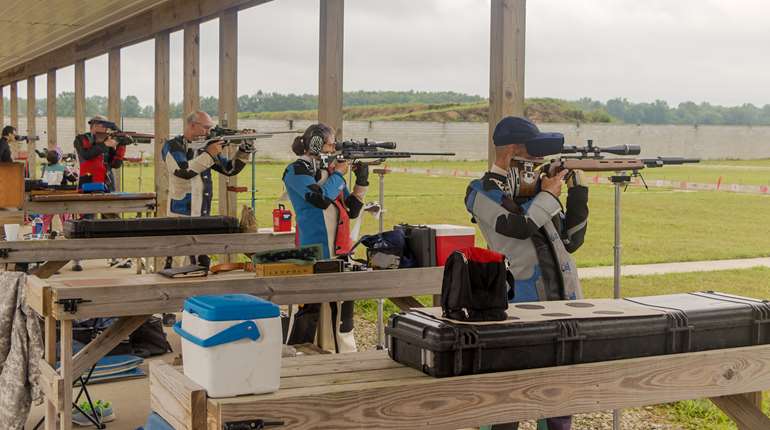
A shot in the arm for international shooting came with the decision of the military marksmanship units that they could and should contribute. Their contribution was first in the form of international ranges where practically none had existed in the United States before. Suitable ranges meant proper conditions for tryouts for international teams and tough training grounds and proper facilities for the International Championships. The military services developed fine new equipment and, equally important, developed improved training methods and techniques.
A lot of people were involved in improving our shooting and a tremendous effort went into the program. While the Olympics were shot only every four years, International Shooting Union and Pan-American matches were held during the years between. A concerted effort was made to get teams to these events, to get shooter experience, to find out how the American effort was developing, and to see what other people were doing.
Although Americans took some bad lickings along the way—and some occasional awards—by 1958 some signs of hope were to be seen. The Soviets beat us at the International Shooting Union World Championships in Moscow, but the U.S. shooters were pushing them all the way. By the 1962 World Championships at Cairo, U.S. shooters had progressed to the point where they just about split the awards with the Soviets.
All of which brings us to 1964—the year of hope. To the people who had been watching the development of American shooters, this seemed like the Olympic year that would pay off. The United States had a fine group of military and civilian shooters with great capabilities and considerable experience. There were no longer only one or two outstanding shooters in an event; there were many top-rate performers—to the extent that the holder of a world record did not get to shoot in his event.
The final tryouts were held on the international ranges of Fort Benning, shooters firing three times over the course to be used at the Olympics, except in the case of the shotgun. The trapshooters shot 100 birds for three days, where the Olympic match was 200 birds. Spread over three days, the finals were designed to keep out the shooter who happened to luck-in one good score.
Read Part 2 of our look back at the Tokyo 1964 Olympics.
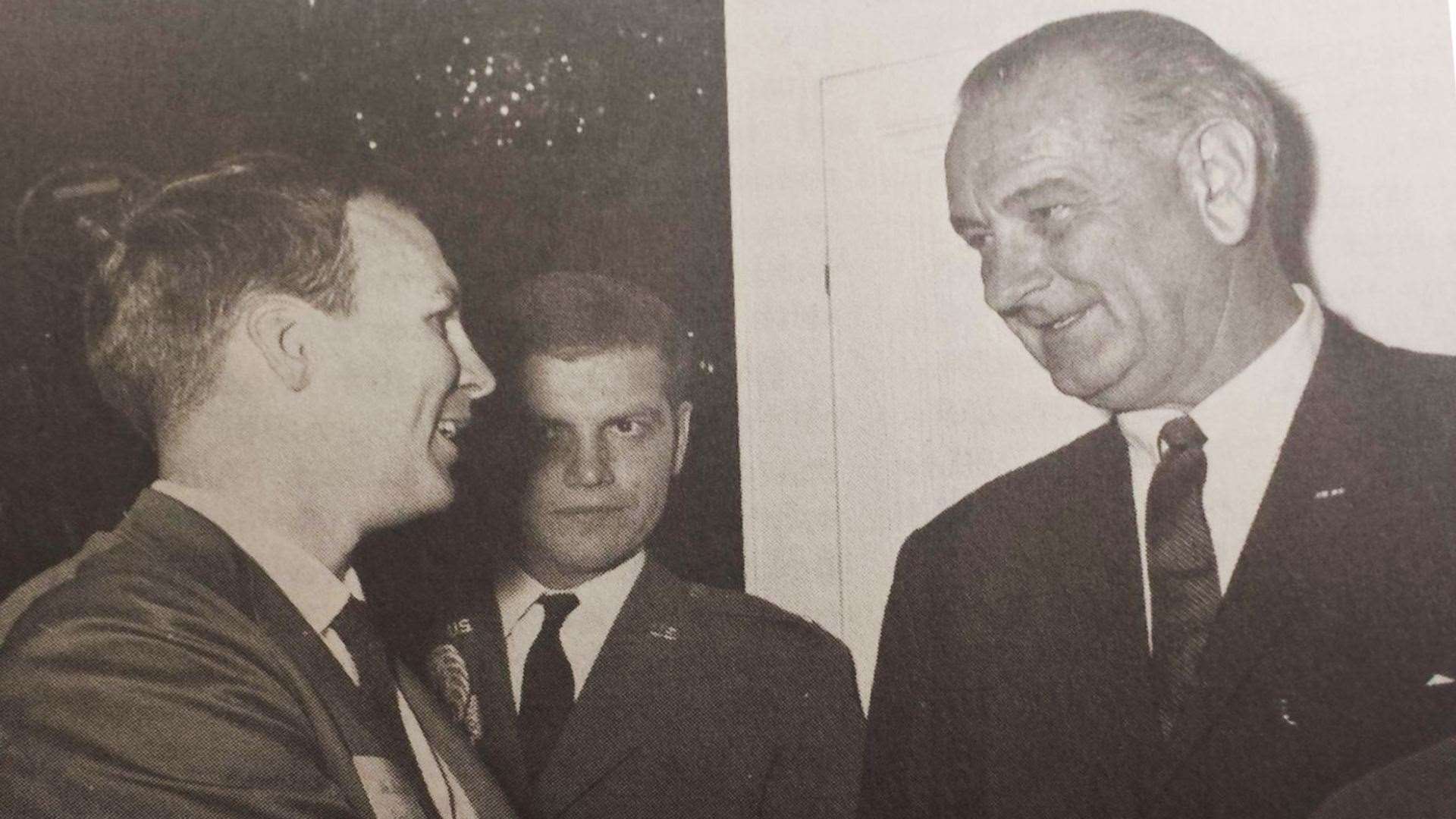
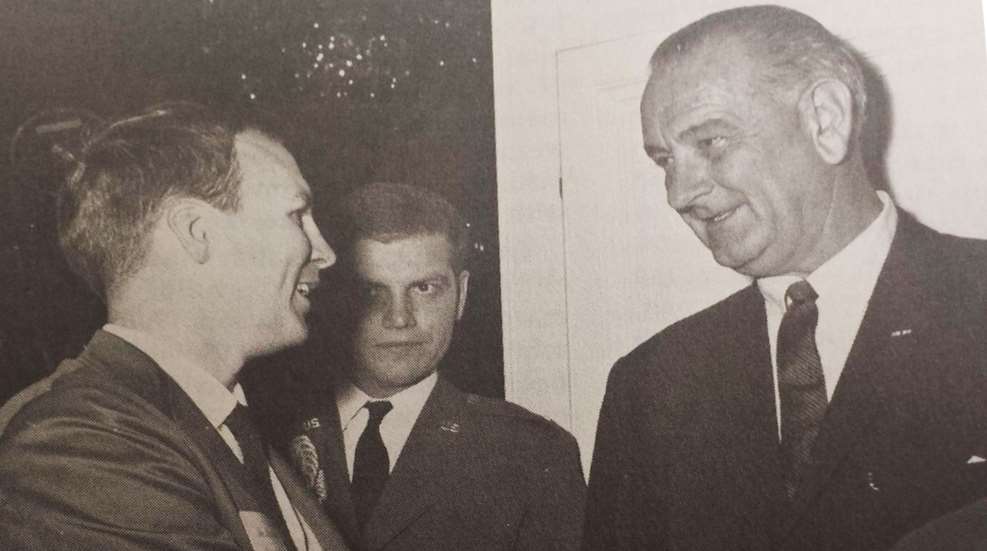
Photo: Bill Morris receives congratulations from President Lyndon Johnson following his bronze medal in clay pigeon in Tokyo. Photo from NRA Archives.
Read more: Return and Renaissance: U.S. International Rifle Shooting 1948-1966
Most Popular