** When you buy products through the links on our site, we may earn a commission that supports NRA's mission to protect, preserve and defend the Second Amendment. **
If you had 10 pro shooters in a room, and asked each of them what the number one tip is to improve shooting skills, we bet at least nine of them will reply "dry-fire practice." And with good reason—most really great, championship-caliber shooters dry-fire a lot.
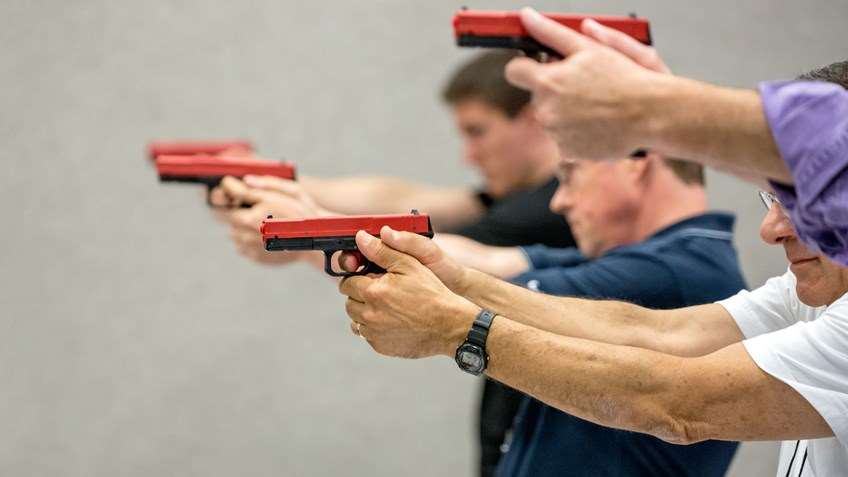
We often receive questions from readers about dry-firing with a firearm. Check out the query below, along with our explanation on why dry-fire-practice is extremely important.
Q. What is dry-firing and how do I do this with my firearm?
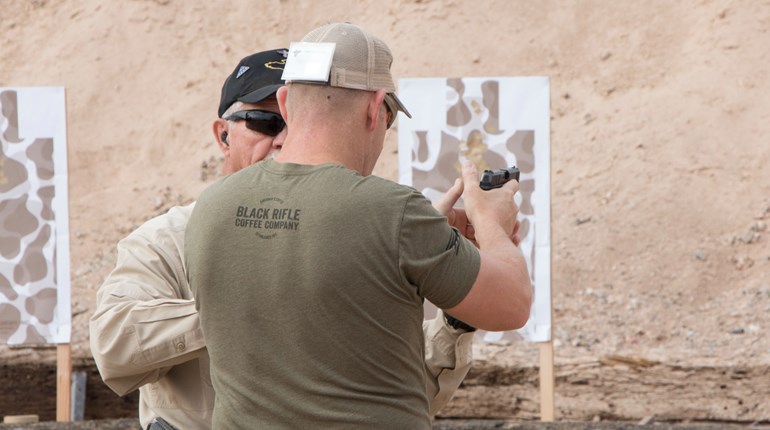
A. Many competitive shooters use dry-firing as a training tool both at the range and at home. During some competitions, such as international pistol, competitors dry-fire between live rounds to review the fundamentals. Many competitors even go through a dry-fire routine at competitions prior to stepping to the firing line.
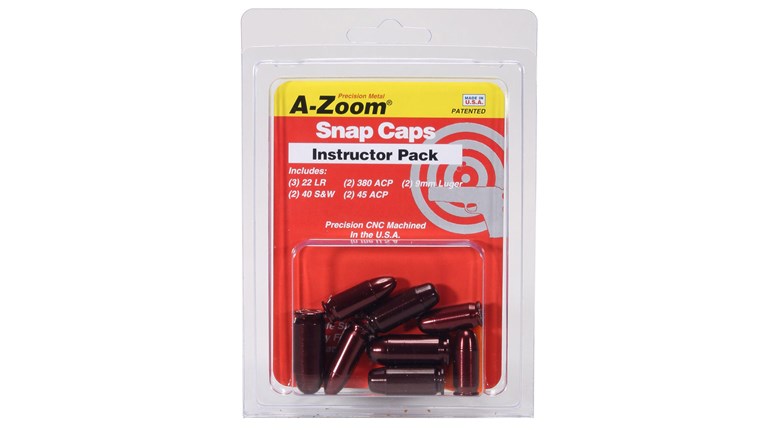
According to the NRA Firearms Sourcebook, dry-firing is the releasing of the firing pin on an unloaded chamber of a firearm. It is an inexpensive, safe and time-efficient way to enhance shooting skills. This is an excellent way to train for both beginners and advanced shooters alike. Fundamentals can be drilled without the interruption of recoil while improving coordination, draw speed from a holster and getting into and out of various shooting positions safely. Remember to always use a snap-cap or dummy cartridge when dry-firing a rimfire to relieve wear caused by the firing pin.
Despite the fact that dry-firing does not require live ammunition, it is important to follow these safety rules:
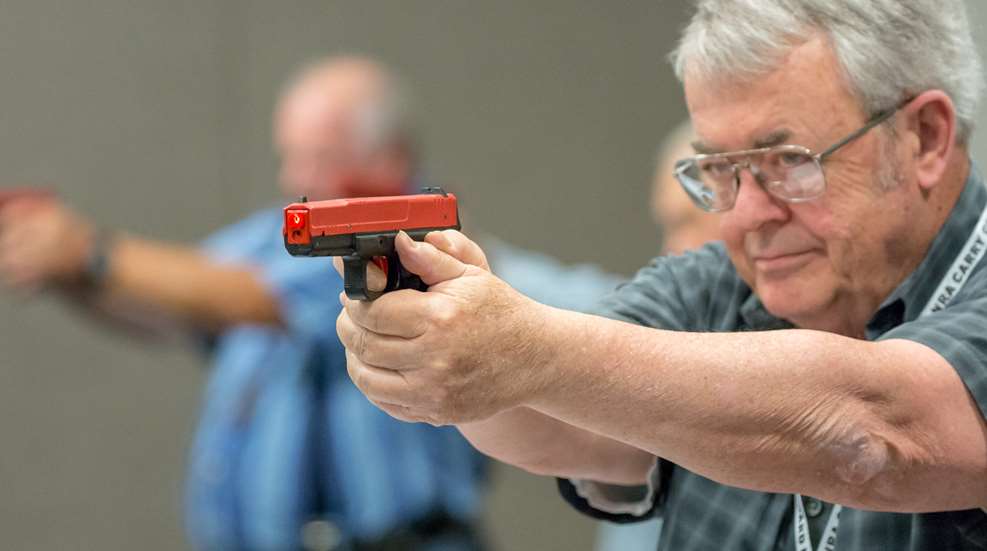
The SIRT training pistol was specifically designed for dry-fire practice.
We often receive questions from readers about dry-firing with a firearm. Check out the query below, along with our explanation on why dry-fire-practice is extremely important.
Q. What is dry-firing and how do I do this with my firearm?
A. Many competitive shooters use dry-firing as a training tool both at the range and at home. During some competitions, such as international pistol, competitors dry-fire between live rounds to review the fundamentals. Many competitors even go through a dry-fire routine at competitions prior to stepping to the firing line.
According to the NRA Firearms Sourcebook, dry-firing is the releasing of the firing pin on an unloaded chamber of a firearm. It is an inexpensive, safe and time-efficient way to enhance shooting skills. This is an excellent way to train for both beginners and advanced shooters alike. Fundamentals can be drilled without the interruption of recoil while improving coordination, draw speed from a holster and getting into and out of various shooting positions safely. Remember to always use a snap-cap or dummy cartridge when dry-firing a rimfire to relieve wear caused by the firing pin.
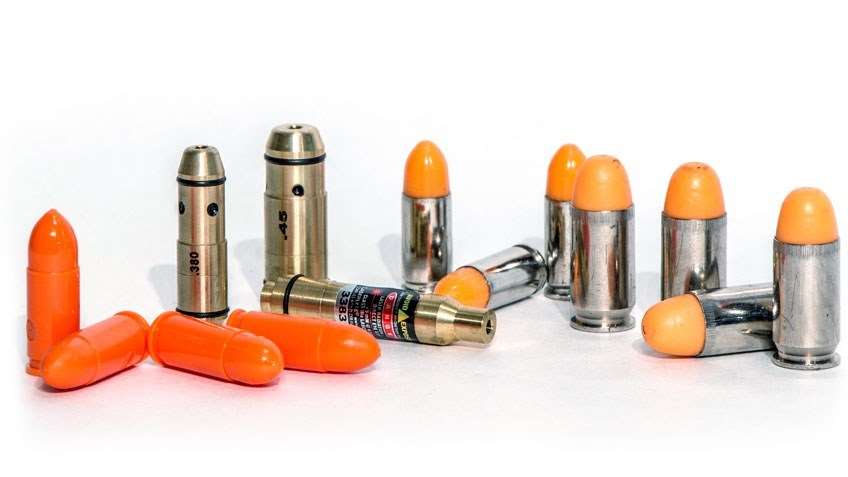
Dry-firing allows you to save on ammo and practice important skills in the comfort of your home. Using dummy rounds or snap caps such as the ones pictured here will add an extra layer of protection for your gun during dry-fire practice.
Despite the fact that dry-firing does not require live ammunition, it is important to follow these safety rules:
- The firearm must be unloaded.
- All dry-firing must be done in a dedicated dry-fire area with a safe backstop in the direction the gun is pointed.
- No live ammunition is permitted in the designated dry-firing area.
- Only dummy ammunition is allowed to be used for reloading drills.
- Always wear eye protection.
And remember, even though the gun is unloaded, it is always important to practice safe firearm handling in keeping the barrel pointed in a safe direction.
If you are interested in adding dry-firing to your pre-competition warm-up, ask a range official where the designated dry-fire area is prior to beginning your warm-up. This is important for the safety of all competitors and match officials.
Have a question? Email us at [email protected]