
“Those who follow the NRA National High Power Rifle Championships are going to remember two things about the 1993 event. G. David Tubb of Canadian, Texas, captured his sixth NRA National Championship, equaling the total number won by competitive legend Middleton Tompkins. And they will remember that the U.S. Marine Corps won almost everything else, chalking up its most dominant visit to the Lake Erie shore since 1956. It happened at Camp Perry August 3-16.”
—J.B. Roberts, Jr., American Rifleman, October 1993
Ninety years after the first federally mandated National Match was conducted at Sea Girt, New Jersey, legislative battles had become standard fare for program officials and administrators. In 1993, despite an earlier order that called for the DCM to be self-sufficient by the end of 1992 and subsequent House and Senate proposals to do away with the DCM altogether, the program received a $2.5 million appropriation, thus allowing the National Matches a modicum of federal funds.
Tournament officials, led by DCM Director Col. Paul Cullinane, Jr., and NRA National Match Coordinator Ed Andrus, worked within their means to provide competitors a fully functional program. (In 1992 competitors contributed more through higher match and lodging fees. National Trophy match fees for seniors included the cost of ammunition, a policy that changed in 1995 when fees for matches and ammunition were handled separately.) And volunteers, led by nearly 20 individuals who reached personal milestones of 10, 15, 20 and 25 years of service at the National Matches, continued to provide the critical support needed to ensure the championships ran smoothly.
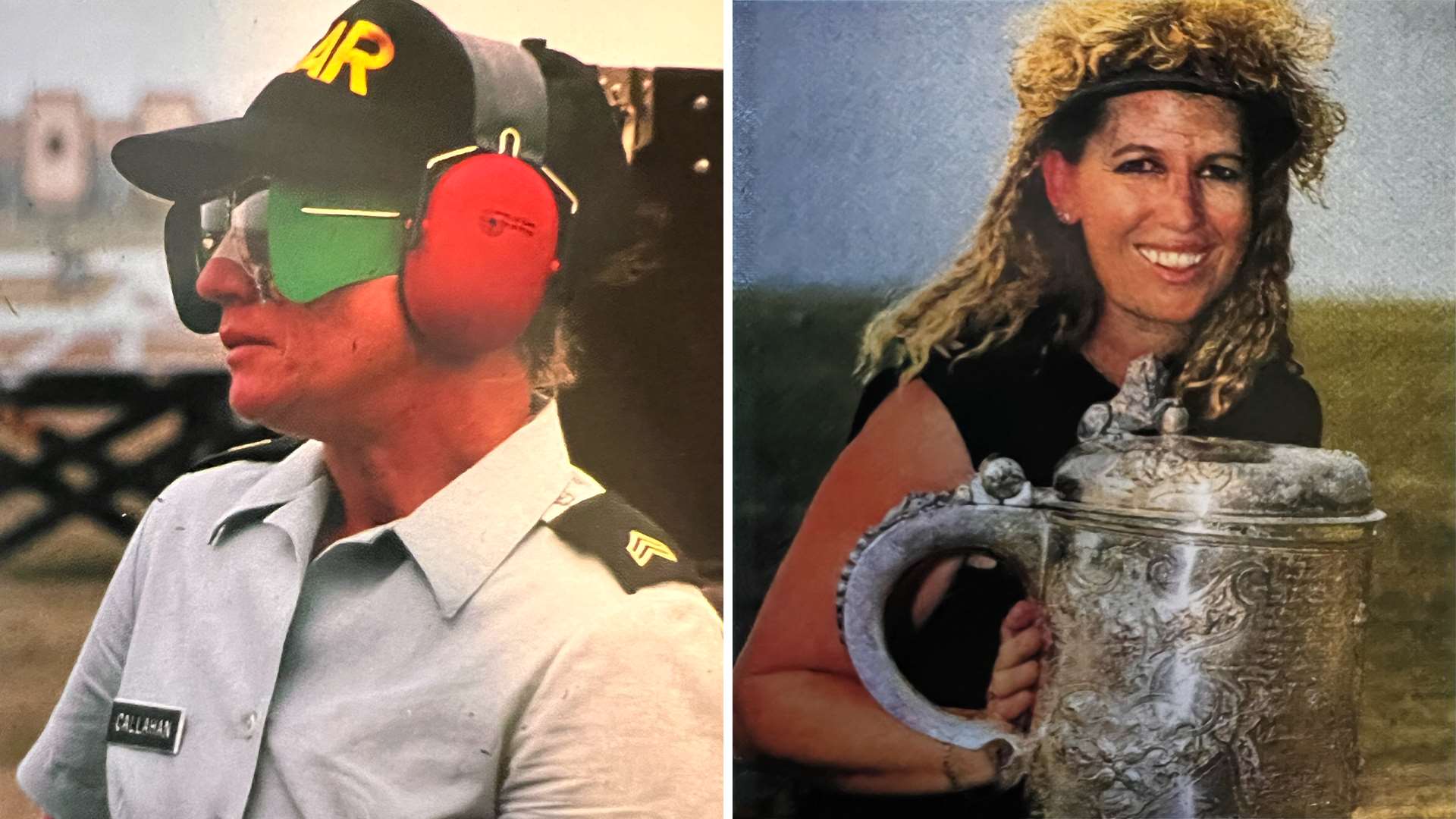
Pleasant weather conditions allowed for a smooth day of .22 firing and Staff Sgt. Richard Lamb started what would become a three-gun championship sweep for Army Reservists by posting a winning 892-44X score. On centerfire day Master Sgt. Steve Reiter, the 1991 overall national champion, battled the wind better than the rest to score a field-topping 883-30X while on the following day, teammate Darius “Doc” Young upped the .45 championship record score by a point with his 892-53X effort, which included clean timed and rapid fire matches.
When aggregates were tallied, Reiter emerged the overall winner with a 2660-123X to claim his second national title in three years. He also earned the distinction as the only shooter to reach the 2660 plateau at the National Matches since Don Hamilton’s record 2668 in 1969. Eight points behind Reiter was two-time national champion Young, who now had three top three finishes since winning his last title four years earlier.
Marine Master Sgt. Mitchell Reed, who started off the program with the Preliminary Championship win, earned service honors and took third overall with his 2650. Additionally, he contributed to victories in both the NRA Team Aggregate and National Trophy Team Matches. Delores Williams topped the women’s category while Ricardo Rodriquez and John Bickar defended their titles among the civilians and juniors, respectively.
The Marine dominance in the Board matches was complete when Sgt. Shane Clevenger won the President’s Match and Staff Sgt. Mario Lozoya, who won both the NRA national title and President’s Match in 1992, fired the high score in the National Trophy Individual Match.
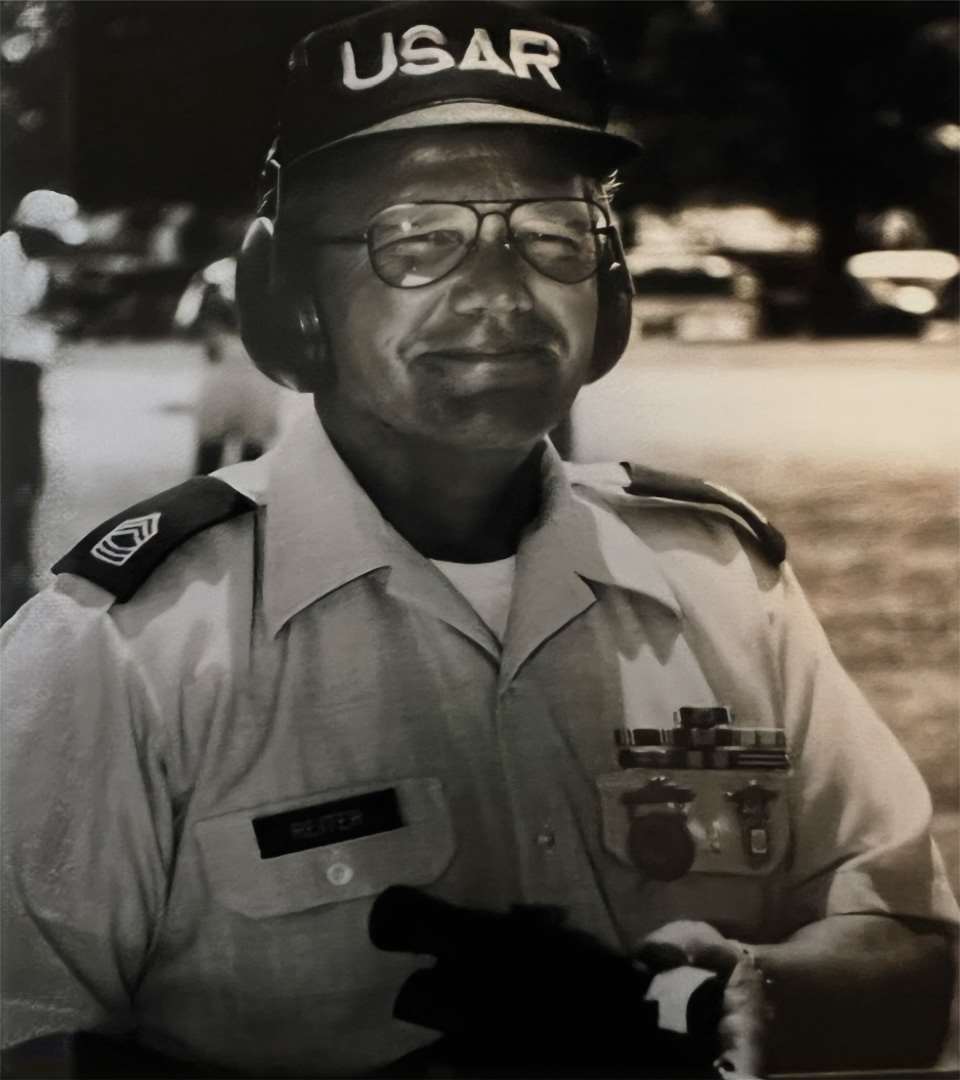
Since 1963 an entry by Lones Wigger, Jr., in the NRA national three-position championship was a given. A victory by Wigger was almost just as certain, for he accumulated an astounding 21 wins in 30 years. Suffice to say, an era came to an end this year when the field did not include a Wigger entry.
Wigger decided to bow out for a number of reasons. First and foremost was the deteriorating condition of his right knee, brought on by a lifetime of crouching over in the kneeling position. It was not unusual to see Wigger rise up slightly at the end of a kneeling stage and slip his kneeling roll under his knee to rest before attempting to stand. Additionally, three-position shooting required more training time than he was able to commit given his position as Director of the U.S. Shooting Team—ironic in that his office at the U.S. Olympic Training Center in Colorado was in the very building that housed the finest 50-meter indoor range in the country. Finally, he had nothing more to prove as a position shooter for he had won about everything there was to win—indoors and out—nationally and internationally.
The race to replace Wigger as national champ began with Bill Beard first out of the gate. The Army Reserve Major and member of the 1984 Olympic Team shot a 397-29X in the opening metallic sight prone match. Fellow Reservist Lt. Web Wright, III, fired a record 378 standing while civilian Ken Benyo was among a trio of shooters to best his own record (377) set the year prior in the kneeling match. Benyo, who fired a 380 this year to outdistance Maj. Jim Meredith and Eugene Opsasnick for the win, displayed not only a prowess in kneeling, but a physical build similar to Wigger, prompting many of his shooting companions to refer to him as “Little Wig.”
At the end of the first day Meredith had earned metallic sight honors with an 1142 and Benyo sat just two back. Beard started the any sight aggregate in the same way he began metallic, with a prone win while Wright and Benyo also repeated with wins in the standing and kneeling matches. The biggest repeat win, however, was Meredith’s, whose second aggregate victory in two days earned him the overall and service championships with a 2267-82X total—his second national three-position title in four years.
Wright finished 10 back to take second place and Benyo picked up both civilian and collegiate titles with his 2254. Army Lt. Kristin Peterson won her second women’s title in three years and Fred Cole won just about every senior match en route to his sixth consecutive senior championship, while Jamie Caruso earned the top junior honor.
In a year that was ripe for a newcomer, it turned out there was no substitute for experience at the top. Meredith’s position win put him second on the all-time winner’s list, tied with Art Cook and Tommy Pool at two each—just 19 wins behind Wigger.
As surprised as the line was not to see Wigger enter the position championship, they were amazed not to see him laying out his gear on the first day of prone. His responsibilities at the Olympic Festival in San Antonio prevented him from being at Perry for the entire championship, capping an unusual year where Wigger did not contend for a national title.
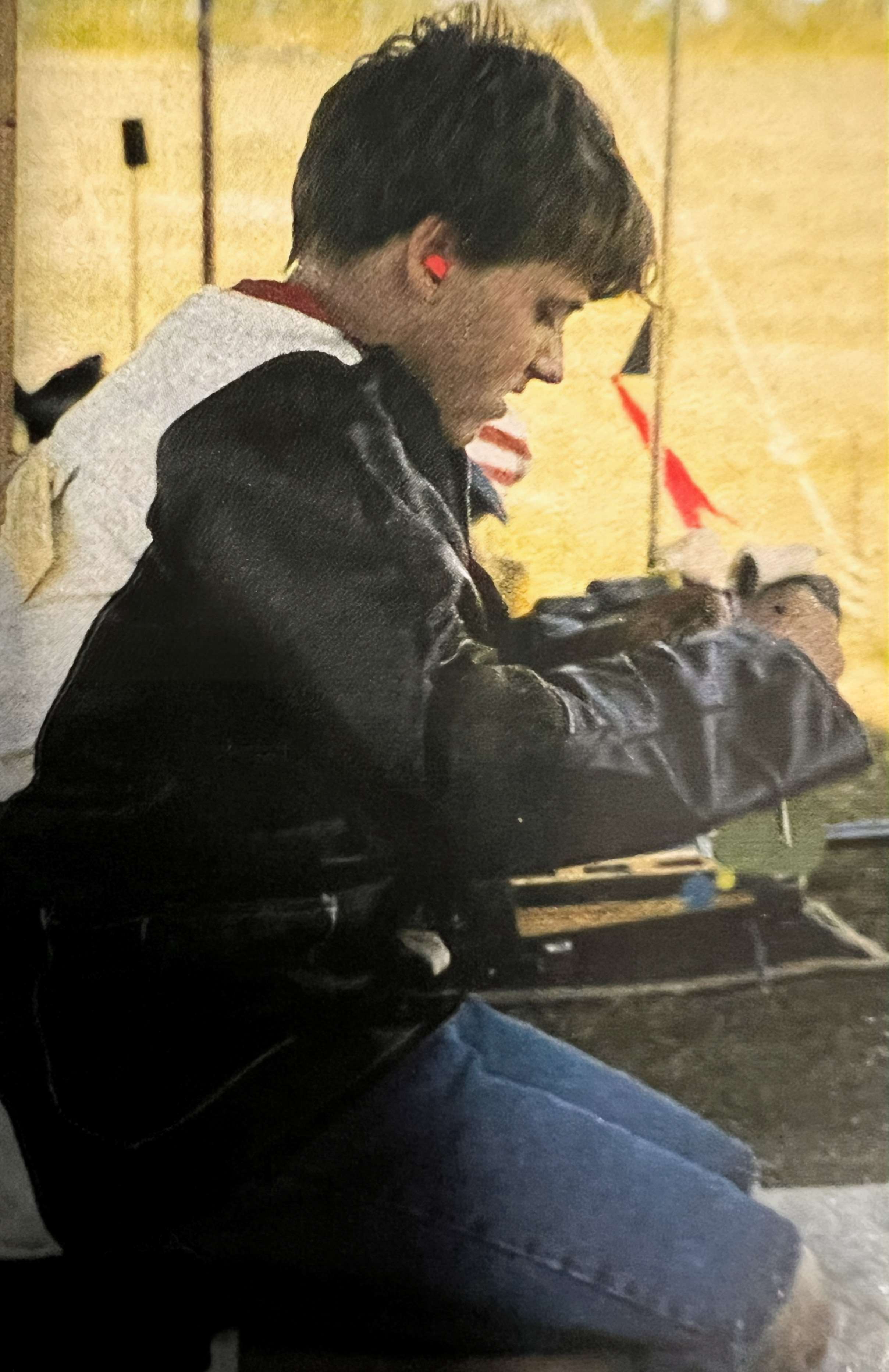
The big prone story in 1993 was that Carolyn Millard-Sparks became just the third woman in National Match history to win the open title, joining Viola Pollum (1955) and Mary Stidworthy (1977, 1978 and 1981) in the elite club. Her emergence as champion came after a variety of match winners battled wind changes in a tournament marked by occasional, not frequent, perfect scores. Millard-Sparks took advantage of intermittent good weather on the second day to position herself for the title run with a score two off the possible 1600. Likewise, her 3183 in the metallic sight championship left her two off the winning mark posted by Peterson, who had the momentum of the women’s position title behind her.
The any-sight matches proved just as challenging for the field, which produced another mix of match winners and a championship score of 3188-213X by Expert class shooter Richard Watson, whose impressive performance earned him both intermediate junior and junior honors. Millard-Sparks finished one back for the second highest any-sight score and her 6370-442X proved to be enough to claim the national prone, civilian and women’s titles. Army teammates Ken Johnson and Web Wright both finished four back, with Johnson’s higher X-count good for second overall and high service honors.
In the four decades since the NRA high power championship was established for both match and service rifle competition, seven marksmen had fired the high score more than once, led by Mid Tompkins’ six national titles over a 25-year span. This year, after G. David Tubb earned his sixth title in just nine years, many were left to wonder not if, but when, Tubb would claim the record for most wins. (Tubb’s win in 1993 was not without drama. On the third day of competition, one of Tubb’s targets was challenged, unsuccessfully, for insufficient hits.)
Tubb accumulated his winning score of 2383-110X in his trademark consistent fashion for, although he shot just one clean score, his lowest 20-shot total among the 12 matches fired was a 197. He topped the field in one of the three, 80-shot aggregates, earning the Nevada Trophy for his 796 efforts, and finished second in another, the Vandenberg Cup, to Frank Van Cleave who placed third overall in the championship for the second straight year. Mitchell Maxberry finished eight behind Tubb and one ahead of Van Cleave for second overall while Nancy Tompkins-Gallagher topped the women’s category for the fifth straight year.
Both Maxberry and Tompkins-Gallagher were successful at long range as well, where Maxberry fired a record score (1444-82X) for the Long-Range Championship and Tompkins-Gallagher captured the Wimbledon Cup, becoming just the second woman in National Match history to do so. (Noma McCullough won in 1980.) The other 1,000-yard event, the Leech Cup, was won by David Milosevich, who captained the winning Rumbold Trophy Team that included Tompkins-Gallagher and husband Mid Tompkins.
Junior James Kallenbach topped his class in both the Wimbledon and Leech, paving the way for his title as high junior in the Canadian Cup Match. The aggregate, comprising scores from the Wimbledon, Leech, and Palma Individual Matches, was won by Richard Del Sesto with a record 846-45X.
The top three service scores in the NRA national championship were fired by Marines, a continuation of the M14 dominance shown during the National Board matches that preceded the NRA competition. Gunnery Sgt. Frank Murphy led the way in the NRA contest with a 2369-82X, followed by Staff Sgt. Kevin Kistler and Sgt. Lewis Tippie. Kistler, who won the McCann Trophy for the high rapid fire aggregate in the championship, also distinguished himself throughout the Board competition by winning both the President’s and National Trophy Individual Matches. In addition, he was the common denominator in both team wins, joining Murphy in the Infantry Match and Tippie in the National Trophy Match.
1993 National Matches Fact
Rain played a factor in the 1993 matches. On team day, the any sight winner was determined from a shortened course of fire. Champion Shooting Club, comprising Carl Jooss, Ron West, John Black and Marsha Beasley earned the Officers Reserve Trophy plaques for their 789-37X score in a match that is normally a 1600 possible.