Back in the days of single stacks and trucker hats, wheelguns and short shorts, USPSA match scores were calculated by hand. Six or seven people sitting around a table with score sheets and calculators was a normal sight at the end of many a club match. Believe it or not, results were arrived at quickly—at the match, same day.
With the advent of computerized scoring, getting to the winner is a mystery to many.
Here’s how scores are calculated using hit factor scoring, from the start signal to the podium. First, we need to know a couple of things about any competitor whose scores are being tallied.
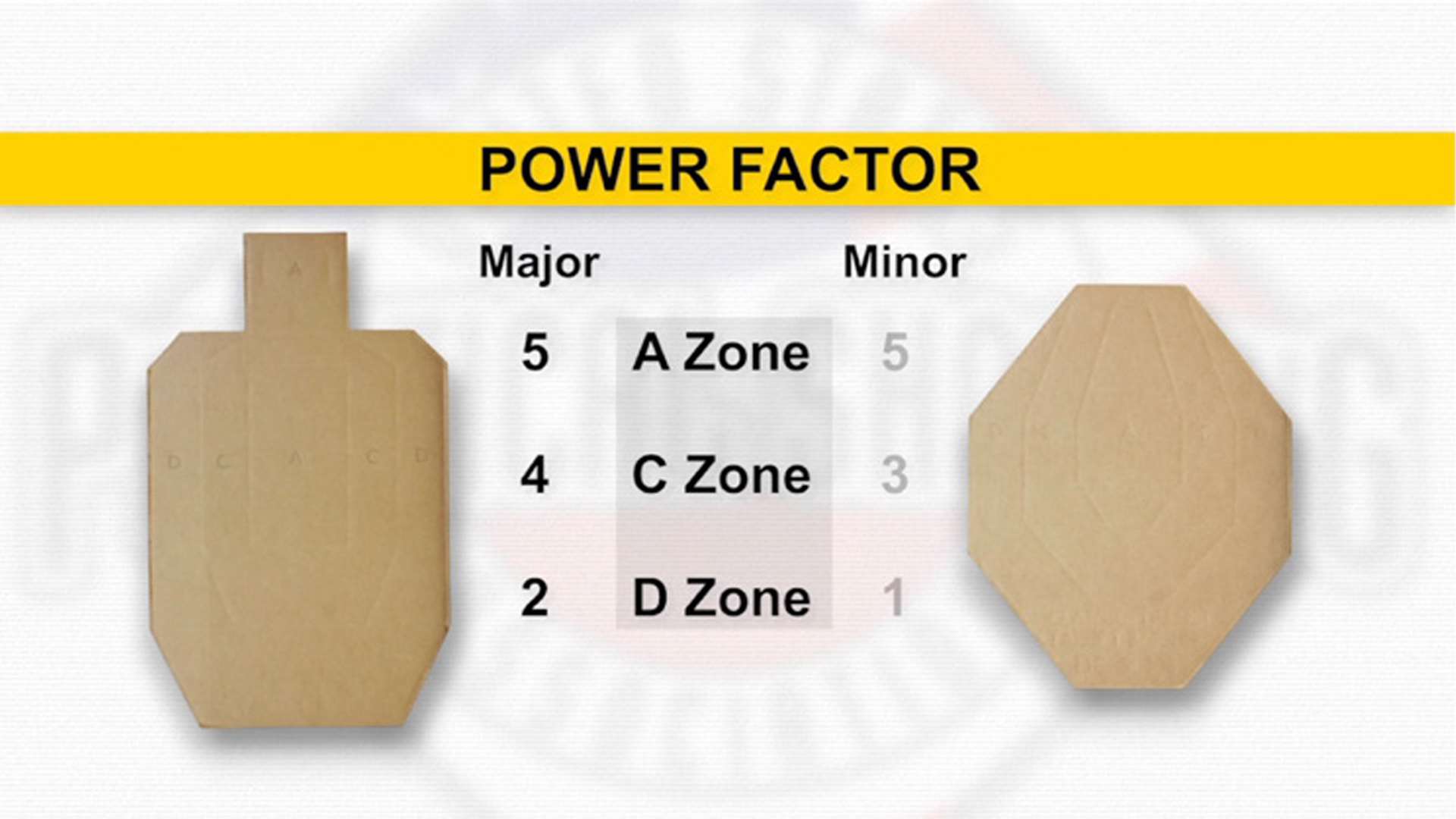
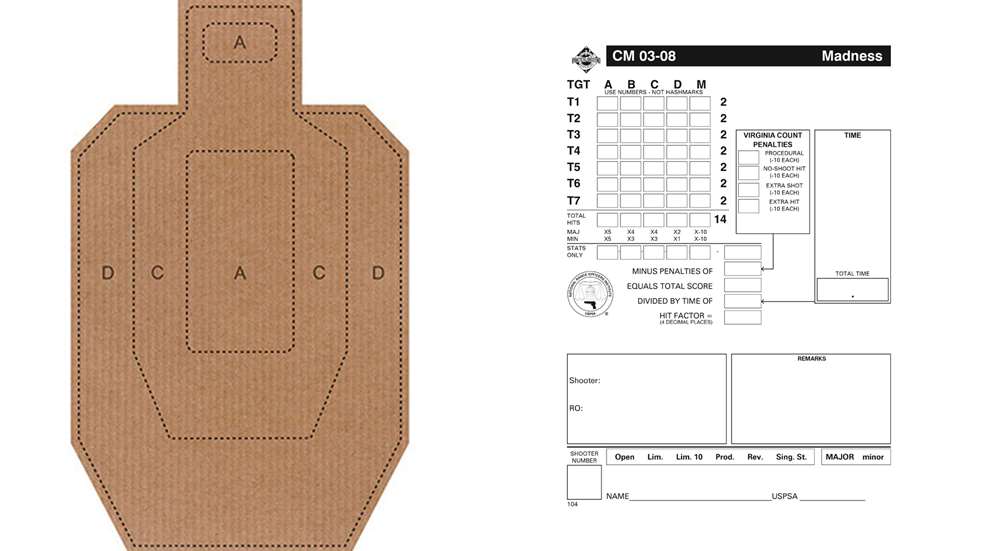
Number one, we need to know what power factor they’re shooting, because point values for C (Charlie) and D (Delta) hits vary between major and minor power factor. A (Alpha) hits are the same for both major and minor, five points. It is the same with a piece of steel, five points for knocking it down. But for C and D hits, major power factor scores four and two points respectively, while minor scores three points for Charlie hits and one point for Delta hits. Misses, no-shoot hits and procedural penalties all count as minus 10 points. In summary:

Second thing we need is the time. How long did it take to shoot the stage? Before electronic timers were developed, stopwatches were used, usually in conjunction with a stop plate or something similar to mark the end of the stage, and give the timer a visual reference for pushing the button and stopping the time. Now, time always stops with the last shot, even though that timer is still running internally until the start button is pushed again.
Once we have the time and the target scores, we can calculate the Hit Factor—the first step in arriving at a final score. Let’s use an older classifier score sheet as an example. You’ll see that the scoring values for major and minor, penalties and time are all neatly laid out. The “stats only” area is where we will be calculating hit factor and then progressing from there to stage points and match points.
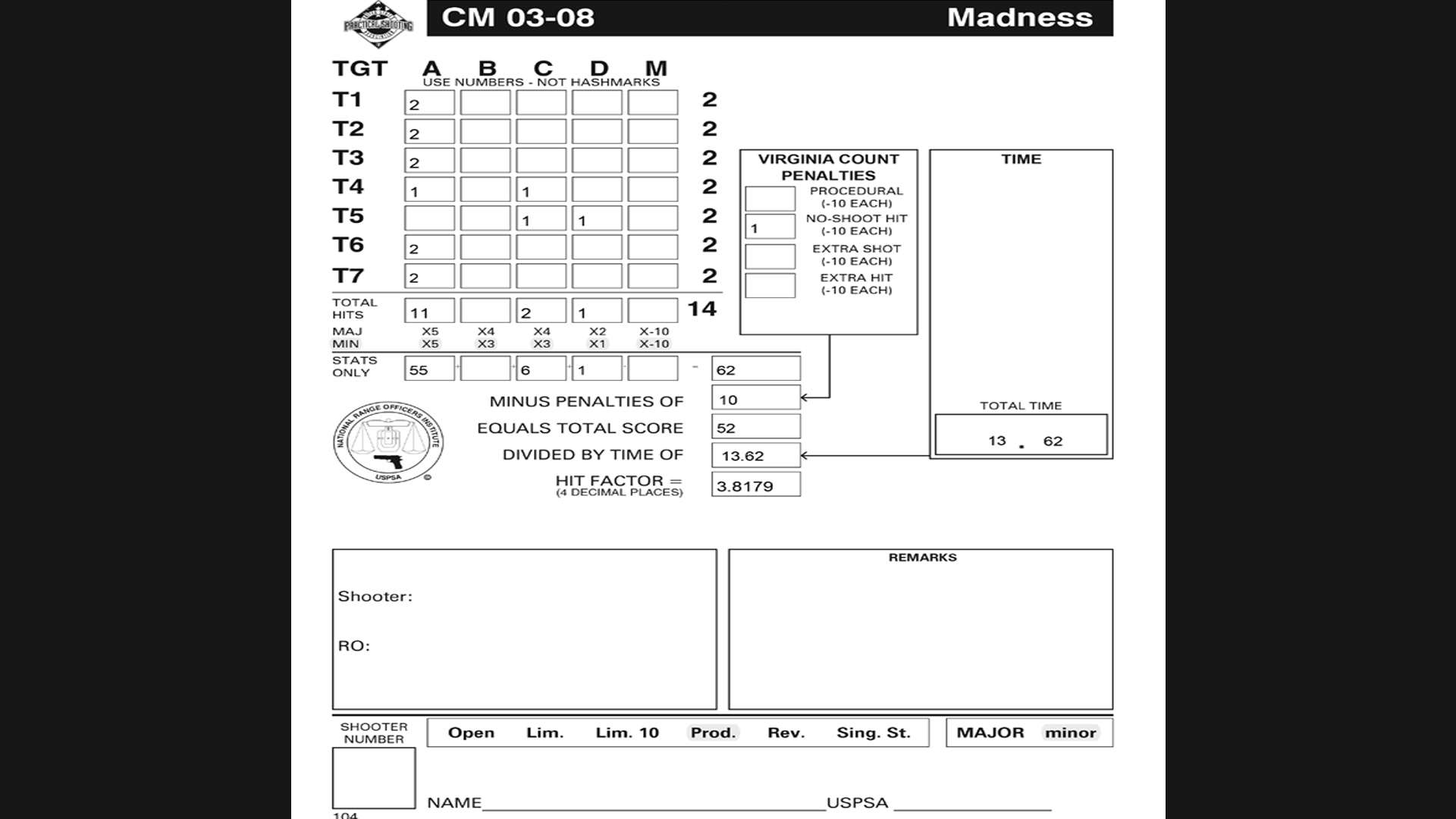
Here, we see that the competitor’s hits have been counted, multiplied by the points available for each hit. Penalty points have been subtracted from the total points shot to give the total score, which in turn has been divided by the time to arrive at a hit factor of 3.8179, or 3.8179 points per second. Note that this number is always truncated at four decimals, never rounded up or down.
Now, to arrive at a stage factor which allows us to statistically normalize everyone in the match against the competitor who shot the stage the best (the stage winner).
For our example, we’ll use three competitors, A, B and C.
- Competitor A has a hit factor of 4.1122
- Competitor B, above, has a hit factor of 3.8179
- Competitor C has a hit factor of 3.6543
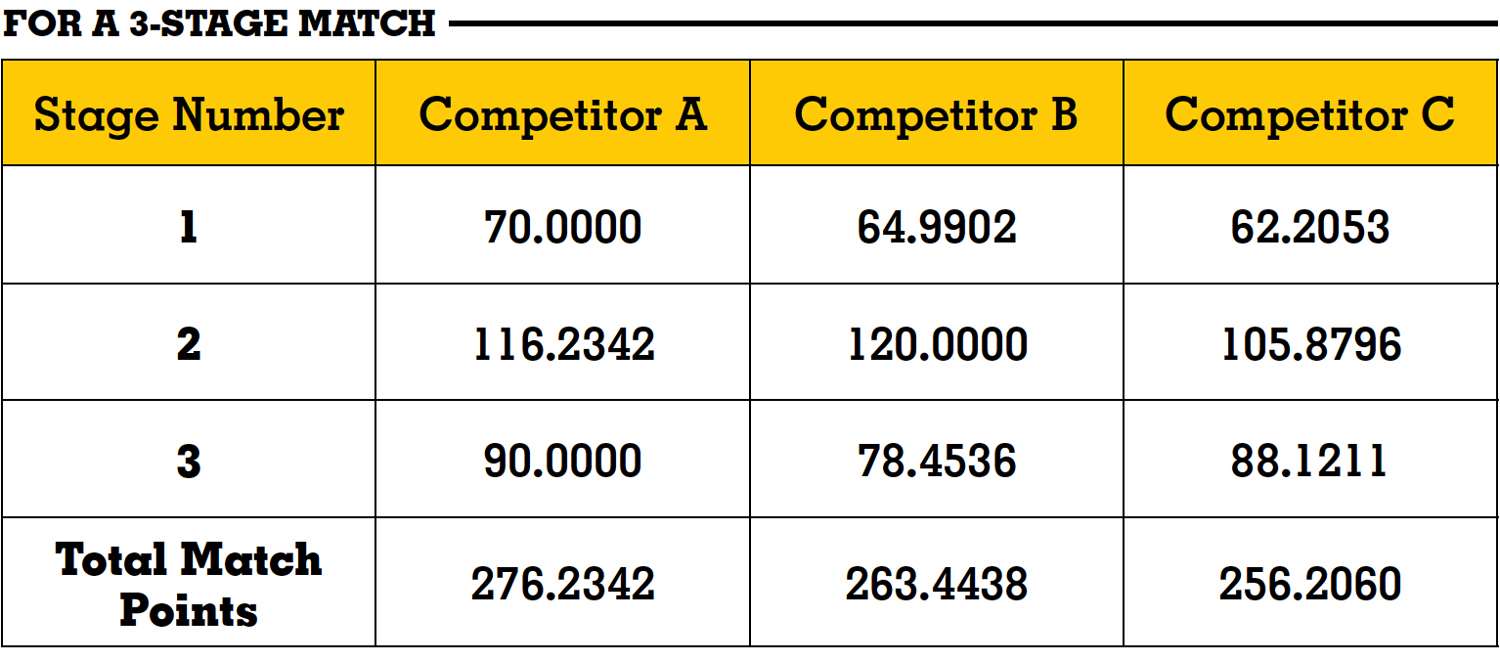
Competitor A wins the stage and is awarded 70 points, the maximum total for the stage. The total points for the stage are then divided by Competitor A’s hit factor: 70/4.1122 = 17.0225 which is the stage factor.
Competitor B’s hit factor is then multiplied by the stage factor, 3.8179 x 17.0225 = 64.9902 to give total match points for the stage.
Competitor C’s hit factor is also multiplied by the stage factor, 3.6543 x 17.0225 = 62.2053 match points.
Competitor A is the match winner, and the remaining competitors are ranked by points, with the percentage of the winner’s score shown as well. This placement is only valid by division, not combined overall, which is not recognized in USPSA matches.
This scoring computation works for Comstock and Virginia Count stages, where the time to shoot the stage varies. In Fixed-Time scoring, the time is fixed, so no hit factor is calculated—however many points are shot on the stage are added directly into the overall match points for each competitor.
Article from the March/April 2022 issue of USPSA’s magazine.