
There’s a conversation happening in the rifle world right now that most shooters haven’t been paying attention to centering on pressure. Specifically, the fact that modern ammunition development is pushing chamber pressures toward 80,000 psi, well past the 62,000 psi that has defined the industry for decades. The military has been driving this work for years, and the civilian side is catching up fast. And the barrel, it turns out, is the next bottleneck.
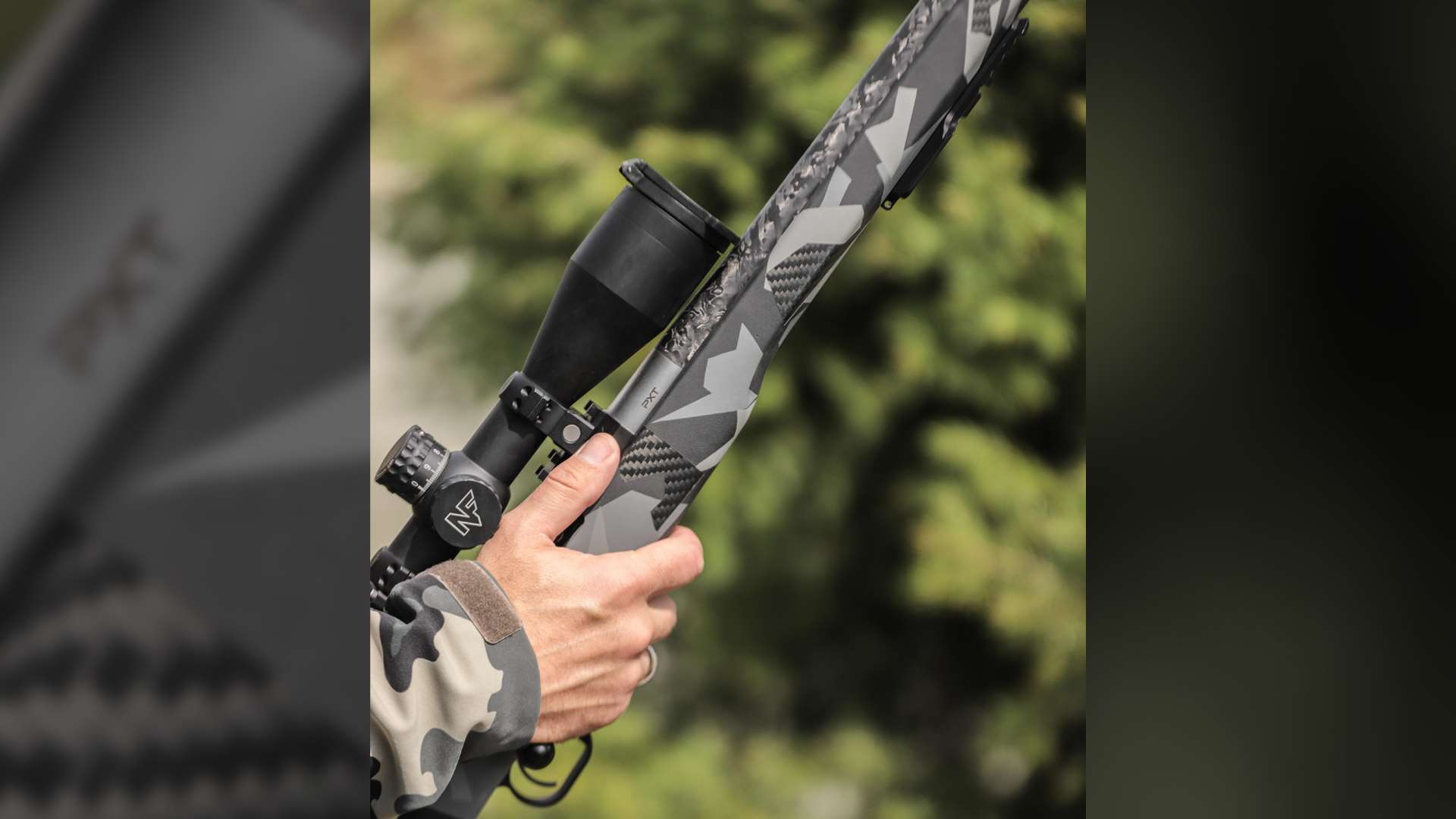
PROOF Research thinks it has solved that bottleneck. The Columbia Falls, Montana, company announced this week the launch of PROOF Exponential Twist, or PXT, a barrel technology that rethinks how a bullet engages the rifling at the moment of ignition. The claims attached to it are substantial: 30 to 100 percent longer barrel life depending on length, and 20 to 50 percent improvements in consistency and accuracy across multiple ammunition types and lot variations. Compatibility with the higher-pressure cartridges that conventional barrels often struggle to handle without significant wear in the first two inches of the bore.
To understand what PXT actually does, you must understand what a traditional rifle barrel is doing wrong.
In a conventional barrel, the bullet exits the case and slams into the rifling at roughly a six-degree angle. Full rotational speed gets achieved within the first quarter-inch of travel. That sounds efficient, and for most of the last century it has been, but the physical reality is violent. A sharp pressure spike. Accelerated wear on the throat. Significant stress on the projectile itself, which can deform the jacket and compromise downrange accuracy. The hotter and faster the round, the worse the problem gets. Modern high-pressure ammunition makes all these issues materially worse.
PXT softens the entire transaction. Where traditional barrels start at 1:7-inch to 1:10-inch twist rates at the breech, PXT barrels begin in the range of 1:250-inch to 1:500-inch before accelerating through the bore. The bullet enters the rifling rotating almost not at all and picks up rotational speed progressively as it travels down the barrel. PROOF claims this reduces the initial engagement angle by 95 to 98 percent.
The rifling profile itself has also been redesigned. Traditional sharp-edged rifling is efficient to manufacture and grips the bullet jacket aggressively, but it wears faster and deforms projectiles under high pressure. PXT uses a proprietary smoother-edged profile that PROOF says reduces bullet engraving force by approximately 30 percent, meaning less deformation, less wear on the lands and a more gradual transfer of energy into rotation.
Brandon Hulzebosch, the company’s director of sales and marketing, framed the launch as a response to a technological gap between current barrel systems and where ammunition is headed. That framing is accurate. PROOF’s team has been working on this problem from the cannon barrel side for years, and the company makes clear in its technical materials that materials and coatings were considered secondary to the underlying physics. The primary issue, in PROOF’s view, was always the moment of ignition. PXT addresses that moment directly.
The performance claims are testable and PROOF is putting them in writing. Barrel life increases of 30 to 100 percent depending on length, with longer barrels seeing the greatest benefit because the gradual twist progression distributes wear across more of the bore. Accuracy improvements of 20 to 50 percent in controlled testing across different ammunition types and lots. Reduced sensitivity to bullet jump and powder charge variations, which matters more than the spec sheet suggests for shooters who load their own or who run a rifle across multiple factory offerings.
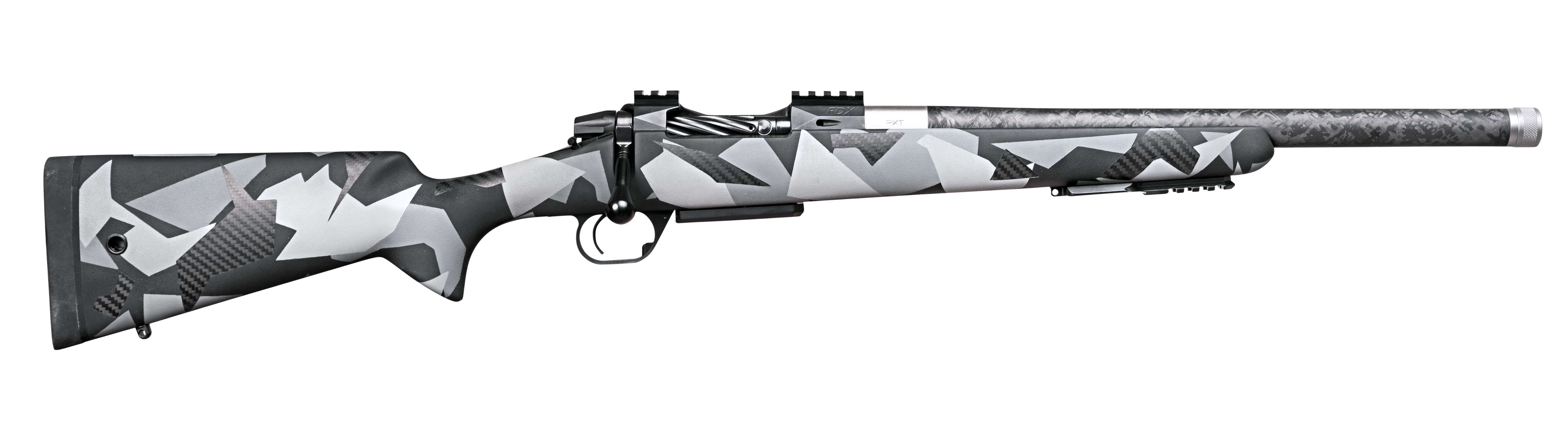
The technology is available now in PROOF’s Elevation FDX and Elevation MTR FDX rifle platforms, with chamberings that read like a target list for the modern precision rifle category. The Elevation FDX starts at $3,499 MSRP. The MTR FDX starts at $3,799. Both platforms ship in 22 Creedmoor, 6.5 Creedmoor, 6.5 PRC, 7 mm PRC, 7 mm Backcountry and 300 PRC. PROOF is also offering PXT in barrel blanks, AR barrels and select pre-fit options, with more configurations on the way.
The target audience PROOF is going after spans the predictable categories: precision rifle competitors, military, law enforcement, big game hunters, etc. The thread connecting them is the same. Anyone running a rifle hard enough that barrel life and downrange consistency actually matter to the operation, and anyone who has been watching modern ammunition outrun the barrels designed to shoot it.
Whether PXT becomes the new industry standard or remains a premium option for shooters who can articulate why they need it will play out over the next several seasons. PROOF, for its part, sounds confident that the technology will reshape how the industry thinks about pressure, velocity, barrel life and repeatable precision for decades.
More information at proofresearch.com.