The below is an excerpt from the 1978 book, Olympic Shooting, written by Col. Jim Crossman and published by the NRA.
1928—Amsterdam: Another Games Without Shooting
By Colonel Jim Crossman
The year 1928 was bleak for Olympic shooters. In fact, it was a missing year—there were no shooting events in the 1928 Olympics.
This was a sad situation, after the eight-event program in the 1924 Games. In the meantime, however, a strong group within the International Olympic Committee had managed to eliminate all sports not of major spectator interest or those events they chose to call "mass athletics." So while there was wrestling, boxing, weightlifting, cycling, fencing, equestrian events, rowing, yachting and a variety of other events, shooting was not included in the 1928 Olympics.
A factor involved was that annoying question of amateurism. Shooting is different from many other sports in being for doers, not watchers. There is little or no market for "professional" shooters, and so there is little or no problem with professionalism. Since the problem is different, the treatment of the shooter who wins a bit of money should be different from the treatment of the moneywinner in some other fields.
This problem bothered the International Olympic Committee and was one of the reasons for leaving shooting out of the 1928 Games.
Despite earnest protestations and lengthy arguments by the International Shooting Union, the National Rifle Association, the United States Revolver Association and many other shooting organizations, the Olympic committee stuck to its decision and it took another four years—until 1932—to put shooting, grudgingly, back in the games on a limited scale. Brig. Gen. Fred Waterbury, of the New York National Guard, NRA president, made a trip to Paris to meet with the International Olympic Committee in 1928 and his arguments, along with those of others, finally resulted in the return of shooting in the next Games.
To say there was no shooting in the 1928 Olympic Games is not quite right, because there was. The shooting took place in the Pentathlon, an event that held no interest for U.S. shooters or that U.S. shooters worked for.
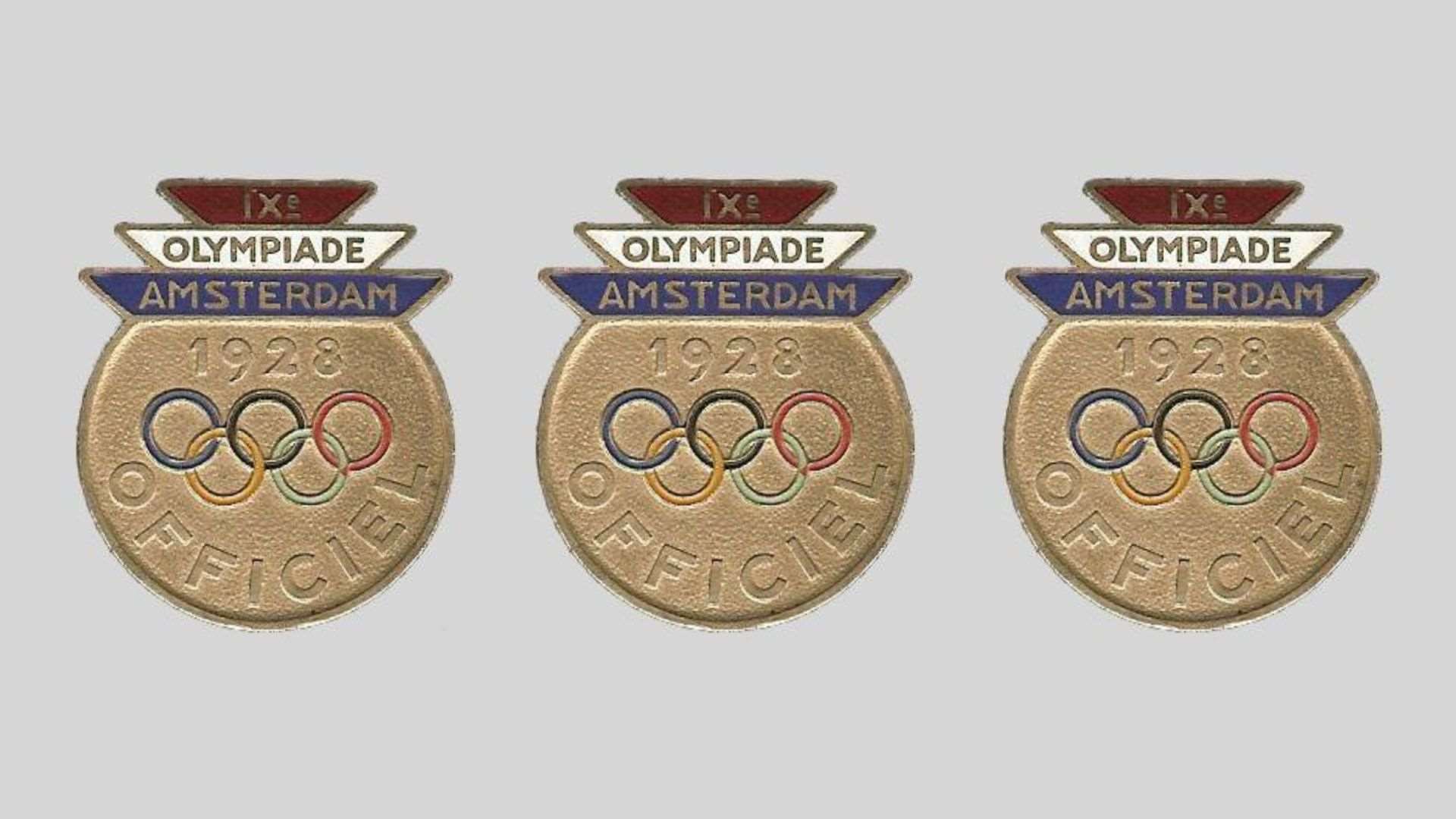
The earlier Games had included an event known as the pentathlon, which was an attempt to pick an all-around athlete from his performance in five track-and-field events. The pentathlon was finally dropped from the schedule just before the Games at Amsterdam. A rival event had been introduced in 1912, also including five parts and called the modern pentathlon.
The modern pentathlon was based on a military theme, with a hypothetical courier delivering an important message. He starts on horseback, has to fight his way out of an ambush with a pistol, loses his horse and has to swim a river, meets up with other trouble and fights his way out with a sword, finally making a long run on foot to deliver the message. The five events—riding, shooting, fencing, swimming and long-distance running—are usually conducted on different days and the competitor is graded in each one. Due to the nature of the events, the majority of the competitors have been military. Lt. George Patton had taken fifth in 1912, but the U.S. had not done as well since, and 1928 was no exception, with 15th place overall and a seventh place in the shooting part as our best effort.
With remarkable uniformity, the shooting part of the modern pentathlon has changed little over the years since 1912. Lt. Patton would have found himself right at home in the 1928 shooting match. Many of the older pistol shooters would have recognized a familiar course, also, as the rules were based on shooting a dueling target.
At 25 meters, a man-sized silhouette was flipped into facing position for 3 seconds, then turned away for 10, faced again for 3 seconds and so on for 4 series of 5 shots each. The shooters held his pistol at his side, with the stock of the handgun touching his thigh, until the target appeared. The target had oval-shaped scoring areas generally centered on the torso of the silhouette, with 10 as the highest value. Shooters were rated by the number of 10s made. If there were ties, they were settled by the total number of points, using the edge of the bullet for marking.
Generally speaking, it was found easier to teach a good, versatile athlete how to shoot well than it was to teach a good shooter how to swim, run, ride and fence well. The shooters thus had only a passing interest in the pentathlon shooting and were not much concerned about it.
So you can still say, for all practical purposes, that there was no shooting in 1928.
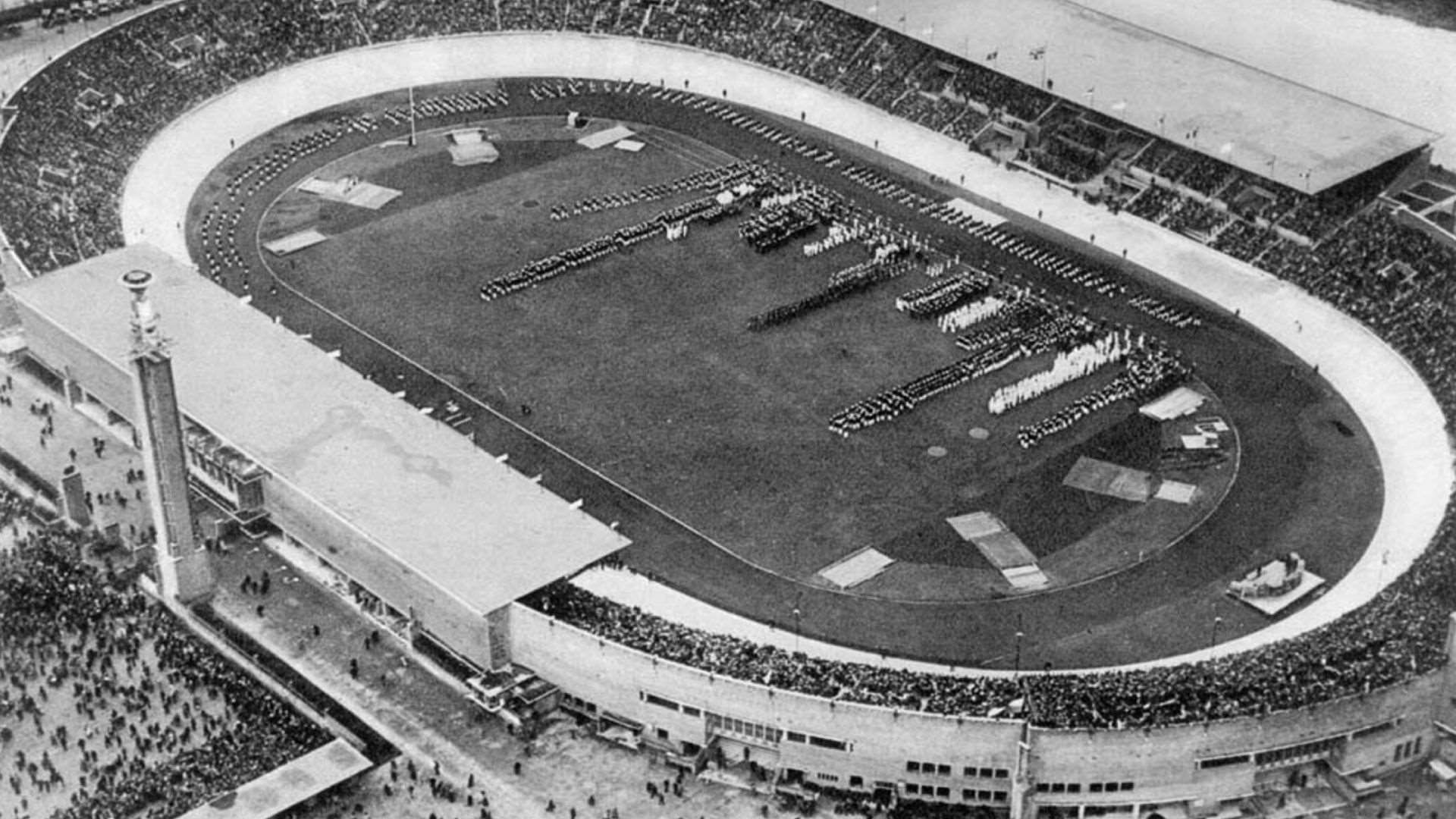
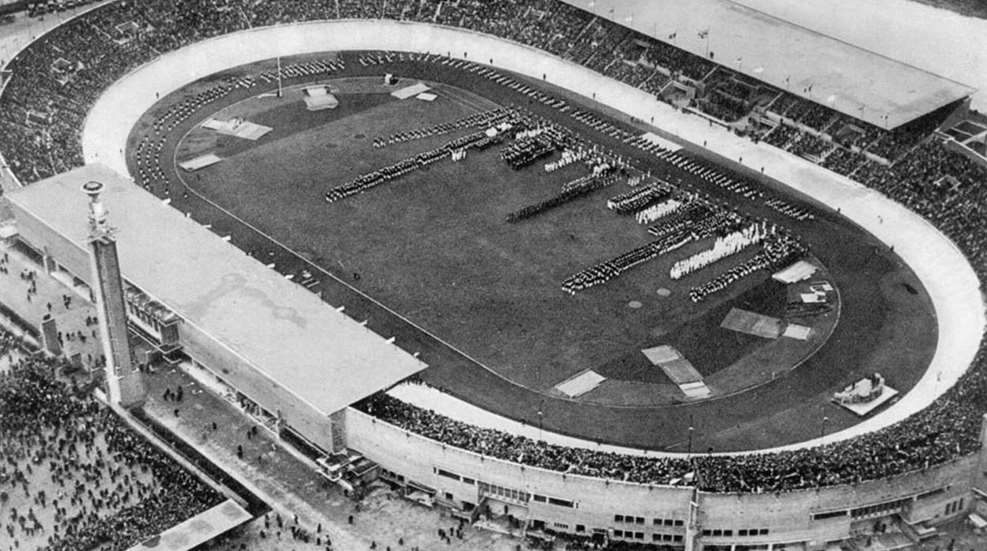
Photo: An aerial view of the Amsterdam Olympic Stadium during the opening of the 1928 Olympic Games.
Read more: The Origin Of The Olympic Games
Most Popular