Readers may want to check out Chris Cerino's previous articles in SSUSA on training yourself, the difference between training and practice, as well as confidence and complacency.
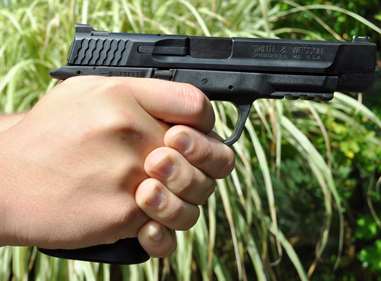
The difference between good shooters and great shooters is usually just details. Great shooters understand the details and apply the fundamentals, achieving better results.
Although it’s important to know the fundamentals of marksmanship, what’s more important is understanding them. The hidden details of the how and why of application need to be understood.
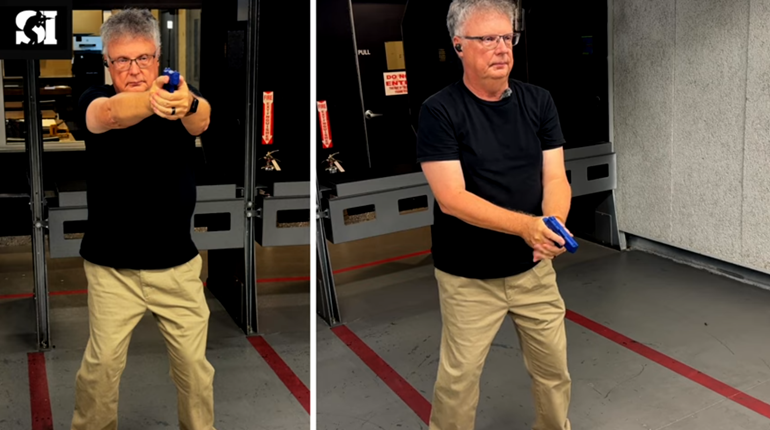
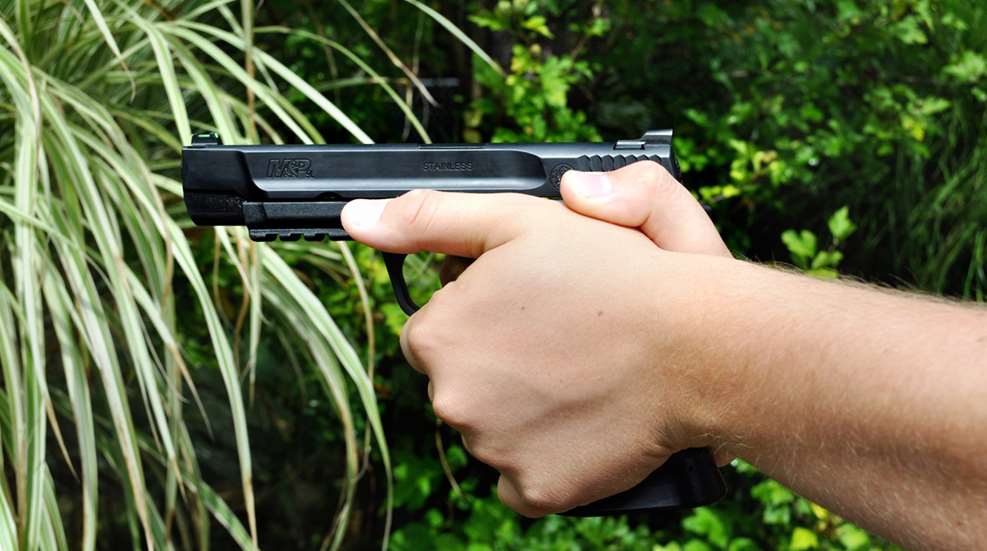
A prime example is gripping a pistol with two hands. There is so much more than just a correct look. Do you know why trainers recommend a high, thumbs forward grip?
Recoil is best managed when you are high on the pistol, near the axis of momentum. (Where the action is taking place.) How we do this, is in the details.
Many believe their strong hand does the majority of holding the pistol and the support hand just lends assistance. Actually, your strong hand is 50 percent or less of the two handed grip. The support hand does a majority of the work by firmly locking the strong hand on the gun.
Now look at the pressures exerted on the gun by each hand. Front to rear pressure with the strong hand and side to side pressure with the support hand. High to the axis of recoil with thumbs stacked and pointed forward.
But why point the thumbs forward? Again, much more than a look, this serves a detailed purpose. When the thumbs reach forward the wrists become “set” and therefore stronger. Not muscular strength, but skeletal strength. Certainly a valuable detail for a smaller, weaker shooter.
So many details to learn! Like, how and when you meet the trigger while presenting the pistol to a target. How your hands meet to form the two-handed grip. How best to get the sights to your line of vision. And why?
All in the interest of getting to the target quickly, being ready the instant your sights are aligned on target and having more control of the gun. Because … you are responsible for every round you send downrange and ammo isn’t cheap.
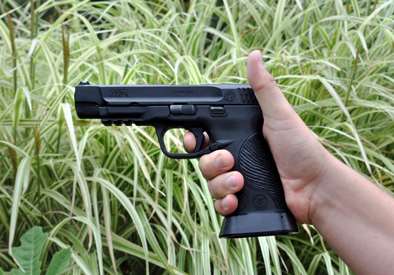
Mastering the details is done by exaggerating your movements in practice. Make movements cleaner, more concise and consciously exaggerate them to build solid motor programs, therefore creating automatic motor programs you can rely on when there is no time to think. No time to think about the how. Only time to act.
The fundamental of follow through is one that I exaggerate regularly. Why? How do you ever call a shot sent downrange if you lose control of yourself and the gun the instant you fire? Losing control is usually mental and physical and is a simple lack of discipline, a detail often ignored due to a lack of understanding. Follow through is maintaining all the fundamentals through the break of the round. Thus, discipline to see the sights and sight picture the instant the gun goes off is achieved with detailed practice.
There’s no time in a competition or a gunfight for exaggerated follow through, but how do you ever build the skill without exaggerated practice? Another topic for another column perhaps.
Training can create unconscious competence or action without thought. Don’t only ask trainers how questions, ask your trainer why. If the answer doesn’t make sense, keep asking for clarification until it does, or ask someone else who may explain differently. When you get the details, exaggerate them in training so you retain more under stress. The difference is in the details.