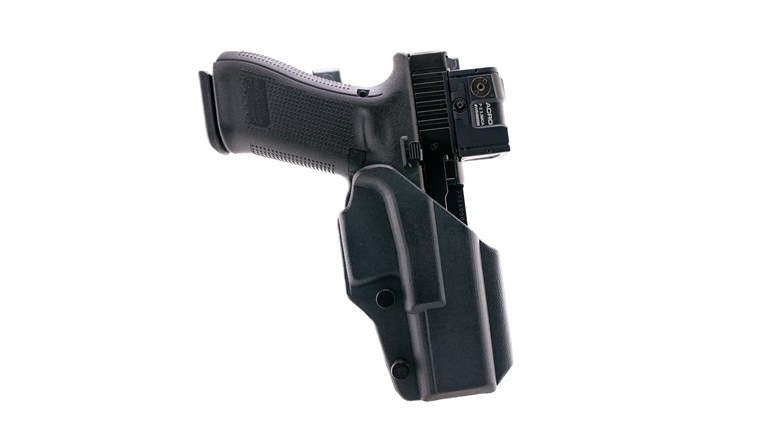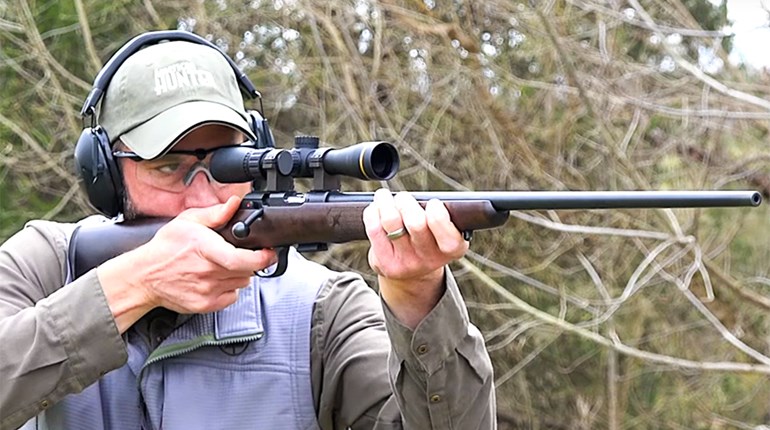

Above: The proper draw stroke will produce an accurate hit from the holster. The Precision Drill will help shooter's achieve that.
All Action Pistol games will normally have the shooter start each stage with a holstered gun and draw it to deliver the first round when the buzzer sounds. A fast draw is obviously an asset but some overestimate its importance. That can lead to the speed of the draw becoming more important, in the shooter's mind, than the scoring hit that results.
For many shooters their worst scoring shot in a stage will be the first one from the holster. But it doesn't need to be.
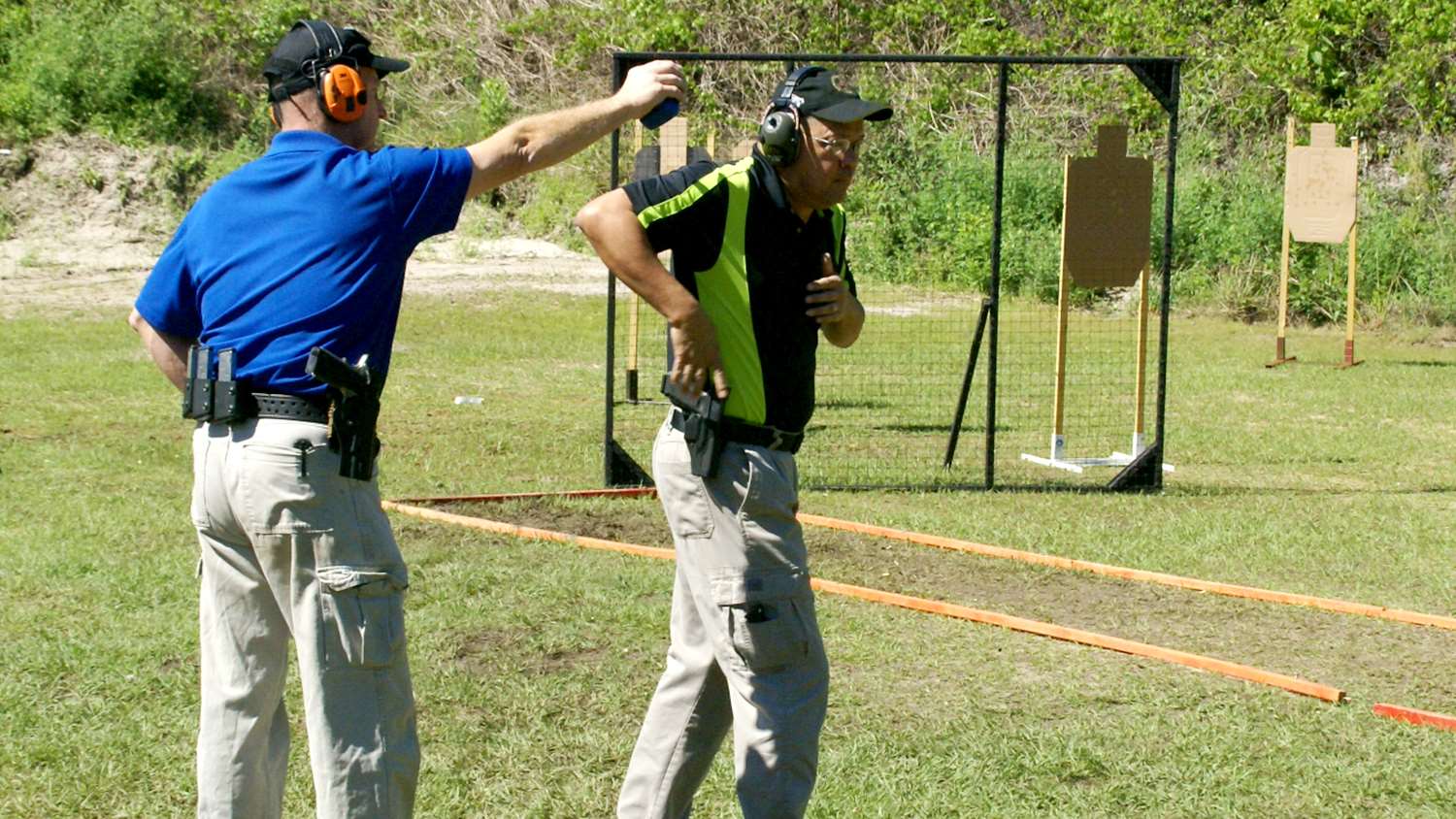
Competitors in IDPA, USPSA, and ICORE may feel a one-second draw is impressive, but if the shot winds up outside of the A Zone, ICORE shooters will eat one or two seconds in penalties. In 2017 IDPA shooters hitting the -1 scoring portion of the target will eat one-second as well. The penalties are not as severe in USPSA, and speed can sometimes overcome a C Zone hit, but the D Zone and Mike penalties will hurt. A 'blazing draw' may impress the peanut gallery but it tends to lose its luster when the resulting hit sends the score downward. Considering that an eight-stage match will only require eight draws (unless a Classifier or Standards stage is included) draw speed is a bit overrated in these games. An accurate first round hit is more important.
The only Action Pistol game where draw speed becomes a significant factor in a shooter's score is Steel Challenge. A stage consists of five runs through five metal plates, and centerfire shooters start from the holster. The best four runs are scored. In a six-stage match that's 24 scoring draws on the clock. For an upper level shooter that draw time can be as much as one-third of their final score.
If one is striving for a three-second run a speedy draw is a major asset. But only if you hit the first plate. Miss it on the draw and things go downhill fast. Nothing screws up the smooth rhythm needed to hit five plates in three seconds more than missing the first plate! Even if the shooter's reaction time allows them to realize the miss and hit it on a fast second shot, that 'blazing draw' is wasted. Worse, is if the shooter doesn't realize the miss until he has transitioned to other targets and then has to come back to pick that one up. Worse still, is if the shooter doesn't realize the miss at all and runs the rest of the plates and then hits the Stop Plate. That three-second run just went to five or six seconds—and you only get one throwaway run per stage.
Making that first shot count is a scoring asset in any Action Pistol game, even if it's a bit slower than “blazing”. There are several drills that will improve the shooter's ability to execute a smooth and fluid draw with a perfect scoring hit. The Precision Drill is one of the best because it provides a dramatic visual conformation of proper technique.
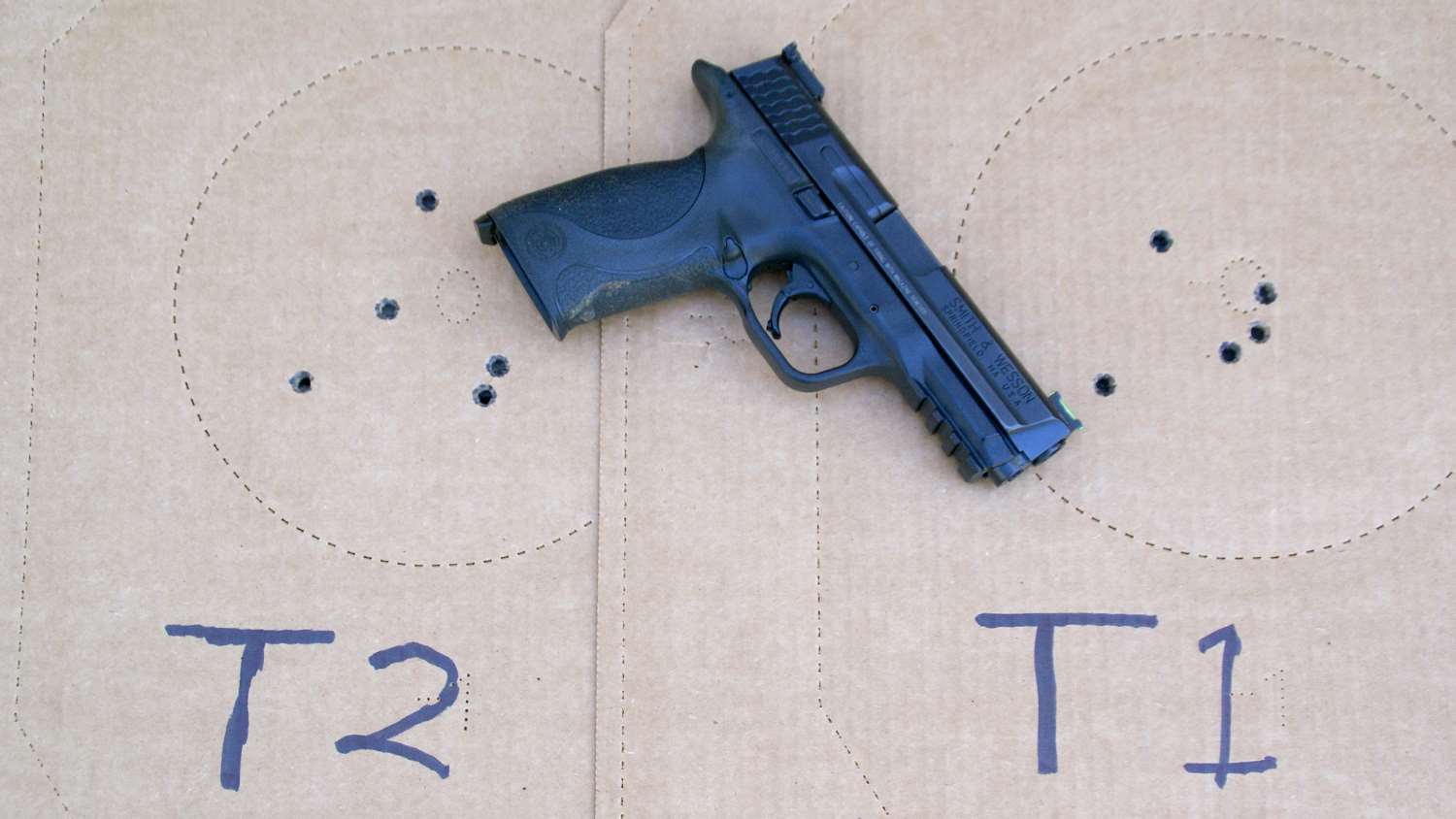
Set up two targets appropriate for the game being played and spaced about six feet apart. On the first target (T1) the shooter assumes a freestyle grip with the gun held at a low ready position. A timer is nice to have, but not mandatory. Bring the gun up to the target, acquire the sight picture, and fire one round. This is not a deliberate Focus Drill. The shot should break in two seconds or less. Then bring the gun back to low ready and repeat the one round sequence, bringing the gun back down between shots, to achieve a five round group. On the second target (T2) the shooter starts from the holster. Draw and fire one round, then holster the gun and repeats for a five shot group—all shot from the draw stoke. The two target groups should be similar in size and located at the same point on the target. If a shooter can produce, for example, three-inch group from low ready they should be able to get very close to that from the holster.
Shoot this drill from 10 yards and beyond. USPSA and ICORE shooters may want to extend the range to 50 yards, since they will see those targets in a match. Steel Challenge and IDPA shooters can stop at 35 yards.
The first target (low ready) will show a shooter what they are capable of achieving when the gun is firmly in hand and smoothly, yet quickly, applied. The second target (from the holster) will show them whether or not they are achieving that potential on their draw stroke. If they aren't, that first target becomes the nagging coach standing in the background. It is always staring the shooter right in the face and serving as a strong motivating factor.
When the buzzer sounds the shooter is the only one who can draw the gun and hit the target. It all comes from within the shooter. The beauty of this drill is that it shows the shooter what they can do when the gun starts in hand, and then challenges them to do it from the holster.
It may require a change in stance, grip on the draw stroke, target focus, or a refinement of their shooting rhythm. But as they stare at target T1 they will know what they can achieve, and be motivated to make their first shot count.
Most Popular