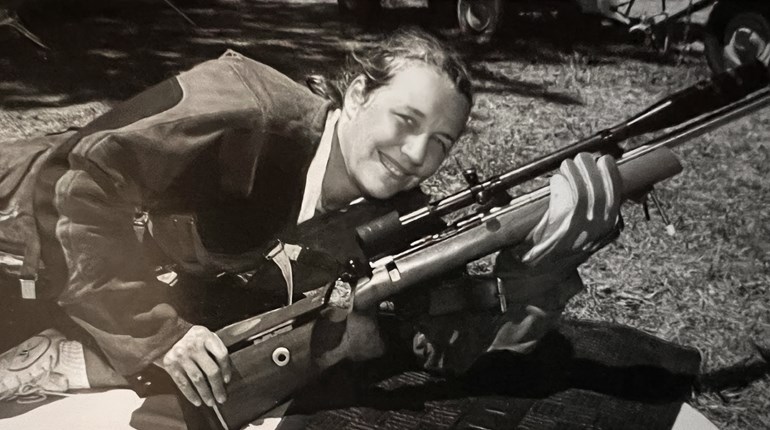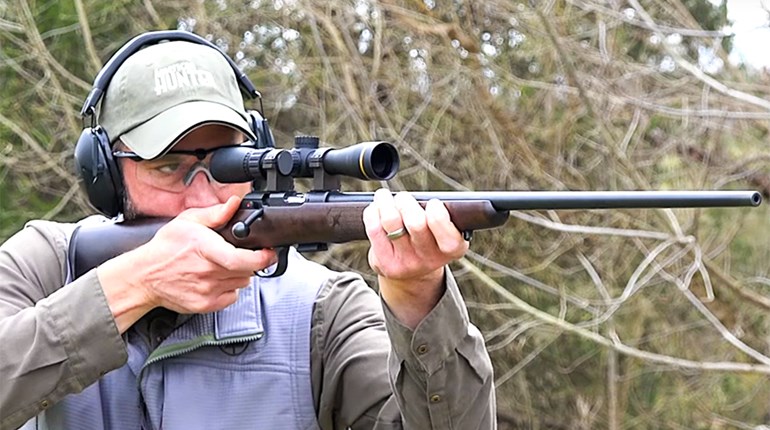
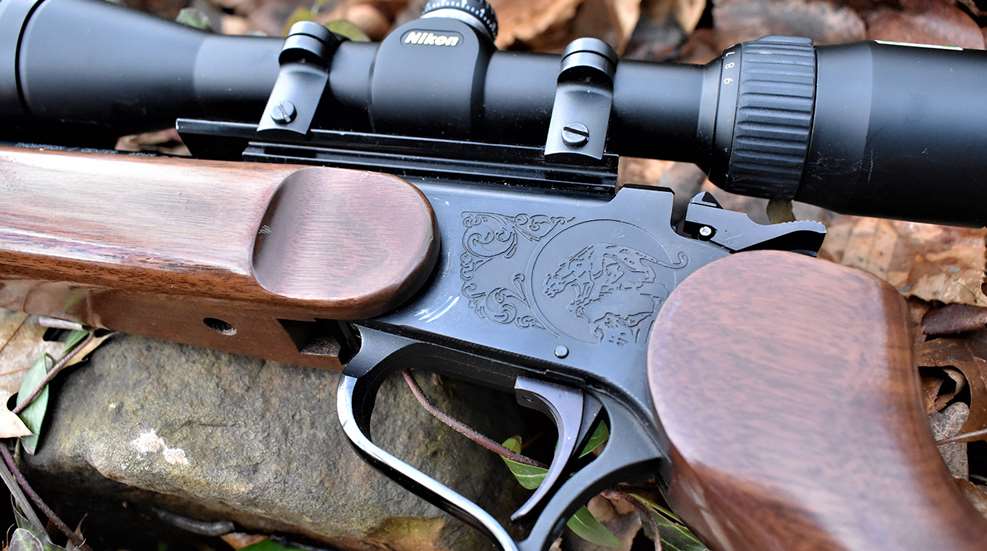
I have shot many different rimfire rifles over the years, but the Thompson/Center .22 LR Contender Carbine has always been what comes to mind when I think of my first rimfire. I “adopted” this gun from my dad for my first silhouette matches. When I pick up my T/C Contender Carbine, with the mountain lion engraving on the action that I so love, a whole rush of memories and feelings come along with it.
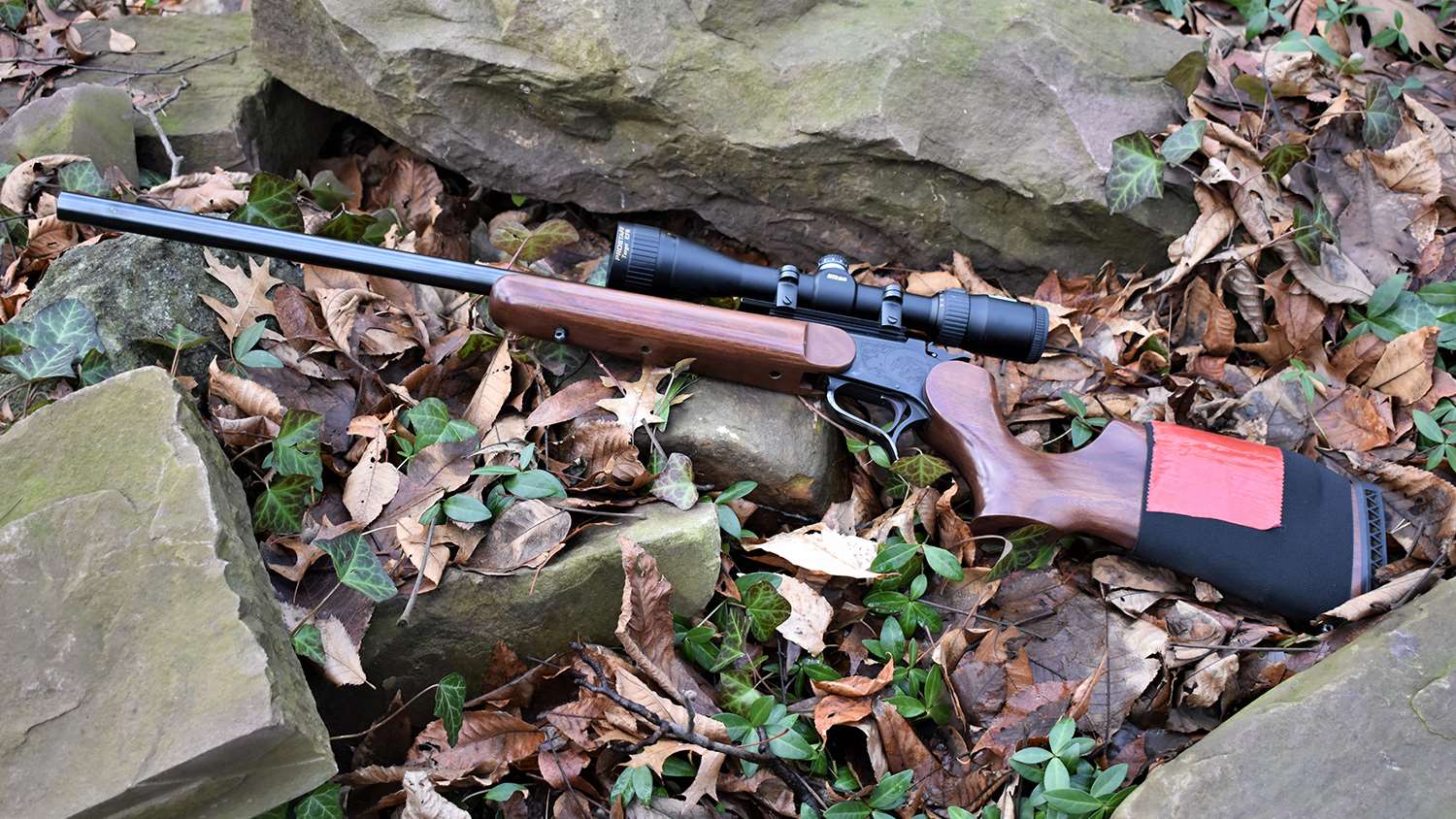
While many love semi-automatic or lever-action rimfires, I still prefer my break-open single-shot. It’s relaxing and nostalgia-inducing feeling. Deliberately loading every shot, being careful to load the bullet without scraping off part of the lead tip and hearing the click of the action as I feel the gun lock in my hands. There is a certain power that accompanies the simultaneous cocking of the hammer as I shoulder the rifle and move the pad of my finger from the side of the rifle to rest on the trigger.
Shooting a break-open action taught me to be cautious of where my barrel was pointed all of the time. I had to be careful when reloading the gun off of shooting sticks so that the barrel would not get scratched or hit the ground. Sure, my rifle sports a few nicks, each representing a lesson learned, but that is not the most valuable thing I have learned from my T/C Contender Carbine.
My competitive shooting career began shooting silhouette at Tusco Rifle Club. I still compete in the short range .22 LR class with the T/C Contender Carbine. Since my first time shooting this rifle in the backyard, I have not moved the scope from nine power. I never really thought much about the wobble I was seeing in the scope when I lined up the crosshairs on the chickens 25 yards away. It never occurred to me to reduce the power on the scope to help minimize the movement I was seeing. Frustrated when I missed the offhand targets, I invested more time in practicing standing shots. I worked to reduce the wobble I was seeing in the scope. During this process I learned to break shots as the crosshairs were coming into (not leaving) the target.
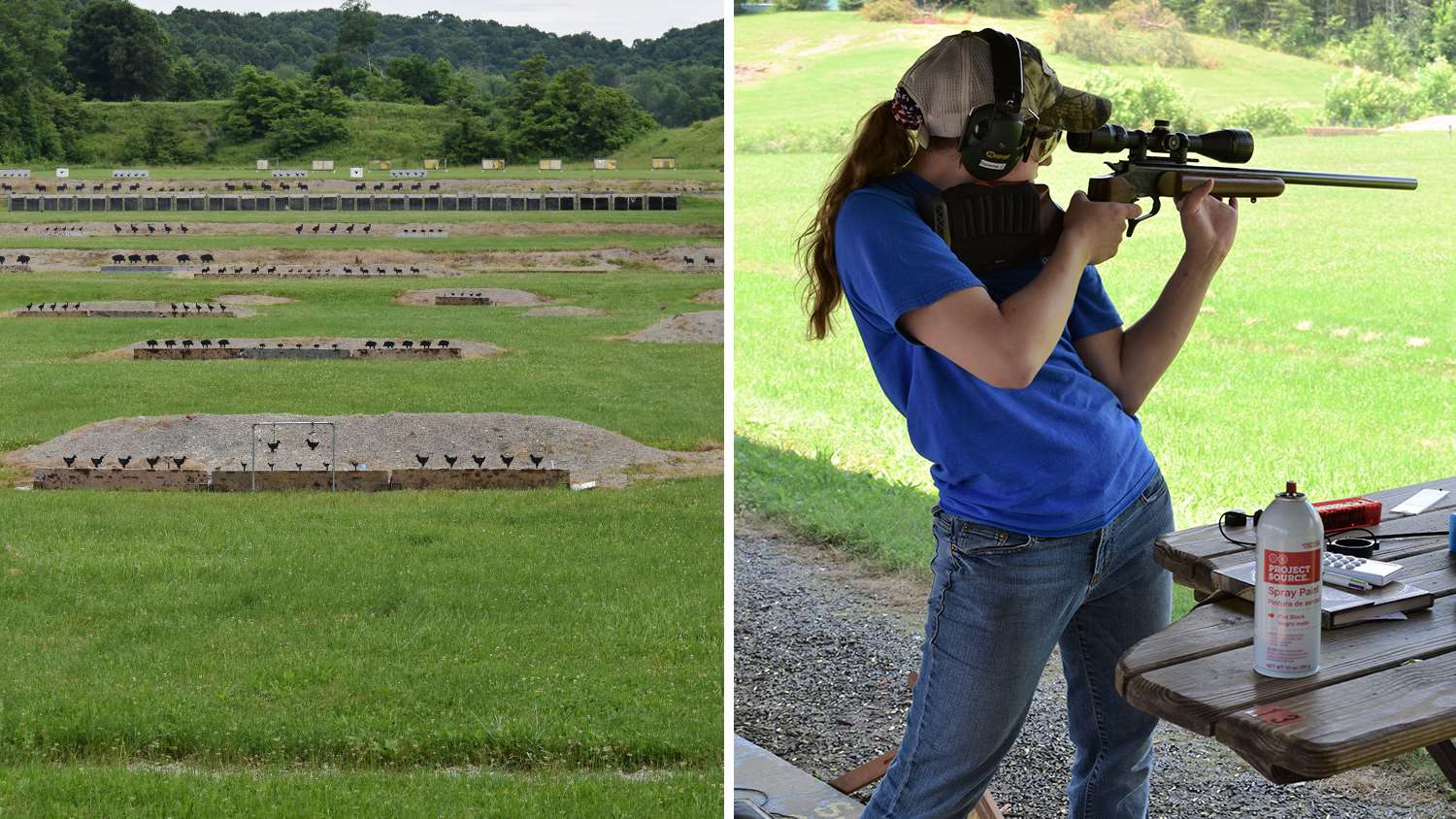
Only the first five shots were offhand at these matches. The rest of the match, I used shooting sticks. I still needed to focus, but the prone shots were much easier. If I finished early, I would use the remaining time to challenge myself. I start by picking off any chickens I missed offhand. Once those were down, I focused on the smaller chickens beneath them, trying to shoot five-in-a-row. Further targets were next on my list, usually the ram swinger target at 100 yards. The most challenging offhand targets I have found are a very small set of shoot-off silhouettes, approximately 75 yards away. I start with the largest one and work down to the smallest silhouette, only about the size of a half-dollar. I have not shot all of them in a row yet, but have not given up. By performing this exercise, especially with leaving the scope on nine power, I have been able to better apply skills I have refined in high power rifle―including natural point of aim and trigger control.
Practicing the standing position like this, without a shooting coat or any fancy equipment, has greatly improved my standing position. When I started shooting high power service rifle in 2015, most could not understand why my offhand scores were much higher than those of many other new shooters. Others were baffled at how easily I switched from shooting offhand with iron sights to shooting offhand with a scope. I have heard from many competitors that they struggled with the movement they saw when shooting offhand with a scoped service rifle for the first time. To this day, I am asked if I shot air rifle or smallbore before starting high power as those disciplines greatly emphasize the standing position. With a sort of pride, I tell them no. I learned to shoot standing with a single-shot .22 LR and chicken silhouettes. This rifle will always be the one that I learned to shoot offhand with—helping to make my transition to shooting a scope in high power quite seamless.
Read the story of Shooting Illustrated Assistant Digital Editor Evan Brune’s first rimfire rifle.
Most Popular