Moving targets can add stress to shooting sports like nothing else, particularly when that movement produces a narrow window of engagement. Targets, such as drop turners and swingers, are native to both IPSC and IDPA competition, and can be some of the most troublesome to neutralize on a course of fire. Complicating things are the limited practice opportunities, as these target systems are typically too cumbersome to move, and the associated cost leaves them out of reach for most budgets. Action Target is not numb to this fact, recently launching its reasonably priced PT line, designed to add setups such as these to shooters’ target inventories. Here is a closer look at the Action Target PT Swinger ($280) and the PT Turn-Swing ($301), along with how they dramatically changed the way I practiced.
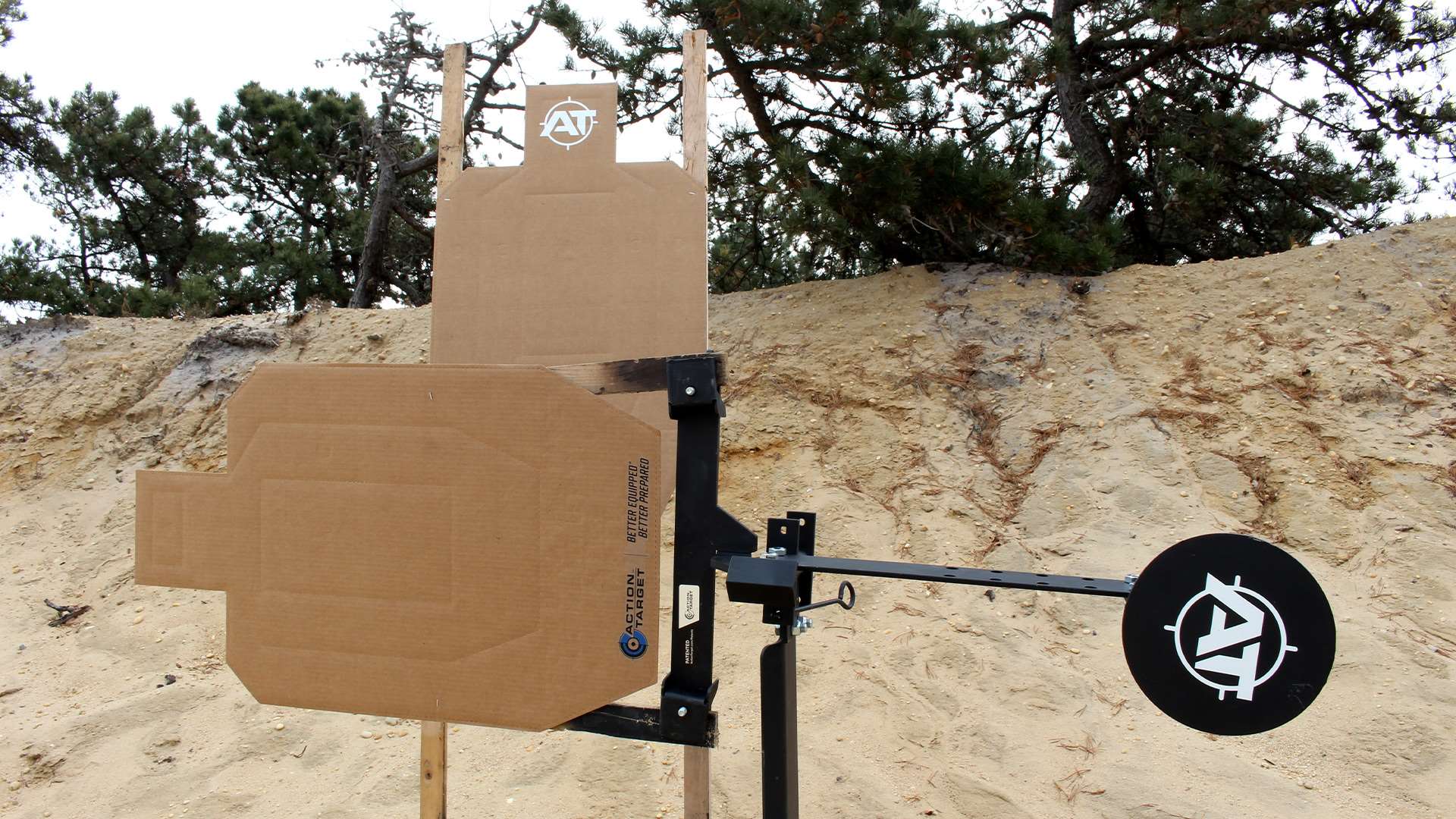
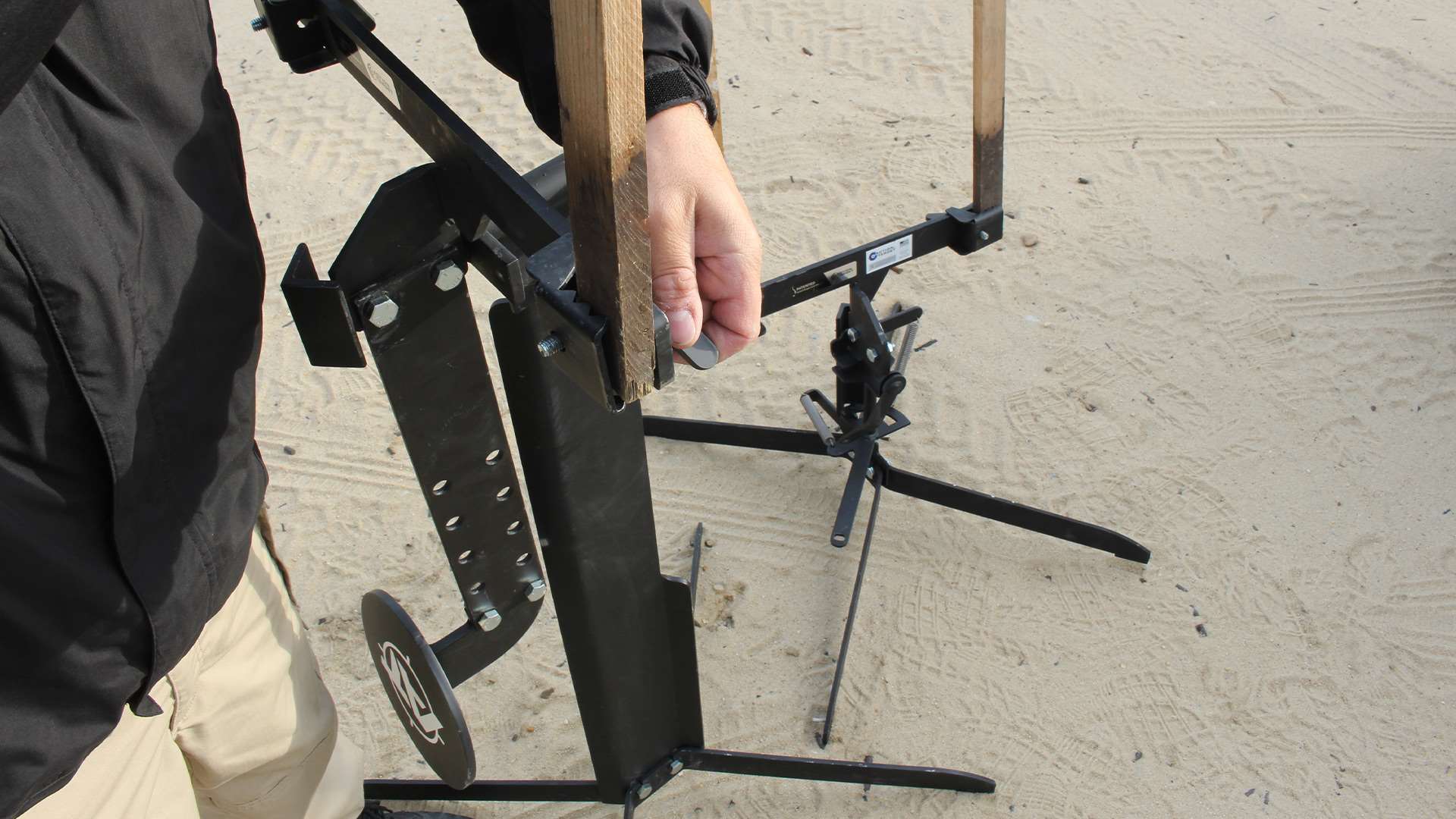
The “PT” in the name stands for “Portable Target” and although they are made entirely out of heavy-gauge steel, these targets can still be set up and transported by a single person. When the targets arrived at my door, they required nothing more than two ¾-inch wrenches to assemble using the provided hardware. After assembly, they take up a bit more space than most would like in their closet; however, by removing the two bolts that comprise the legs both of these targets flatten out and can be stacked nearly anywhere. Using this configuration, I fit both targets into the trunk of a compact sedan, with room left over for a stack of cardboard IPSC targets, plus the rest of my shooting gear.
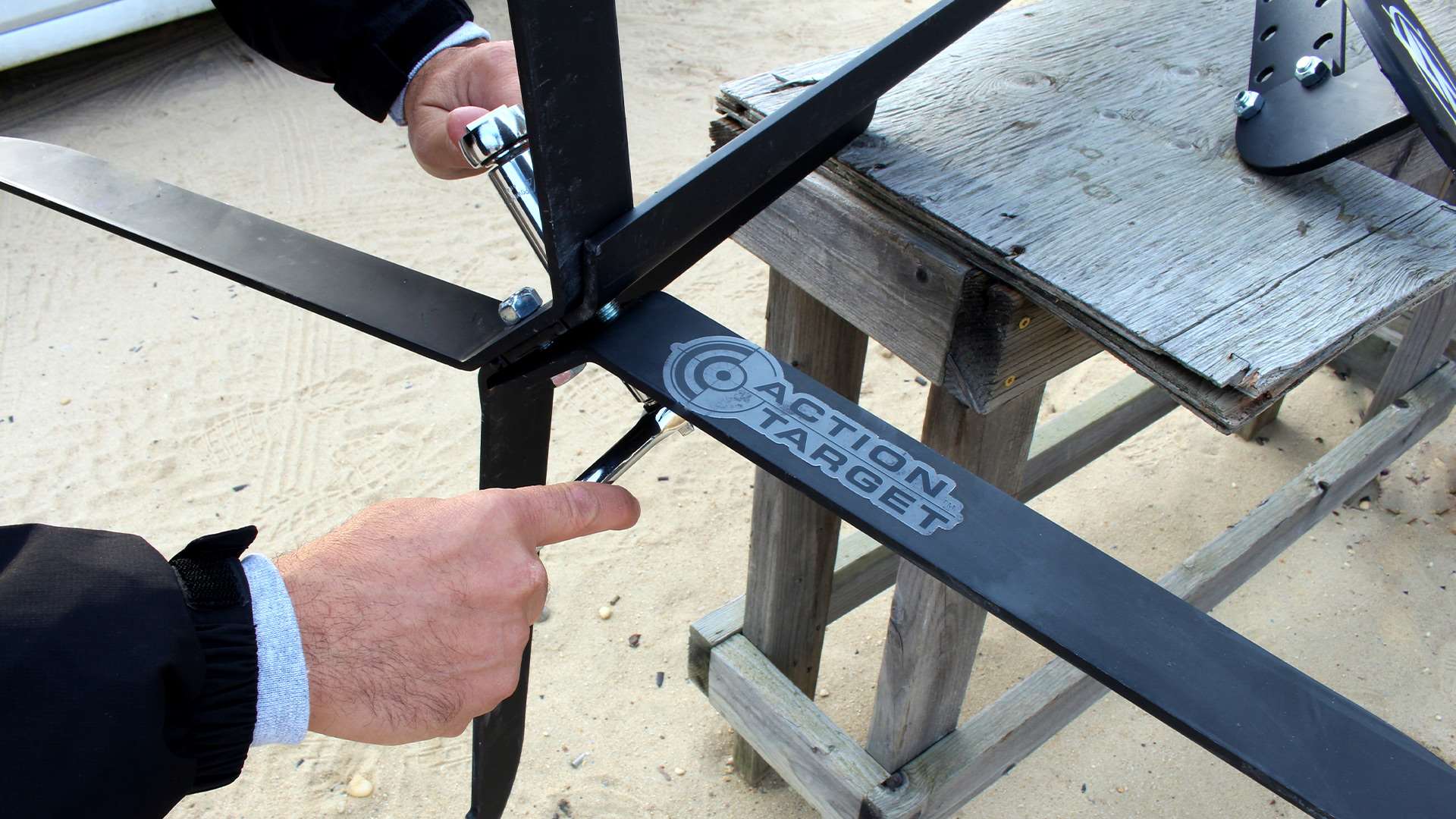
Arriving at the range, my attention turned to the PT Swinger, as it was the most familiar of the two. Relatively straightforward, I did notice that the counterweight was also a steel target, opening up a few more options than a traditional swinger. After putting the legs back on, I set two furring strips into the target frame, gaining appreciation for the aggressive clamping method that both systems utilized. It was a smart design since the targets are going to be subjected to constant movement, which also allows for other types of wood to be used in the absence of 1x2-inch strips.
Next was the decision of how to start the motion. The included pin and cable are a “vanilla” solution. A little creativity can go a long way in scenario creation. To me, a more attractive method of starting the movement is to prop a pepper popper neatly under the counterweight, and once it falls, the target starts to swing. You can also attach a falling target to a rope several feet away.
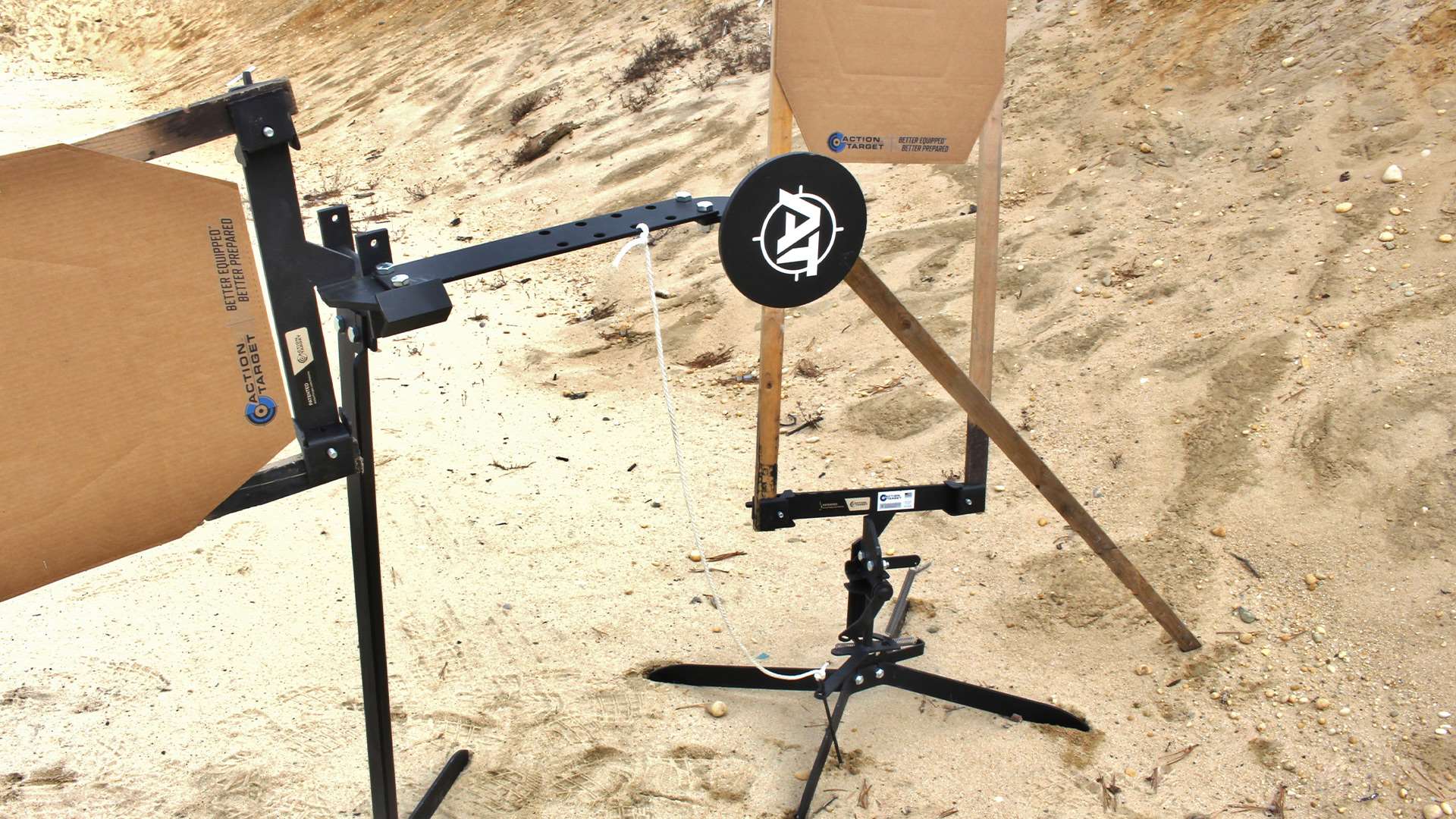
After squaring away the PT Swinger, I readied the PT Turn-Swing. The name on this one is a bit deceiving, as it doesn’t turn and swing simultaneously, instead performing two separate and unique functions, depending on which activator lever you use. This target interested me due to its turning capability, since I need a little help with drop-turners out in the field, which is how I set it up. Something that I noticed when placing it downrange is the option to set the target up so that it either starts off presented or bladed to the shooter. This doubles the utility of the system and lends it to far more training scenarios than first meets the eye. Once you decide which way you want the target to turn (or swing), you can leave it in the cocked position with the provided pin and activate it a few different ways. Alternatively, Action Target includes a pulley system and a length of rope, so you can have a buddy continually (and randomly) turn it for you while safely behind the firing line.
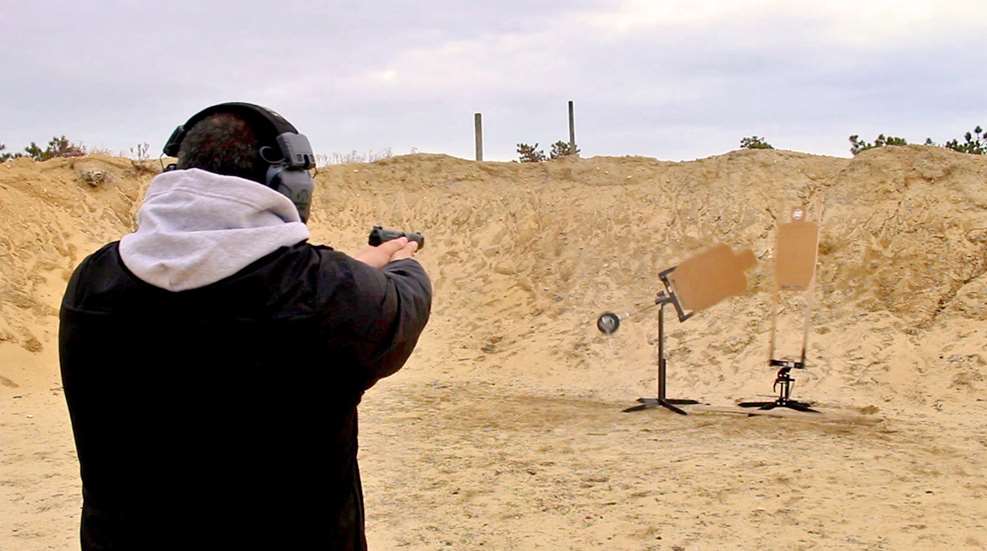
After spending time with both targets, I developed a drill that I nicknamed “The Drop Turner from Hell.” Using the PT Swinger’s target plate as an activator, I propped a simple furring strip between it and the ground to keep it in the cocked position. Attached to the additional holes on the plate arm is a rope that connects to the pull pin on the PT Turn-Swing. The course of fire begins with the shooter engaging the steel plate until it “falls.” This will take a random number of rounds because it doesn’t happen easily. Once the PT Swinger target is activated, the shooter must engage the PT Turn-Swing before it turns away and then shoot the PT Swinger. This drill is helpful, because it couples both target types. It’s also tough, because you only get one target presentation on the PT Swinger, instead of the usual two or three on a traditional drop turner. Once that gets boring, I will mix things up by making one of the cardboard targets a no-shoot, forcing me to shoot the PT Swinger before it is in line with the PT Turn-Swing, or vice-versa.
Having these target on hand has changed the way I train and has gotten me to the range more than usual. It’s amazing what adding that dynamic factor to a shooting session can do. Furthermore, these targets offer enough variety to make it easy change things up in between each session, or even between each magazine. It doesn’t take much, either. For instance, in the previously described scenario, I found that adjusting the slack on the rope changes the overall difficulty of the drill. A loose activator rope will provide additional time between hitting the steel and engaging the turner, while a taut one will have the opposite effect. I also experimented with target spacing, staggering and even a remote activator, which introduced position changes. There was even a bit of footwork. All of these variations were cooked up over the course of a single afternoon, which tells me that I have only scratched the surface of the utility of Action Target’s PT lineup.
For more information, visit actiontarget.com.
Read more: Become An Ambidextrous Shooter To Boost Your Scores
Most Popular