Norma is well known for their premium rifle ammunition. They have recently entered the pistol ammunition market and have targeted their new 9mm Luger ammunition at competitive shooters.
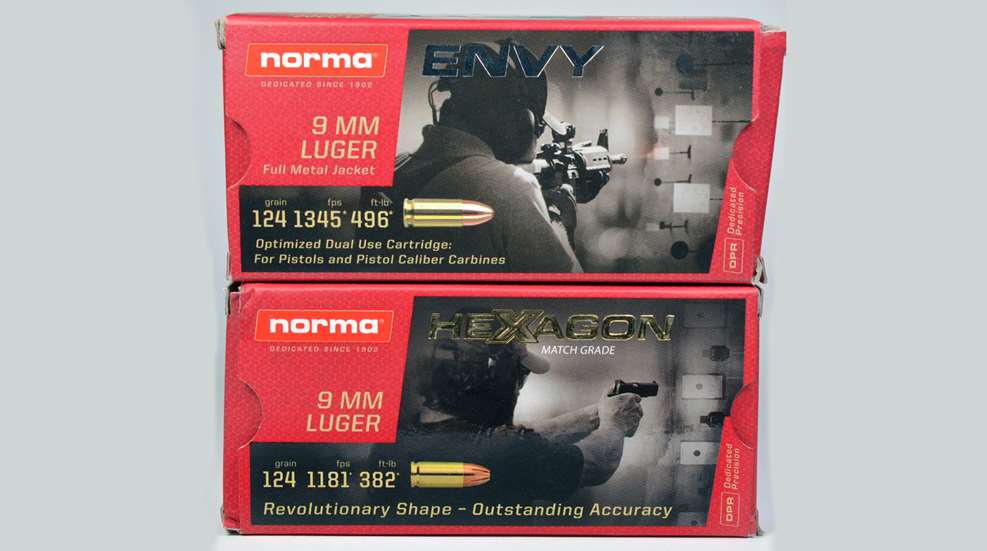
The company produces two 9mm loads geared towards competitors. Their Envy line is designed for top performance in pistol caliber carbines (PCCs). Norma says it’s capable of groups under 1 inch at 50 yards. The Envy cartridge has a 124-grain FMJ round nose bullet and is rated for 1,345 fps from a 17-inch carbine barrel.
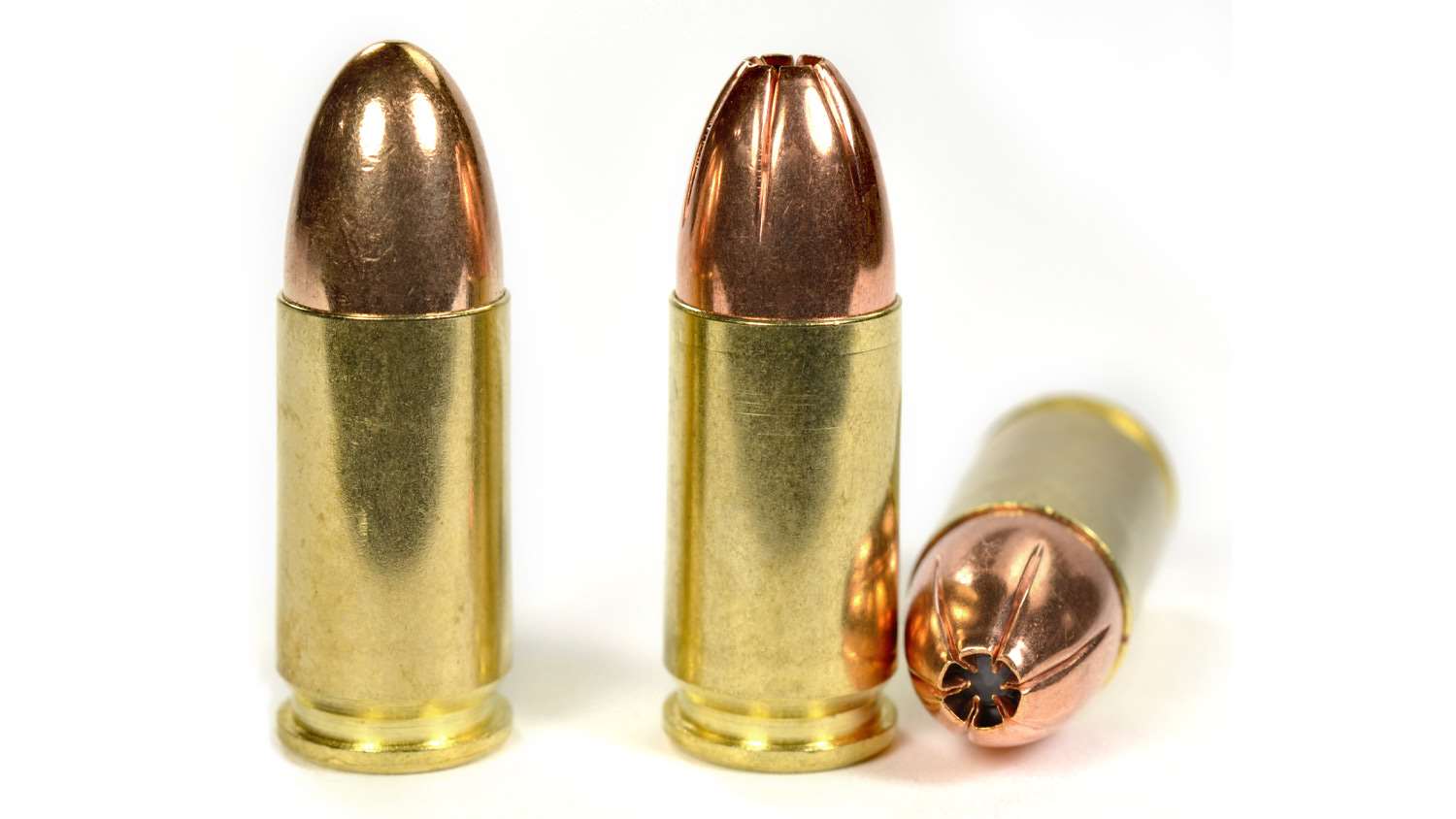
The other load is a Hexagon match-grade line which has been optimized for accuracy out of a handgun. Norma offers three rounds in the Hexagon line, 9mm Luger, .357 Magnum and .45 ACP. The 9mm version features a 124-grain Hexagon bullet, which has a unique appearance produced from six stabilizing grooves and an aerodynamic shape. Norma claims accuracy is 1 inch at 25 yards. It’s rated for 1,181 fps from a 6-inch barrel. The Hexagon cartridges are loaded with high performance powders for consistent velocity.
Both rounds are “dual use” cartridges, meant for both pistols and carbines. I tested them in a 9mm pistol for velocity and accuracy. I used a hybrid pistol with a Para Ordnance frame, Caspian slide and a 5-inch Kart barrel.
Minor power factor was easily made from my 5-inch barrel with both loads. The 124-grain FMJ bullet clocked at 1,110 fps (137 PF) and the Hexagon bullet clocked at 1,127 fps (139 PF). Velocity spread was limited. The maximum spread of 30 124-grain FMJ rounds was just 31 fps, and the maximum spread of 30 Hexagon rounds was just 36 fps. Thus, even the slowest bullets were only two power factors below the average power factor.
As for accuracy, the 124-grain FMJ round had an average 10-shot group size of 1.68 inches. A 30-round aggregate group had a maximum spread of 2.22 inches. The Hexagon load had an average 10-shot group size of 2.15 inches, and all 30 shots were in 2.75 inches.
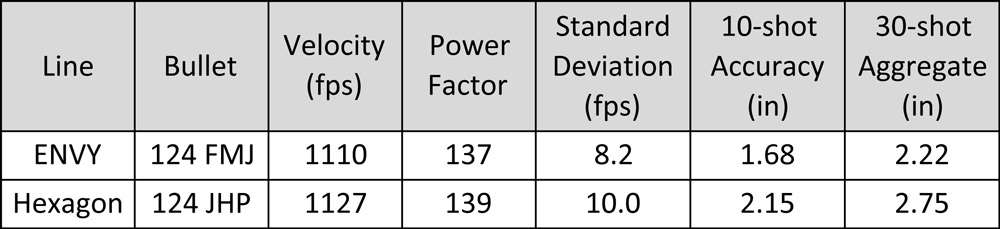
There were no malfunctions at any time during my tests. My pistol preferred the FMJ round over the Hexagon bullet, but individual guns have individual preferences, and you don’t know what your gun will like until you try it. Still, the difference in accuracy was just half an inch at 25 yards, which isn’t much.
Both loads will serve competitive shooters needs. They are accurate, easily make power factor and are reliable. The 124-grain Envy FMJ retails for $13.01 for 50 rounds, making it very economical. The Hexagon 9mm round retails for $19.09 for 50 rounds. Learn more at norma-ammunition.com.
Read more articles by Brad Miller:
- Accuracy Testing: Shortcomings Of The Five-Shot Group
- Review: Eley .38 Super Comp Ammunition
- Rimless .38 Super Brass: Everything You Need To Know
- How To Power Clean Revolver Chambers
- 38 Different 9mm Loads
- Review: Smith & Wesson 5-inch M&P M2.0 9mm
- Kaboom: The Consequences Of A Blown-Out Case
- Firing Out Of Battery?
- Heavy 9mm Luger Bullets: Everything You Need To Know
- Review: Federal Syntech Action Pistol Ammunition
- How To Use 9 Major In A Short Barrel
Most Popular