The M1903 Springfield rifle was only five years old when the U.S. Army recognized the chronic problem of recoil causing the steel receiver tang to split the wooden stock where the two meet. In 1908, the Army told Springfield to make all subsequent rifles with a 1/16 inch gap between the tang and the stock, solving the problem.
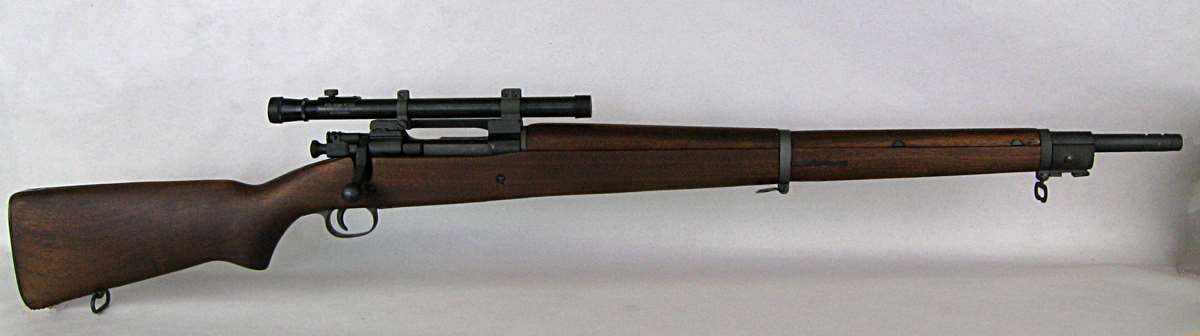
Thus, commercially refurbished M1903, M1903A3 or M1903A4 rifles for as-issued Springfield Rifle or Vintage Military Sniper Rifle competitions sport new-made aftermarket stocks; so if you’ve purchased one take a look and be sure it has that proper 1/16 inch tang-stock gap. I say this because not long ago I bought from a major company a M1903A4 built on a M1903A3 action. I noted it had little tang-stock gap, but thought that there was enough to preclude any splitting problem.
Wrong.
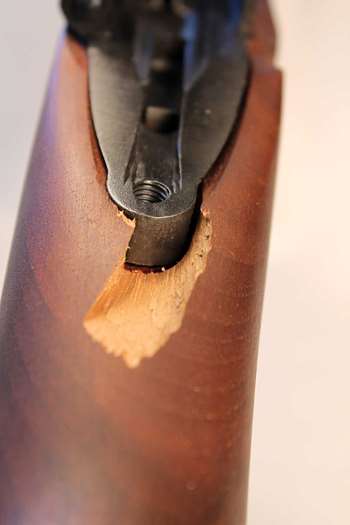
Not only wrong, but of course Murphy split the stock during the 600-yard stage of a national championship Vintage Military Sniper Rifle match. Shots suddenly began flying far and wide and the guys in the pits spooled out the white pasters as I tried to figure out the problem while the target went up and down every 20 seconds. When casing the rifle after the frustrating string, a thumb-size chunk of broken wood fell off the stock behind the tang and I’d only put about 150 rounds through the rifle.
Luckily, the well-known gunsmith’s fix isn’t difficult, so here’s how to make a repair with a minimum amount of fuss.
Epoxy, bind, relieve
Luckily, the broken chunk of wood fit perfectly back into place like a piece of a jigsaw puzzle. I removed the barreled action and used Brownell’s Acraglas to epoxy the chunk back into place. Because the chunk fit tightly and I wanted to avoid any undue excess Acraglas squeezing out of the repair, I used the standard version, rather than the Acraglas gel version I normally use for bedding actions. I masked the area around the break with transparent tape then mixed up the Acraglss and applied it thin to the broken surfaces with a cotton swab. Then, with surgical tubing tied tightly around the repair it held it under pressure for 24 hours of drying time. Conveniently, surgical tubing is available at pharmacies that deal in medical supplies at a cost of about $1.75 per foot for two feet.
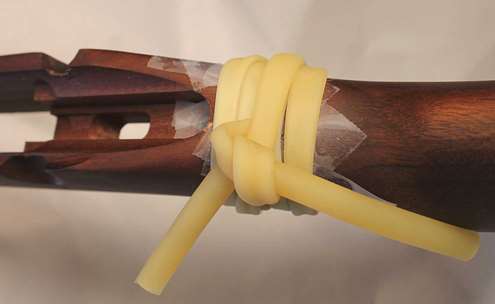
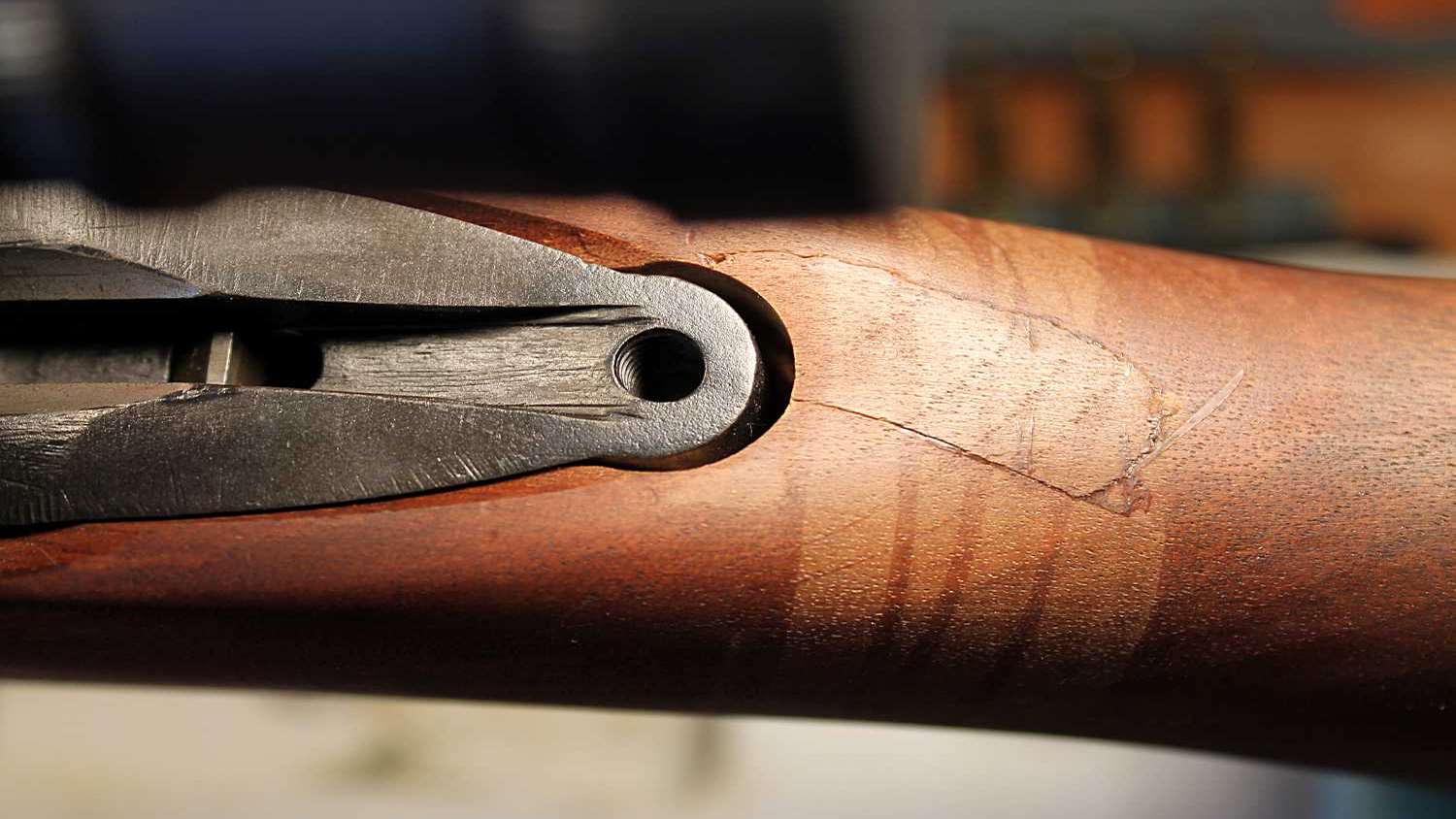
Fortunately, there was no problem with the Acraglas overrunning. You can also see the surgical tubing left its own mark, and that the edges of the break need some blending to fit with the wood. A little bit of 600 grit sandpaper and some Tru-oil will hide the warts, though it won’t match exactly—but performance counts more than looks.
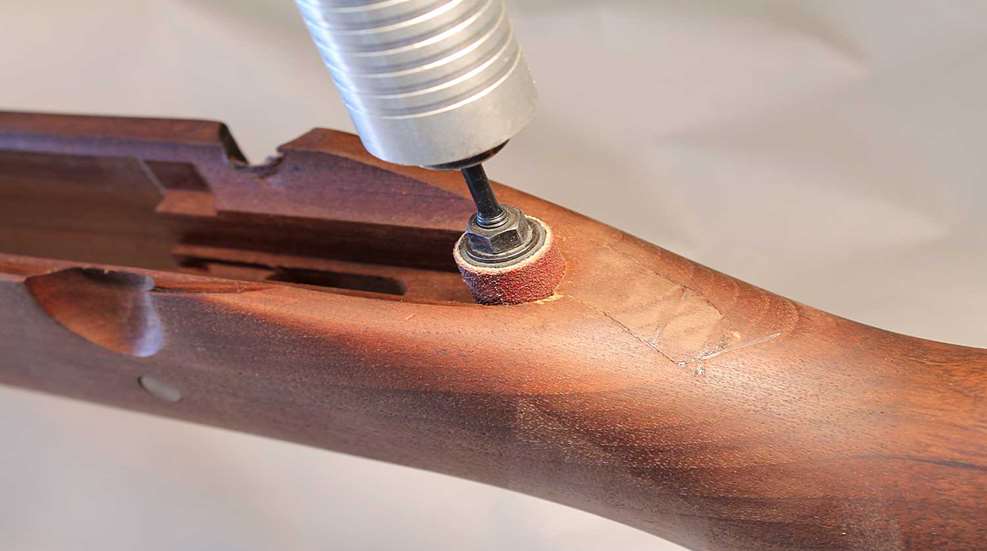
After drying 24 hours, I used a small sanding drum to relieve the wood to clear the receiver tang 1/16 inch. Coincidentally, the drum was almost precisely the perfect diameter to match the existing relief cut radius.
An ounce of prevention …
If your rifle’s tang-to-wood gap appears too narrow you may want to widen it before your stock splits. When doing so be sure the sanding drum relieves wood vertically all the way to the bottom of the inletting. The back of the receiver tang is vertical, and no part of it must touch the wood. The drum cuts fast, so go slow and “try fit” the receiver tang several times; it’s easier to remove more wood than to put any back.
When reassembling my rifle I degreased the receiver screws and screw holes and applied blue Loctite to the threads to preclude any loosening and a possible white paster repeat at the next match. The nosecap screw received the same Loctite treatment. Twenty test rounds of match grade ammo later, it appears the rifle shoots as well as ever.
Of course, bedding the tang with Acraglas or adding pillars could help prevent splitting, but that would disqualify the rifle for competition because either would modify the rifle from “as-issued” condition and may serve to accurize it. While the “as-issued” rules prohibit modifications and any accurizing of Vintage Military Sniper competition rifles, they do allow for repairs such as this.
Acraglas is available from Brownell’s at www.brownells.com.
Most Popular