I am not a reloading expert. I began reloading years ago because I can’t afford the ammo that my two boys shoot. My dad taught me how to produce quality, safe ammo that does a job on white tail deer or 3-Gun match targets. My thoughts going into the review were: I had an interest in finding out which one I wanted to buy; I am busy and don’t have loads of time to trim (excuse the pun); and my hands kill me after brass prep. Currently I use a traditional lathe-style Wilson trimmer that is simple to set up and produces very accurate and consistent cases.
So there I was with four of the very best (and most expensive) case trimmers available. I had a preconceived idea that the Giraud and Hornady were going to be the tops in the field. I mean look at them! They are models of engineering excellence. The Hornady is hot rod red and the Giraud is, well, cool looking with its machined parts and gold anodizing. Let’s take a look at each model that, for this article, I set up to trim .223 brass.
Giraud
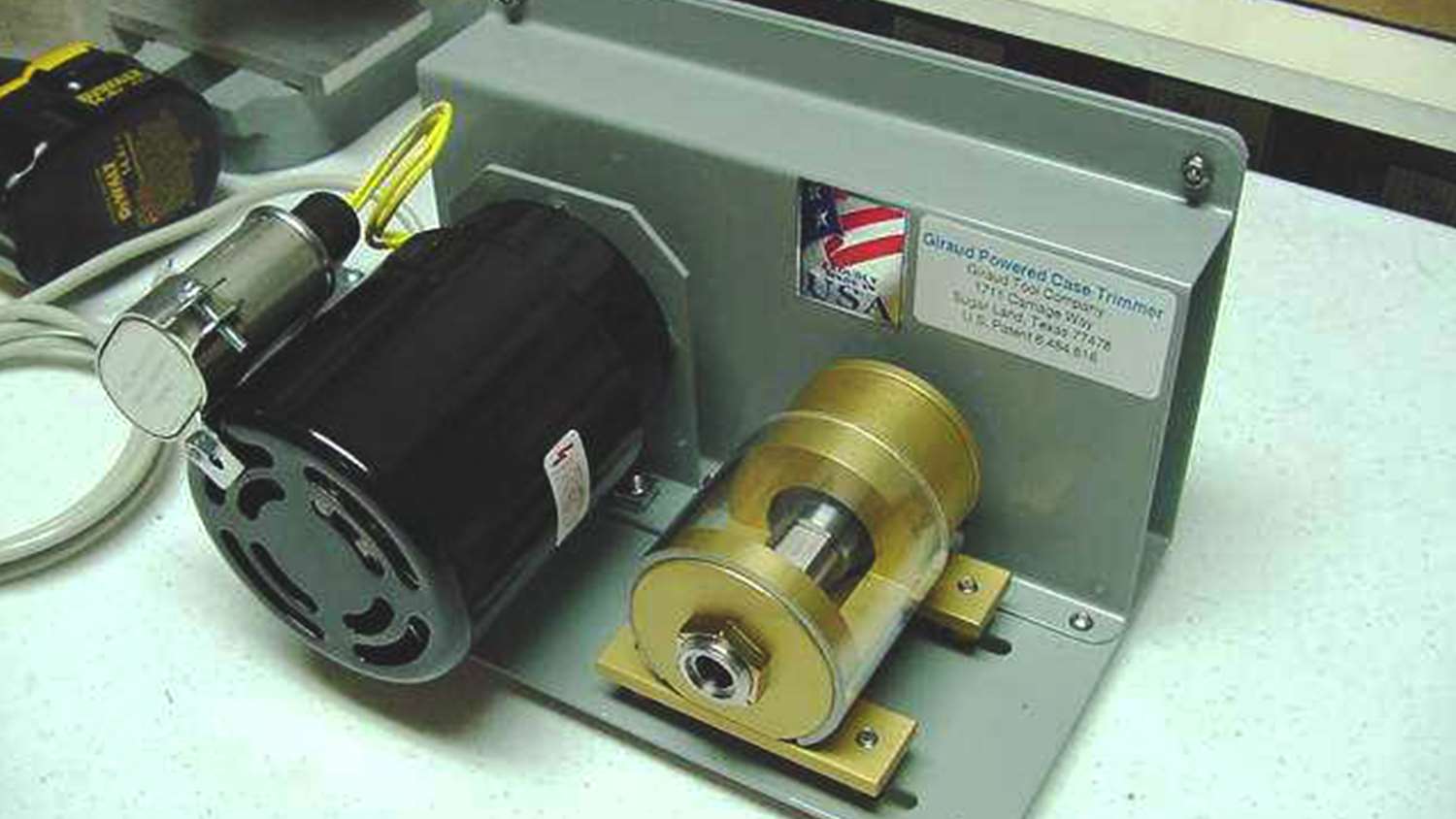
Doug Giraud built this rig like a brick house.
When you turn on the Giraud’s switch you immediately appreciate the smooth, high speed whirring of the motor. Invented by a mechanical engineer, Doug Giraud built this rig like a brick house. The constant duty motor, serrated belt drive and general construction quality are impressive. Other than the Hornady, the Giraud takes up the least amount of bench space. With some practice and a light touch, I was able to produce an excellent cut and probably the prettiest cases of the bunch. I did have to hold onto that case pretty well and that is one thing that my 41-year-old abused fingers didn’t like much. The 3-way cutter blade does three things at once: Trims, deburs and chamfers the neck. I didn’t try it, but a rubber glove might make operation of the Giraud much nicer on the digits. Giraud also makes a constant power motor replacement for the Gracey, as well as other related products. I gave this one an A+ because it’s built to last more than a lifetime.
Hornady
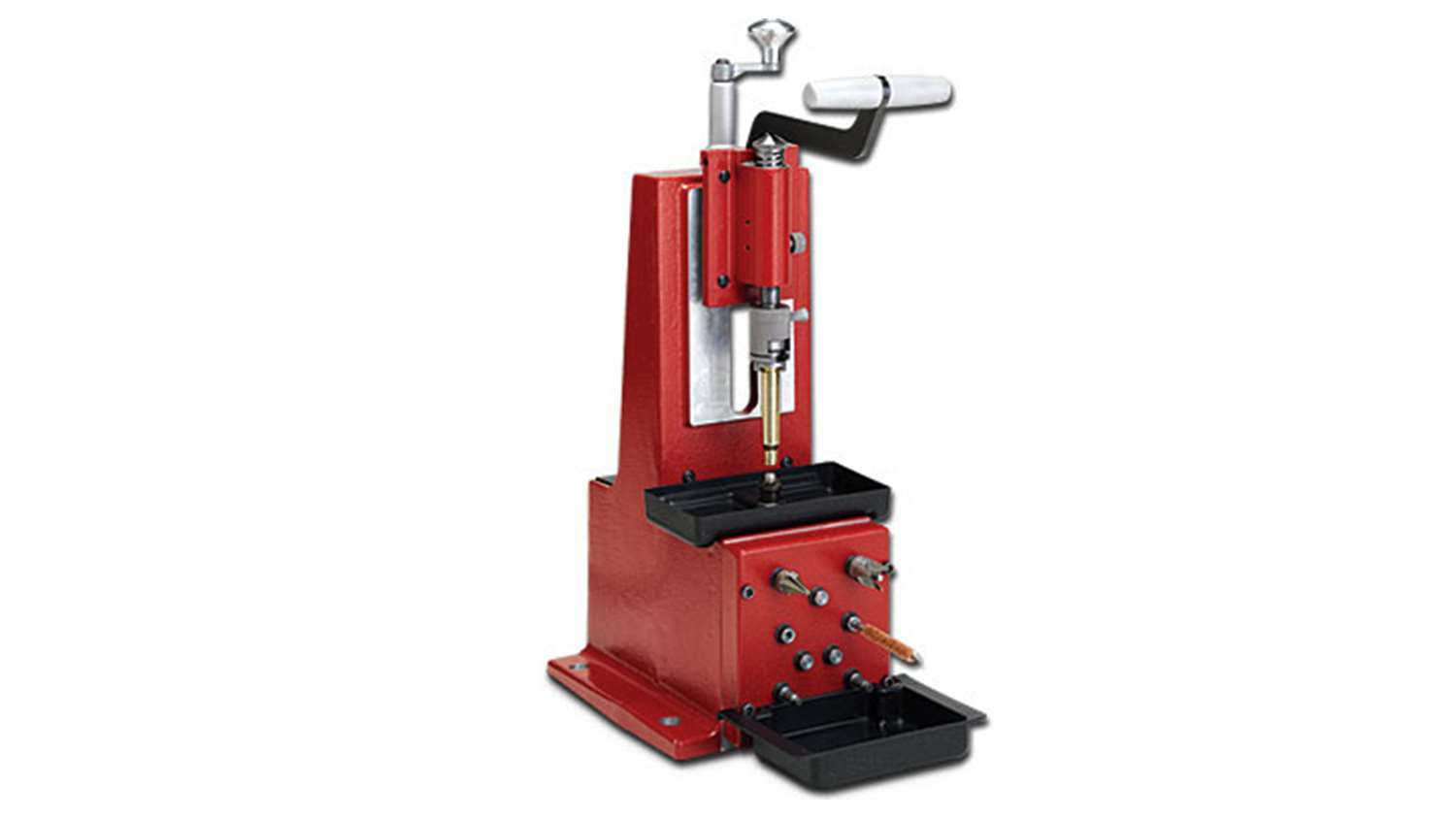
The Hornady provided the smallest footprint of the four.
If you’re going to trim a variety of cases, this model was the easiest to change settings and reset for different calibers. The Hornady is a miniature version of rugged equipment I’ve seen in machine shops. Keep in mind that you will have to purchase Hornady case holders if you don’t already have them, which resulted in another trip to the store and about $25. One issue I had with the Hornady was that, due to the design and excellent handle, you can exert too much pressure on the case while trimming. This might not be a bad thing while trimming large magnum cases. Another thing to keep in mind with the Hornady is that after full length trimming, you’ll still need to chamfer and debur the neck using two other workstations. This trimmer provided the smallest footprint of the four. I gave this model a B+ only because it required multiple passes to complete the trimming.
RCBS
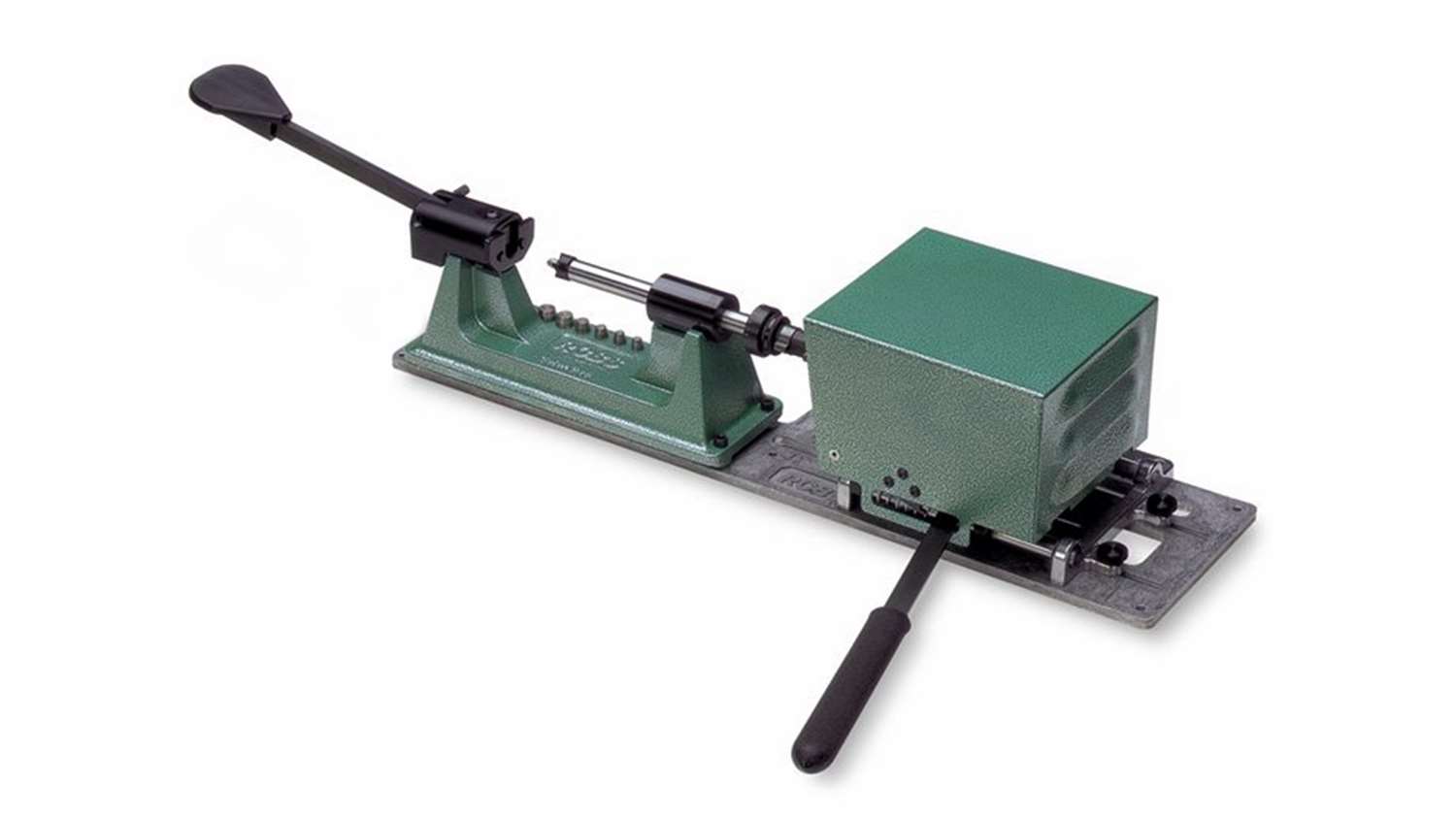
The author found the RCBS the most enjoyable to use.
Honestly, my first impression with the RCBS was that somebody took a manual trimmer and just added a motor—that it wasn’t specially built to be automated. WRONG. True enough, it uses an existing manual trimmer similar to my Wilson, but this is absolutely the most enjoyable to use of the lot. Grab a handful of brass and, with very little effort, you have trimmed, debured, and chamfered your brass. Rather than clenching the case head with your left hand, brass is chucked into the RCBS holder using the short swing lever on the left. Engaging the handle on the right both turns on the motor and moves the brass to meet the cutter. Granted, our kit included the $48 accessory three-way cutter to get the full benefit of owning the RCBS. It is definitely not the fastest of the bunch, but I guarantee you that your fingers will love you. It is also worth mentioning that setup and adjustment on the RCBS was easy, probably due to my prior knowledge with a Wilson. While it takes up a little more space on the bench and chucking each piece of brass takes time, I gave this model an A because of the saved wear and tear on my left hand.
Gracey
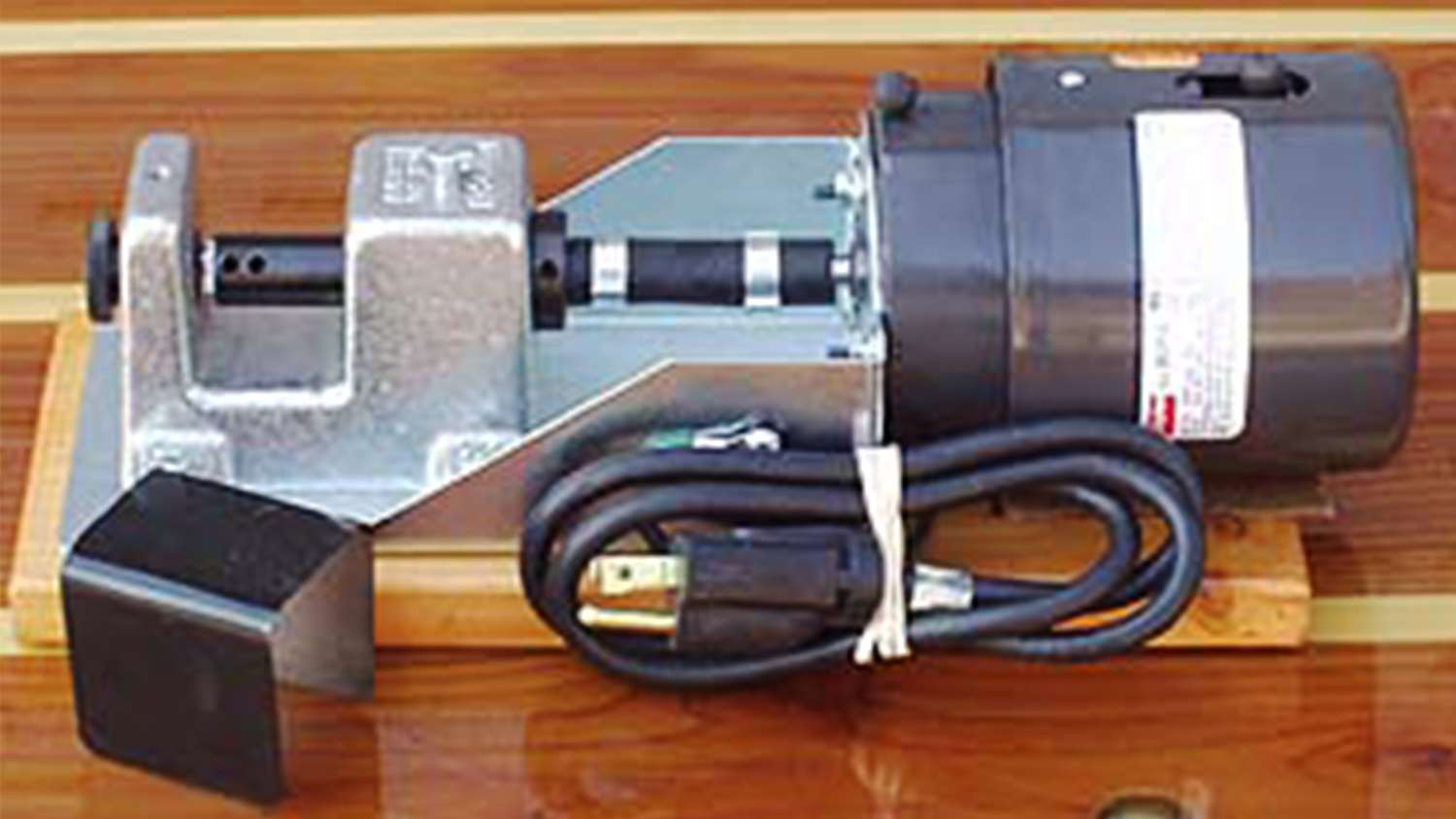
The Gracey works with great speed and accuracy at a nice price.
Designed by competitive rifle shooter Doyle Gracey in the 1980s, this model may have a piece of wood for a base, no off-on switch and a piece of bent sheet metal to contain brass shavings—but it does trim, debur and chamfer with great speed and accuracy at a nice price. The two-bladed cutter requires a little more patience to adjust than the one-piece cutter on the Giraud, but it gets the job done superbly. Some things to note about the Gracey are that is uses a clamped rubber hose as a drive shaft and you have three points to oil on occasion. OK, not that big of a deal. The black tool cover is a cheap piece of bent aluminum. Keep in mind that the cover does get the job done and the RCBS doesn’t have one at all. At least the Hornady has trays designed to catch most of the shavings. It is easy to adjust the length of the cut and, as far as I can see, will trim more brass than your fingers can handle. I give this mode an A because it does the job for less money, if you’re willing to tinker with the cutter blade adjustment.
Little Crow
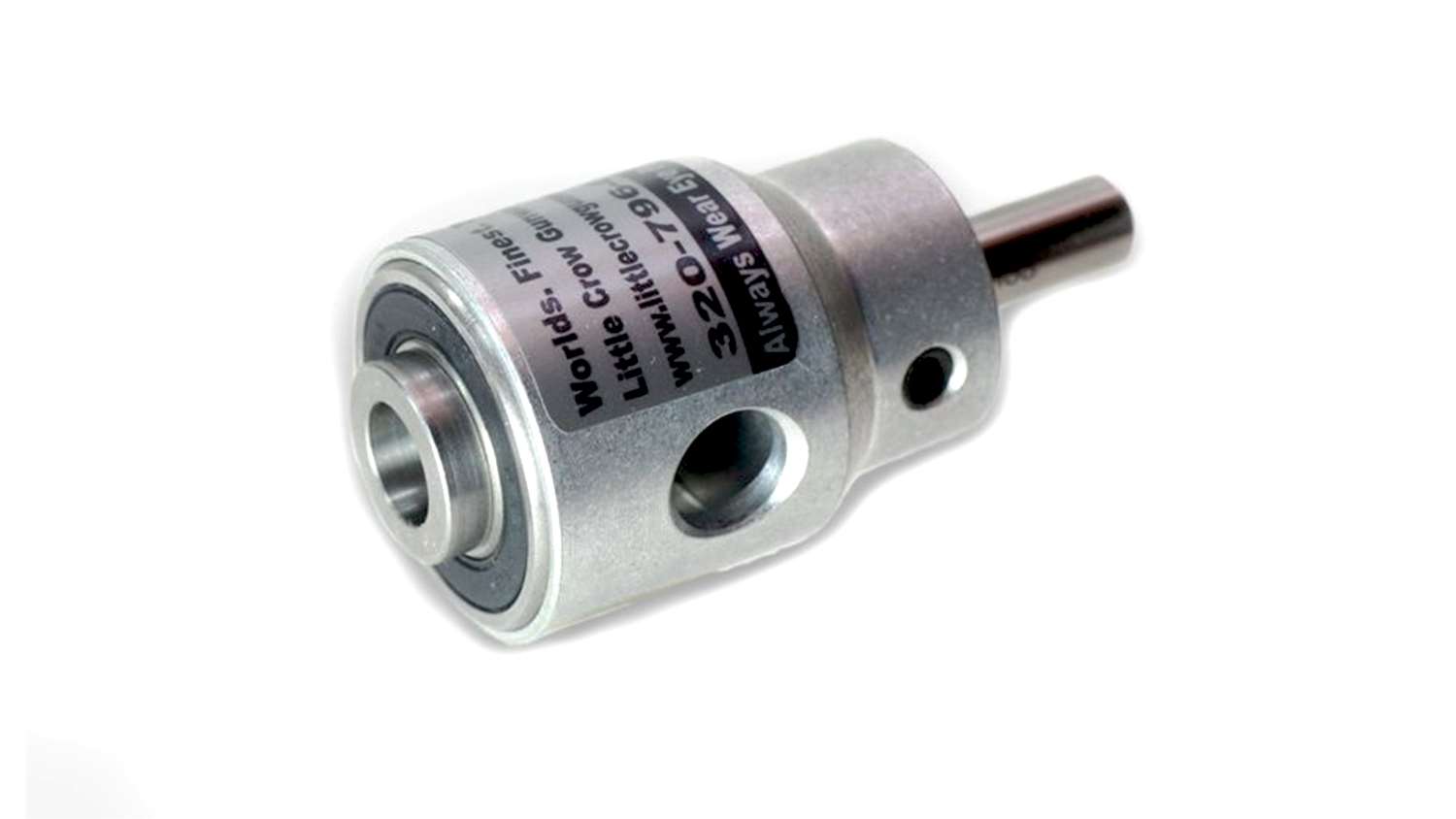
Like the Giraud and Gracey, this trimmer indexes on the bottleneck shoulder to ensure consistent, precise total length measurements.
Editor’s Note: For comparison, we included one of the better made drill mounted trimmers that sell for a fraction of the cost of the four high-end models reviewed by Trey. Little Crow Gunworks makes this trimmer with the precision of the custom long-range rifles that are its main line of business—kind of like having your work belt made by John Bianchi. Like the Giraud and Gracey, this trimmer indexes on the bottleneck shoulder to ensure consistent, precise total length measurements. As you would expect from a precision rifle builder, Little Crow takes the design of this trimmer to new heights by using a sealed bearing, which provides ultra smooth operation. The trimmer is intended to be powered by your 3/8 inch or larger hand-drill which greatly reduces the cost to the handloader. The design is similar to an electric pencil sharpener and is capable of easily trimming 500 cases per hour. The current model trims to proper length only. Future models are in the works to debur and chamfer like the Giraud, Gracey and RCBS.