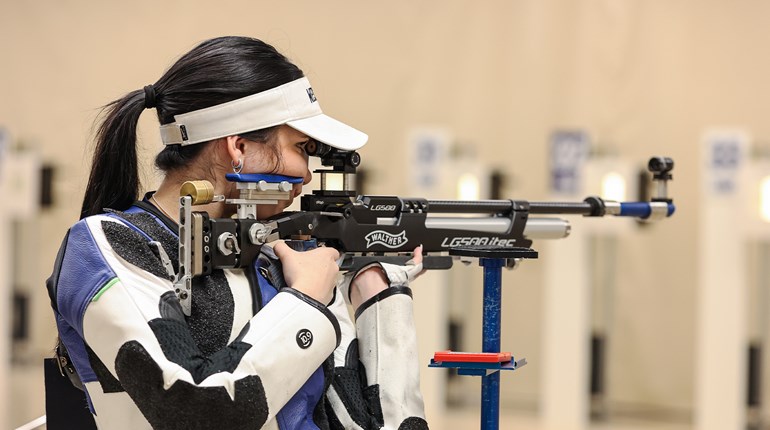

(Feb. 24, 2026) — The NCAA Men’s and Women’s Rifle Committee revealed on Monday the eight teams and individual qualifiers for the 2026 NCAA Rifle Championship. Ohio State will host the two-day tournament at Covelli Center in Columbus, Ohio, with smallbore three-position on Friday, March 13 and air rifle on Saturday, March 14. A total of 48 athletes will compete, selected on an individual or team basis in one or both disciplines.
The qualified teams are Alaska-Fairbanks, Georgia Southern, Kentucky, Navy, Nebraska, Ole Miss, Texas Christian University (TCU) and West Virginia University (WVU). Kentucky enters as the top-ranked program with a 9500 combined qualifying score, followed closely by Nebraska at 9495.33 and TCU at 9490.33. Defending champion WVU sits fourth at 9485.67, with Ole Miss rounding out the top five at 9483.
The gap between first and eighth in this field is just 37.67 points. Alaska-Fairbanks and Navy are tied at 9472 in the sixth and seventh positions, while Georgia Southern holds the eighth and final qualifying spot at 9462.33. That kind of compression means the championship is unlikely to be decided until the final relay of air rifle on Saturday afternoon.
Kentucky arrives in Columbus carrying the weight of a near-miss. The Wildcats finished as runner-up to WVU at the 2025 championship, which was held at Kentucky’s own Memorial Coliseum in Lexington last March. Losing a title on your home range stings, and the Wildcats have responded with the strongest qualifying score in the country this season. Kentucky has won five NCAA rifle titles in program history, most recently in back-to-back seasons in 2021 and 2022.
West Virginia University, meanwhile, enters with a qualifying score that ranks fourth but a championship pedigree that dwarfs every other program in the sport. The Mountaineers won a record 20th NCAA Rifle Championship in 2025, extending a dynasty that dates to 1983. No other school in any NCAA championship sport has dominated its discipline with the consistency WVU has shown over four decades of competition. Fourteen of those 20 titles have come since 1988. The Mountaineers have never gone more than four seasons without winning it all.
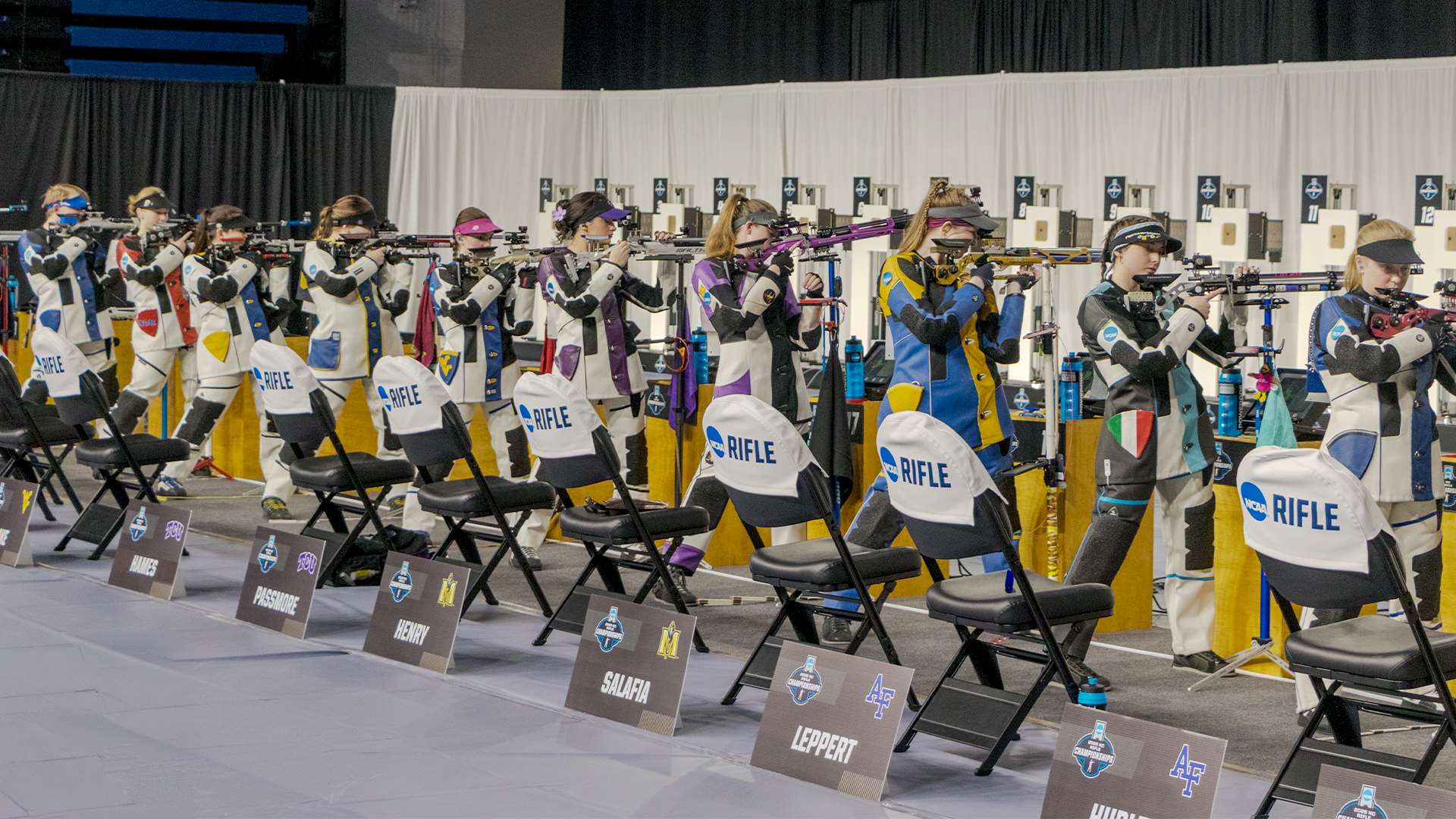
Alaska-Fairbanks and TCU are the other programs with serious championship history in this field. Alaska-Fairbanks is the second-most decorated program in NCAA rifle championship history behind WVU with 11 national championships, including a 2023 title. TCU has won four NCAA rifle titles, most recently in 2024 and with earlier wins in 2019, 2012 and 2010.
Nebraska, Navy, Ole Miss and Georgia Southern bring competitive qualifying scores but no prior NCAA rifle titles. For those programs, this year’s tournament in Columbus represents both an opportunity and a measuring stick against collegiate rifle’s established powers.
Eight individual qualifiers were also selected from designated qualifier matches, four in each discipline. The smallbore individual qualifiers are Addison Antwiler of Army West Point, Katrina Demerle of Memphis, and Carlotta Salafia and Lea Soulé of Murray State. Smallbore alternates are Riley Dunn of Ohio State and Alexander Pohlman of VMI. In air rifle, the individual qualifiers are Lily Wytko and Lily Miller of Air Force, Caroline Martin of Murray State and Kameron Wells of UTEP. Air rifle alternates are Abby Ballard of Murray State and Carlee Valenta of UTEP.
Murray State, which finished ninth in the overall rankings at 9455.33, placed three athletes into the individual qualifier pool across both disciplines. That kind of depth from a program just outside the team cut speaks to how competitive the bottom half of the top 10 has become.
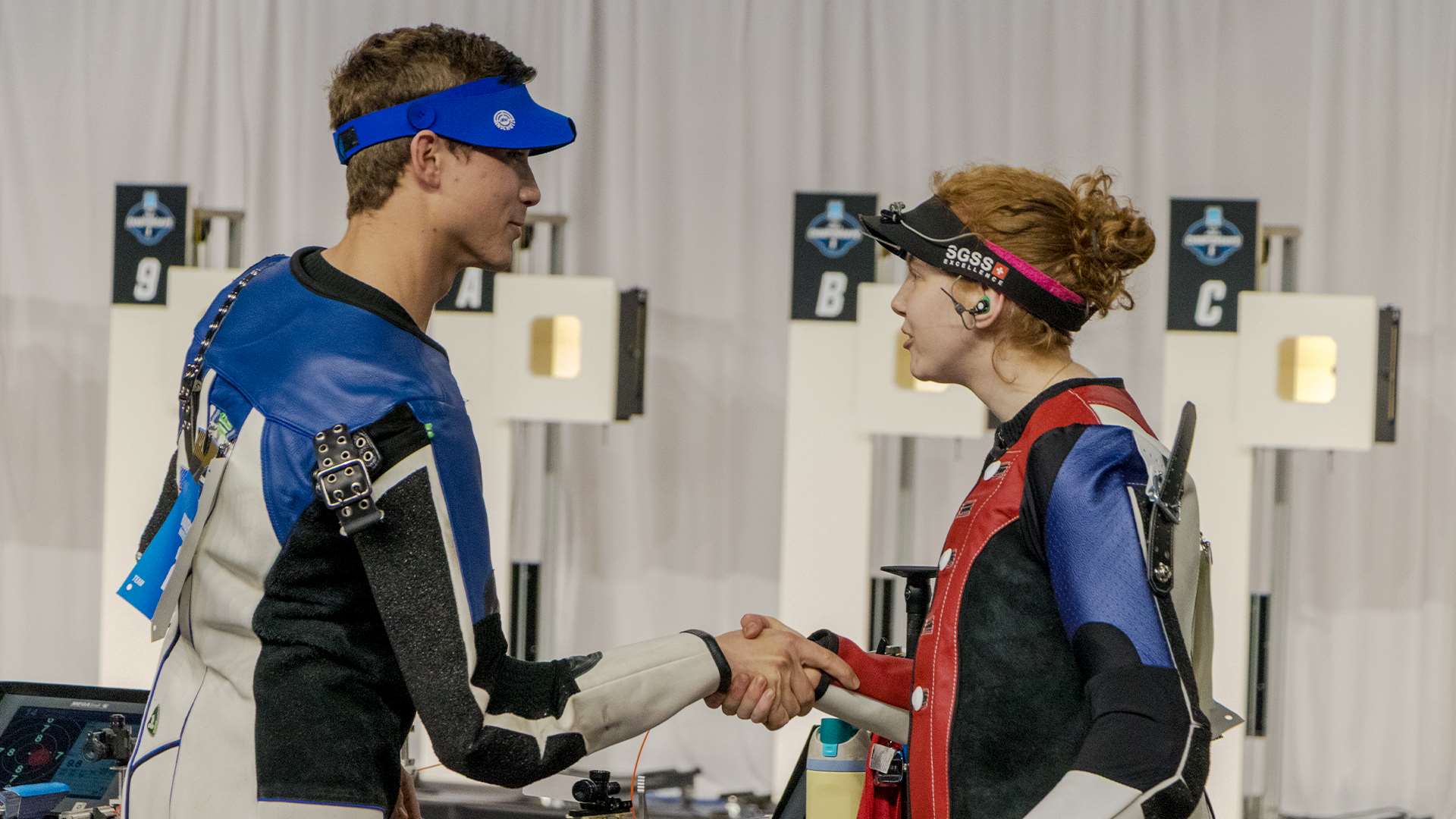
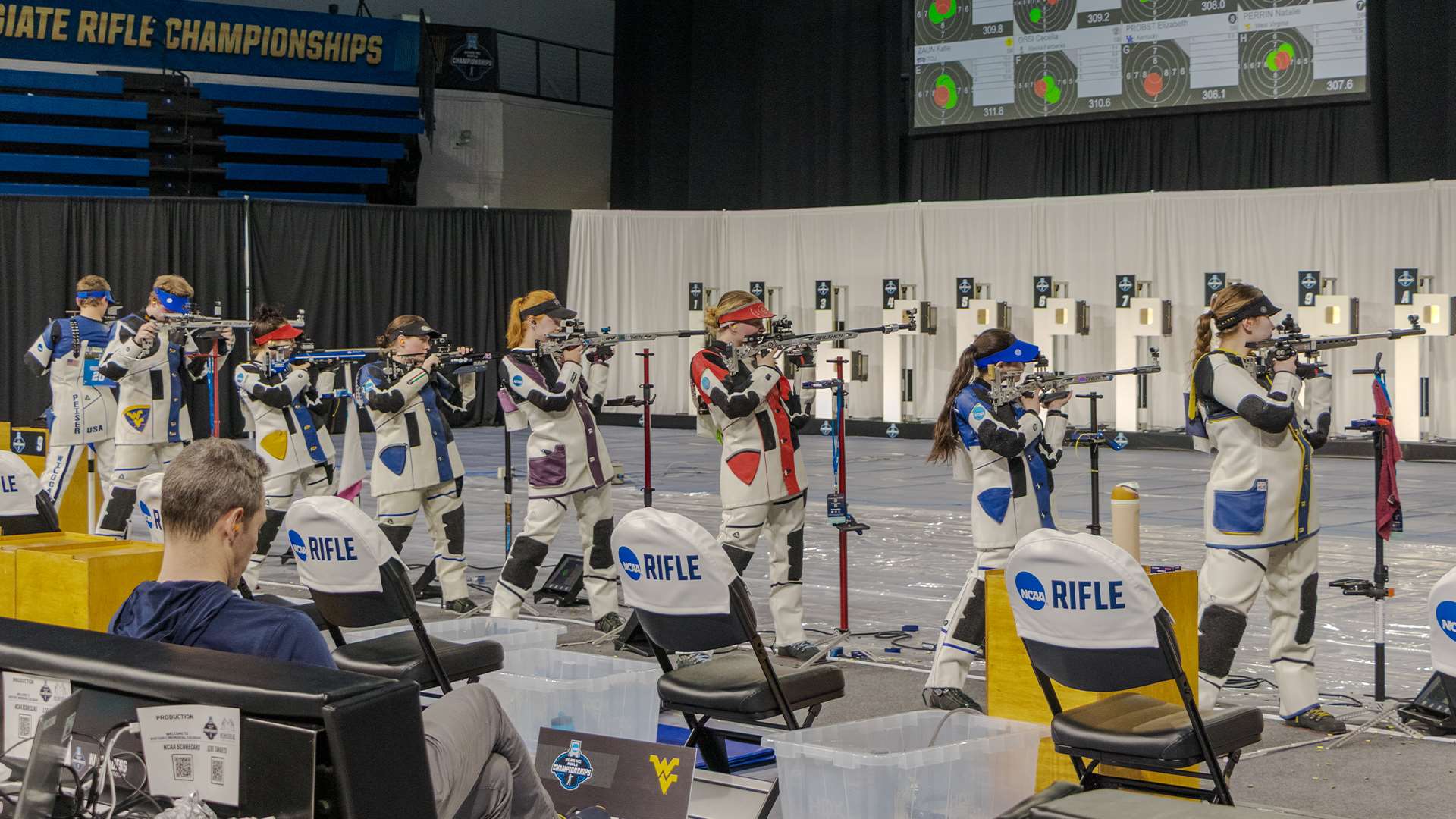
For those unfamiliar with the format, each team fields up to five shooters in both smallbore and air rifle. A perfect score in either discipline is 600. The best four scores from each discipline are recorded, and the team with the highest combined total wins. Smallbore three-position is fired in standing, kneeling and prone at 50 feet. Air rifle is fired standing only at 10 meters. In both disciplines, the top eight individual scores advance to a final, with ties broken by center-shot count, to determine individual champions.
The championship course of fire has consisted of 60 shots per competitor in both smallbore and air rifle since 2005, totaling 120 shots per team member. Prior to 2005, the format required 120 shots in smallbore and 40 in air rifle.
For additional coverage and background on NCAA rifle competition, visit ncaarifle.org and ncaa.com.