Many long range competitors and snipers know something only a few hunters know―over longer ranges, rifling twist causes bullets to fly left or right of target. The designers of one combat rifle now used in Vintage Military Rifle competition, the M1903A3 Springfield, recognized the need to compensate for this phenomenon if the Springfield was to be used effectively by basic infantrymen at ranges beyond 400 yards.
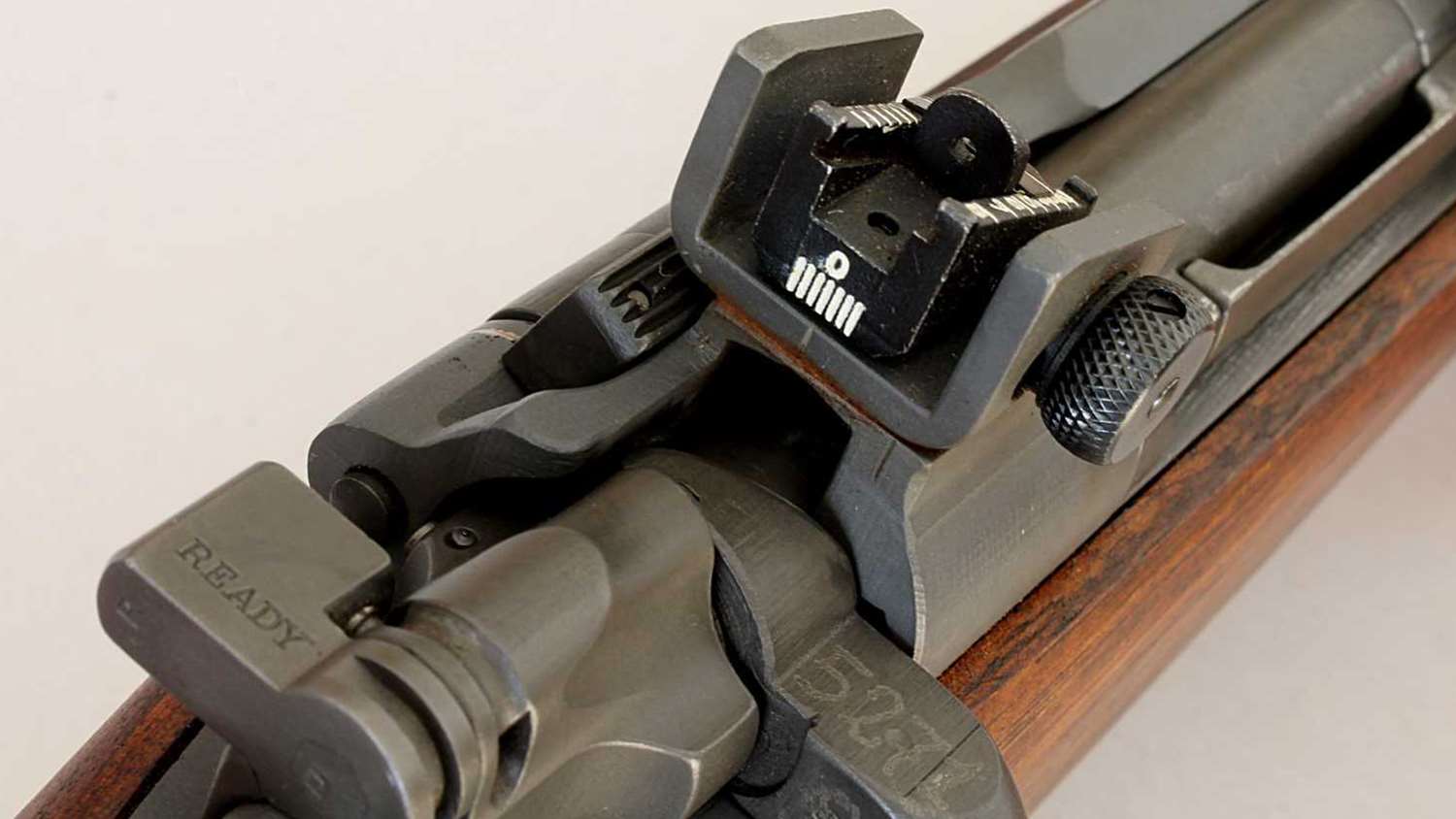
You can’t readily see it with the naked eye, but as the M1903A3 Springfield rifle’s sight moves up in elevation, it also moves slightly to the left. This compensates for the Springfield rifling’s right-hand twist, which drifts bullets to the right. Rather than exhaustively train soldiers in precision long range sight adjustments, the powers-that-be in WWII elected to simply incorporate the compensation into the rear sight.
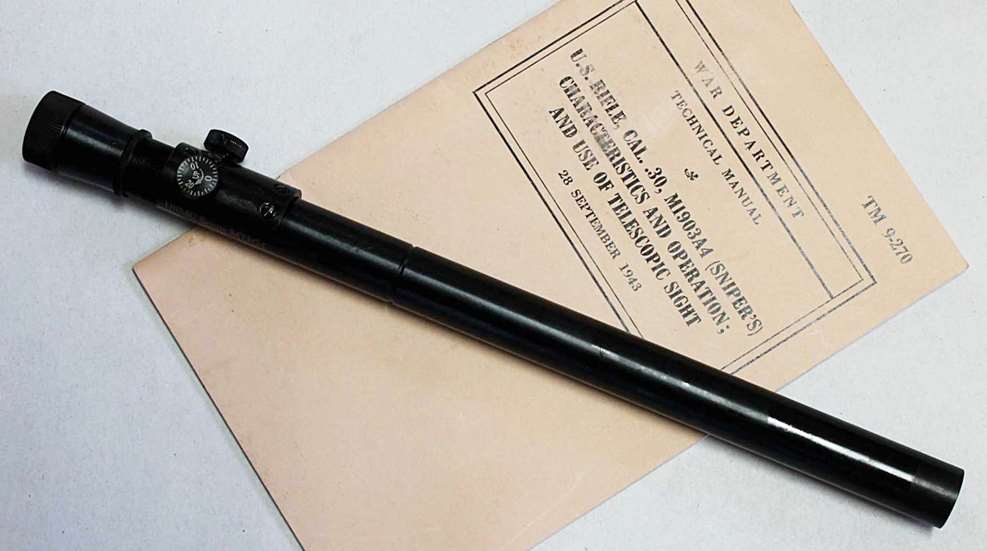
The War Department’s Technical Manual TM 9-270 of 1943 for the Weaver-scoped M1903A4 Springfield sniper variant openly addresses this drift in a firing table that shows scope windage click corrections for the M2 Ball 150-grain FMJ bullet. The table directs snipers to manually crank in left-hand windage on the Weaver 330C (or M73B2 in Army parlance) beginning at 400 yards to compensate for rifling-induced drift.
What is the phenomenon of rifling causing bullet drift to the left or right over extended ranges? In the July, 1952 American Rifleman Dope Bag, Gen. Hatcher explained it in layman’s terms:
“The motion of a bullet to the right when fired from a barrel of right-hand twist or to the left when fired from one of left-hand twist is what is known as ‘drift.’
It is well understood by ballisticians and while the causes are somewhat obscure and have a good deal of mathematics mixed up in them, we might simplify the whole thing for the purposes of illustration by saying that in effect a bullet starts to fall as soon as it leaves the muzzle of a gun, hence the air underneath the bullet is compressed a little more than that on top. With a right-hand twist the bullet is rotating to the right and it tends to roll to the right on this layer of compressed air. On the contrary, if the twist is to the left it rolls or drifts to the left.
On the Springfield rifle the rear sight aperture is carried on a small so-called drift slide which moves on an inclined guideway on the rear sight leaf. This guideway slants to the left so that as the rear sight is raised high in elevation the aperture moves further to the left, thus compensating for drift. The total drift is very small at first, but gets larger as the bullet goes on further so that at 1000 yards it is about 13 inches for the .30-06 ammunition in the Springfield rifle.”
Most Popular