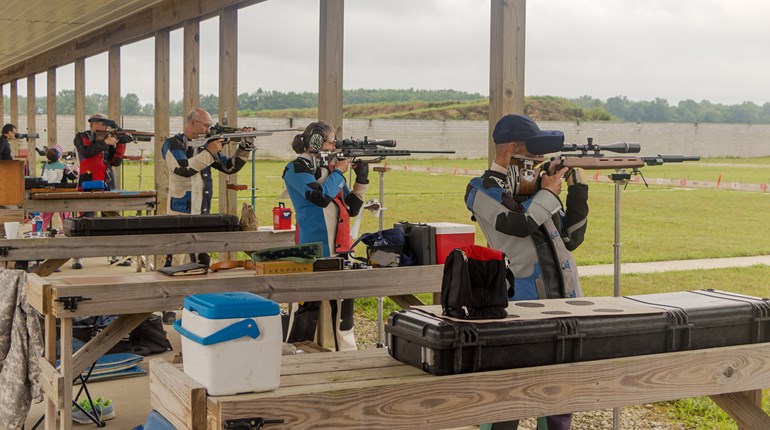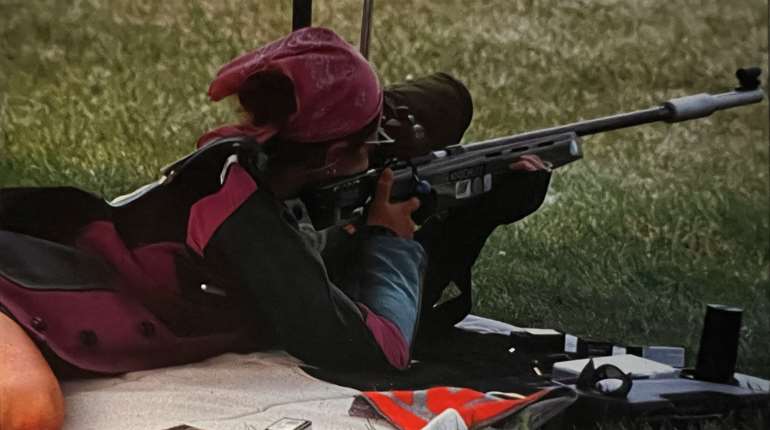
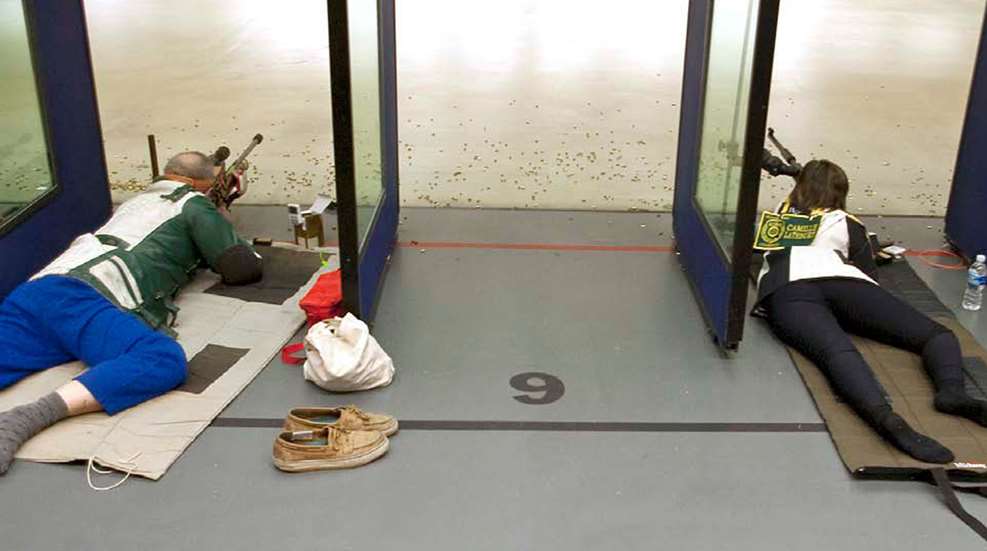
From the vault: Two smallbore rifle competitors—Camille Lathbury and Geoff Hornseth—showcase how competitive shooting is a “sport for all ages.” In this article, they share their thoughts as they gear up for the first smallbore match of the 2010 competitive shooting season. As published in the February 2010 issue of Shooting Sports USA.
A Sport For All Ages
By NRA Staff
Fourteen-year-old Camille Lathbury and 60-year-old Geoff Hornseth represent the spirit of competitive shooting as a “sport for all ages.” Against the backdrop of the annual Spring Fling tournament, here are their thoughts as they prepared for and participated in this perennial first smallbore match of the season.
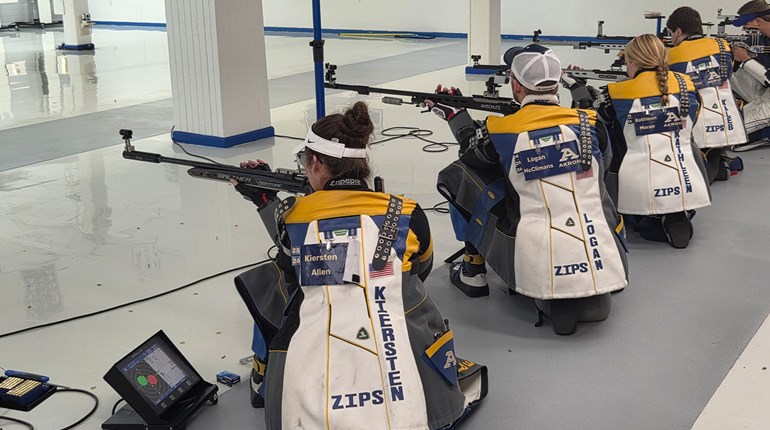
Tournament History: Since NRA relocated to Fairfax, Virginia, in the winter of 1994, a smallbore three-position rifle tournament has been held there each April to kick-off the new season. This unique indoor 50-yard match has since grown to more than 150 competitors with participation from as far as California, Connecticut, Florida and Michigan. In addition, more than 90 national records have been fired during this tournament, making it one of the most prestigious indoor smallbore rifle position events in the country.
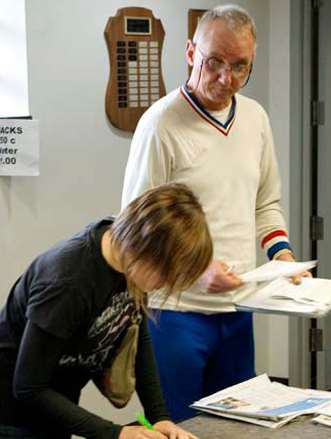
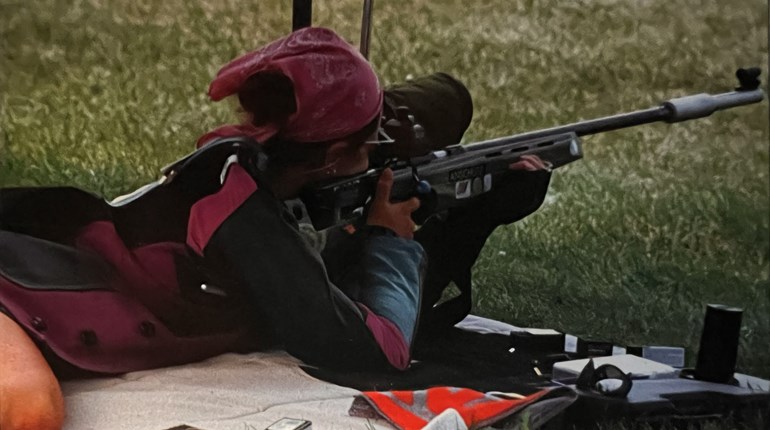
Camille Lathbury: “Hello, I’m Camille Lathbury. I’m home-schooled, hold 14 NRA national rifle records and have participated in three Junior Olympics tournaments. I have been shooting competitively since I was nine years old. I began shooting after attending an NRA-Day camp in North Carolina. One of the electives in the camp was “riflery.” I had no idea what riflery was, so I signed up blindly (I come from a non-shooting family). Thanks to a couple of enthusiastic camp counselors who taught me the prone position, I noticed that one of the shots on my target was a nine. I was so excited that I shot a nine that I didn’t much care that the other campers had perfect targets or that they were shooting in other positions. I had a huge head and a nine on a target.
“Upon coming home and telling my mother (You’re interested in which sport?!), I managed to get her to look for a shooting team in our area. I soon found that shooting is not an easy sport. However, with the help of many cheerful volunteer coaches and their helpful guidance, my scores have greatly improved. I am forever thankful to them and I wouldn’t have loved the sport as much as I do now if it hadn’t been for them cheering me along.”
Geoff Hornseth: “Art Cook, the 1948 Olympic prone gold medalist, once commented to me that although he had been shooting for nearly 60 years; ‘I always learn something new every time I go to the firing line.’ Right then I realized that learning the sport of competitive shooting is a lifetime endeavor. His comment forever shaped my view of practice. It has to be something more than mindlessly blasting shots down range. Shooting must have a plan, every time. A plan does not have to be elaborate. It mostly boils down to identifying one or two areas of your technique that need improvement. There is always something needing improvement.
“I divide matches into two groups: ‘practice’ matches and ‘important’ matches. The difference, for me, is in the level of prior mental preparation. A local club match can be a good practice match. To avoid burning yourself out, practice matches are approached pretty much stress-free, with little or no prior mental preparation. An ‘important’ match is one where you decide that your best performance is the goal. Concentrate solely on the process (shot plan) of making a good shot, thus keeping you focused on your job as a shooter: Making just one perfect shot at a time. Thinking about outcome is a distraction and will lead to problems—‘match nerves.’ It is very important to separate the process of making a good shot from the outcome. And don’t forget to enjoy yourself. Shooting needs to be fun, not just serious work.”
Most Popular