** When you buy products through the links on our site, we may earn a commission that supports NRA's mission to protect, preserve and defend the Second Amendment. **
Shooters should know which is their dominant eye. This is often tested during an introductory shooting clinic, particularly with beginning and junior shooters.
[Editor's note: Read Chip Lohman's article “Expert Forum: Eye Dominance” that includes a detailed introduction to the subject by Dr. Wong.]
 One 1967 study by Rengstoff, compared 5,546 subjects in an age range from 5 to 75. He found that 91.5 percent were right handed, 7.7 percent were left handed and 1.1 percent were ambidextrous. Additionally, 66 percent were right eyed, while 34 percent were left eyed. By detailing eye and hand preferences together, 62 percent were right eyed-right handed, 28.6 percent were cross-dominant as left eyed-right handed, 4.2 percent were left eyed-left handed and 3.9 percent were cross-dominant right eyed-left handed.
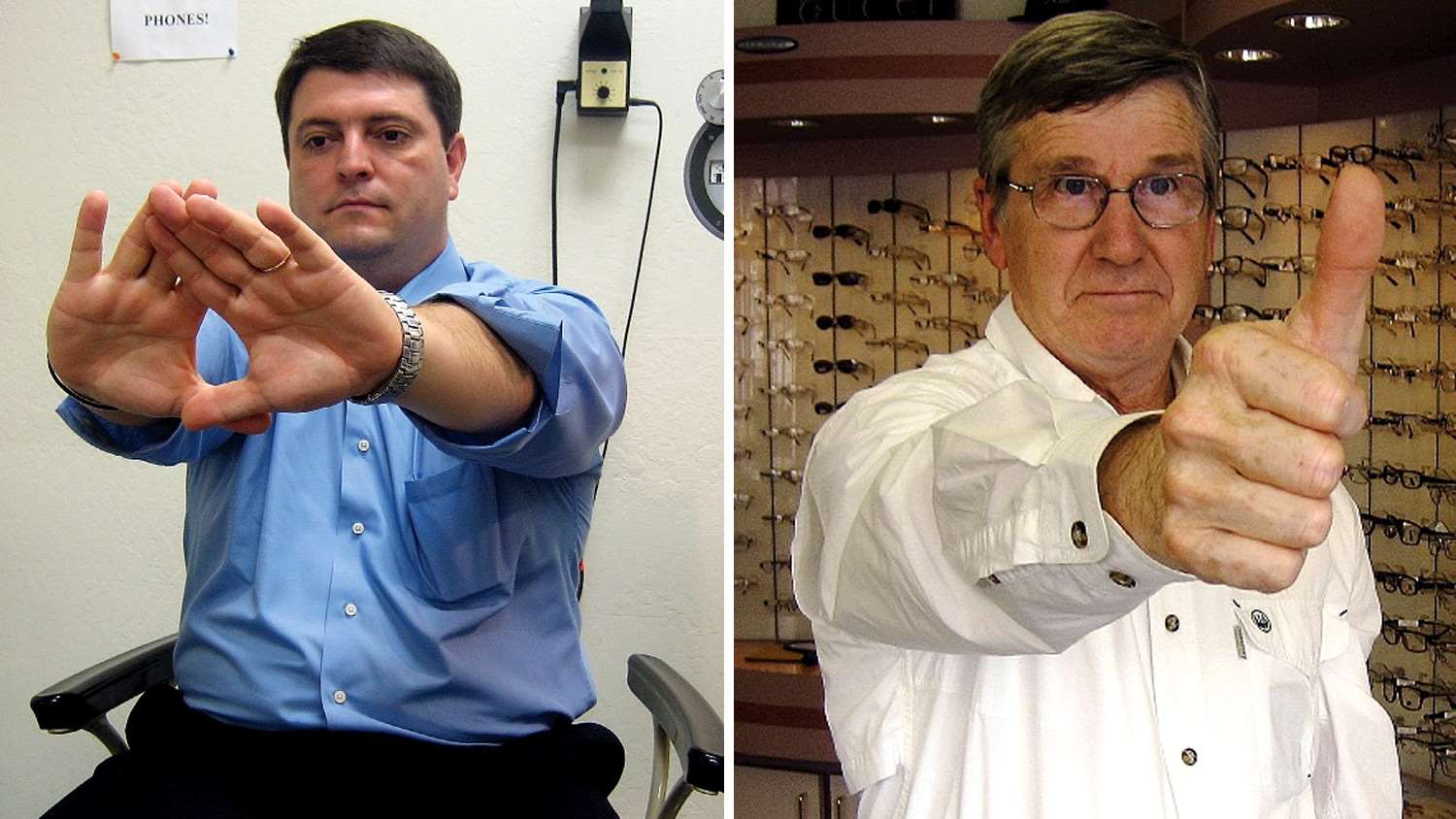
A common method of testing one’s eye dominance is the classic opening between out-stretched hands. The subject looks through the opening to see the examiner’s eye. The examiner would then be able to determine which eye was used. While it is a good start, this test doesn’t show the quality and to what depth is the dominance. When asked, some shooters may actually say they’re not sure which eye is dominant.
After working with shooters for a number of years, I wanted to check eye dominance a little further. The following is my new approach:
Those who are right eye dominant will note the left thumb image more prominently, whereas the right thumb image will be more prominent for left eye dominant shooters. In my case, the right thumb image is more stable and the left thumb image fades very quickly, which indicates my left eye is fairly dominant. This test provides some feedback to the intensity of dominance.
When images are focused upon the retina, visual signals are sent to the visual cortex of the brain. The brain does not like to “see” double images, so the second image of the non-dominant eye typically becomes suppressed, while the image of the dominant eye prevails.
If, during a clinic, a student states “It’s the same,” then these shooters typically can use either eye to shoot effectively because there is not much difference in the dominance of either eye.
Photos by Nellie Ormeno
[Editor's note: Read Chip Lohman's article “Expert Forum: Eye Dominance” that includes a detailed introduction to the subject by Dr. Wong.]
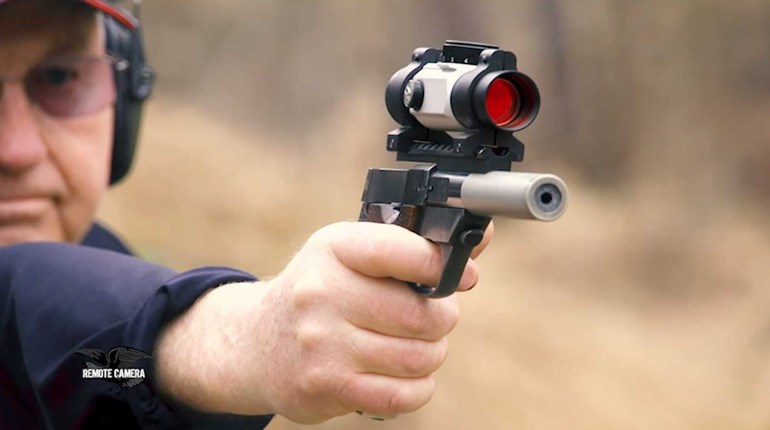
Eric L. Pueppke instructing during a pistol clinic.
A common method of testing one’s eye dominance is the classic opening between out-stretched hands. The subject looks through the opening to see the examiner’s eye. The examiner would then be able to determine which eye was used. While it is a good start, this test doesn’t show the quality and to what depth is the dominance. When asked, some shooters may actually say they’re not sure which eye is dominant.
After working with shooters for a number of years, I wanted to check eye dominance a little further. The following is my new approach:
- Direct your attention and focus onto an object across the room.
- Hold your thumb up and in front of the object. Do not focus on your thumb, but rather maintain focus on the object. The thumb should be a bit blurred. This test works best when the object appears larger than the thumb and the lighting is brighter on the “target” than the thumb. Wear your distance prescription eyeglasses, if any, and not your reading glasses.
- One would note the appearance of two thumbs which is normal and is known as physiological diplopia. The right thumb image is seen by the left eye. The left thumb image is seen by the right eye. Align the right thumb image with the object. Continue to maintain focus on the object and note how easily the thumb image fades in and out. Note how the fading changes during 5 seconds, 10 seconds, and 15 seconds of duration.
- Try this again by slightly moving the arm over to place the left thumb image against the object. Again, note the thumb image as it fades in and out, and continue to focus onto the target or object. Compare and note which thumb image was more stable and which faded more easily.
- Finally, try this test under different lighting conditions, both indoors and outdoors, and with a “6 o’clock hold” while imagining the thumb as the front sight post.
Alexander Tsapp, New Jersey bullseye pistol shooter, demonstrating standard eye dominance test (left). David L. Bundesen, demonstrating the new technique (right).
Those who are right eye dominant will note the left thumb image more prominently, whereas the right thumb image will be more prominent for left eye dominant shooters. In my case, the right thumb image is more stable and the left thumb image fades very quickly, which indicates my left eye is fairly dominant. This test provides some feedback to the intensity of dominance.
When images are focused upon the retina, visual signals are sent to the visual cortex of the brain. The brain does not like to “see” double images, so the second image of the non-dominant eye typically becomes suppressed, while the image of the dominant eye prevails.
If, during a clinic, a student states “It’s the same,” then these shooters typically can use either eye to shoot effectively because there is not much difference in the dominance of either eye.
Photos by Nellie Ormeno
Most Popular