WARNING: All technical data in this publication, especially for handloading, reflect the limited experience of individuals using specific tools, products, equipment and components under specific conditions and circumstances not necessarily reported in the article and over which the National Rifle Association (NRA) has no control. The data has not otherwise been tested or verified by the NRA. The NRA, its agents, officers and employees accept no responsibility for the results obtained by persons using such data and disclaim all liability for any consequential injuries or damages.
Here at the U.S. Army Marksmanship Unit (AMU), we receive inquiries from shooters at many skill levels. One of the most frequent questions we are asked is, “What equipment do you recommend I buy to start handloading?”
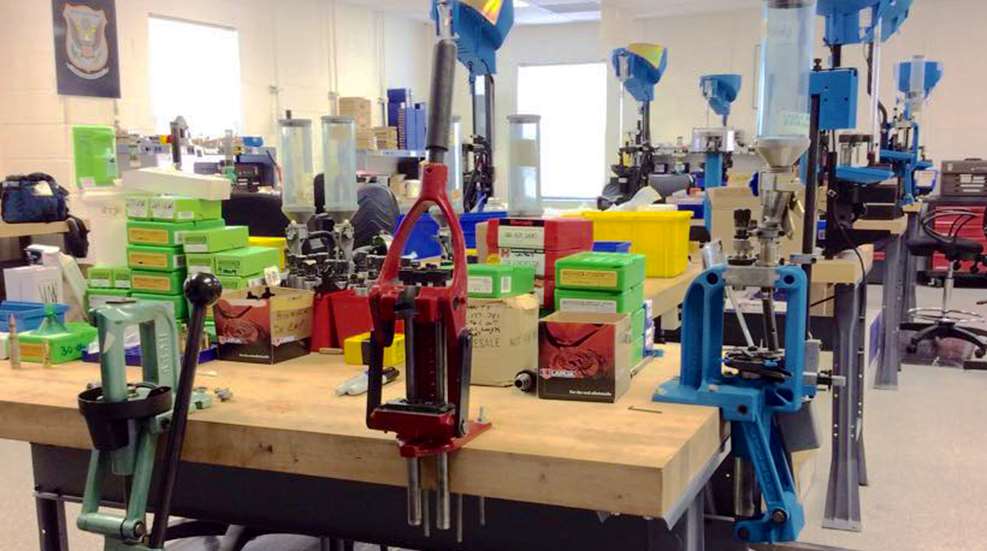
Often, the handloader will be focused on producing ammo in quantity, and a big concern is whether to begin with a single-stage vs. a progressive press. However, there is one critical item that often gets overlooked as folks talk about the especially interesting topics such as reloading die brands and types, scale types and brands. And, what might that item be?
“When all else fails, read the what?” Yes, we recommend those new to handloading actually begin with reading the early chapters of one or, preferably two quality handloading manuals. They contain copious information on basic handloading safety, how to choose and use components, and how to recognize and avoid potentially dangerous conditions. Of course, they also do a fine job of teaching new loaders the correct methods of adjusting dies, determining safe loads and improving accuracy. Beginners can recognize and avoid many potential pitfalls, shortening the learning curve tremendously.
As a government entity, we aren’t able to make specific brand-name recommendations as such. However, recent manuals from the major bullet and powder manufacturers, especially those who emphasize accuracy and match-type bullets are generally a wise choice.
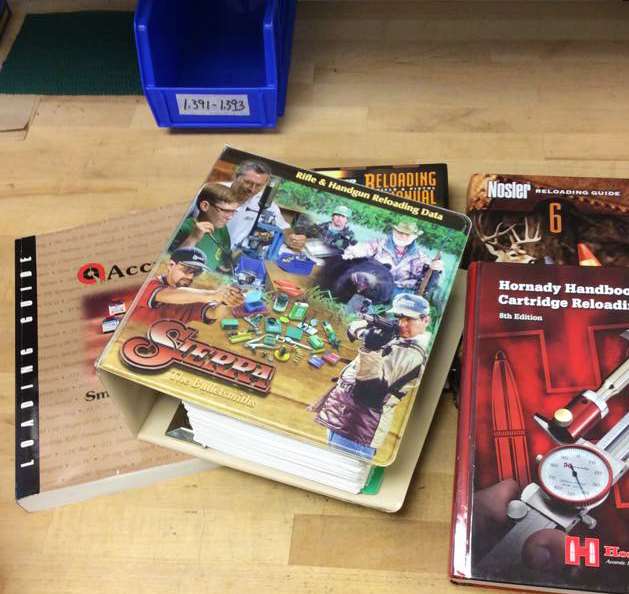
Handloaders often come to prefer one or two maker’s manuals over others for various reasons. Asking a friend who’s already an experienced loader which manuals they recommend is a good start. Borrowing one or more to read before purchasing is another.
This is a good way to both save money and get a feel for the variety of component types and data that are available. Comparing differences in data from different manuals in the same caliber, with the same powder and bullet weight can be an eye-opener. It is also a wise step in researching any loading project before one begins—and the reasons for the differences are fully explained in the manuals!
The AMU recommends buying proven, high-quality equipment. It should have a reputation for great durability, good ergonomics and reasonable-to-excellent precision. In addition, ask fellow shooters which companies have a good reputation for support after the sale. Several of the better handloading companies set the bar very high.
With the better ones, it’s common to call to order small replacement parts and receive them at no charge in the mail immediately thereafter. Other companies don’t enjoy such a sterling reputation. Often, these focus on cheap equipment made with low-quality materials, aimed at those to whom cost is the prime consideration.
Good quality equipment not only leads to less frustration, faster production, better results and less misery—it is also an excellent investment. Certain companies’ products sell virtually instantly on the used market and retain high resale value. Other gear from less well-regarded companies is much more difficult to sell. Moreover, it brings far less of its original purchase price—if it can be sold at all.
Ask veteran handloaders—preferably those who are still very active in the shooting sports—which equipment they prefer, and why. After getting specific recommendations, search for reviews of that equipment, as well as possible alternates and newer designs. Learn the steps of operating the various options, and evaluate them for efficiency, effort and precision. A little research can pay big dividends here!
A prime example of this would be case trimmers. Trimming rifle brass is one of the universally least-enjoyed handloading chores, so it really matters which trimmer one buys.
Someone who loads maybe 100-200 rounds a year will likely be satisfied with their 40-year-old case trimmer. And, why not? Although of obsolete design, the dull blades and inefficient case holder work well enough for their needs. They never experiences the blisters, hand cramps and general pain that a competitive shooter attempting volume loading on such equipment will.
Since they had this gear for many years, they may have felt no need to improve, upgrade or even learn about better models over time. This occurs despite massive improvements in certain areas (especially case trimmers and case sizing lubricants). Therefore, while their advice may be perfectly valid, it may not be the most comprehensive or up-to-date.
Competitive shooters who’ve been in the game and compete successfully are a great source of extensive, first-hand knowledge. Their recommendations include both what to buy, and almost more importantly, what to avoid.
In general, it’s better to buy good equipment once and cry once, than to buy inferior gear and then spend that money again, plus more, on better gear shortly thereafter.
Until next time, shoot straight, and as always—safety first!
Read the next article in this series: Should I Buy a Single-Stage Press, or a Progressive?
Thanks to the U.S. Army Marksmanship Unit for allowing the reprint of this article.