
"We predict that the National Board for the Promotion of Rifle Practice will select the Ohio range for the matches of 1907, and that the meeting will be the most successful ever held in this country."
—Shooting and Fishing, October 1906
Never was a year so critical to the continuation and success of the National Matches. Faced with the task of finding a site suitable for the growing National Match program, an important resolution was proposed during the NRA's Annual Meeting upon Gen. Ammon B. Critchfield's offer to hold future NRA Matches at the new Ohio range:
Resolved, that it is the sense of the National Rifle Association of America ... that whenever possible the annual matches of the association shall be held at the same place and just prior to the national matches;
Resolved, that this association respectfully request the National Board for the Promotion of Rifle Practice to select the Ohio state range as the place for holding the national matches in 1907;
Resolved, that it is the further sense of the National Rifle Association of America that the invitation of the Governor of Ohio and of the Ohio State Rifle Association to hold the annual matches of the association in 1907 on the new state range of Ohio be accepted, and that we do hereby respectfully request the executive committee of this association to select the Ohio range as the place for holding next year's matches, provided the national matches are held on the same range;
And resolved further, that in accepting this invitation of the Ohio authorities it is the sense of this association that they be accorded the same full management and control as has been the custom in preceding years.
While the NRA favored the Ohio range for future National Match programs, Fort Riley was still in the running with the support of the War Department. Were it not for delays in range expansion at the Kansas facility, however, the future of National Match competition might have followed a different course, very possibly without any affiliation with the NRA, which didn't deem the complex appropriate.
The resolution that included the site change proposal was a logical response to a situation whereby overcrowding and delays at the National Matches had become the rule rather than the exception. During the NRA phase this year for example, Gen. Spencer was forced to refund money to shooters who had purchased score cards for re-entry matches yet were unable to use them.
Specific course adjustments included the reduction of the Wimbledon Cup Match, won by Capt. J.C. Semon of Ohio, to a 10-shot event due to a combination of poor weather and record entries. And during the firing for the Leech Cup, which drew a record 232 entries, it was reported in Shooting and Fishing that "K.K.V. Casey was unfortunate in being obliged to fire his final shot at 6:47, the targets being almost invisible ... A miss resulted, whereas a 4 would have given him the match." Honors went to Capt. Stuart Wise of Massachusetts. The elimination of the 1,000-yard stage of the President's Match in order that the Board Matches could start as scheduled drew an exceptional amount of criticism. Pvt. E.C. Simpson of Connecticut earned the shortened course title along with the congratulatory letter from President Roosevelt.
Sea Girt played such a critical part in the promotion of marksmanship that it eventually fell victim to its success. And when it became obvious that it was no longer able to accommodate the needs of a growing National Match program, attention turned west to Ohio, where Critchfield was attracting the interest and admiration of marksmen everywhere.
Critchfield's search for a new range began when the existing Ohio National Guard range near Newark was suffering from the effects of urban sprawl. And when he found land suitable for a spacious shooting facility on the shores of Lake Erie, Critchfield wasted no time starting construction which provided for electricity, running water and sewer—amenities not common to shooting ranges of the period.
Sea Girt's last year as site of a full National Match program marked the first time that the NRA Matches preceded the Board events. At the January NRA Directors meeting, the decision was made whereby it was "Resolved, that it is the sense of the board of directors of the National Rifle Association of America that the annual shoot of the association be held at the same place and just prior to the national matches." The NRA Matches were conducted from Aug. 27 to Sept. 3, with Gen. Spencer as Executive Officer, while Col. Peter Bomus of the Cavalry oversaw the Board Matches which took place Sept. 4-10, four days longer than originally scheduled due to the large number of entries in proportion to available targets.
The NRA schedule included first time involvement by a woman at the National Matches when Elizabeth "Plinky" Topperwein shot in a qualifying match for a Marksman medal. And following through on a 1903 NRA resolution to encourage civilian and youth participation in the shooting sports, the first youth event was included at the National Matches—a 200 yard, 15-shot any position match.
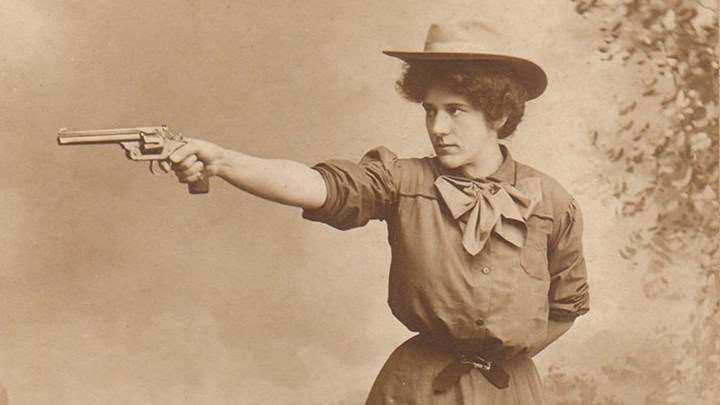
The NRA also sponsored handgun events for the first time since the inception of the National Match program to round out a series of NRA breakthroughs. The Infantry put an end to New York's dominance in the National Team Match and became the first regular service honoree in the event's brief history. And topping the field of 747 entries in the National Individual Match, Corps of Engineers Lt. T.H. Dillon beat out the Cavalry's Lt. Morton C. Mumma, while Lt. S.M. Parker of the Infantry took national pistol honors.
Important legislation this year included an amendment to the Dick Act of 1903, whereby the one million dollar annual appropriation for the National Guard was doubled with the requirement that 25 percent of the funds be directed to range acquisition, development and equipment. Other legislative activity included the June appropriation of $5,000 for "National Trophy and Medals for Rifle Contests," an increase of $1,000 from 1905. And earlier this year, on Feb. 27, Congress passed an act "making appropriations to supply urgent deficiencies in the appropriations" for 1906 and prior years. Under the War Department heading of the act was a section for "National Trophy and Prizes for Army and Militia" and a provision for an additional $756 appropriation to make up for the 1904 fiscal year shortfall. Perhaps the original national trophy bill and its unintentional omission of Navy and Marines and consequent allowance of said teams in competition factored into the budgetary discrepancy and in some way was responsible for the national match funding increase from $2,500 to $4,000 that was approved shortly thereafter.
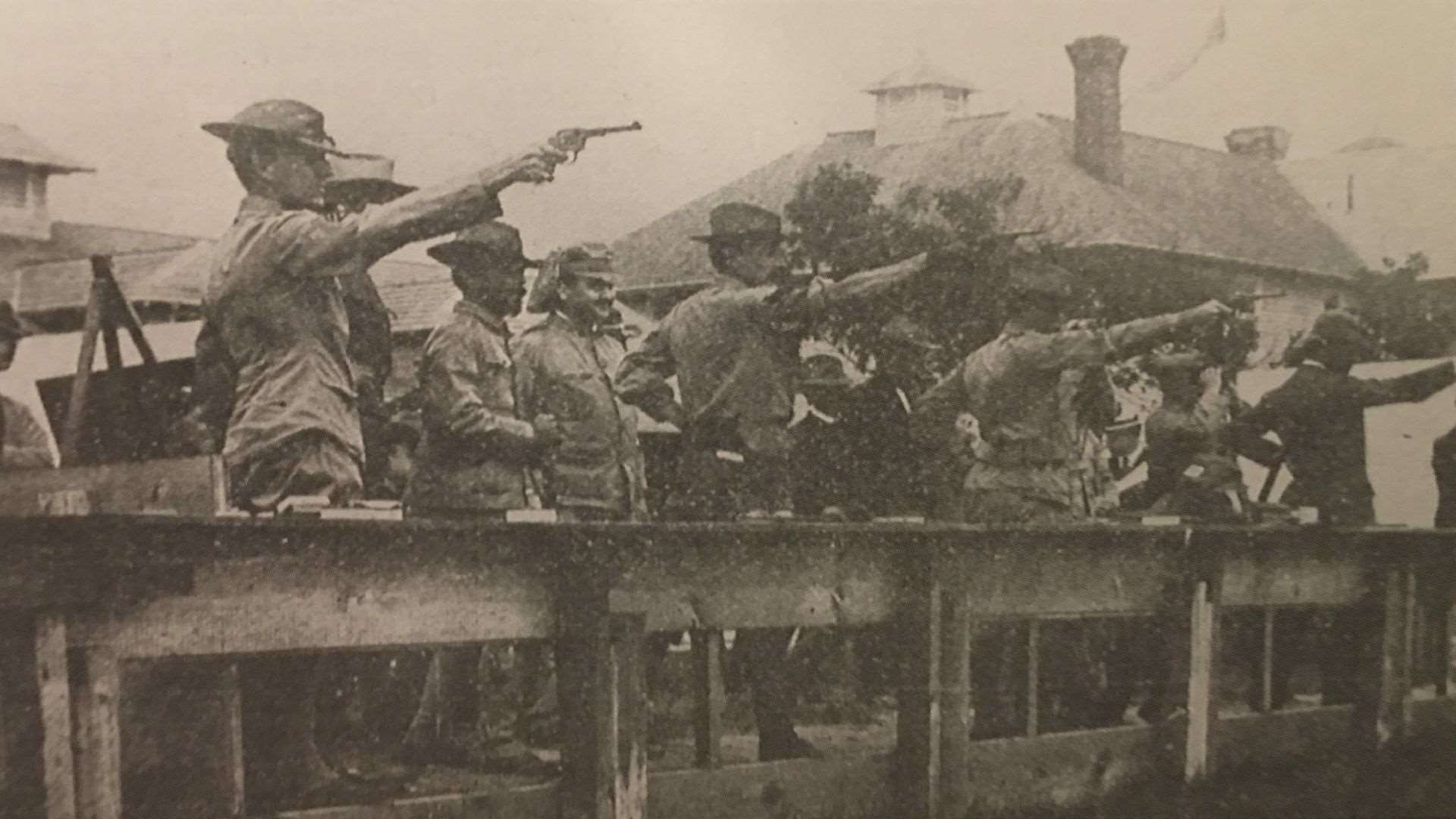
Photo: Enlarged by the purchase of some 42 acres in 1905, the range at Sea Girt was nonetheless too small to support the growing attendance at the National Matches. This photo of the National Pistol Match, taken in 1906, shows the New Jersey facility in the final year in which it was the single site for National Trophy competition. (Regional National Trophy Matches were held there in 1914.) NRA held its 1912 championships at Sea Girt, a year in which there were no National Trophy Matches.
Read more: NRA National Championships: The Early Years
Most Popular