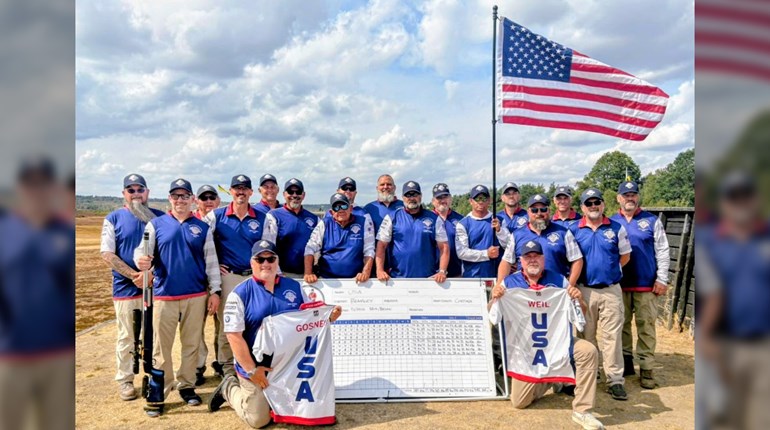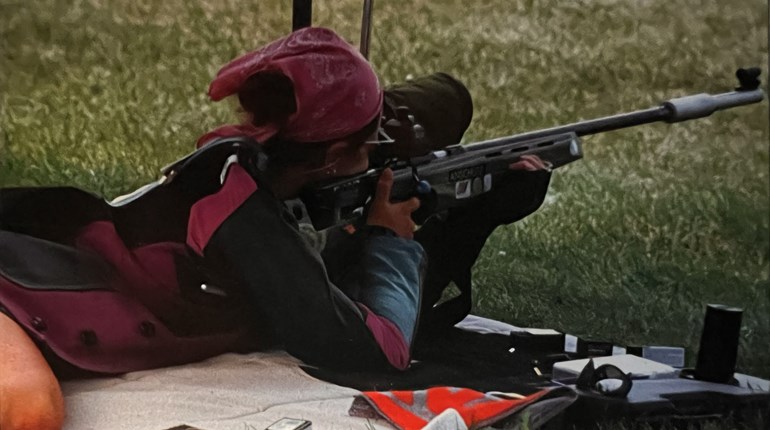

The United States sent some of its youngest F-Class competitors halfway around the world for the 2026 F-Class World Championships at the historic National Shooting Center at Bisley, England, and they came home with plenty to be proud of.
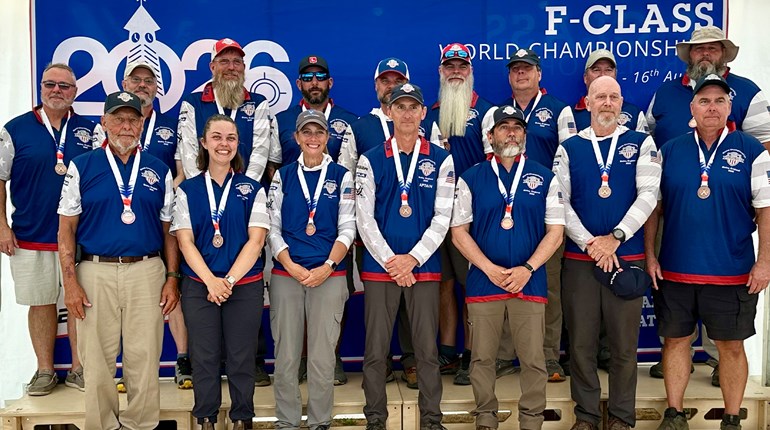
The USA Under-25 F-Open Team earned silver in the International Team Championship, while Joshua Massingill and Shiloh Plue also claimed second and third place, respectively, in the individual U-25 F-Open Championship.
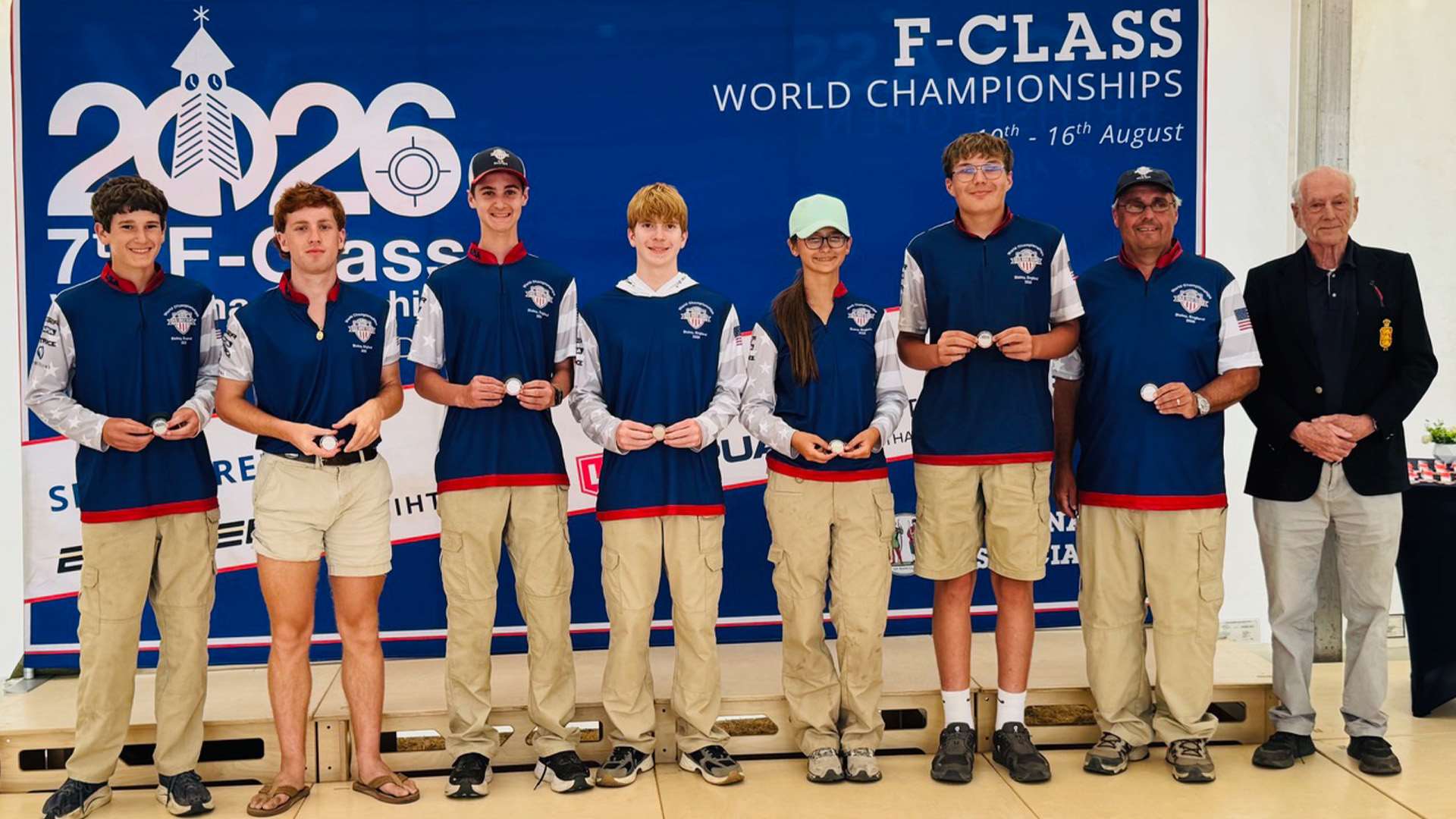
What mattered more was that the week at Bisley demonstrated exactly why international Under-25 competition matters. These are already accomplished young competitors, but the World Championships gave them an opportunity to compete, coach and lead while wearing USA on their backs against some of the best F-Class shooters in the world.
They represented the United States very well.
A Different Kind of Team
One interesting feature of ICFRA Under-25 competition is that the leadership structure is intentionally different from what American shooters are accustomed to seeing on the adult F-Open and F-T/R teams.
On the adult teams, experienced senior competitors serve as captain, vice-captain and other team officials. For an Under-25 team, however, the young shooters themselves occupy the key competitive leadership positions.
ICFRA U-25 team structure includes a team captain, adjutant/team manager, four shooters, a reserve and a coach. The manager is permitted to be over age 25, but an adult manager’s role on the firing point is specifically limited. In other words, the adults are there to organize, advise and support, not to take over the team.
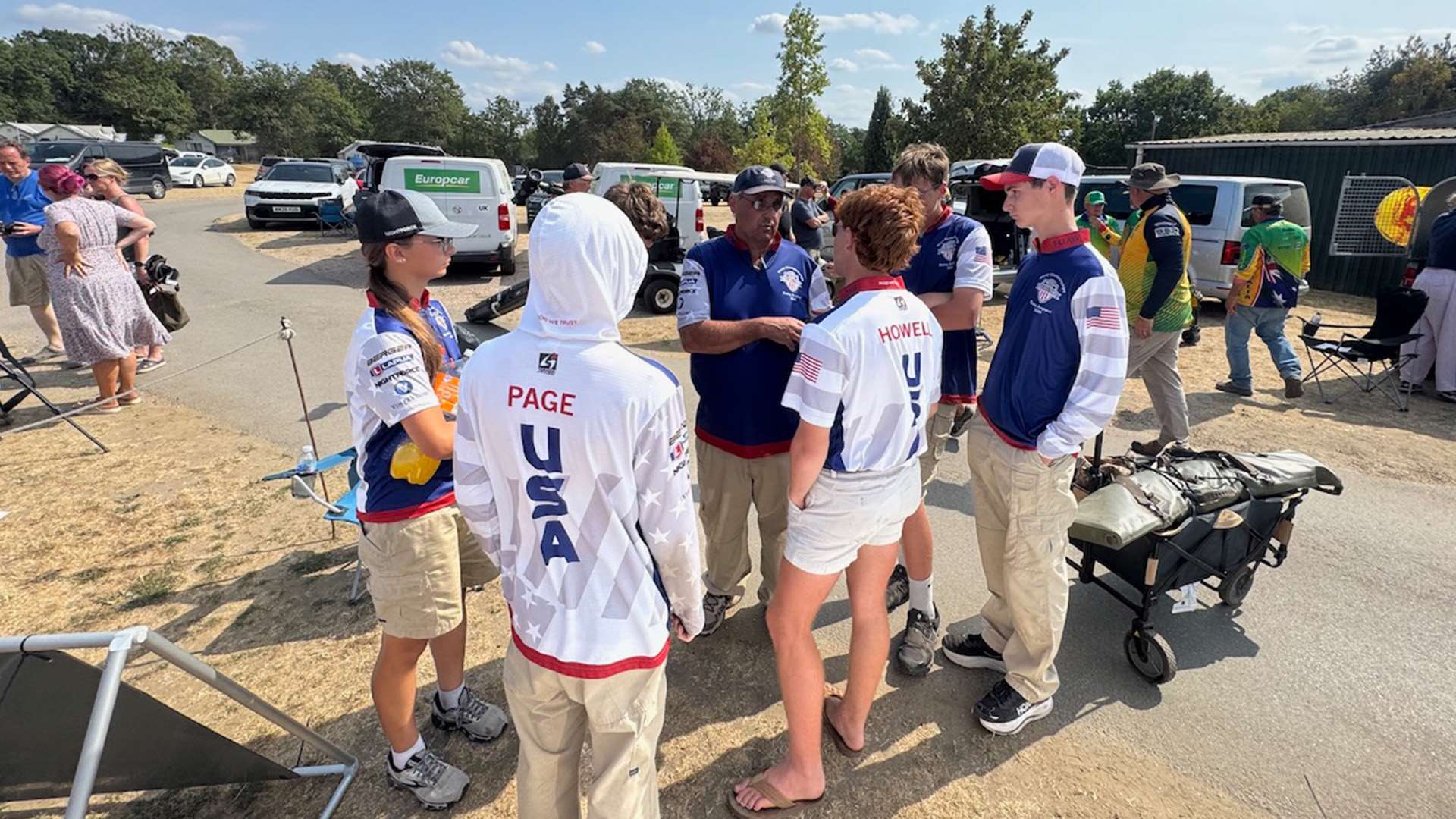
Rick Jensen served as adjutant for the 2026 U.S. Under-25 team, and I served as manager. Our job was to handle the logistics and then stay out of the way of the young shooters running the team.
For young competitors, there aren’t many better classrooms.
Welcome to Sunny England
Anyone who packed for a traditional English summer vacation quickly discovered that England apparently had other plans.
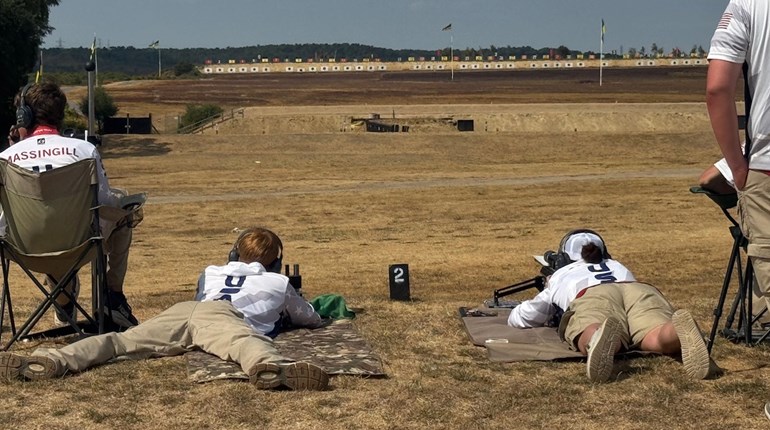
Conditions at the 2026 championships were unusually hot and dry. Temperatures climbed into the 90s, accompanied by significant mirage and changing winds. Bisley had reportedly gone roughly 150 days without measurable rainfall before the championship.
So much for all that rain gear.
Those conditions added another dimension to an already unfamiliar international competition. Bisley is one of the world’s iconic rifle ranges, and competing there is a different experience from simply showing up at another American long-range match.
Our U-25 shooters had to adjust to a new range, a different match environment, international procedures and some of the strongest competitors in the sport.
They did so quickly.
Two Americans on the Individual Podium
The individual U-25 F-Open Championship provided the first major highlight for Team USA.
Joshua finished second overall to earn the silver medal, and Shiloh finished immediately behind him in third to take bronze. In the process, both qualified for their NRA International Distinguished Rifleman badges.
Australia’s Jock Foster won the U-25 championship, but that only begins to describe how well he shot. Jock finished fourth overall in the entire F-Open Individual World Championship aggregate, competing against the complete field rather than simply the other U-25 shooters.
That was an exceptional performance by Jock, and putting two Americans alongside him on the U-25 podium was an outstanding accomplishment and a strong indication of the talent within this U.S. team.
Taking on the Adults
Our next opportunity came in the Rutland Cup, a four-shooter F-Open team match contested at 800, 900 and 1,000 yards.
The Rutland was particularly valuable for our young team because it put the U.S. U-25s on the same scoreboard with a field largely made up of experienced adult teams. The kids held their own.
Team USA finished fourth in the six-team field, only nine points behind third-place GB Rutland. Just as valuable, the match gave us another opportunity to rotate responsibilities and develop leadership within the team.
Wesley Page served as captain for the Rutland Cup, Joshua coached, and Jacob Reddick, Nathan Howell, Austin Speer and Shiloh made up the firing four.
That was a solid performance by the young Americans, but Australia made an even bigger statement.
Australia Under-25 won the Rutland Cup outright, finishing ahead of every adult team in the field. By that point, we were getting a pretty good idea of just how talented this Australian group was.
On to the International Team Championship
Individual competition in F-Class is important, but international team shooting is a different animal altogether.
Four rifles suddenly become one scorecard. Shooters have to trust the coach. The coach has to understand what each rifle and shooter is telling him. Everyone has to perform within the rhythm of the team.
Representing the United States as shooters in the U-25 International Team Match were Shiloh, Jacob, Austin and Wesley. Joshua served as head coach, with Nathan serving as team captain and back coach.
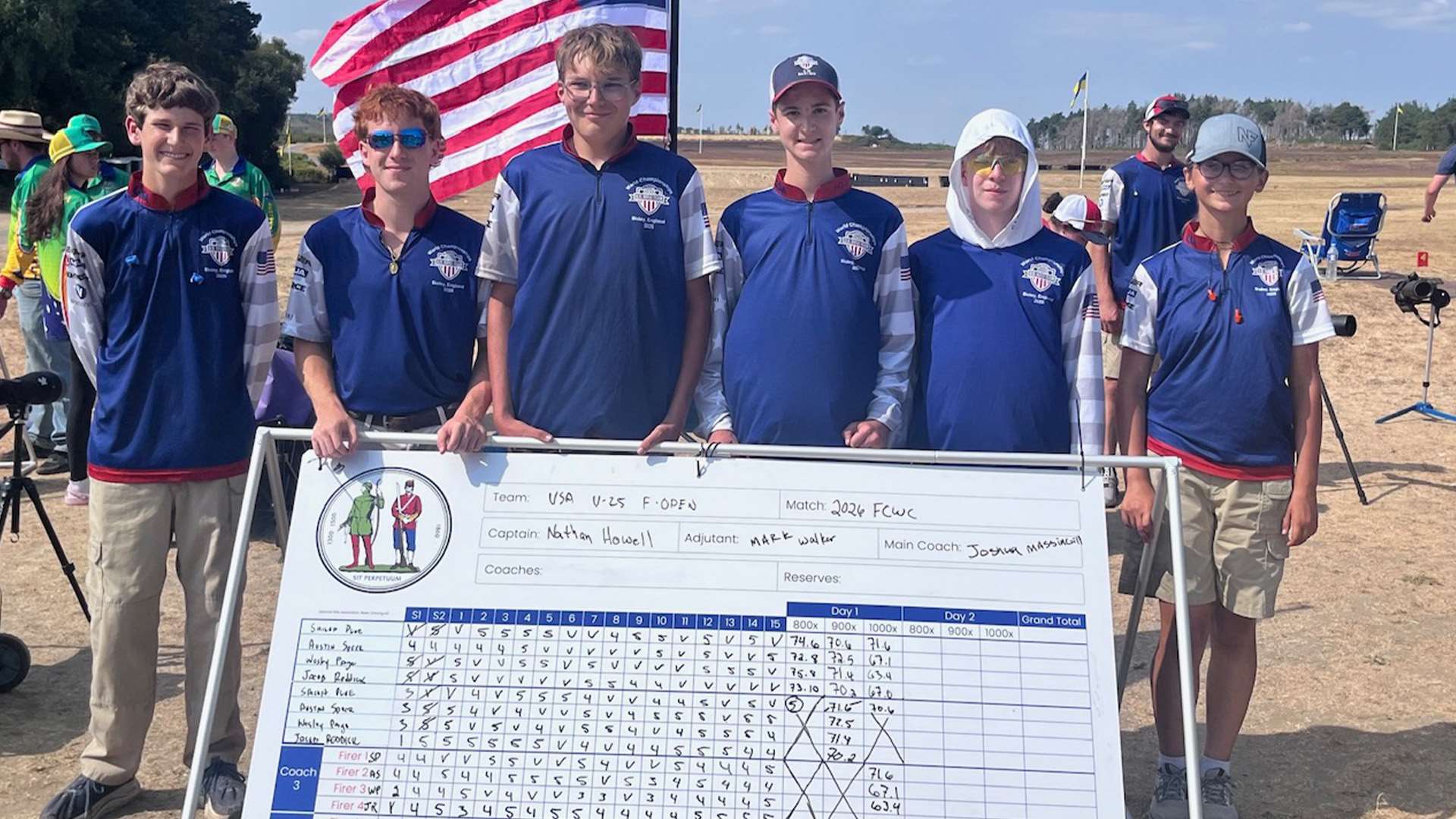
Across from us was an outstanding Australian team led by Captain Byron La Fontaine, Adjutant James Hay and Coach Jock Foster. Their firing team consisted of Jacinta Bradley, Mia Lowe, Isabella Campbell and Beau Edmonds-Turnbull, with Jacob Campbell serving as reserve.
They shot extremely well. Australia put together an exceptional two days and deservedly earned the gold medal. The United States finished second and brought home silver.
During the match, every one of the four American shooter-coach combinations produced at least one perfect 75-point string, with six perfect strings recorded by the U.S. team over the two days.
That is one of the things that makes F-Class team shooting so different from individual competition. A score on the board may have one shooter’s name beside it, but it is the product of the shooter and coach working together. Across four firing points, those partnerships ultimately combine into a single team result.
Competitors, and Friends
Over the course of the championships, the American and Australian U-25 teams spent a lot of time together. What began as two groups of young shooters who had traveled halfway around the world to compete against one another quickly developed into something much more.
We got to know an amazing group of people.
The friendships that developed between the American and Australian teams over those days at Bisley are ones I fully expect will last for many years.
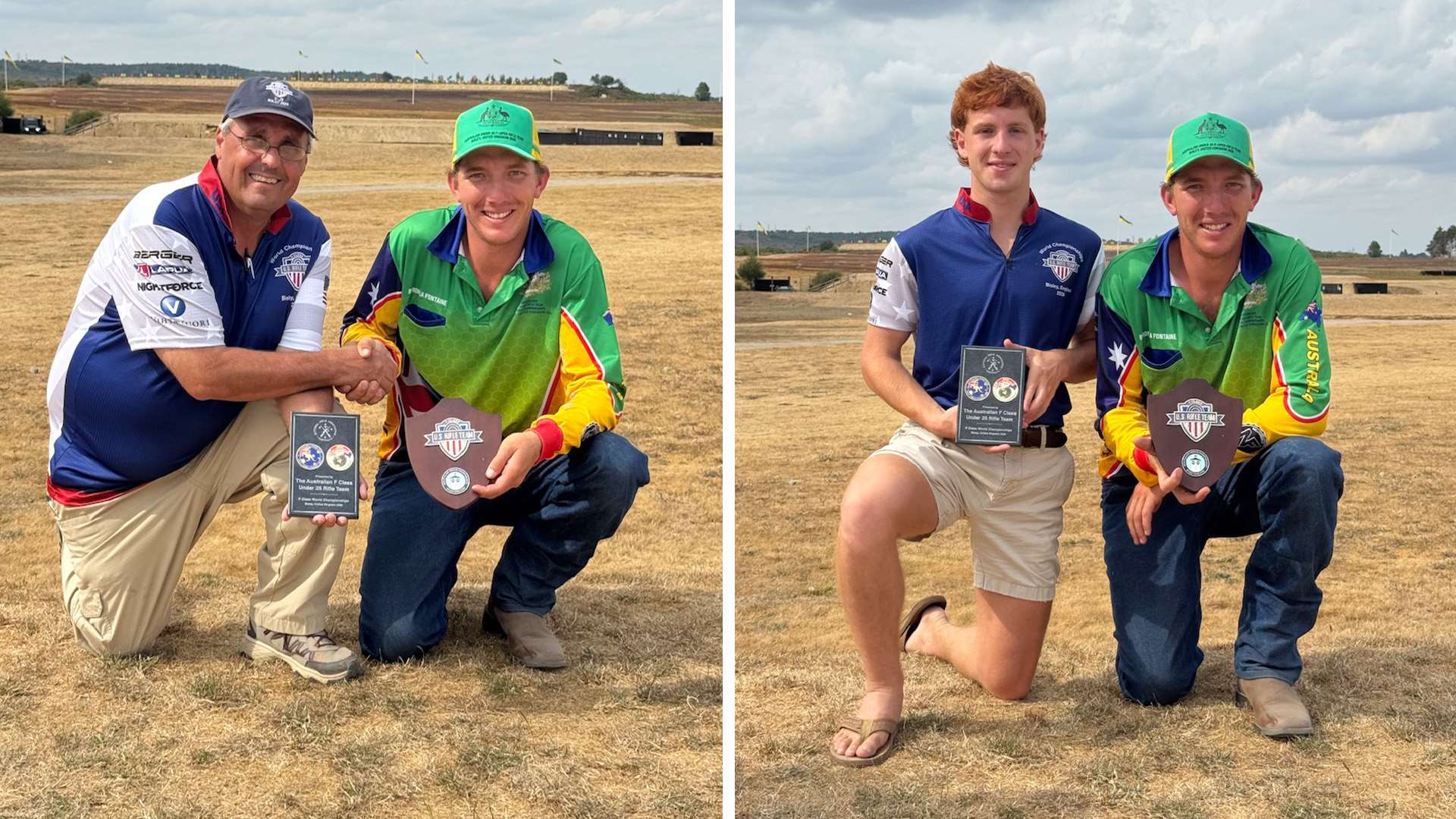
That may sound strange to someone who hasn’t experienced international shooting. You spend months preparing to beat the people wearing the other country’s colors. Then you finally meet them, compete as hard as you possibly can against them, shake their hands when it is over and often discover that you have far more in common than you ever had separating you.
Byron, James, Jock, Mia and the entire Australian U-25 group are tremendous competitors and even better people, and they deserve full credit for what they accomplished at Bisley.
Jock won the U-25 individual title and finished fourth overall among all F-Open competitors. Australia’s U-25 team then won the Rutland Cup against a field that included adult teams, and followed that by winning the U-25 International Team Match. That’s a remarkable championship.
We came to Bisley wanting to beat them. We left wishing we had, but also looking forward to seeing our new friends again soon.
More Than Medals
It would be easy to measure the success of the trip by the hardware.
A team silver medal.
An individual silver medal.
An individual bronze medal.
Two new International Distinguished Riflemen.
Those are significant accomplishments, and the team should be proud of every one of them.
But as the manager of the team, what impressed me most was watching these young people take ownership of representing their country.
Nathan Howell wasn’t simply another competitor at Bisley. He served as team captain and back coach, taking on responsibilities normally handled by far more experienced competitors. Nathan has since begun another significant chapter in his life by joining the United States Marine Corps.
Joshua Massingill went from standing on the individual podium to sitting behind four teammates and working entirely for their success as head coach. That transition from individual competitor to team coach says a great deal about what the U-25 program is intended to develop.
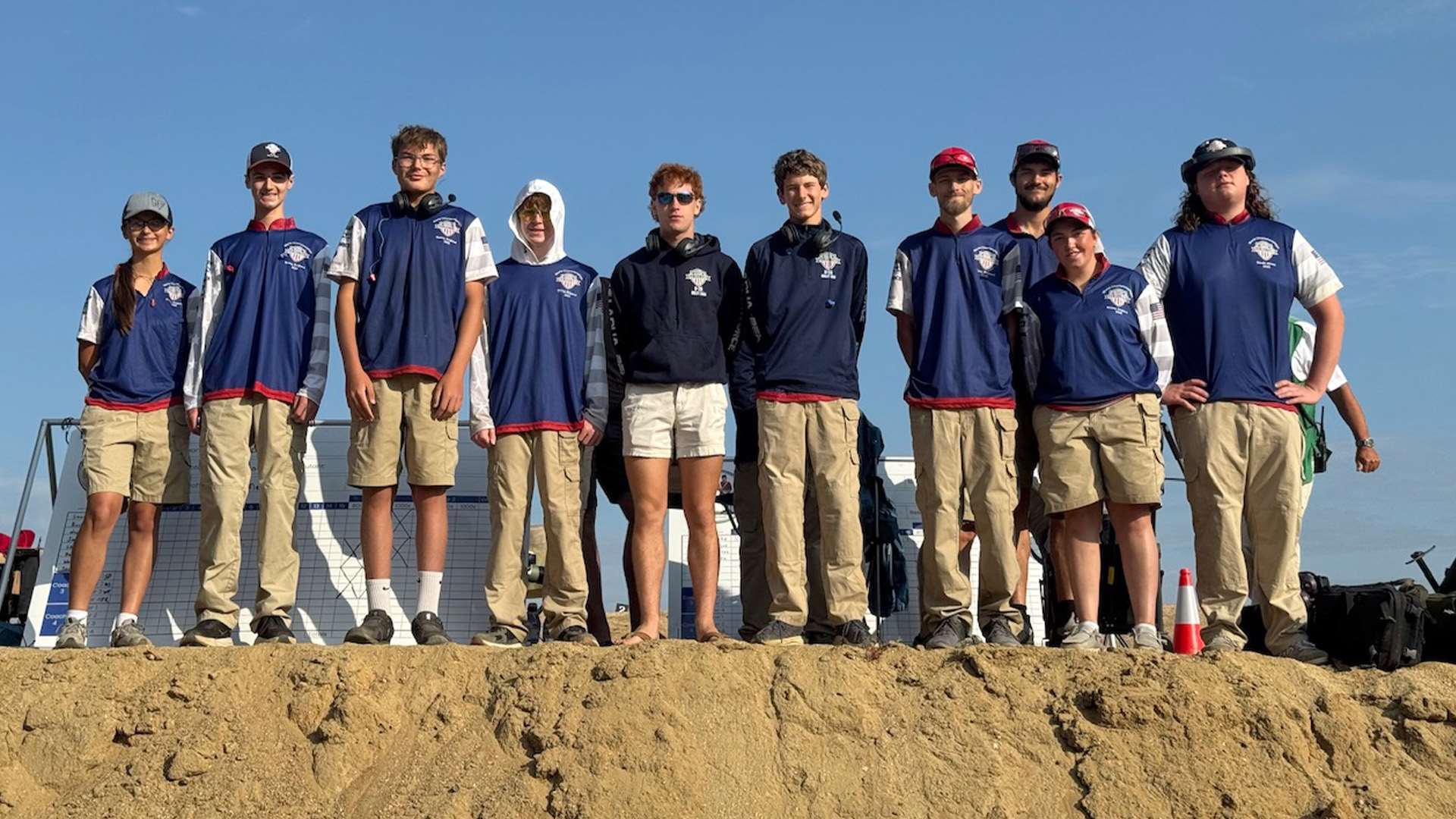
Shiloh Plue earned an individual bronze medal and her International Distinguished Rifleman badge before turning her attention to the team matches and the shared job of representing the United States.
Jacob Reddick competed in both the Rutland Cup and the U-25 International Match and was part of a U.S. firing line that showed just how competitive this young American group can be on the international stage.
Austin Speer likewise competed in both team matches and continued to grow into the international team environment as the championship progressed.
Wesley Page contributed on the firing line in the U-25 International Match after having already taken his turn in a leadership role as captain of the U.S. team in the Rutland Cup.
Every member of this team had a role, and over the course of the championships those roles changed. Shooters became captains. Individual competitors became coaches. Team members moved on and off the firing line.
That’s exactly what should happen in a developmental program.
Those experiences matter just as much as the scores. Travel, preparation, teamwork, problem solving, sportsmanship, leadership and the pressure of representing the United States in international competition all count.
And the young shooters from two countries who began the week as opponents left Bisley as friends. That matters too.
The Next Generation
F-Class is a sport in which competitors can remain competitive for decades. That makes developing young shooters especially important.
The people competing on an Under-25 team today may very well be the shooters, coaches, captains and team leaders representing the United States for many World Championship cycles to come.
Australia hosts the next F-Class World Championships in 2030, with the United States set to host the event at the Ben Avery Shooting Facility in Phoenix in 2034.
Four years is a long time when you’re 50.
It’s an eternity when you’re 20.
The shooters who represented the United States at Bisley will be different competitors by the time the international F-Class community gathers again in Australia. They’ll have four more years of matches, barrels, wind calls, victories, mistakes and experience behind them.
Some will no longer be U-25 shooters at all.
That’s the point.
The Under-25 program isn’t simply about winning an age-group match. It is about developing the shooters, coaches and leaders who will become the future of Team USA, and building relationships with the people who will become the future of the sport around the world.
After watching this group at Bisley, I look forward to seeing what they do with those four years.
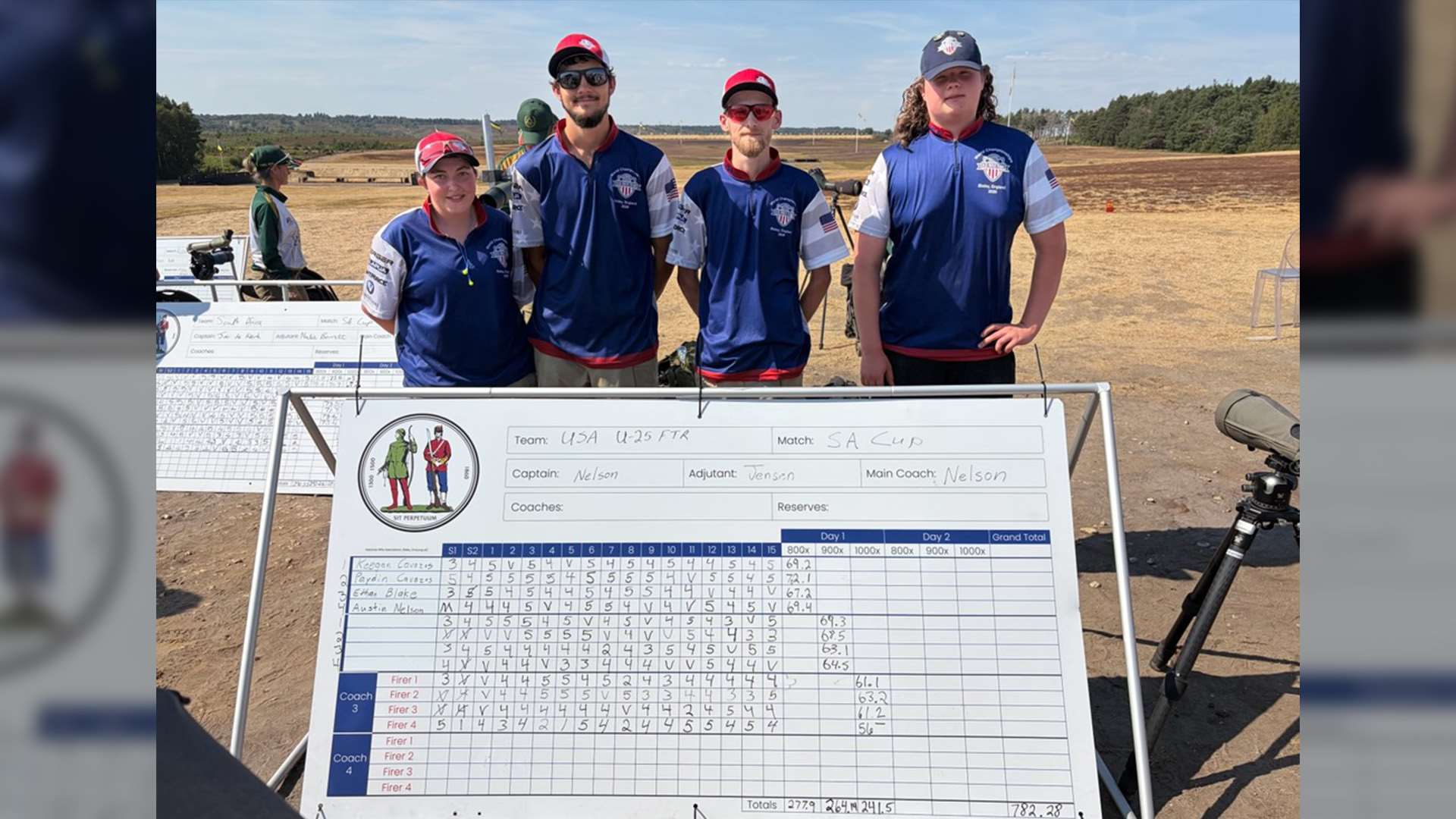
For now, they can look back at the 2026 F-Class World Championships knowing they represented the United States with distinction, put two Americans on the individual U-25 podium, earned two International Distinguished Rifleman badges, finished fourth in the Rutland Cup against a strong mixed field and brought home team silver from one of the most historic rifle ranges in the world.
They also came home with some new friends.
With Thanks
A team like this does not make it to a World Championship without a tremendous amount of support behind it.
We owe a special thank you to our primary sponsors, Nightforce Optics and Capstone Precision Group, whose support helped make it possible for this team to represent the United States on the world stage.
Most importantly, however, I want to thank the parents of every member of this team.
Long before Bisley, they were the ones providing the rides to matches, the equipment, the encouragement, the time, the travel and the countless other things that go into helping a young shooter reach this level. Their support did not begin with the World Championships, and it certainly did not end there.
Without their never-ending support of these young competitors and this team, none of what happened at Bisley would have been possible.
The medals belong to the team.
But a very large part of the journey belongs to the families who helped them get there.
That’s a pretty good week for the next generation of Team USA.
Editor’s note: Mark Walker and Rick Jensen served as manager and adjutant of the 2026 USA Under-25 F-Open Team. Under ICFRA rules, adults fill those support roles while the young shooters themselves serve as team captain and coaches. Jensen captained the U.S. F-Open Rifle Team for the 2017 World Championship cycle, with Walker serving as his adjutant and vice-captain. Neither had a son or daughter on this year’s Under-25 team. Both took on the job out of a love of the sport and a dedication to the NRA and the United States.