** When you buy products through the links on our site, we may earn a commission that supports NRA's mission to protect, preserve and defend the Second Amendment. **
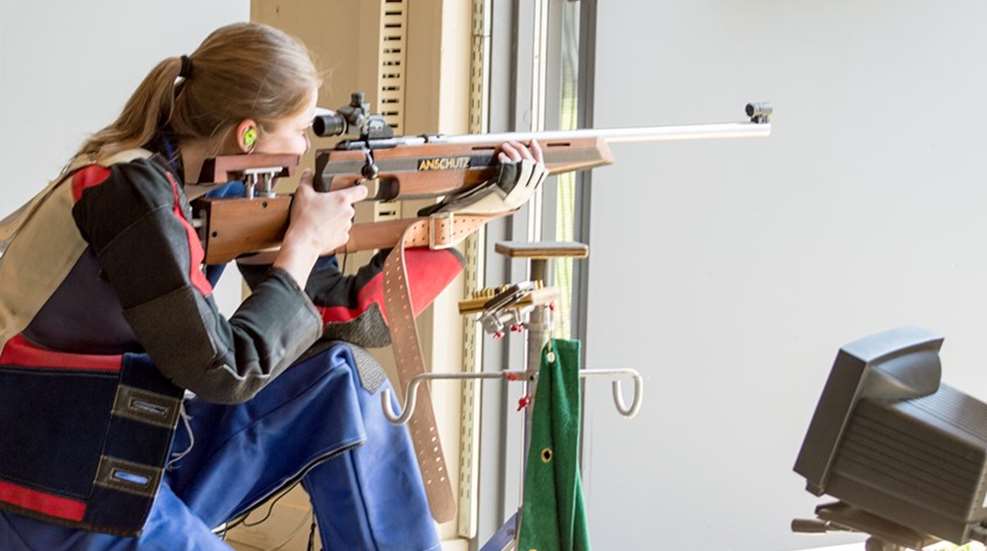
In the first installment of our Rifle Fundamentals series, we covered determining your dominant eye and your first shooting position. This article focuses on the fundamentals of aiming a rifle.
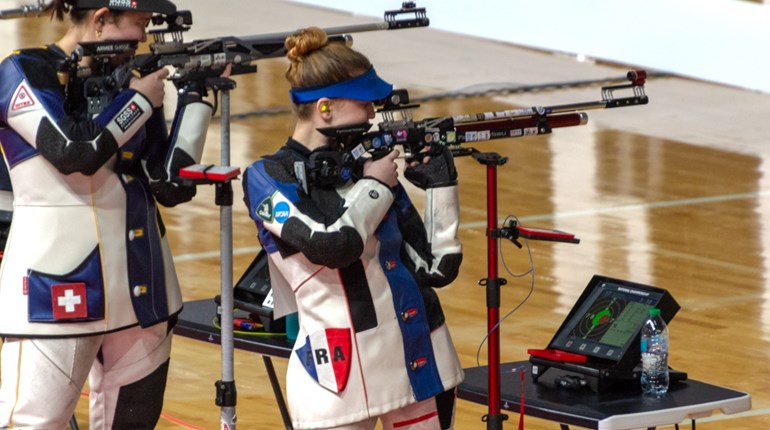
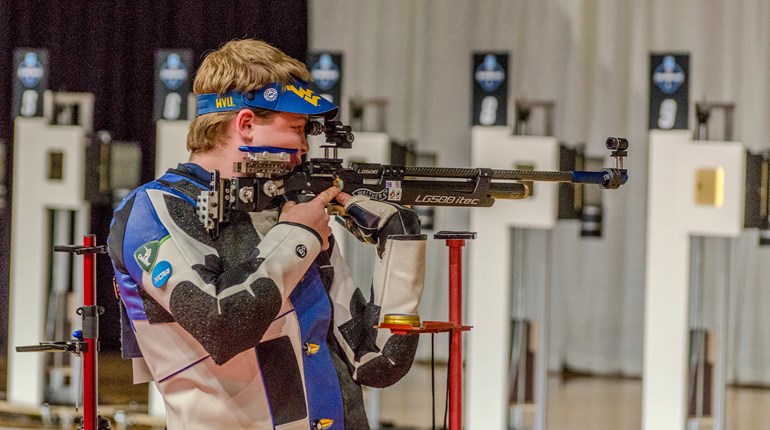
Aiming is the way you point the rifle at the target. In aiming, you line up, or align, your dominant eye, the rear sight, the front sight and the target.
Sights. Choosing the proper sights will make your aiming easier and more accurate. The rear sight should have a disk with an aperture (small hole) through which you look during aiming. The ideal rear sight aperture size for shooting at rifle targets is 1.1 to 1.3 mm (.044 to .052 inch).
The front sight should be either a square-topped post or a hooded front sight in which you can place either a post or ring insert.
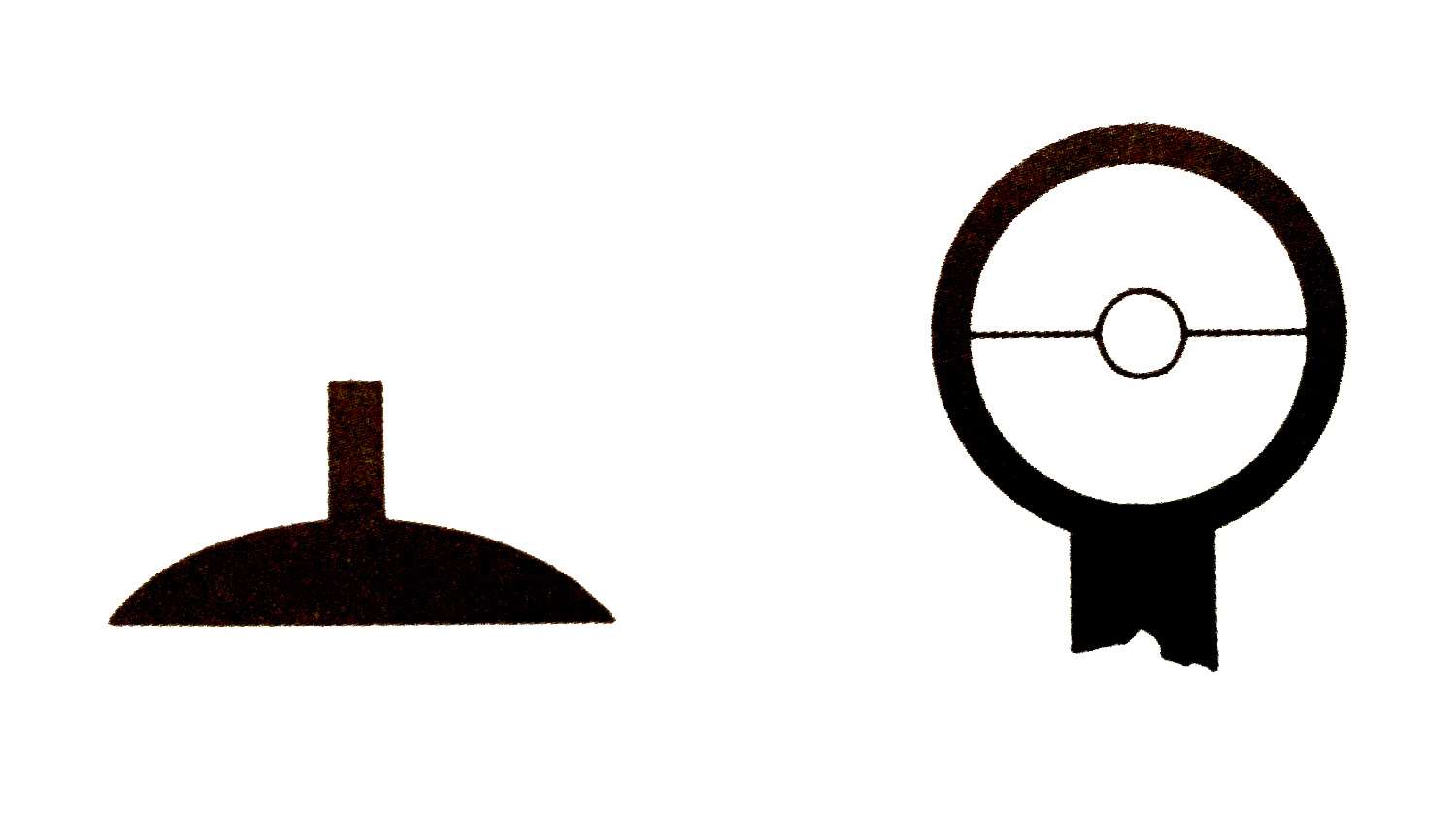 Most shooters prefer the ring front-sight insert but there are advantages and disadvantages to both the post and the ring. The ring is better in steady positions such as prone, while the post is better in less steady positions such as standing. The ring is easier to learn to use. You may choose either, but once you start with one, do not change back and forth.
The best ring size is one that looks like it is 1½-2 times bigger than the aiming bull when you are looking through the sights. The correct post size should seem to be the same width as the aiming bull.
Eye relief is the distance between your eye and the rear sight when your head is in place on the stock. Proper eye relief prevents you from bumping the sight with your eye and keeps your head in the same place for every shot. Eye relief will be different in different positions, but it should never be less than one or two inches and may be as much as three or four inches.
The keys to eye relief are proper head position and consistency. When you get into position, let your head drop naturally and comfortably onto the chestpiece without stretching forward toward the rear sight. Then be sure to put our head in the same position for every shot.
Sight alignment is the relationship between the front and rear sights. Your eye must see the front sight in the center of the rear sight. With proper sight alignment you can point the rifle at the target exactly the same way each time a shot is fired.
Sight picture is the relationship between the aligned sights and the aiming bull on the target. With the ring front sight, center the aiming bull in the ring. With the post front sight, hold the post just below the aiming bull. You should be able to see a line of white between the top of the post and the bottom of the bull.
Using the Eyes in Aiming. There are two rules for using the eyes in aiming.
Keeping both eyes open helps you see better and without strain. You should not aim longer than eight to 10 seconds. This helps prevent your eyes from getting tired.
Aiming with Open Sights. If a rifle with an aperture rear sight is not available, you can use an open-sighted rifle to learn how to shoot.
An open rear sight is usually mounted on the barrel ahead of the action. It is called an open sight because it has a U-shaped notch instead of an aperture to use in aiming. Most open-sighted rifles have post or bead front sights.
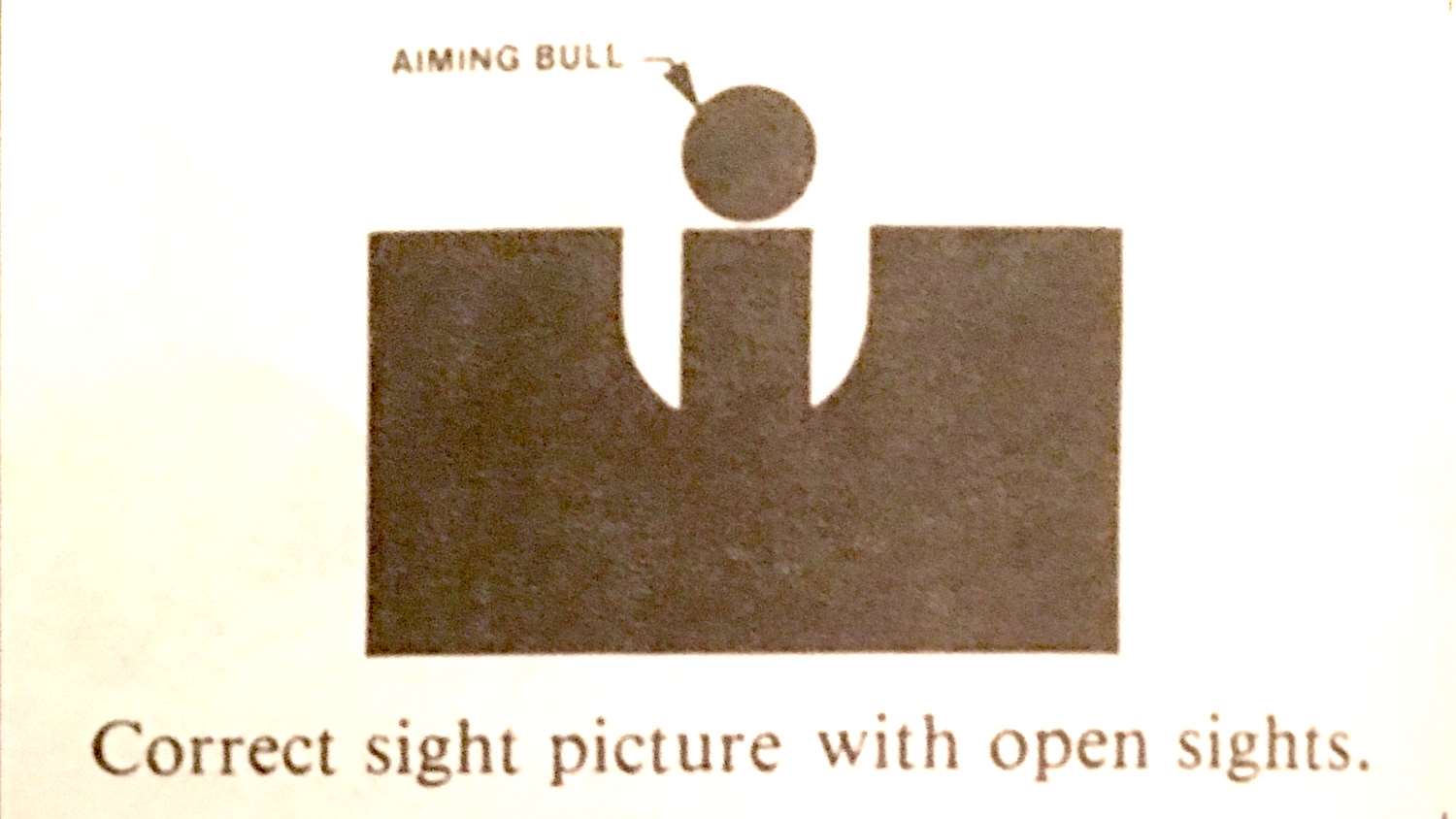 When using open sights with a post front sight, you have correct sight alignment when the post is centered in the rear sight notch, and the top of the post is even with the top of the rear sight notch. You have correct sight picture with open sights when the aligned front sight post is held below the bull.
It is more difficult, but not impossible, to aim accurately with a bead front sight. You have proper sight alignment when the top of the bead is even with the top center of the rear sight notch. The aligned bead should then be centered on the aiming bull.
In our next Rifle Fundamentals article we’ll cover breath and hold control.
Aiming is the way you point the rifle at the target. In aiming, you line up, or align, your dominant eye, the rear sight, the front sight and the target.
Sights. Choosing the proper sights will make your aiming easier and more accurate. The rear sight should have a disk with an aperture (small hole) through which you look during aiming. The ideal rear sight aperture size for shooting at rifle targets is 1.1 to 1.3 mm (.044 to .052 inch).
The front sight should be either a square-topped post or a hooded front sight in which you can place either a post or ring insert.
Post front sight and hooded front sight with ring insert.
The best ring size is one that looks like it is 1½-2 times bigger than the aiming bull when you are looking through the sights. The correct post size should seem to be the same width as the aiming bull.
Eye relief is the distance between your eye and the rear sight when your head is in place on the stock. Proper eye relief prevents you from bumping the sight with your eye and keeps your head in the same place for every shot. Eye relief will be different in different positions, but it should never be less than one or two inches and may be as much as three or four inches.
The keys to eye relief are proper head position and consistency. When you get into position, let your head drop naturally and comfortably onto the chestpiece without stretching forward toward the rear sight. Then be sure to put our head in the same position for every shot.
Sight alignment is the relationship between the front and rear sights. Your eye must see the front sight in the center of the rear sight. With proper sight alignment you can point the rifle at the target exactly the same way each time a shot is fired.
Sight picture is the relationship between the aligned sights and the aiming bull on the target. With the ring front sight, center the aiming bull in the ring. With the post front sight, hold the post just below the aiming bull. You should be able to see a line of white between the top of the post and the bottom of the bull.
Using the Eyes in Aiming. There are two rules for using the eyes in aiming.
- Keep both eyes open when you aim.
- Do not aim too long.
Keeping both eyes open helps you see better and without strain. You should not aim longer than eight to 10 seconds. This helps prevent your eyes from getting tired.
Aiming with Open Sights. If a rifle with an aperture rear sight is not available, you can use an open-sighted rifle to learn how to shoot.
An open rear sight is usually mounted on the barrel ahead of the action. It is called an open sight because it has a U-shaped notch instead of an aperture to use in aiming. Most open-sighted rifles have post or bead front sights.
Correct sight picture with open sights.
It is more difficult, but not impossible, to aim accurately with a bead front sight. You have proper sight alignment when the top of the bead is even with the top center of the rear sight notch. The aligned bead should then be centered on the aiming bull.
In our next Rifle Fundamentals article we’ll cover breath and hold control.