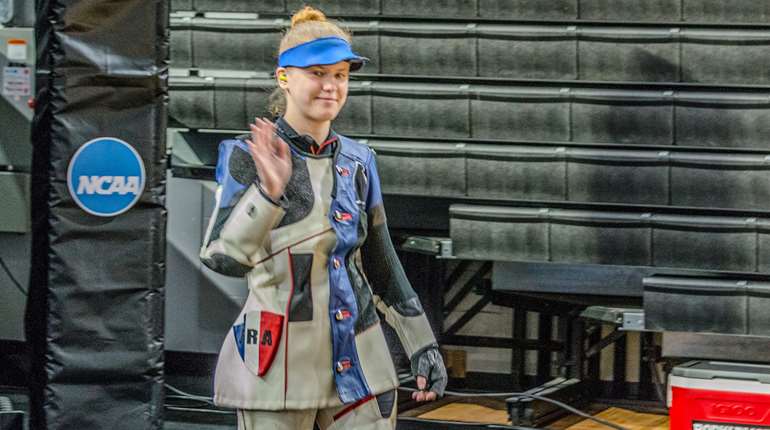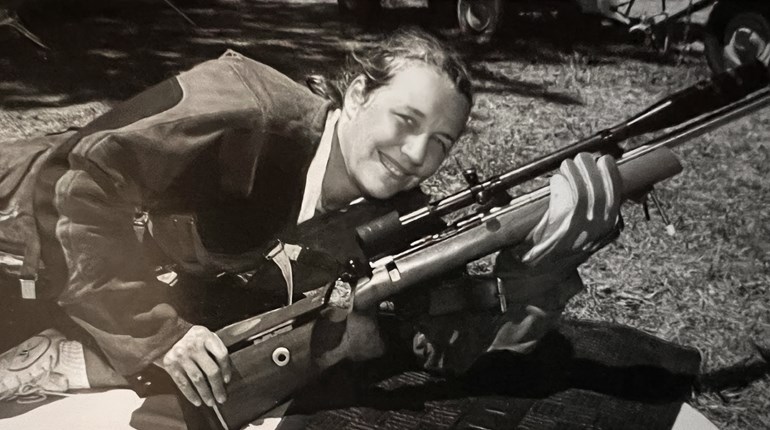
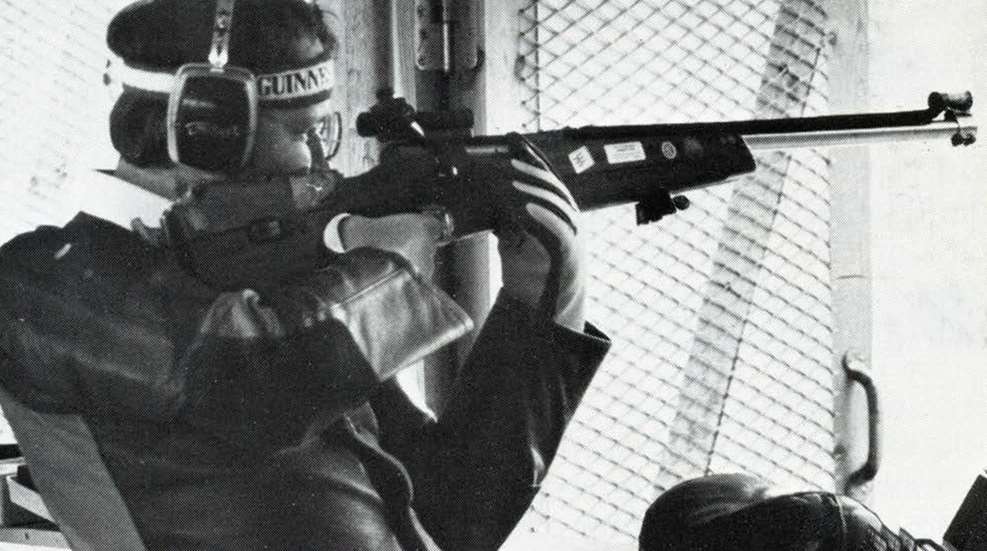
Editor’s Note: This is the third installment of our series featuring the late Malcolm Cooper (pictured), who won gold medals in shooting for the United Kingdom at the 1984 and 1988 Olympics in the smallbore three-position event. Read Part 1 and Part 2, additionally be sure to review his article on contingency planning.
Match pressure is something all shooters face. What counts is how we react to it. Whenever I’ve felt pressure for any reason at a match, I’ve always turned to face it. I have even sought to expose myself to pressure as much as possible. Pressure is a condition that causes adrenaline to be released into the body. Adrenaline is a compound that has several physiological effects that prepare the body for action. Many describe the effects as preparing the body for “fight or flight,” that is to either physically fight or to run from danger. Many shooters believe that adrenaline is destructive since it creates a strange or uncomfortable feeling. But a certain amount of adrenaline can actually be helpful. I often shoot with high adrenaline. Sometimes I even finish a match with a headache from its intensity. I believe I perform at my best with my adrenaline pumping, since it heightens my senses. I see better, I feel better, and my reaction time is quicker.
With adrenaline there appears to be increased muzzle movement, which most shooters attribute only to an increased pulse beat. Your heart rate does increase with adrenaline, but if your technique is good, there is no significant increase in movement from the pulse beat. It is just that the adrenaline is letting you see better. Most of the movement is always there, but it can’t be seen as clearly. If you do see an increase in movement, that is okay. In fact it’s good. It means you are seeing well. The problem is when that perceived increase in movement makes the shooter anxious and that anxiety leads to the release of too much adrenaline. Trouble can begin at this point because the body comes right up to a razor’s edge, and equilibrium is easily disturbed. That anxiety, though, should never be experienced if one is confident, uses positive thinking and pays really good attention to the job at hand. Such anxiety is caused only by negative thoughts, which can be controlled with adequate mental training.
As you practice, it is hard to put pressure on yourself and create the same situation that you will face in a match. When I was learning to compete, I would often seek a pressure situation so I could perform at my best. I would use a pressuring device such as needling my friends that I would do better than them or bragging that I would shoot a difficult score. Before any match, I psych myself up to perform at my best and get my adrenaline at the necessary level. If, after one position, I feel dull and want to be picked up, I look at the scores my competitors are firing and ask what score I need to win. This will create tension and give me the necessary lift I need. All it for is to heighten the senses.
There is no other pressure for me like shooting in the Olympics. The world championships do not create the same kind of feeling. Even after four Olympics, I still sometimes have butterflies before I start. But once I start, I funnel my energy and focus my mind on the job at hand. I must be totally focused on what I am doing in the match. At this point it is critical that I have no negative thoughts to push the adrenaline level up too much. I just use what’s there from the excitement of the match.
The key to this is that whenever I shoot, I keep my attention on what I am doing and let the score look after itself. If I control my thoughts on each shot, there is no time to calculate scores or work out where I will place. It is no good wishing for 10s and having my attention on the target. My attention must be 100 percent on what I am doing. I am the launching pad for the shot. The target is simply the vehicle to show I’ve performed correctly.
By facing pressure whenever you feel it, you can learn to use your heightened senses and the related feelings that adrenaline brings. Learn to shoot under these conditions, always being careful to focus entirely on the task at hand and avoid negative thoughts.