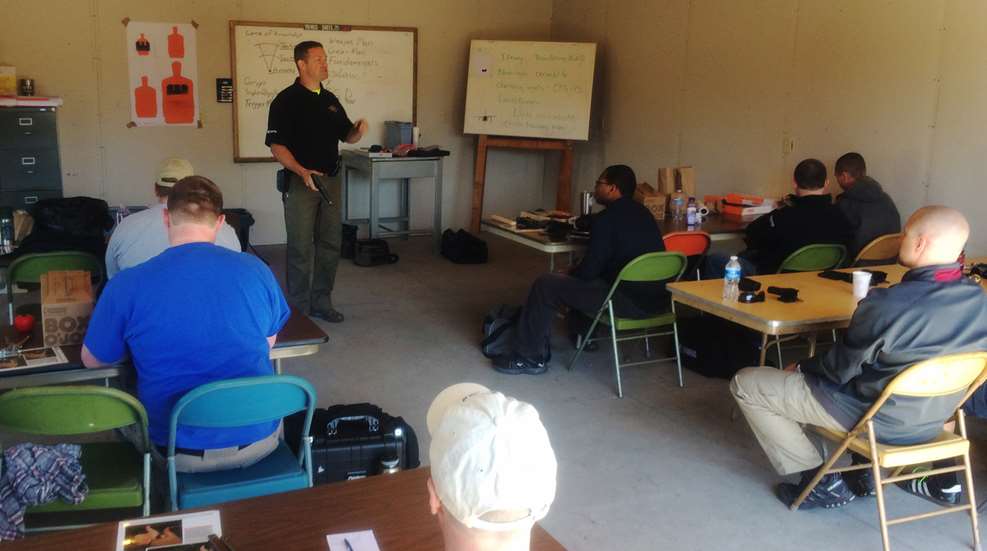
Long ago, in a training class, I learned the true meaning behind the words principles, tactics and techniques as we apply them to the shooting sports. They were discussed and referred to in a hierarchy as each is applied to training. The definitions and the images those words were so strongly presented that I took lots of notes. I vowed to remember this lesson and have not only made it part of my training classes but also part of my company logo.
My specialty is not just training shooters, competitors, police and/or military personnel. I really enjoy and specialize in training firearms instructors. Those men and women who will go forth and spread the principles, tactics and techniques that make me successful. That said, I have a feeling that it’s not just recreational shooters who read what I write here but also many of the nations certified instructors. If you are a recreational shooter, don’t stop reading here as this information can pertain to everyone. It may even provide a litmus test of sorts for you to use as you attend your next class.
This all starts with principles―solid and fundamental. Tactics come next and are used to accomplish the principle task. Last are techniques which are used by you to personalize the tactics which accomplish the principle task. As a trainer for many years, I do my best to stay away from the words always and never. People win and lose or live and die by the decisions they make every day. You simply don’t know what could save your day in a competition or any uncertain event. I believe that there is a time and place for just about anything. However, the more you understand the principles, the better your chance will be of accomplishing them.
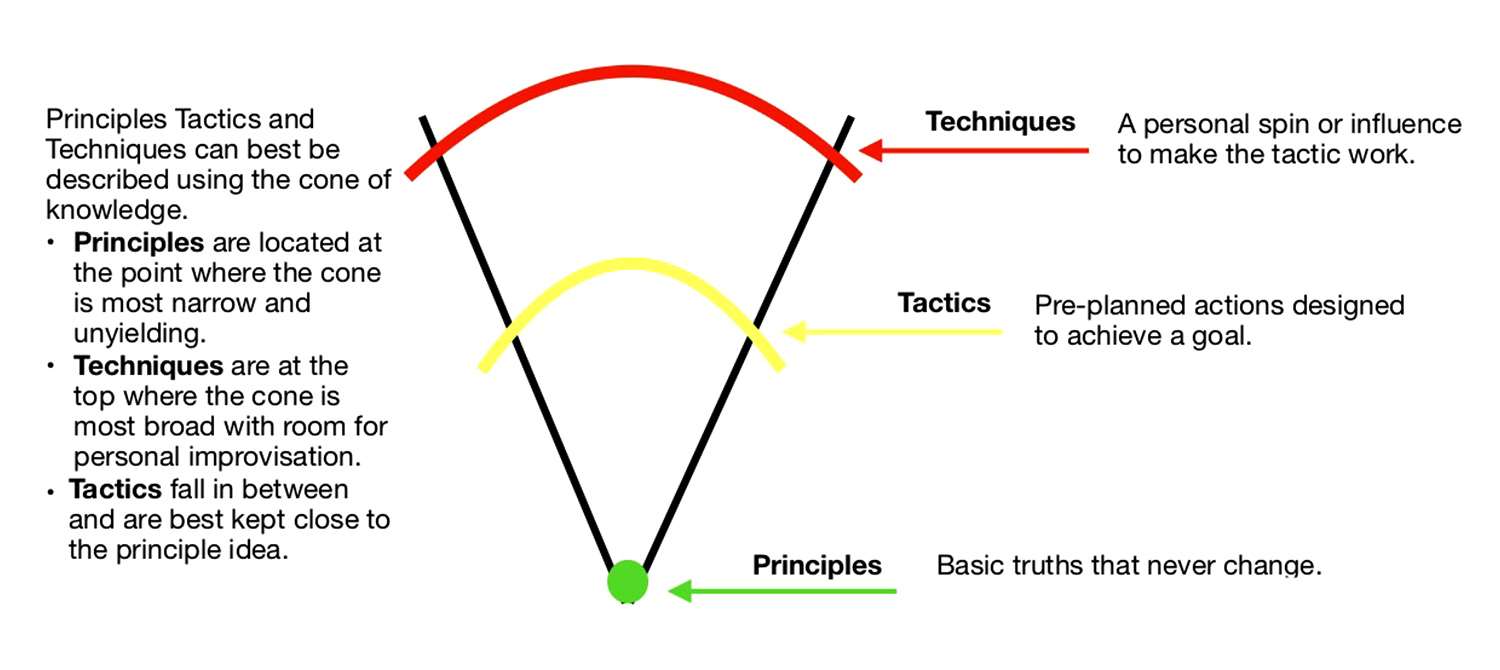
Principles are our foundation. Principles are defined by Webster as “fundamental truths or propositions that serve as the foundation for a system of belief or behavior.” Principles are where training starts. Think about the principle as something you need to accomplish; shoot a target, change a magazine, shoot from a support, move from point A to point B, etc. The closer we stay to principle the less room we have for error by straying from the ultimate goal. At its simplest, moving from A to B is accomplished by walking. We won’t even address that it could be in a straight line.
Tactics are defined as pre-planned actions designed to achieve a goal, task or principle. Hmmm. Principle again. We use tactics to achieve the principle. Now, there are a variety of ways to shoot a target, change a magazine or move from point A to point B, but we need to have specific tactics in mind to accomplish the tasks. Tactics should be simple and lend themselves directly to accomplishing the principle task. How about when you move from point A to point B―you go in a straight line? Or, we appear to be doing the same thing when we do a reload drill. Our tactics are similar but―I’m faster.
Techniques are a way of carrying out a particular task, especially the execution or performance of a procedure. Instructors should share techniques when a student needs it. Try running to B. And start with small steps and end with small steps. Your reload looks the same but, here’s what I’m doing. Furthest from the principle idea, techniques are generally personal. I try to have a long list of tactics and techniques to meet my students needs and I am ever learning. I have, and employ specific techniques to enhance tactics as needed to help me or others accomplish a principle. Techniques are a way to help an individual or team to personalize the tactic for them and possibly only for a specific situation. Successful trainers realize that there is no one way to accomplish a principle task or perform a tactic. Your child or wife may need to do something different to work the slide on a pistol. Don’t force them to do it your way or they may end up failing.
Next time you train ask yourself a question: “Do you like this because you can make it work? Or do you like it because you can get others to make it work?” I have never forgotten that statement and try to keep it in mind as I train others.
Principles, tactics and techniques. Know each and the part that each plays in your shooting and training. Don’t be closed minded, but don’t fall for the flavor of the day tactics and techniques. Greater understanding leads to great ability.