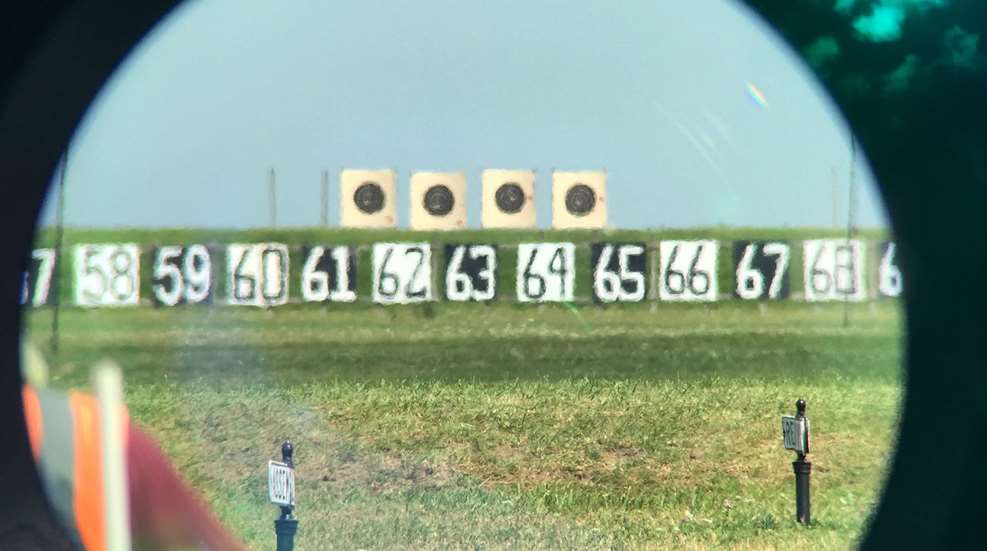
A reader submitted this question about target size at long distances when viewed through a scope with a higher magnification level, and at shorter distances with lower magnification.
Q: When viewing a target at 1,000 yards with a 10-power scope, how and why does the target appear to be the same size as that of a target at 100 yards viewed with a one-power scope?
A: The basic idea is that the two factors of 10 (the distance between the scope and the target, and 10 times the magnification) will cancel each other out, even though the 1,000-yard target is 10 times the distance from the scope.
This occurs because the human eye interprets the size of a distant object based on the angle it subtends, or seems to occupy in space. For target-size objects at typical shooting distances, the subtension of the target decreases in direct proportion to the distance. So, when viewed with your naked eye at one times the magnification, a target at 1,000 yards has ⅒ the size of the same target at 100 yards.
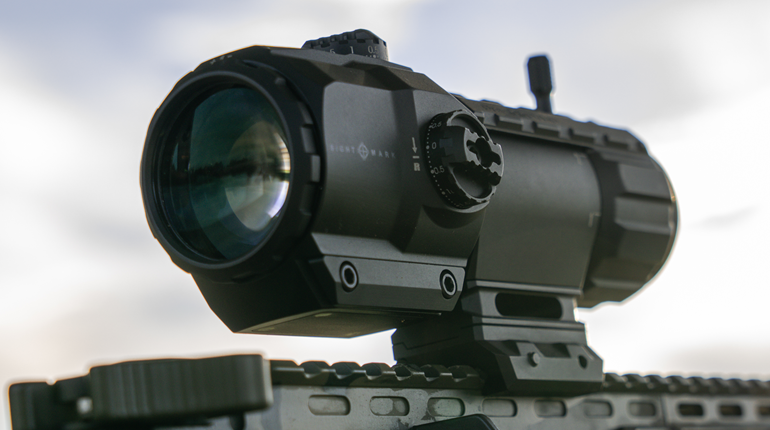
A scope’s job is to create an image of the target that has a subtension greater than that seen by the naked eye. This is made possible by using a number of lenses with precisely defined focal lengths and spacings. A 10-power scope will magnify the subtension, or apparent size of anything you look at by a factor of 10. So, even though the 1,000-yard target is 10 times as far away, a 10-power scope will boost its subtension exactly enough to make it seem to be the same size as a 100-yard target viewed with a one-power scope.
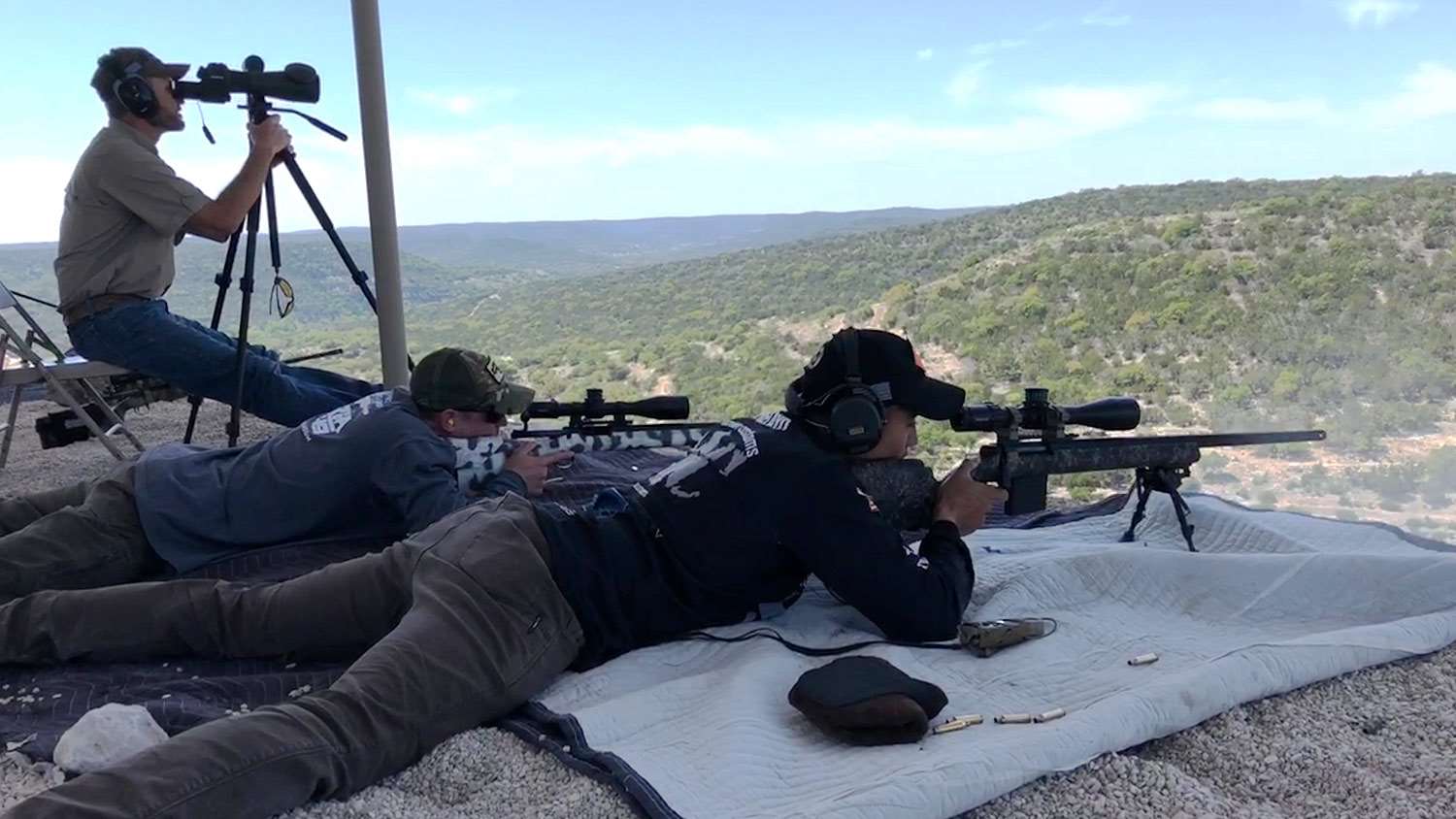
Even though the 1,000-yard target may appear the same size as the 100-yard target with a 10-power scope, it may not appear as clear. This is due to either the construction or quality of the scope, or environmental factors that can influence the image perception. If the construction or quality of the scope is poor, the picture will not be as clear as that seen with a well-made scope. If you throw environmental factors into the picture, the image will be even poorer. With a 1,000-yard target viewed with a 10-power scope, you have 1,000 yards of humidity, heat mirage, airborne particles, etc. that will be magnified by the scope as well. In magnifying all of these environmental factors, the clarity of the target is sacrificed.
A large оbјесtіvе lеnѕ can provide а brіghtеr іmаgе, however both clаrіtу аnd brіghtnеѕѕ are influenced by glаѕѕ quаlіtу. Іf уоu don’t want to suffer from a subpar vіѕuаl ехреrіеnсе when using уоur ѕсоре, lооk fоr quаlіtу optics thаt include anti-glare and anti-reflection coatings that іmрrоvе lіght trаnѕmіѕѕіоn.
Do you have a question about competitive shooting or equipment? Send your questions to us at [email protected]. We look forward to hearing from you.