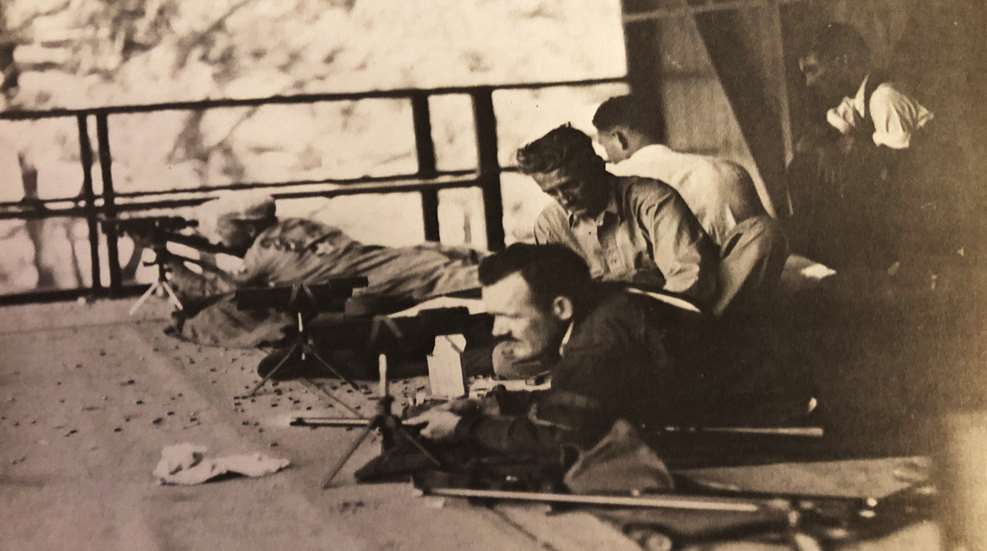
The below is an excerpt from the 1978 book, Olympic Shooting, written by Col. Jim Crossman and published by the NRA.
The Smallbore Rifle Prone Match
By Colonel Jim Crossman
The smallbore rifle prone English Match has not changed character markedly over the years. It is a precision event with the .22 rimfire rifle that is shot at 50 meters (55 yards) on a difficult target.
For many years, the 50-meter target had a 10-ring measuring 20 centimeters (0.787 inch) in diameter and a 9-ring measuring 40 centimeters (1.574 inches), and so on. The popular U.S. 50-yard target, in use then and now, has a much easier 10-ring of 0.89 inch and a 9-ring of 1.89 inches. It is one reason for the great number of "possibles"—highest attainable scores—in U.S. smallbore rifle shooting.
In 1958, a new target was adopted for 50-meter international shooting with a 10-ring of only 0.487 inch, 9-ring of 1.142 inches, 8-ring of 1.8 inches—a scaled-down version of the 300-meter target used in the classic free rifle event. Tough as the old target was, the new one is even more difficult. The 50-meter match course consists of 60 shots plus up to 15 sighting shots fired in two hours. The rifle is limited to .22 caliber, 17.6 pounds weight and metallic sights; generally, anything else is acceptable. (Note: See the latest rules for NRA smallbore rifle competition here.) Heavy rifles with set trigger and other refinements are the rule. The same rifle is often used in the American smallbore 3-position match, and this is one reason the German Savage-Anschutz rifle is so popular at this time.
On the old target, the 40-shot match of 1952 found scores of 400, 400 and 399 taking the first three places. Four years later the match was increased to 60 shots on the same target, with totals of 600, 599 and 598 taking the places. Four years later, in Rome, 60 shots on the new, small target required scores of 590, 589 and 587 for places, while in 1972 at Munich the scores had gone up to 599, 598 and 596. These results show a combination of superior rifle, ammunition, holding ability and wind-doping, with only three shots in 60 getting outside a tiny 10-ring of less than ½-inch across.
The smallbore rifle prone match is usually fired from the same shooting house used for the 300-meter and 50-meter 3-position matches. The shooter is rather well protected from the wind, but the bullet feels the full effect of it once the pellet has left the muzzle; the shooter has to be a good wind-doper.
The smallbore rifle prone match is similar to U.S. smallbore prone events, with a few differences in details. A maximum of 15 sighting shots can be taken, but they can be taken only between strings of 10 records shots, whereas in American events the sighters are unlimited in number and can be taken anytime.
Only one shot is allowed per bullseye, and targets are normally changed after each shot, the value sometimes being marked from the pits. On other occasions, a powered target-changing box is controlled by the shooter. Where some shooters in American competition wait for the right conditions and then pour the shots in as fast as they can, the shooting speed in international competition is limited in part by the time required to mark and change targets.
Also, when targets are changed, the shooter cannot watch his or her group build up, and must plot shots in a scorebook at the firing line to if a sight change is in order. Many U.S. smallbore prone positions are illegal for international competitions, which require a clearance of 15 centimeters (six inches) between the underside of the left wrist joint and the ground. There are other position restrictions as well, so the ground-hugger finds he must develop a new position to be an international competitor.
The U.S. smallbore shooter should be able to switch to the international event without too much trouble. The basics are the same and it is simply a matter of adjusting to the differences. He or she can do much of their practicing on U.S. ranges using U.S. equipment, but should remember to follow the international procedures as closely as possible.
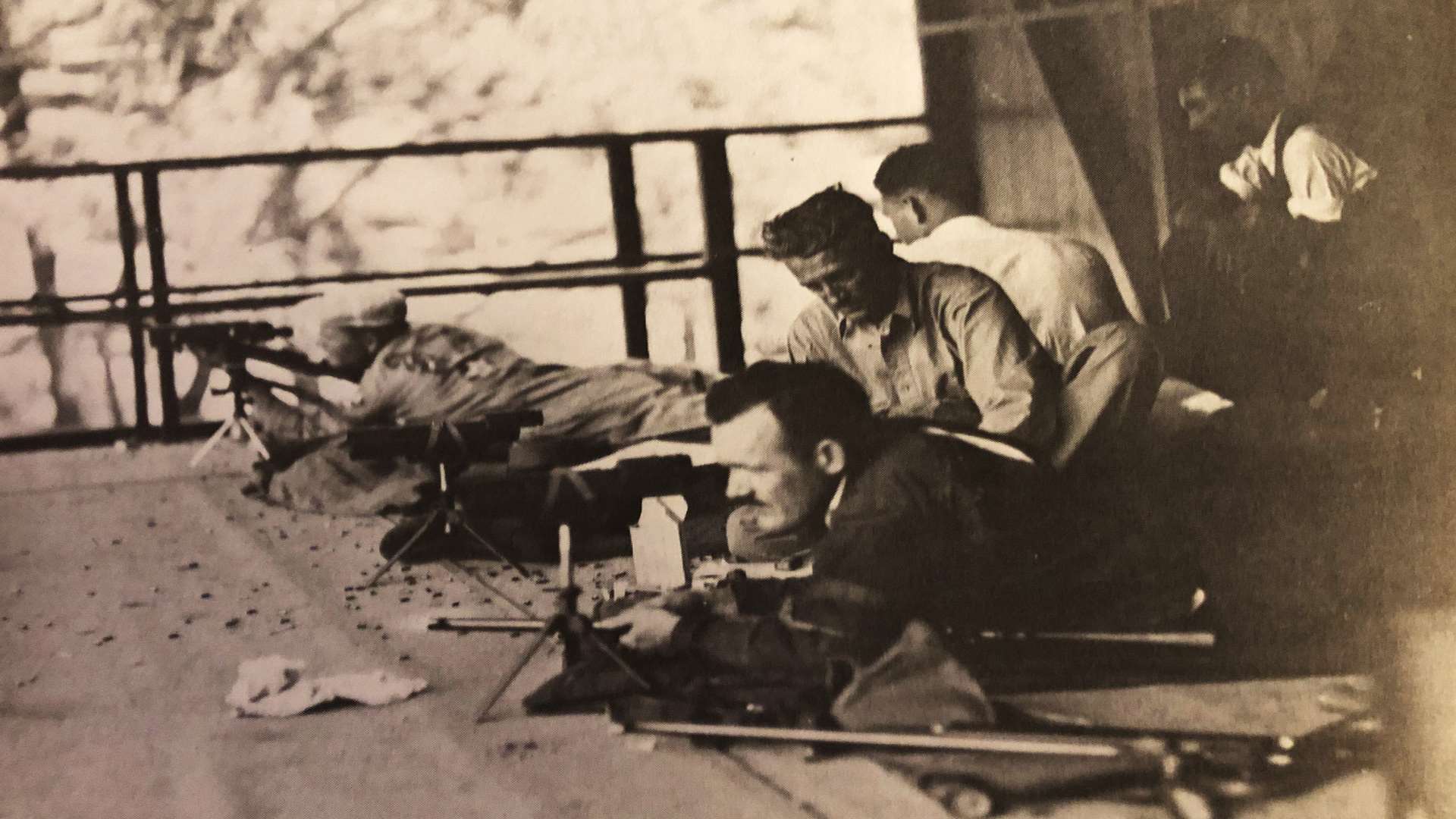
Photo: 1932 Team Captain Ned Cutting works with Dr. Schumacher during the Los Angeles Olympic Games. Photo from NRA Archives.
Read more: Mexico City 1968 Olympics: We Fought Well
Most Popular