A wise man once told me, “Frank, if you want to keep it, you need to give it away.” While I was confused at first, he explained the meaning—you have to mentor others if you want to stay fresh at anything in life. This principle was not only his secret to continued growth in the arena that we were discussing, but with all things in life. As time passed by, I heard a similar saying, paraphrased as, “to learn is to teach twice,” which brings us to this article. Sometimes when I meet a new friend and explain what I do for a living, they often reveal that they enjoy shooting themselves, which always prompts the question, “What can I do to get better?” Armed with the knowledge of one of my greatest mentors, I reply with a solemn word—teach.
When slowly bringing newcomers into the fold, it forces us to rexamine the fundamentals. This applies to any shooting discipline. For instance, I rarely align my shotgun stance to the break zone when it first becomes warm enough outside to shoot sporting clays. However, if it’s later in the season and I’ve been working with new shooters for a few weeks, it becomes next to impossible to forget. The same could be said about my legs in the prone position when shooting service rifle. But, if I’ve just taught a rifle positions course, or working with military students, they once again begin to fall into place by instinct.
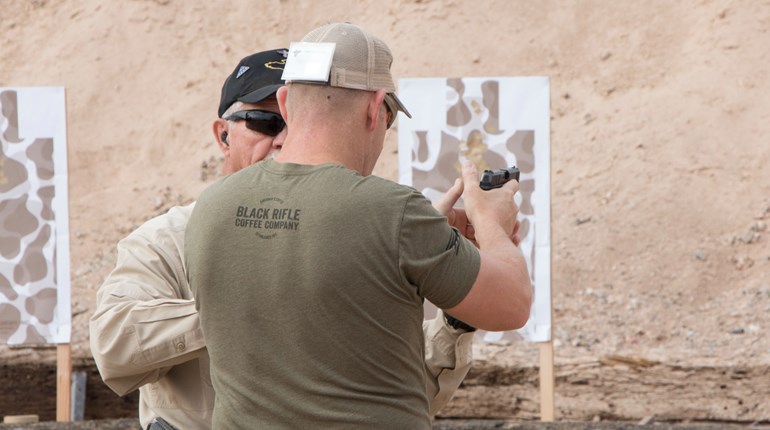
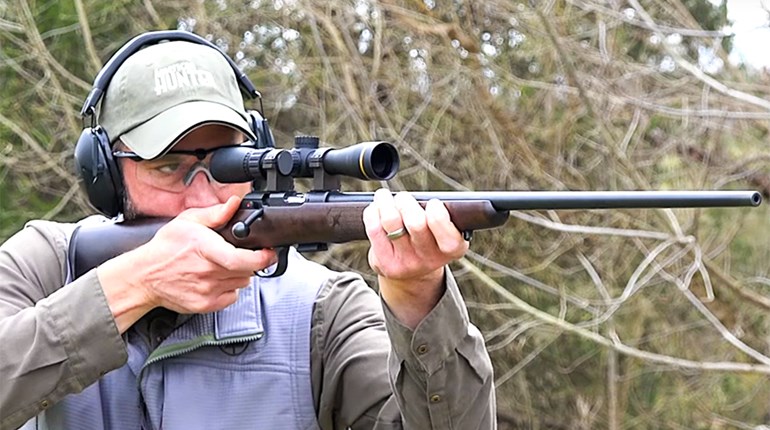
With the fundamentals fresh in our minds, frequent teaching should also mean regular demonstrations. I like to demo for my students, because it shows them that these fundamentals work, and it seems to be the only time that I can get in any practice. Many would say the number-one slot for improvement goes to practicing, but without something pushing you to the range, training often takes a backseat to the less exciting things in life. We can sit idle for weeks or even months between pew pew sessions without a catalyst. Over the last decade, I’ve averaged three days a week on the range working with students in different shooting disciplines. At each session, I only send about a magazine’s worth of ammunition downrange, which is enough to stay sharp and improve a bit during the busy season. Finally, it’s also an opportunity to “see yourself in a mirror” and catch and correct something that you have always thought worked well, but after seeing it in front of you, you drealize that is no longer the case.
Working with new shooters will also expand your competitive shooting horizons. For instance, I don’t care much for the Limited division of USPSA, but I’ve had students with guns best suited for it, thus forcing me to brush up on that section of the rules. The same can be said about the match rifle division that shares the line with the service rifle shooters in many high power events. Nothing waters the tree of growth as a shooter of the opposite hand dominance entering your life. As a born lefty, this happens some 83 percent of the time when I train someone. Since righties make up the majority of my students, I started performing all of my presentations and demonstrations with my right hand to make it easier for them to follow. The funny thing about doing that for all these years; I have become ambidextrous. Interestingly enough, it’s at the point where I no longer have a dominant eye and can shoot a long gun off either shoulder with both eyes open. One of my favorite challenges these days to my range buddies is “weak-sided” shooting. Most of them are wise to it by now and decline to play, which is a shame because it’s the only way they’ll get better at it.
There is no better way to learn something than through complete immersion. People who have learned a new language can attest to this, as the hours spent in a classroom can’t measure up to spending a few months in a country where that language was spoken. In many ways, teaching is simply another vehicle for immersion, as it’s another event in your life that involves firearms and getting to the range. So, if you are looking for a new means of improving your scores, grab that neighbor up the street that has expressed interest, or maybe even volunteer at your local 4-H. Both options have a better chance of paying dividends over mindless paper punching. Above all, the world can use a little kindness, so share a box of ammunition and a smile with somebody looking to learn, and you’ll be surprised at how much it helps you grow as well.
Most Popular