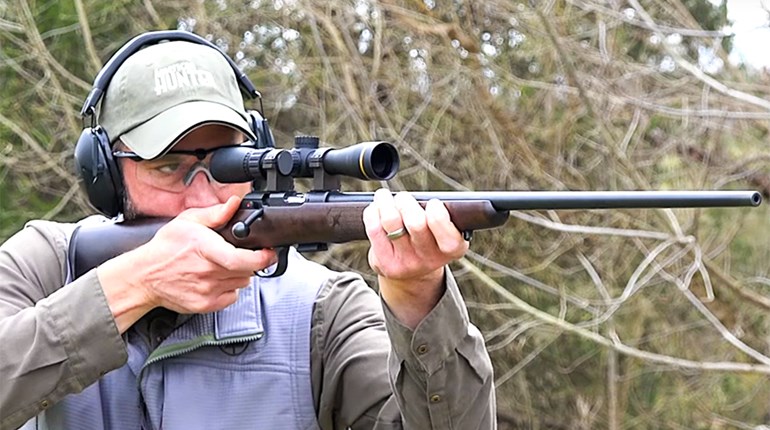
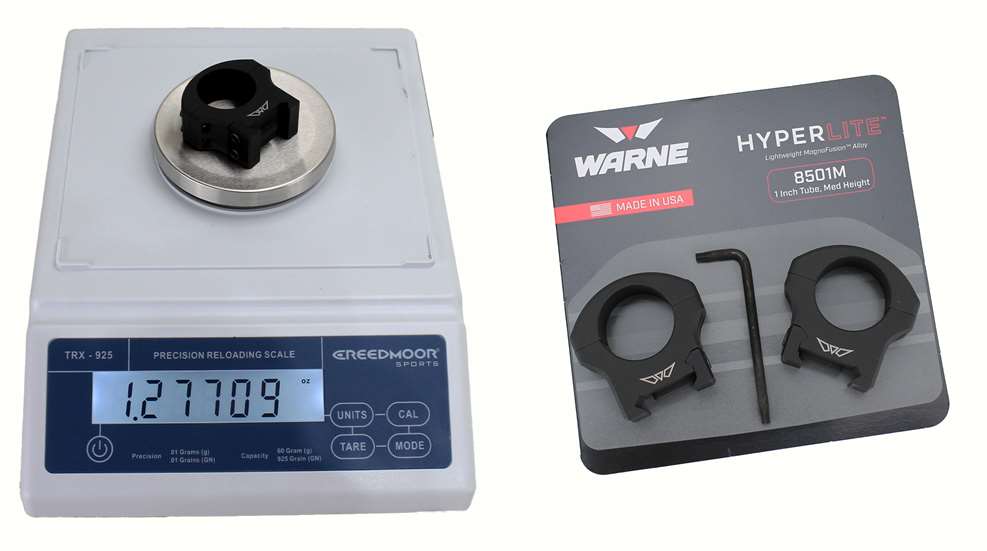
Competitors concerned with weight savings have a new option from scope-mounting specialist Warne. Made of a special alloy, HyperLite rings shave significant weight compared to aluminum rings while still providing plenty of heft to ensure neither rings nor scope is going to move under recoil.
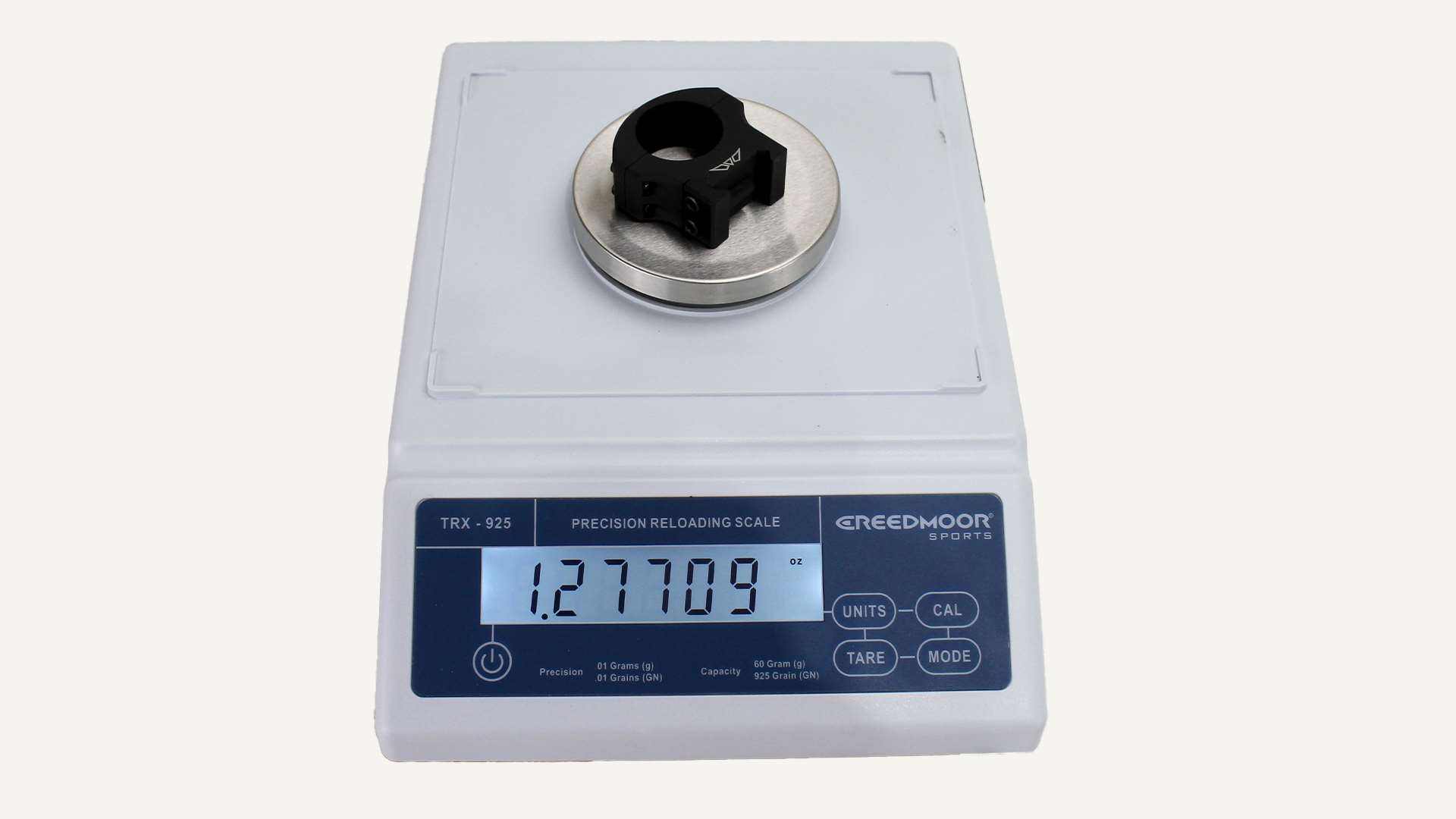
Warne says HyperLite rings are 35% lighter than aluminum rings, thanks to a Warne exclusive alloy it calls MagnaFusion. The rings for one-inch scope tubes provided by Warne for this evaluation tip a scientific scale at 1.277 ounces each, 2.55 ounces per pair. For beef, two screws hold the clamps firmly to Weaver or Picatinny rails, and four ring screws provide redundant clamping power to hold scopes immobile. Important for competition shooting, the upper ring halves are slim enough to permit unobstructed view of scope elevation turret index marks. The thickness of the rings on the sides should allow similar viewing of windage turret index marks, but that will depend upon your specific scope, of course. Additionally, HyperLite rings wear a weatherproof black matte Cerakote finish.
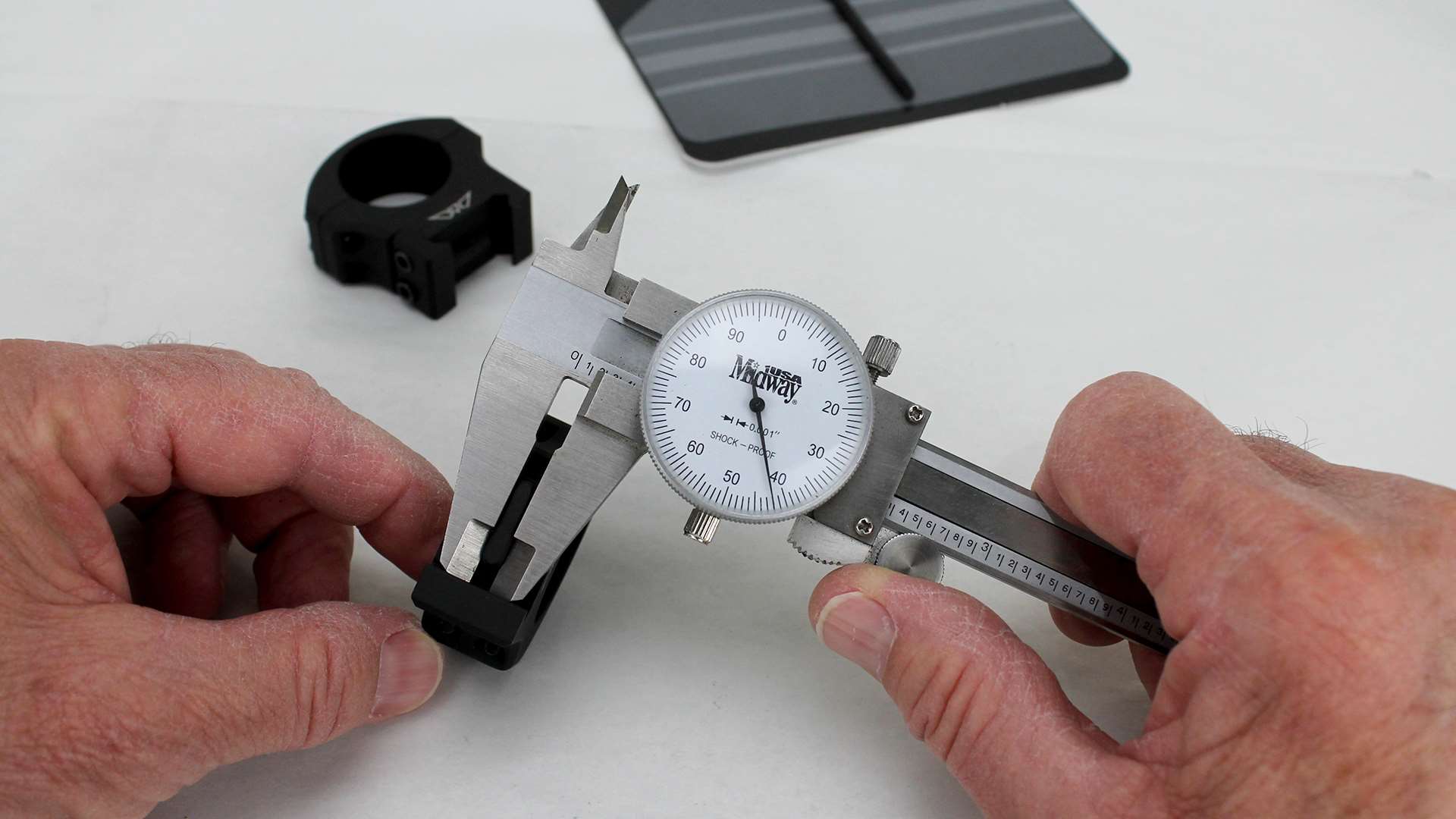
With the rings screws snugged down, ring inside diameter measured vertically is .961 inch for one ring and .962 for the second, very consistent. These medium-height rings measure .415 inch from the bottom of the ring to the lower inside edge where it contacts the scope. Edges are not so sharp as to mar a properly mounted scope.
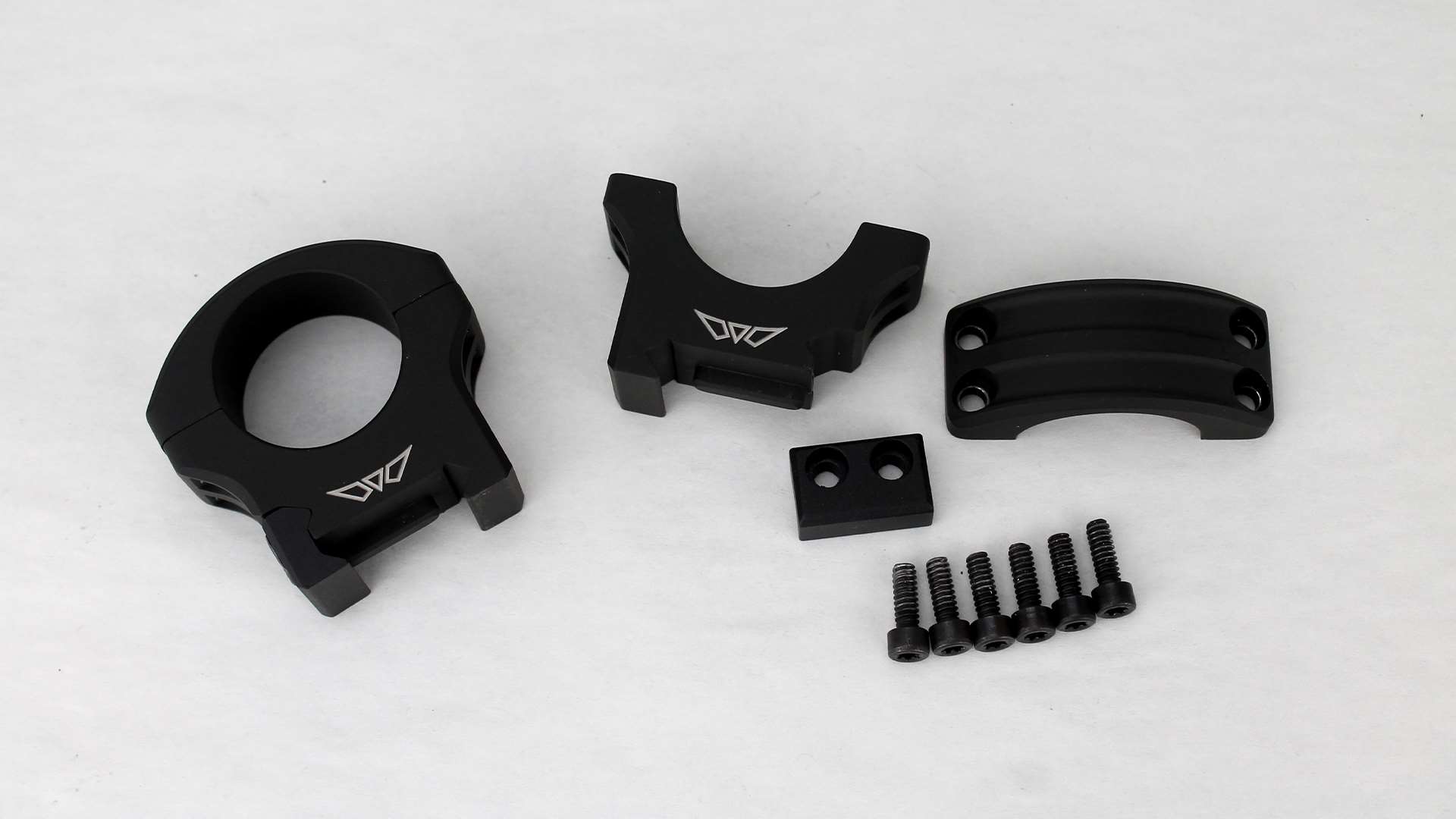
An impressively technical-sounding bit of package literature reads “STANAG 4694 interface allows for better return to zero and rigidity,” a reference to NATO Standardization Agreement 4694, which describes the now-ubiquitous Picatinny rail. Warne says the HyperLite also fits Weaver-style bases. Pic and Weaver are somewhat different, which we detailed in another article, but there is typically some wriggle room to mate one system to the other. When doing so, there is some “play” between Weaver ring transverse locking bars and Pic rail slots, so it’s important to push rings forward in the slots to ensure the rail contacts the locking bars under recoil, which Warne explains in the mounting instructions. HyperLite ring transverse locking bars, machined integral to the bottom of the rings, measure .142 inch in width, whereas true Pic rail slots measure .206 inch in width; Weaver locking bars are ostensibly 0.149-inch wide to fit .180-inch wide slots.
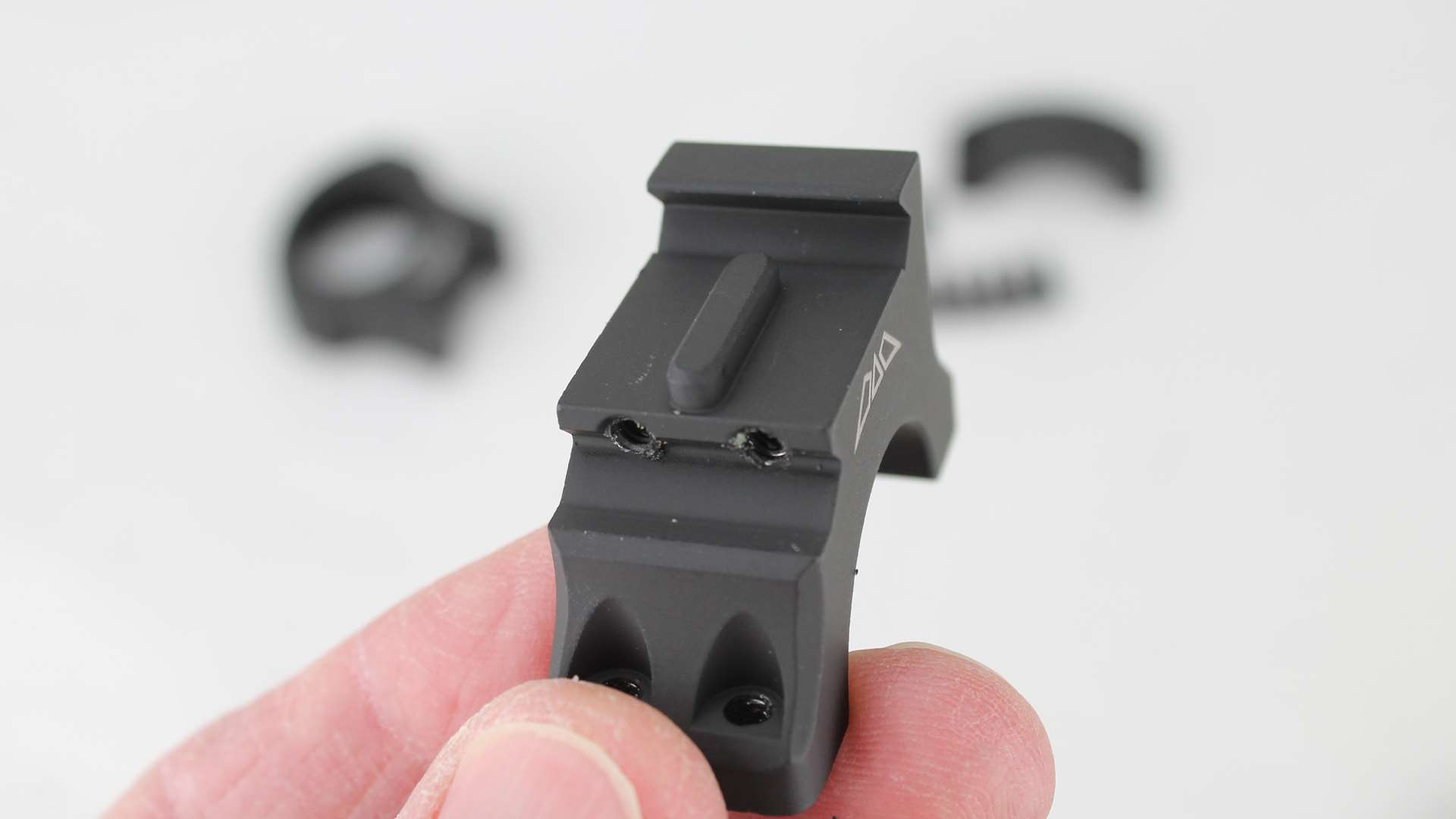
Warne also provides clear instructions on HyperLite ring screw torque values, which are pretty much at the high end of industry standard and often ignored by too many shooters, judging by the numbers of over-torqued scope mount and ring screws I’ve encountered on others’ rifles.
Warne specifies 25 inch-pounds of torque for the HyperLite mount clamp screws, and a maximum of 18 inch-pounds for the ring screws. As well, Warne spells out a too-often ignored rule to never use thread locking compound on ring screws. Warne’s torque values are for dry threads; wetting threads with locking compound essentially lubricates them temporarily, which increases the torque applied to the screw. That is, though you may have your torque wrench set for 14 inch-pounds, wetting the threads may raise the actual applied torque several inch-pounds beyond that. Over-torquing ring screws often results in “rounding out” screw heads or snapping off screws when disassembling later. This is especially true with non-steel alloy and aluminum rings and screws. Amateurish attempts at drilling out damaged screws usually results on throwing away mangled rings. A gunsmith can drill and tap for a larger ring screw, but a single disparate ring screw would offend the sense of organization of most competition shooters.
Warne’s sense of organization included making all the HyperLite ring and clamp screws the same size so that they are all interchangeable, and all take the same T15 size Torx head wrench, which Warne includes in the package and which you don’t really need because you will use a torque wrench, right?
Warne covers the spectrum with HyperLite rings in all the sizes popular with competition shooters, one inch, 30 mm and 34 mm, and in low, medium and high versions. With an MSRP of $109.99 (and on sale at this writing for $99.99), they are economical, too, for a can’t-play-without-it competition accessory. There’s more information at the Warne website.